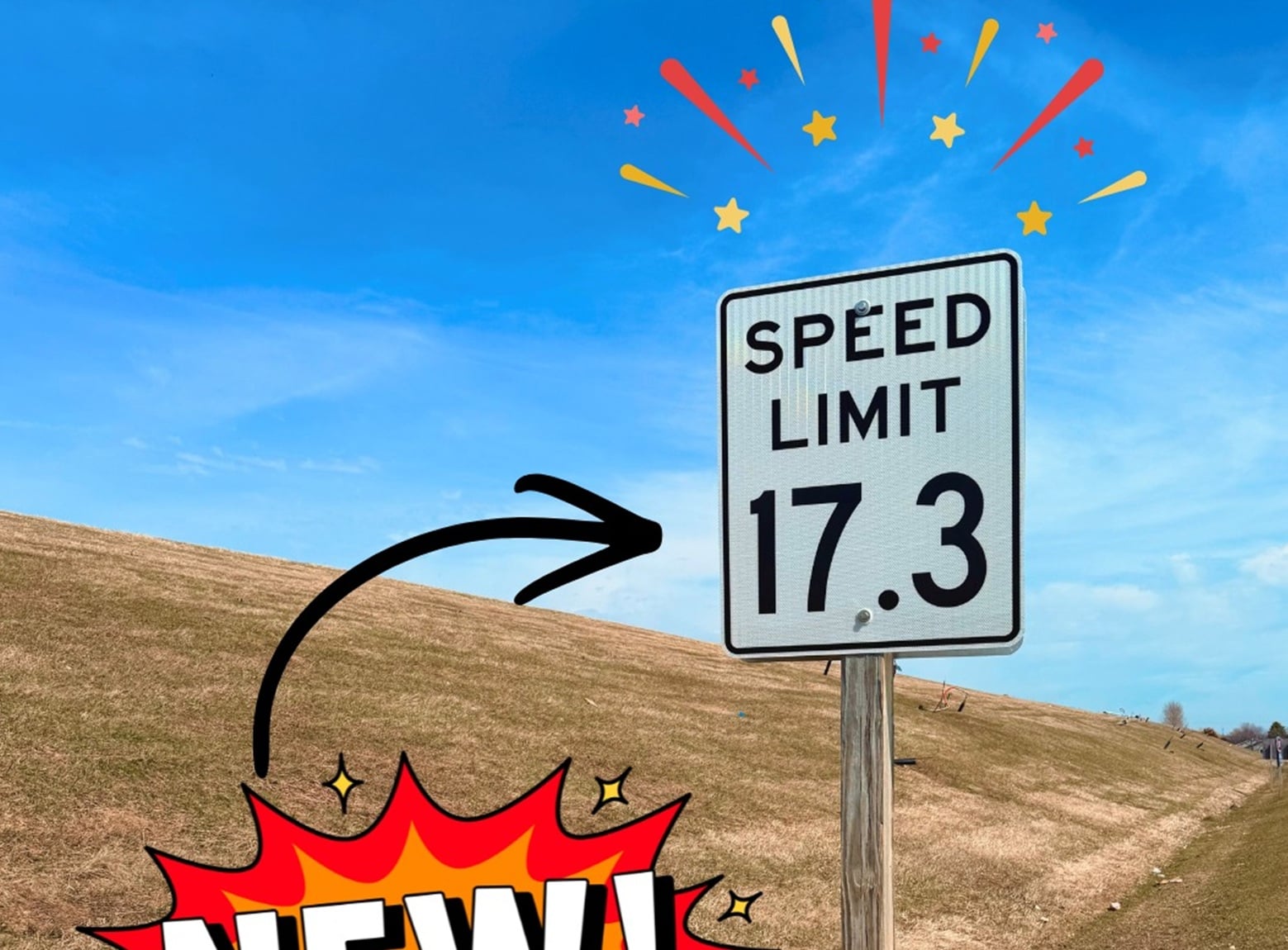
If you pulled into the Outagamie County Recycling and Solid Waste facility in Wisconsin and noticed the speed limit sign, you would probably slow down, squint, and wonder if someone just never learned how rounding works. The posted limit is 17.3 miles per hour, and no, that is not a typo. It is not a glitch. Nobody forgot a decimal point somewhere it did not belong. This is completely intentional, and honestly, once you hear the reasoning, it is hard to argue with it.
The facility serves a constant flow of contractors, haulers, and everyday residents dropping off their recycling. That kind of mixed traffic, all moving through the same space at different speeds with different vehicles, creates real safety concerns. Officials needed a way to make sure drivers were paying attention, and they decided that a perfectly ordinary speed limit sign simply was not going to cut it anymore.
So they did something weird. They posted 17.3 mph. And the strange thing is, it worked exactly as intended, because here you are, reading about it.
The recycling center explained the decision on Facebook, noting that the unusual number forces drivers to actually look at the sign rather than registering it as background noise. When something breaks the expected pattern, the brain has to slow down and actually process what it is seeing. In a facility full of foot traffic and heavy machinery, that extra second of attention could genuinely matter.
The Psychology Behind the Peculiar Number
There is a real concept at work here, and it goes beyond a quirky social media stunt. Drivers who travel familiar routes regularly tend to operate on what psychologists call automaticity, basically a form of mental autopilot where routine actions happen without conscious engagement. You have driven that road a hundred times, so your brain stops actively reading every sign and starts just assuming what they say.
Unusual stimuli interrupt that autopilot mode. A speed limit of 25 mph barely registers on a familiar road. A speed limit of 17.3 mph forces the brain to stop, process the anomaly, and re-engage with the environment. That cognitive speed bump, pun absolutely intended, is exactly what the facility was going for.
The recycling center was straightforward about the goal: they want every person who visits to leave safely at the end of the day. A strange number on a sign is a small price to pay for that.
Said one response on Facebook: “Okay, that’s actually kinda smart because not going to lie, I find myself in a autopilot state of mind while driving quite frequently. Although I’ve avoided countless accidents, then thought, “Wait, I don’t remember leaving my neighborhood.”
Wisconsin Is Not the First Place to Try Something Like This
Odd speed limits have a longer history than most people realize, and some of the origin stories are even stranger than Wisconsin’s.
Back in 2013, reports surfaced that Trenton, Tennessee had been operating with a 31 mph speed limit since the 1960s. The reason? City officials could not agree on whether the limit should be 30 or 35, so they literally split the difference and went with 31. That compromise speed limit apparently stuck around for decades.
Out in Colorado, some private developments and shopping centers have gone even further, posting speed limits with fractions rather than decimals. If 17.3 sounds odd, imagine pulling into a parking lot and seeing a sign for 14 and three-quarters mph. Compared to that, Wisconsin is practically conventional.
These examples share a common thread: when standard signage fails to get results, someone eventually decides to get creative with the numbers.
What We Can All Learn From a Decimal Point
The 17.3 mph sign is a small story, but it carries a genuinely useful lesson about how people process information and how easy it is to stop truly seeing things that become routine.
Road safety officials and traffic engineers have long known that familiarity breeds inattention. Rumble strips, flashing lights, and variable message signs all exist for similar reasons: to interrupt the autopilot and force a moment of real awareness. The Wisconsin approach just happens to do it with a single absurd number rather than expensive infrastructure.
There is also something worth noting about the facility’s transparency. By explaining the reasoning publicly, they turned a quirky sign into a conversation about safety culture. People are now thinking about the facility, about attentive driving, and about the way routine dulls awareness in ways that have nothing to do with recycling. That is a pretty impressive return on one sign post.
Whether 17.3 mph catches on elsewhere remains to be seen. But the next time you breeze past a speed limit sign without really registering it, maybe ask yourself whether you actually read it, or just assumed you already knew what it said.