Most modern vehicles promise to do more than just drive. They monitor themselves, flag issues early, and are supposed to give drivers enough warning to avoid bigger, more expensive problems down the line.
That promise is a big part of the appeal, especially with vehicles like the Tesla Model X, where software plays a central role in how the car operates and communicates with the driver.
Most modern vehicles promise to do more than just drive. They monitor themselves and are supposed to give drivers enough warning to avoid bigger, more expensive problems down the line.
That promise is a big part of the appeal, especially with vehicles like the Tesla Model X. Software plays a central role in how the car operates and communicates with the driver.
When that system does not work the way drivers expect, the result is not just frustration. It can get expensive quickly and without much warning.
That is exactly what one owner says happened after a charging issue in Tempe, Arizona. What started as a simple error message turned into a repair bill that doubled in just a matter of days.
What Happened at the Supercharger
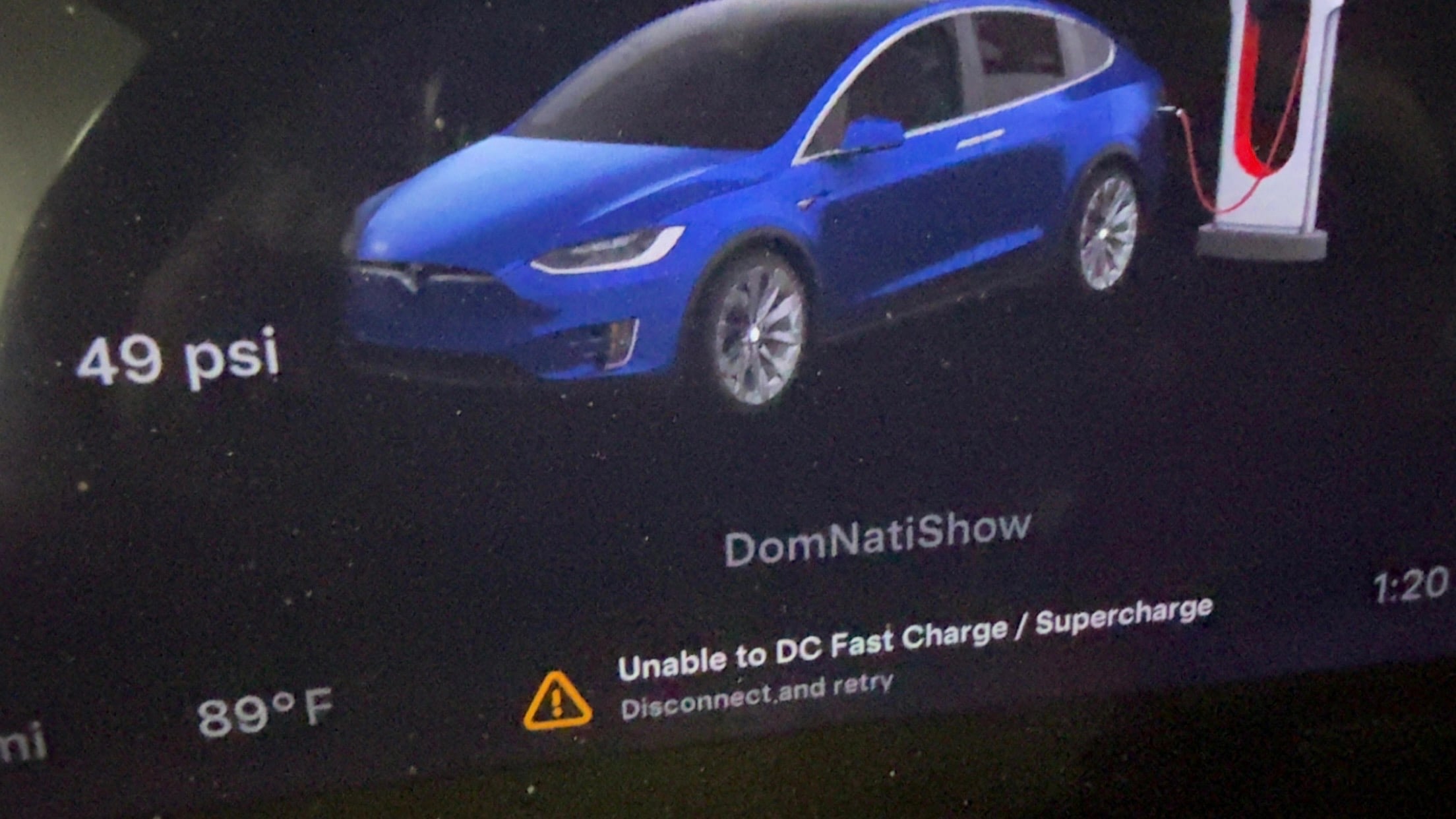
According to the owner, the issue started at a Tesla Supercharger, where the vehicle displayed an error message reading, “Unable to DC fast charge. Disconnect and retry.” After attempting to reconnect multiple times and receiving the same message, he decided to head to a nearby Tesla service center just a few miles away.
Once there, the situation escalated quickly. While parked at the service location, the vehicle reportedly became completely unresponsive, with the screens going black and the car effectively shutting down.
From a $1,700 Estimate to a $3,400 Repair Bill
The owner says he was initially told the issue could be resolved for around $1,700, assuming the problem had not progressed further. Two days later, he says the final repair cost was approximately $3,400.
According to the owner, Tesla service staff told him the issue had been developing over time and now required a more extensive repair, including a system flush. That explanation is where the dispute begins.
Owner Says There Was No Prior Warning
The driver maintains that he had not received any earlier alerts indicating a developing issue before the charging error appeared. He says the first warning he saw was the fast-charging error at the Supercharger.
“Up until that point, I hadn’t received any warnings about a larger issue,” he said. “I was told the compressor had likely been going bad for some time, but I was never alerted to it before this happened.”
From his perspective, that timing is the entire problem. He argues that if the vehicle had warned him sooner, he would have brought it in earlier and potentially avoided the added cost.
He documented part of the experience in a video shared online.
Embedded media follows. Please allow a moment for it to load.
@domenicknati Yet again Tesla does not notify the operator of an issue #tesla #car #cars #driving #bill ♬ original sound – domnati
The Internet Had Opinions—and They Went in Every Direction
As the video spread, the reaction was exactly what you would expect when a Tesla repair bill doubles overnight. Some viewers immediately blamed the car, others defended the brand, and a few just leaned into the humor. A lot of the top comments were blunt. “And what did we learn? Don’t buy Tesla.” “That’s why I will never own an electric car.” “Will never buy another one… always glitches and issues.”
Others pointed to their own experiences, which did not line up with what happened here. “I’ve had mine for 3 years. No problems.” “Mine is going on 3 years and never an issue… It’s an amazing car.” That split is part of what keeps stories like this moving. One person’s expensive failure runs headfirst into someone else’s completely trouble-free ownership.
There was also a steady stream of comparisons to gas-powered vehicles, which tends to happen anytime an EV issue goes viral. “Gee, I don’t have that problem with my gasoline car.” “I’ve had my RAM pickup for over 10 years… $300 in repairs.” And then there were the comments that just leaned into the moment. “I know what’s wrong with it… ain’t got no gas in it.” “They are flushing your wallet.”
Not everyone agreed with the criticism, though. A few pushed back on the core claim, arguing that not every failure comes with a warning. “Almost no cars, gas, or EVs give you a notification that an air conditioning compressor is about to go out.” That point cuts right to the center of the debate. Some viewers see this as a failure of Tesla’s alert system, while others see it as a normal mechanical issue being blamed on the car.
The Bigger Question About Vehicle Alerts
Situations like this highlight a broader question that extends beyond a single repair bill.
Modern vehicles, especially software-driven platforms like those built by Tesla, rely heavily on internal diagnostics and alert systems to communicate problems to drivers.
When those systems work as intended, they can help prevent small issues from becoming major repairs. When they do not, drivers are left trying to reconcile what the vehicle told them with what service departments later report.
In this case, the owner’s claim centers on that gap.
Tesla has not publicly commented on this specific situation, and it is not clear what internal data or fault history the vehicle may have recorded prior to the incident.
What is clear is the outcome: a sudden failure, a repair that doubled in cost, and a dispute over whether the warning came too late to make a difference.
What happens next, including whether the bill is challenged further, remains to be seen.