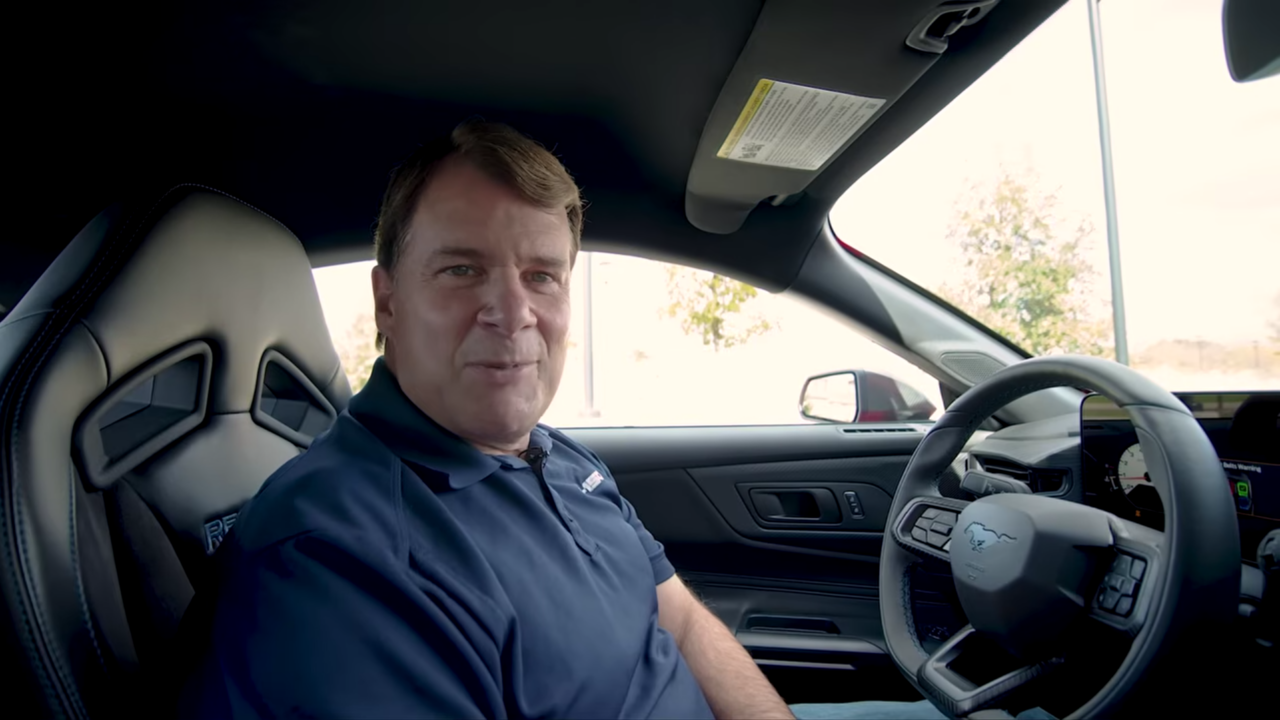
Ford CEO Jim Farley has never hidden the fact that he takes the global EV race seriously, but one of his more eyebrow-raising admissions may sting Tesla harder than most.
Instead of daily driving a Tesla, Farley chose a Chinese electric car, and not because he wanted to make a headline. He says the decision came down to product execution and what he believes Chinese automakers are doing better right now.
That is a remarkable thing to hear from the boss of one of America’s biggest car companies, especially when the EV he praised comes from a market the U.S. industry increasingly sees as its biggest long-term threat.
And while Farley made clear he has respect for Tesla, his reasoning still lands like a direct shot at Elon Musk’s company.
Farley Says Tesla No Longer Has the Freshest Product
In recent comments, Farley said he chose a Chinese EV over a Tesla because, in his view, Tesla did not have an updated enough product at the time.
The Ford boss was effectively comparing a Chinese model like the Xiaomi SU7 with Tesla’s aging lineup, and he suggested the newer Chinese offering simply felt more compelling.
That is the part Tesla fans will not love.
Farley was not dismissing Tesla’s importance, far from it, but he was blunt in implying that Chinese EV makers are moving faster and building products that feel fresher.
Why the Chinese EV Caught His Attention
Farley has spoken before about importing a Xiaomi SU7 to the U.S. and using it personally, saying he did not want to give it up after spending time with it.
That alone says plenty.
For an executive in his position, driving a rival product is not unusual. Admitting publicly that you genuinely like it more than some domestic alternatives is another matter entirely.
It suggests Ford is treating Chinese EVs not as curiosities, but as serious benchmarks.
This Is Bigger Than One Car
What makes the story important is not simply that Jim Farley liked one Chinese EV.
It’s that he seems to view Chinese automakers as the next great industrial challenge for legacy Western brands.
In the interview, Farley spoke more broadly about how Ford has torn down both Tesla and Chinese EVs to understand where the company is falling behind, especially on cost, packaging, and system-level engineering.
That tells you this is more about survival than it is about admiration of the competition.
Ford Learned Something Humbling
Farley said Ford engineers were “humbled” when they tore down Tesla’s Model 3 and Chinese EVs.
One example he gave was the Ford Mustang Mach-E’s wiring, which he said was dramatically longer and heavier than Tesla’s setup.
In an EV, that matters more than many buyers realize, because extra weight affects battery size, efficiency, and cost.
His point was that legacy automakers cannot afford to think about EVs the same way they thought about combustion cars.
Why This Matters for Tesla

Tesla built its reputation by making legacy automakers look slow, bloated, and outdated.
Now, according to Farley, Chinese EV makers are doing something similar to everyone else, including Tesla.
That does not mean Tesla is finished or irrelevant. It still sets the pace in many areas, but if the CEO of Ford is openly saying Chinese products feel newer and sharper, then Tesla may no longer be the only benchmark that matters.
Farley’s Real Message
The most important takeaway is that Farley is not praising China for the sake of it.
He is warning America’s car industry that the competition has changed.
Tesla forced companies like Ford to wake up on EVs. Now China is forcing them to wake up all over again on cost, speed, and product execution.
And when the CEO of Ford would rather drive a Chinese EV than a Tesla, the automotive world should take heed of that warning.