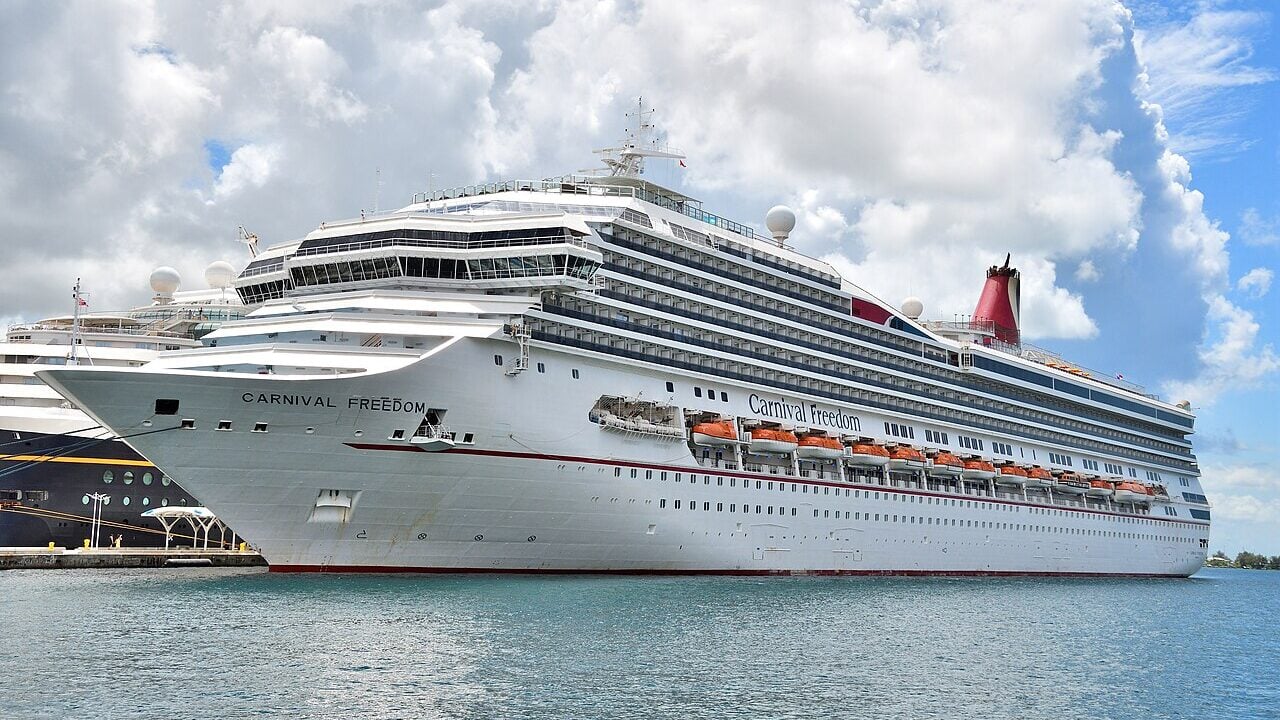

A U.S. jury has handed down a decision that is already sparking debate across the travel and hospitality world, after a California nurse successfully sued Carnival Cruise Line over a night of heavy drinking that ended in serious injury.
Diana Sanders, 45, was aboard the Carnival Radiance on January 5, 2024, when she consumed what court records describe as at least 14 shots of tequila over roughly eight and a half hours. According to reporting by Miami Herald, the drinks were served between 2:58pm and 11:37pm.
Not long after, Sanders says she blacked out.
Sometime between 11:45pm and 12:20am, she fell, sustaining a list of injuries that reads more like a post-crash medical report than a holiday mishap. These included a concussion, suspected traumatic brain injury, back and tailbone damage, along with widespread bruising.
The legal battle that followed turned on a deceptively simple question. When does serving a paying customer cross the line into negligence?
A Shared Responsibility
Sanders’ legal team argued that Carnival staff had a duty to stop serving her once she became visibly intoxicated.

In many jurisdictions, including parts of the United States, this principle is embedded in what are often called “dram shop laws.” These laws hold alcohol providers liable if they continue serving someone who is clearly impaired and that person later harms themselves or others.
Cruise ships occupy an interesting legal space.
They are floating businesses that often operate under maritime law, but when cases are tried in U.S. courts, judges and juries frequently apply familiar negligence standards. That includes the idea that companies must exercise “reasonable care” for passenger safety.
In this case, a Miami federal jury agreed with Sanders, finding that Carnival failed in that duty.
The panel assigned 60 percent of the blame to the cruise line and 40 percent to Sanders herself in a shared responsibility model that is common in U.S. civil cases. The final award came to $300,000.
A Business Must Chaperon Its Customers?
Jurors went further, stating that Carnival has a responsibility to supervise or assist passengers it knows, or should reasonably know, are engaging in potentially dangerous behavior. That language is significant.
It suggests the obligation is not limited to obvious cases of intoxication but extends to situations where risk is foreseeable.
Carnival pushed back hard during the trial and continues to do so.
The company argues that Sanders could not identify which bartenders served her or where exactly she was drinking, making it difficult to pin responsibility on specific employees.
Its legal team also claimed there was no clear evidence she displayed classic signs of intoxication such as slurred speech or stumbling.
The company has since said it disagrees with the verdict and plans to pursue an appeal.
One detail that fed into Sander’s legal position is the company’s own alcohol policy. The cruise line enforces a 15-drink limit within a 24-hour period. In that sense, Sanders’ reported consumption of 14 shots sits just below that threshold.
That raises an uncomfortable question for operators across the hospitality industry. Is a numerical limit enough, or should staff rely more heavily on real-time judgment of a guest’s condition?
The Lesson for Everyone
For cruise passengers, the ruling highlights how responsibility does not disappear in a leisure setting. The jury’s decision to assign 40 percent fault to Sanders makes it clear that personal choices still matter, even when a company is found negligent.
For cruise lines and other alcohol-serving businesses, the message is more complicated. Policies on paper are not always enough. Enforcement, staff training, and situational awareness can become critical factors when things go wrong.
And for anyone watching from the automotive world, there is a familiar echo here. Overservice laws, liability sharing, and duty of care are not unique to cruise ships. They show up in cases involving bars, events, and even dealerships hosting promotional gatherings. The setting changes, but the legal logic stays surprisingly consistent.
Sources: Miami Herald