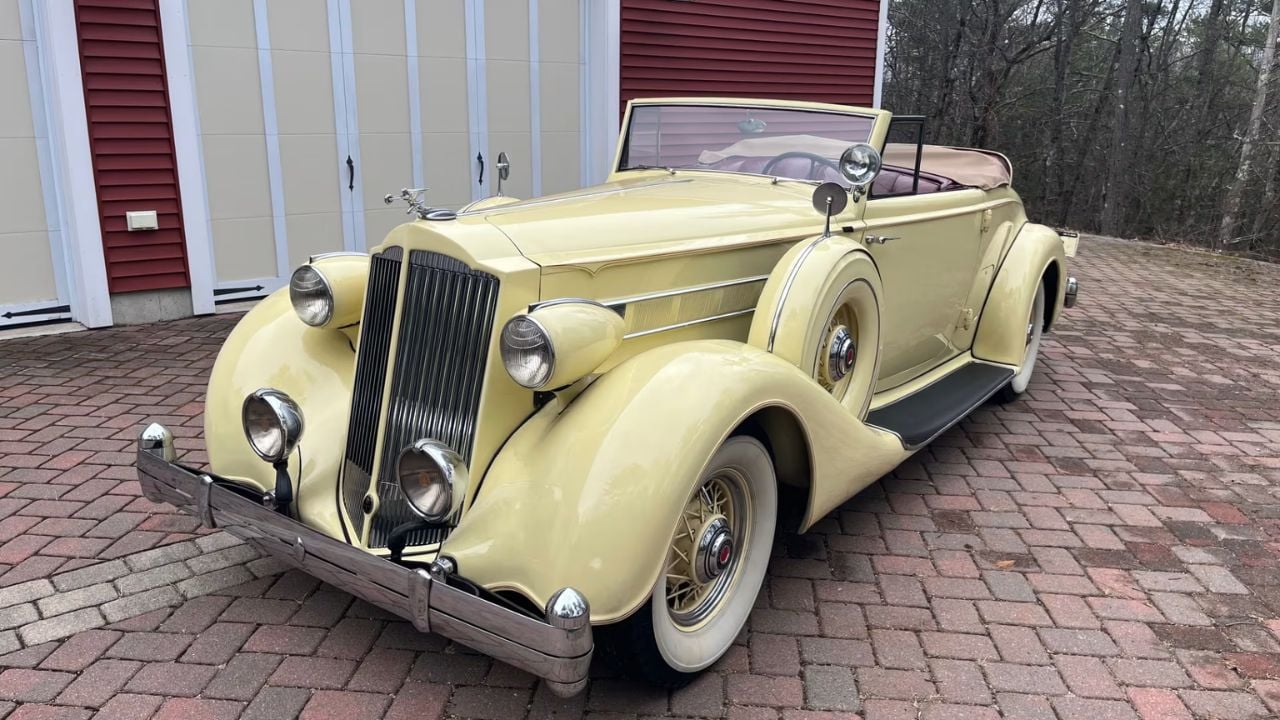
Packard was still one of America’s benchmark luxury names in 1936, and cars like the 1401 Eight Coupe Roadster explain why. Long before postwar tailfins and V-8 horsepower wars reshaped the market, Packard built its reputation on smooth straight-eight power, formal elegance, and the kind of road presence that made even its sporting body styles feel dignified.
That is what makes this car a strong fit for a major Indianapolis sale. The Mecum Indy 2026 listing places this 1936 Packard 1401 Eight Coupe Roadster as Lot R8 on May 14, giving collectors a chance at one of the more desirable open-body Packards from the company’s Fourteenth Series.
Its appeal is not about raw speed or flash. It is about proportions, craftsmanship, and the way a senior Packard from this era combines long-wheelbase luxury with a more personal, open-air body style that feels far rarer and more characterful than the sedans that carried much of the brand’s production volume.
For today’s market, that combination still matters. Pre-war American luxury cars remain a specialized niche, but well-presented senior Packards continue to attract serious interest because they offer real historical weight, unmistakable styling, and a direct connection to one of the strongest names of the Classic Era.
A Senior Packard From The Brand’s Strongest Years
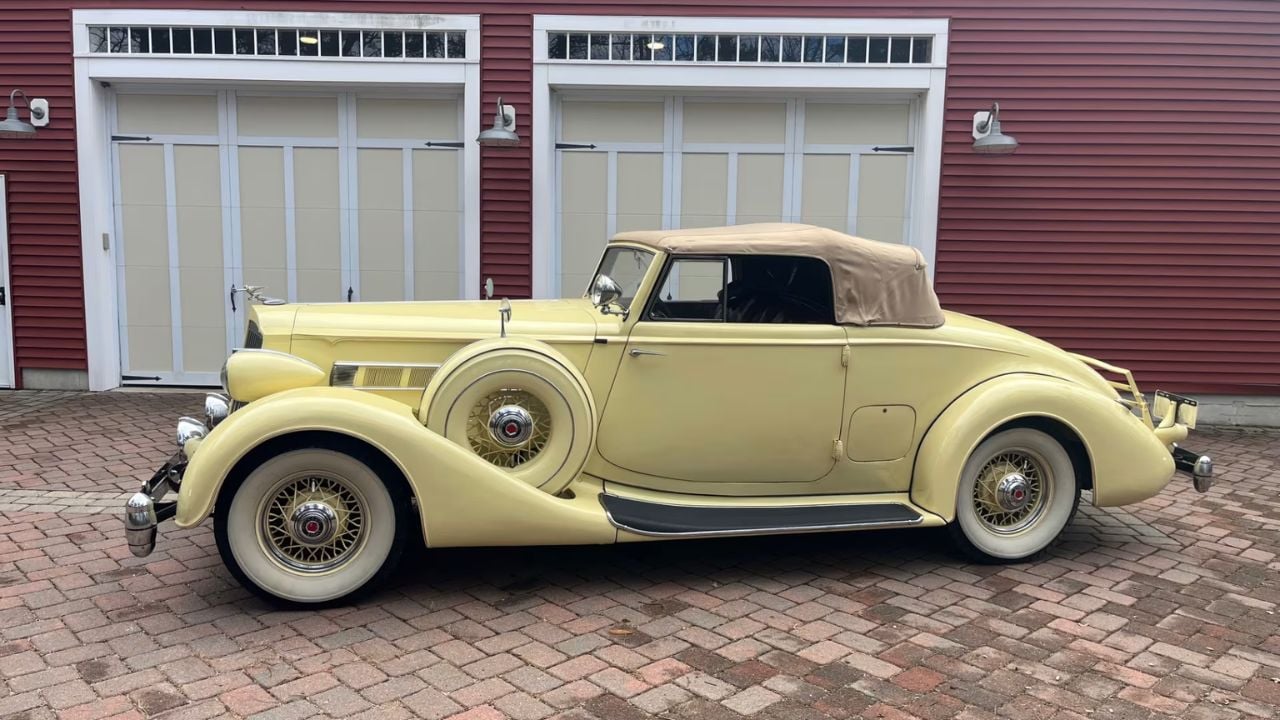
The 1936 model year belonged to Packard’s Fourteenth Series, a period when the company was expanding its reach with the junior One-Twenty while still preserving its more traditional senior cars. The 1401 sat in that senior Eight family, positioned above the high-volume One-Twenty and built on the 134-inch wheelbase chassis that helped give these cars their stately proportions.
Under the hood, the 1401 Eight used Packard’s 320-cubic-inch L-head straight-eight rated at 130 horsepower, and the Mecum listing confirms this example also carries a 3-speed manual transmission. That drivetrain was never about brute force, but it fit Packard’s long-established reputation for smooth, quiet, effortless performance, the same ownership-first philosophy behind the brand’s famous “Ask the Man Who Owns One” slogan.
Production helps explain the model’s collector appeal today. Packard built 61,027 cars for 1936, but only 3,973 were from the 1401 Eight series, making any surviving senior-series open car a much scarcer sight than the company’s junior models from the same year.
The Coupe Roadster body adds another layer of interest. PackardInfo identifies the 1936 1401 Coupe Roadster as body style No. 919, a useful reminder that this was a specific and relatively exclusive configuration within the wider Eight range rather than just another open Packard from the period.
Why The Coupe Roadster Body Still Looks So Good
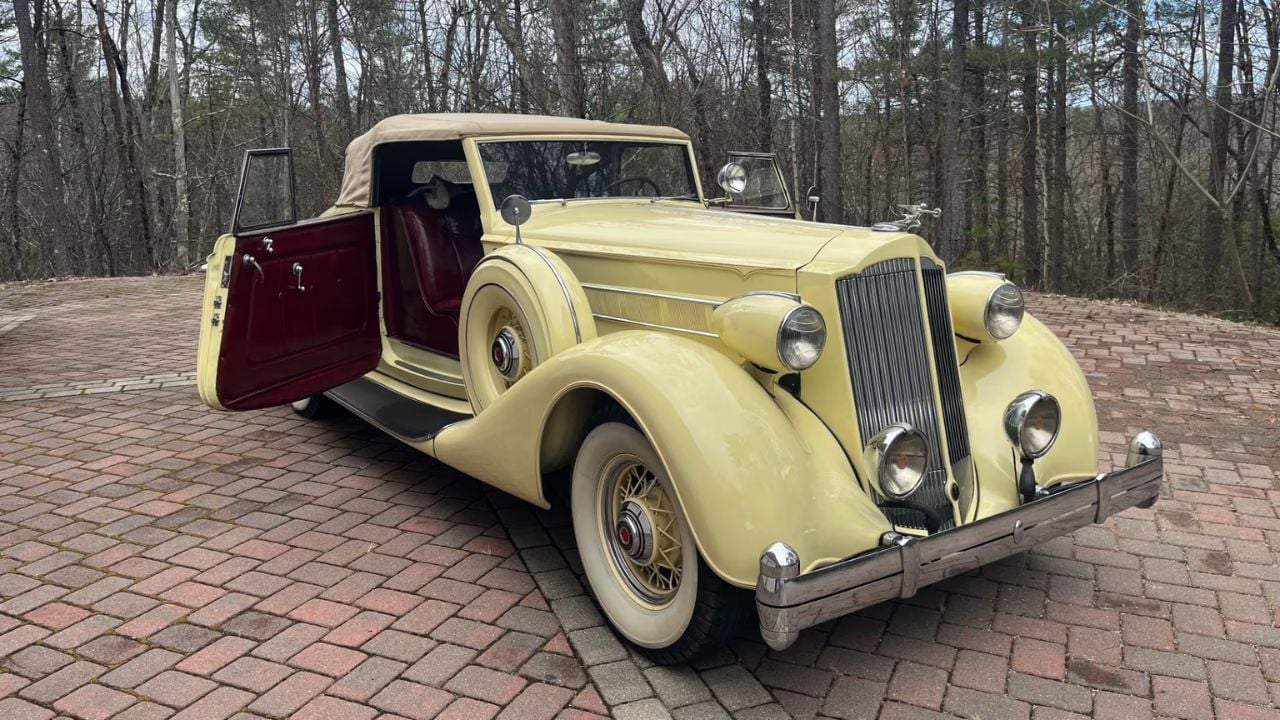
The basic design is a big reason these cars remain so appealing. You get Packard’s tall upright grille, a long hood stretched over the straight-eight, flowing separate fenders, broad running boards, and a compact open cabin that gives the whole car a more sporting silhouette than the formal sedans in the same family.
That balance is what makes the Coupe Roadster special. It still looks every bit like a senior American luxury car, but it does so with a lighter, more personal character that gives the body style more visual energy than Packard’s closed cars without losing the brand’s restraint.
The 1936 Packard Eight line also reflected the company’s effort to modernize without chasing novelty. Period Packard literature emphasized the breadth of the Eight range, its three wheelbase lengths, and the 130-horsepower straight-eight, showing how the company presented these cars as refined, complete luxury automobiles rather than flamboyant status pieces.
That understated approach is part of the attraction now. A good pre-war Packard does not need exaggerated ornament or outsized performance claims to make an impression, because the proportions, detailing, and sheer presence already do the work.
Market Interest Heading Into Mecum Indy
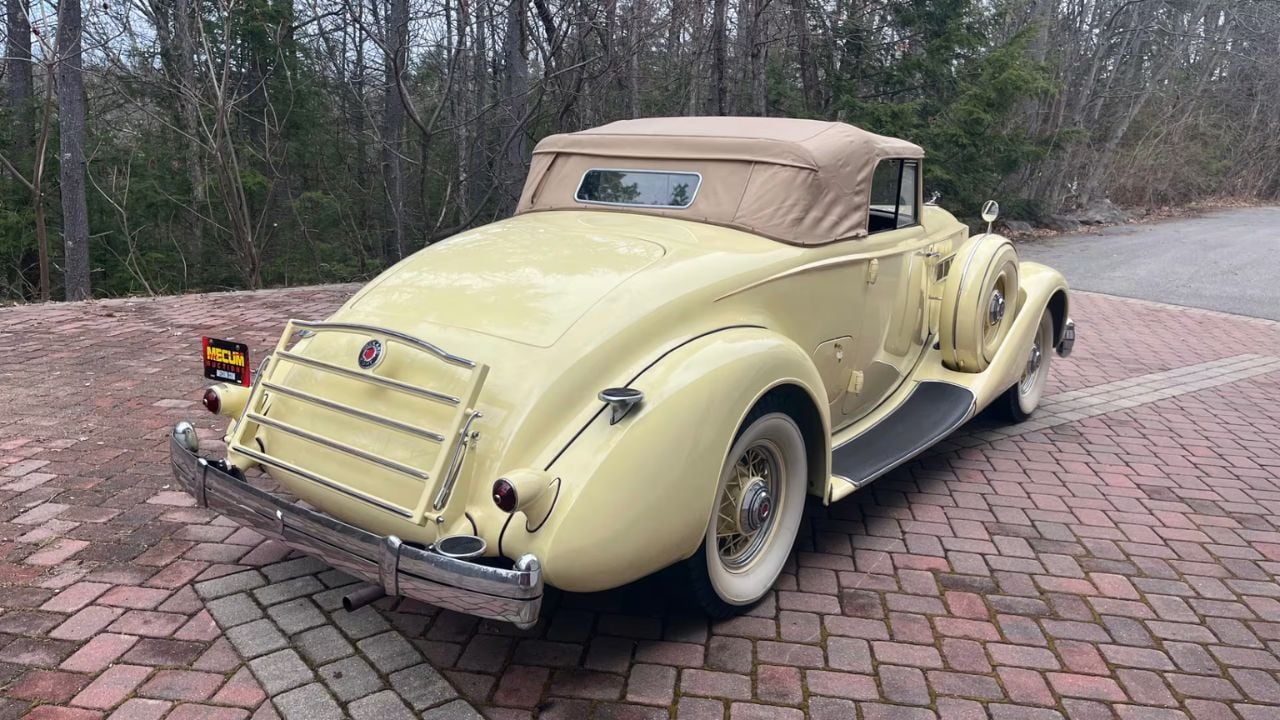
Interest in senior pre-war Packards tends to be strongest when the body style is right, and open cars usually sit near the top of that hierarchy. That does not mean every example trades at the same level, but it does mean cars like this 1401 Coupe Roadster generally draw more attention than the more common closed-body Packards of the era.
Recent public results show why condition and presentation matter so much. A 1936 Packard 1401 Eight Coupe Roadster sold at Mecum in 2020 for $88,000, while another 1936 Packard Eight 1401 recorded a $165,000 sale in 2021, illustrating how values can spread widely depending on body style, originality, restoration quality, and provenance.
The Mecum Indy 2026 example is listed under serial number 392685, and that alone is enough to put it on the radar for collectors who follow high-end American pre-war cars closely. Even in a crowded auction environment, a senior Packard open car has a way of standing apart because the design language feels instantly different from the muscle cars and postwar classics that usually dominate the room.
That is ultimately the appeal here. The 1936 Packard 1401 Eight Coupe Roadster is not just an old luxury convertible headed to auction, but a sharply defined piece of Classic Era American design that still captures Packard at its most graceful, confident, and enduring.