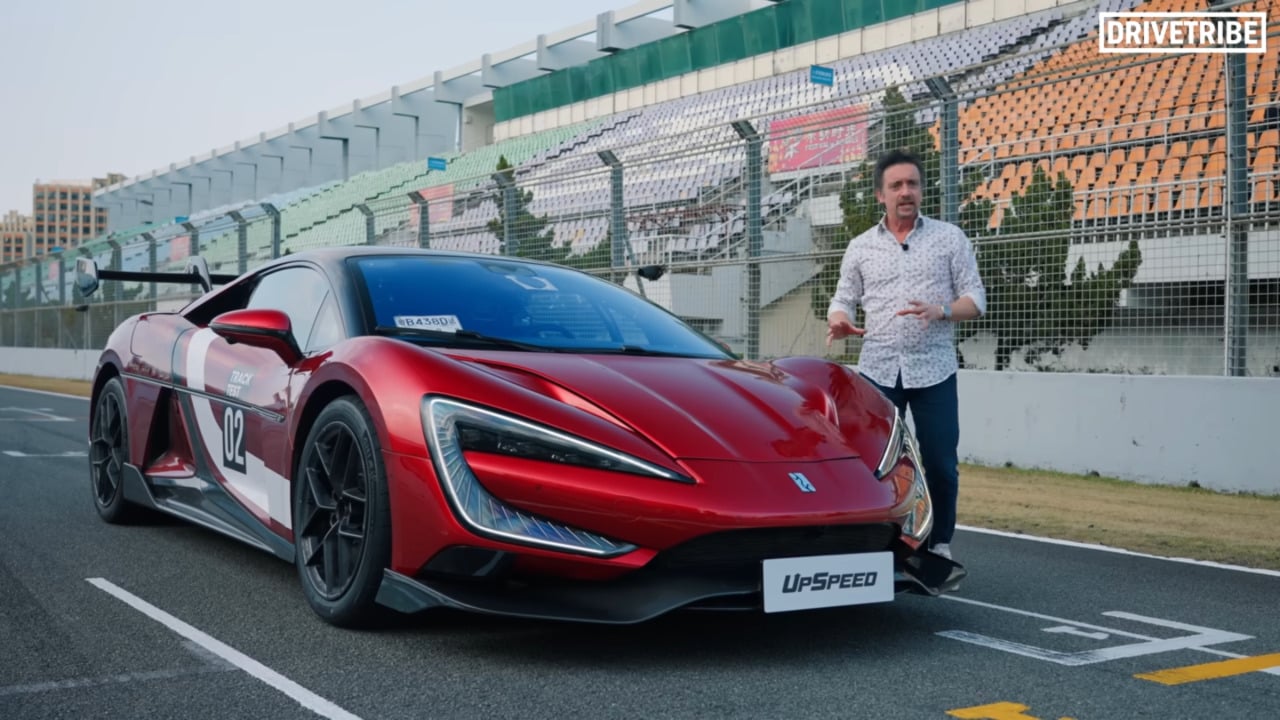
DriveTribe’s Richard Hammond has had the luxury of driving many fascinating vehicles over the years. Whether for his current project, DriveTribe, or previously on Top Gear and The Grand Tour, Hammond has always found himself behind the wheel of something special.
The motoring journalist’s latest endeavour saw him take on the world’s fastest car — the Chinese hypercar Yangwang U9X, a battery-electric supercar built by BYD Auto under its luxury marque, Yangwang. As of September 2025, its “Xtreme” variant became the fastest production car in the world, boasting a top speed of 308mph (496 km/h).
Naturally, its speed is the standout characteristic, but this was an EV Hammond was keen to explore, given its near-3,000hp output.
Yangwang’s Potency Is Scarily Good
With close to 3,000hp on tap, the Yangwang U9X comfortably dominates the record books. For context, the Rimac Nevera R and Lotus Evija produce 2,107hp and 2,011hp respectively, figures that still fall well short of the U9X. On paper, the numbers tell only part of the story; in reality, its acceleration is nothing short of frightening.
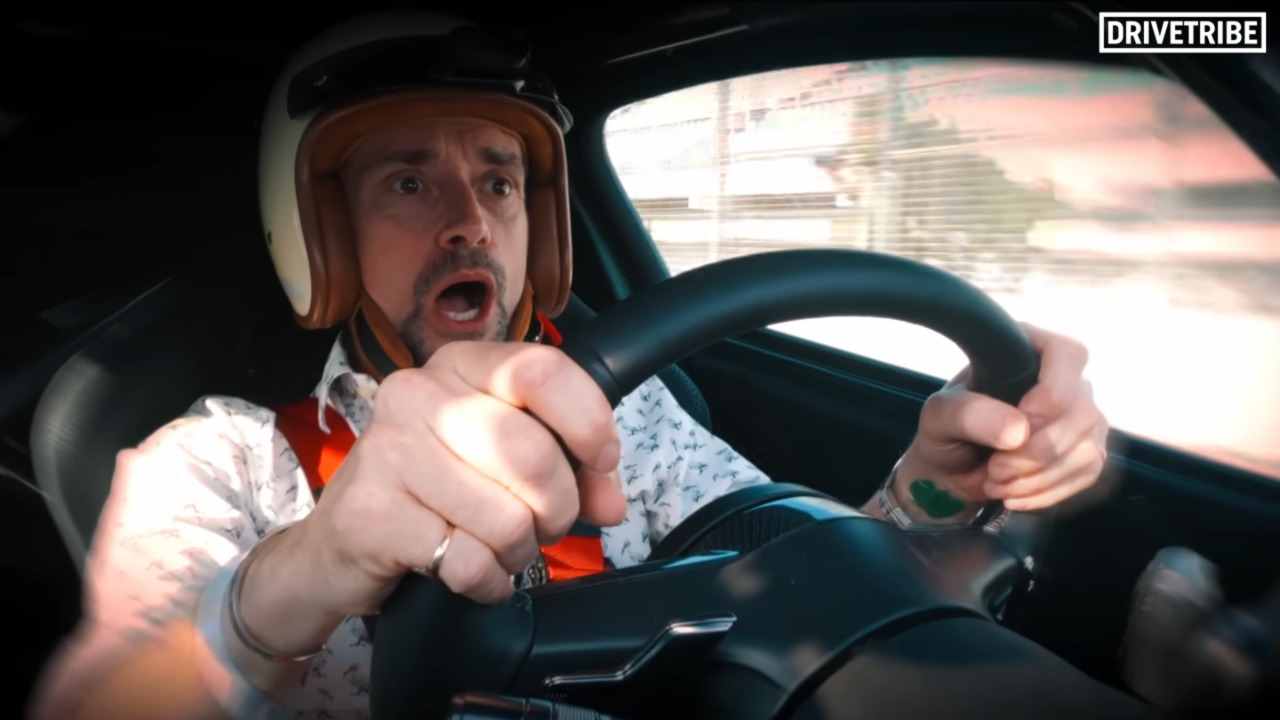
“This is, without question, the fastest car I’ve ever driven,” shared Hammond.
“It does 0-60 in a number that just becomes meaningless. Rather than messing about with numbers, just see what 3,000hp feels like. It’s like firing a cannon.
“That isn’t acceleration, that is relocation!”
His reaction tells the whole story.
All the Electric Details
The milestones do not stop there. The U9 Xtreme is also the first production car to feature a 1,200V ultra-high-voltage platform. That architecture plays a crucial role in thermal efficiency, reducing heat generation by up to 67 per cent compared with an 800V system delivering the same power output.
The advanced platform works in tannodem with the U9 Xtreme’s Blade Battery, which is capable of sustaining extremely high power even at lower states of charge.
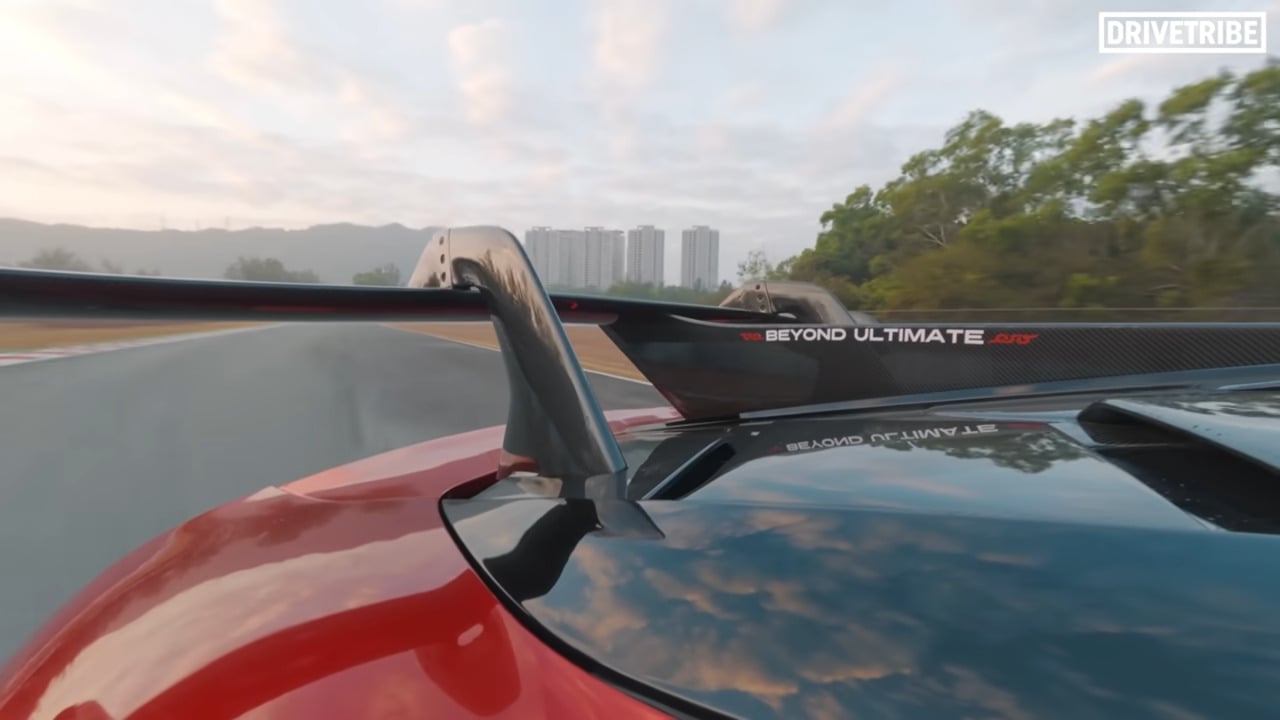
Top Gear reports it can still deliver up to 2,414bhp at just 20 per cent charge, although it is unlikely the car was ever permitted to run that low during testing.
Energy recuperation is equally impressive, with a peak recovery rate exceeding 700kW, easing the strain on the mechanical braking system and further underlining the car’s technical sophistication.
Richard Hammond Makes History
Hammond admitted that during the test drive, he was one of the first Western journalists to complete a review of the car. Obviously, he is famed for his work over the years in the United Kingdom, and in doing so, he made history.
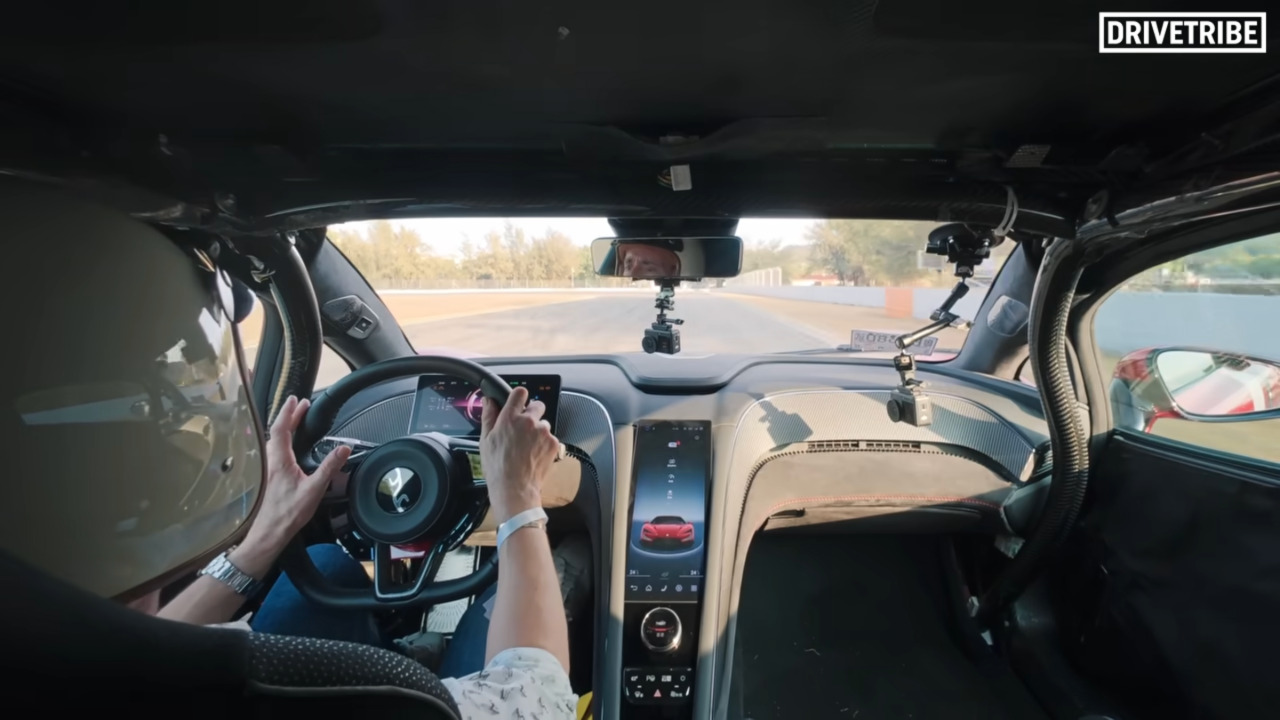
That milestone is significant not just for Hammond personally, but for the wider automotive industry. Chinese cars have often been viewed with scepticism in Western markets, particularly in the hypercar space traditionally dominated by European manufacturers.
It could represent a significant shift in global automotive dominance, showing that high performance and innovation are no longer confined to Europe and the US, and that Chinese manufacturers are now competing at the very highest level. The Chinese automotive industry has seen dramatic growth over the last two decades, and this development has changed the game for the hypercar market.