
New York’s transport oversight system is facing intense scrutiny after a federal funding penalty exposed gaps in how commercial driver’s licenses were issued and managed. The state stands to lose nearly $74 million in federal highway funds, a figure that carries weight far beyond a budget line item.
For the automotive and logistics ecosystem, it raises urgent questions about driver qualification, road safety, and the integrity of freight movement across one of America’s busiest corridors.
At the heart of the issue is a backlog of roughly 33,000 commercial driver’s licenses that federal authorities say should have been revoked but were not. These licenses are tied to drivers who allegedly failed to meet federal standards, which govern everything from medical fitness to legal eligibility and testing compliance.
Under federal law, states are required to maintain strict oversight of commercial driver licensing systems, ensuring that only qualified individuals are allowed behind the wheel of heavy-duty trucks and buses.
Questionable Enforcement Raises the State’s Risk Profile
With the federal government responding by withholding tens of millions in funding, regulators are signaling that compliance is not optional.
Besides the financial pressure, the penalty is a warning shot aimed at enforcing uniform safety standards across state lines. For New York, the consequences extend into infrastructure planning, road maintenance, and transport investment programs that rely heavily on federal support.
For the automotive sector, particularly commercial vehicle operators and fleet managers, the implications are immediate. A breakdown in licensing oversight introduces uncertainty into the labor pool.
Companies depend on the credibility of state-issued CDLs to ensure drivers are properly vetted. If that trust is weakened, fleets may face higher compliance costs, increased internal verification processes, and potential liability risks.
There is also a broader safety dimension.
Commercial vehicles, due to their size and operational demands, require a higher level of skill and discipline than passenger cars. Federal standards exist to reduce the risk of accidents caused by fatigue, inadequate training, or health-related issues.
When those standards are not enforced consistently, it shifts the risk profile of the entire road network. For example, insurance providers may respond by adjusting premiums, while regulators could tighten oversight across multiple states to prevent similar lapses.
A Pressured Logistics Chain
The logistics chain is another pressure point.
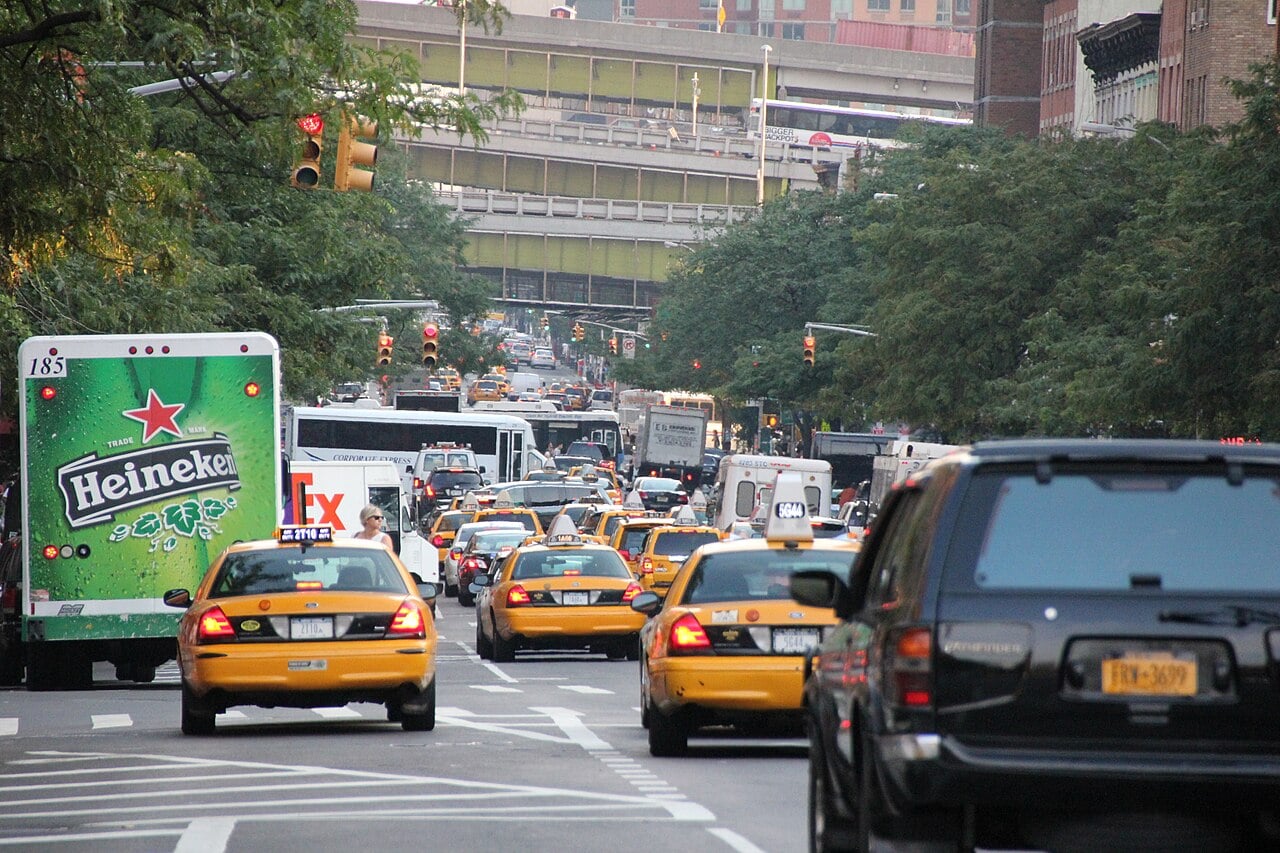
New York serves as a critical gateway for goods moving through the Northeast. Any disruption tied to licensing compliance could ripple through supply chains, affecting delivery timelines and operational efficiency.
Carriers operating in and out of the state may need to reassess driver credentials more aggressively, potentially sidelining drivers whose documentation falls under scrutiny.
From a policy standpoint, the situation highlights the complexity of managing modern transport systems. State agencies must balance administrative capacity with evolving federal requirements, all while handling high volumes of applications and renewals.
Digital systems, inter-agency coordination, and data accuracy play a decisive role in maintaining compliance. A lapse of this scale suggests systemic weaknesses rather than isolated errors.
For automakers and suppliers, the unfolding oversight issues in New York carries indirect but meaningful consequences.
The commercial vehicle market depends on a stable and qualified driver base. If licensing disruptions reduce the availability of certified drivers, it could shift fleet purchasing decisions.
Demand for advanced driver assistance systems and safety technologies may rise as companies look for ways to mitigate risk through hardware and software solutions.
What Now?
In the near term, New York will need to demonstrate corrective action to restore federal confidence and recover lost funding. That likely involves auditing the affected licenses, tightening verification procedures, and improving coordination with federal databases.
The process will not be simple, and the timeline could stretch as authorities work through the backlog.
For now, what’s happening in New York illustrates how regulatory compliance in the trucking sector is deeply intertwined with funding, safety, and the broader automotive economy. When one link falters, the effects are felt far beyond the issuing office, reaching into every corner of the road transport network.