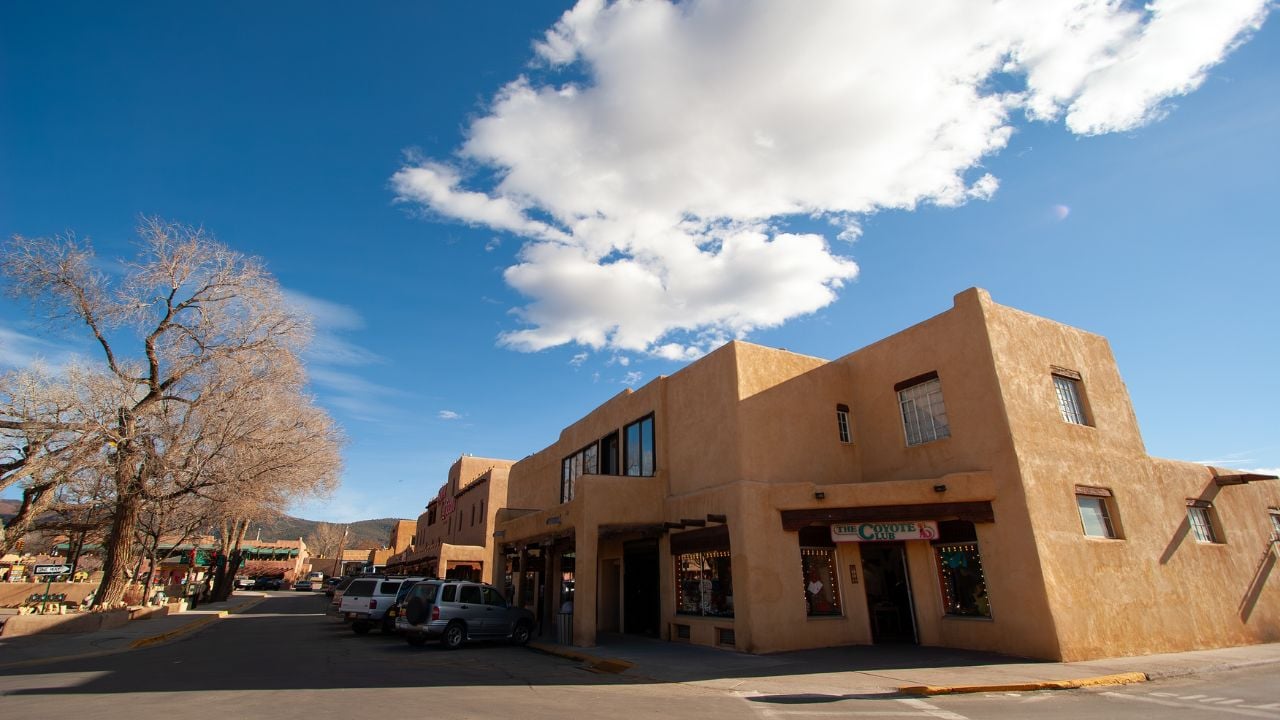
A New Mexico road trip changes color as the day moves. Morning light sits pale on adobe walls, afternoon turns the high desert sharper, and sunset brings out red, ochre, and gold in cliffs, church walls, and roadside hills.
This route keeps the drive simple: Santa Fe first, then the High Road north, Taos for mountain-desert atmosphere, and one wide-open detour toward the Rio Grande Gorge or Ghost Ranch before heading home. The roads matter here, but the best parts are not only behind the windshield. They are in courtyards, gallery gardens, chile-scented lunches, church stops, plaza walks, and views that make the car go quiet for a minute.
Four days can cover the main shape. Six days leave more space for a second Santa Fe morning, a slower Canyon Road walk, a less hurried drive to Taos, and a final desert view that does not feel squeezed between check-out and the airport.
Altitude, sun, wind, and sudden weather changes all affect the pace. Pack water, layers, sunglasses, and enough patience to stop when the road opens toward mesas, mountains, piñon, juniper, or a line of clouds sitting low over the Sangre de Cristo range.
1. Begin in Santa Fe With Adobe Streets, Food, and a Slow First Walk
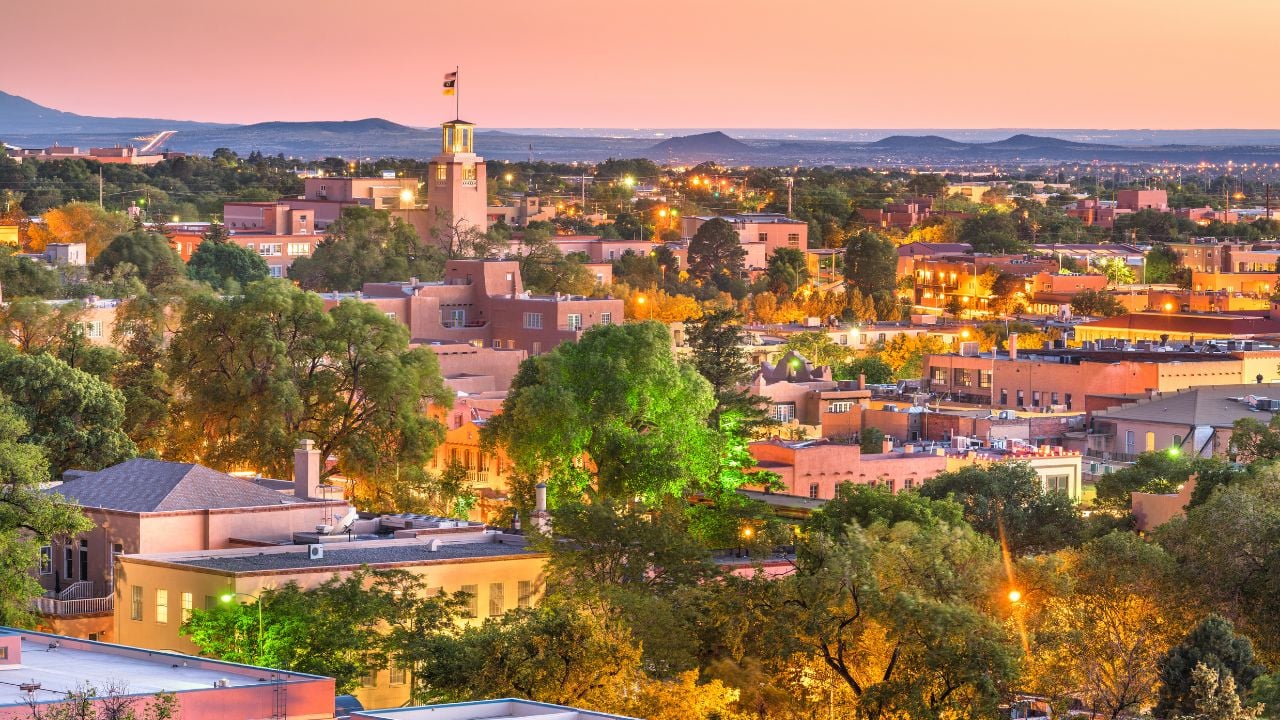
Santa Fe is the right first base because the city’s character appears before the itinerary has to do much. The streets around the Plaza hold adobe walls, low rooflines, portals, galleries, museum signs, courtyard entrances, and restaurant doors that open into rooms smelling of chile, wood, coffee, and warm bread.
Start around the Plaza and downtown. Tourism Santa Fe describes the area around the historic Plaza, the Palace of the Governors, restaurants, galleries, boutiques, bookstores, museums, and classic architecture as the city’s original center. On the ground, that means you can walk without needing the car immediately, which matters after a travel day.
Keep the first evening close. Walk the Plaza, look into side streets, step through a courtyard if a shop or restaurant pulls you in, and choose dinner before the desert cold settles too hard after sunset. New Mexican food belongs early in the trip: red chile, green chile, blue corn, posole, enchiladas, or a plate that finally explains why the state treats chile as part of its identity rather than a garnish.
Give Santa Fe at least two nights if the schedule allows. The city changes between morning and evening: pale walls at breakfast, sharp blue sky by midday, gallery shadows in the afternoon, and a warmer glow when the adobe starts catching low light.
2. Use Canyon Road for Art, Courtyards, and a Walk With Texture
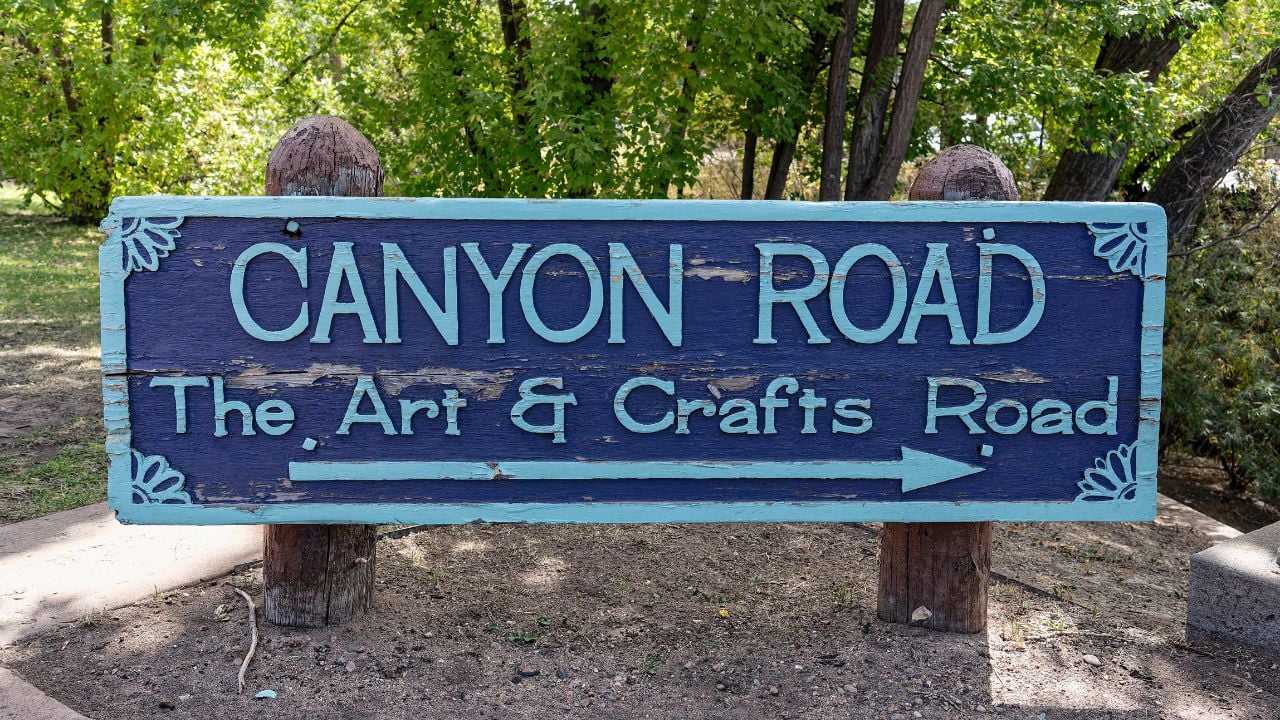
Canyon Road turns art browsing into a walk through walls, gardens, gates, sculptures, and old adobe buildings. Some galleries feel polished and quiet; others spill color into courtyards, doorways, sculpture gardens, and shaded patios where the city’s high-desert light becomes part of the display.
The official Santa Fe tourism site describes Canyon Road as the heart of the city’s gallery scene, with more than 100 galleries along a half-mile, tree-lined, pedestrian-friendly stretch. The street is short enough to walk slowly, but dense enough that rushing it turns the whole afternoon into a blur of frames and price tags.
Choose a few doors, not every door. Step into a contemporary gallery, pause near a bronze or ceramic piece outside, look at textiles or paintings if they catch your eye, then return to the street and the dry smell of sun-warmed adobe. A coffee, lunch, or glass of wine nearby keeps the afternoon from becoming a museum march.
The best Canyon Road moments often happen between the galleries: a blue gate, a carved door, a cottonwood shadow, a small garden wall, a dog lying in a patch of sun, or a sculpture framed by mountains at the end of the street.
3. Take the High Road to Taos and Let the Villages Shape the Drive
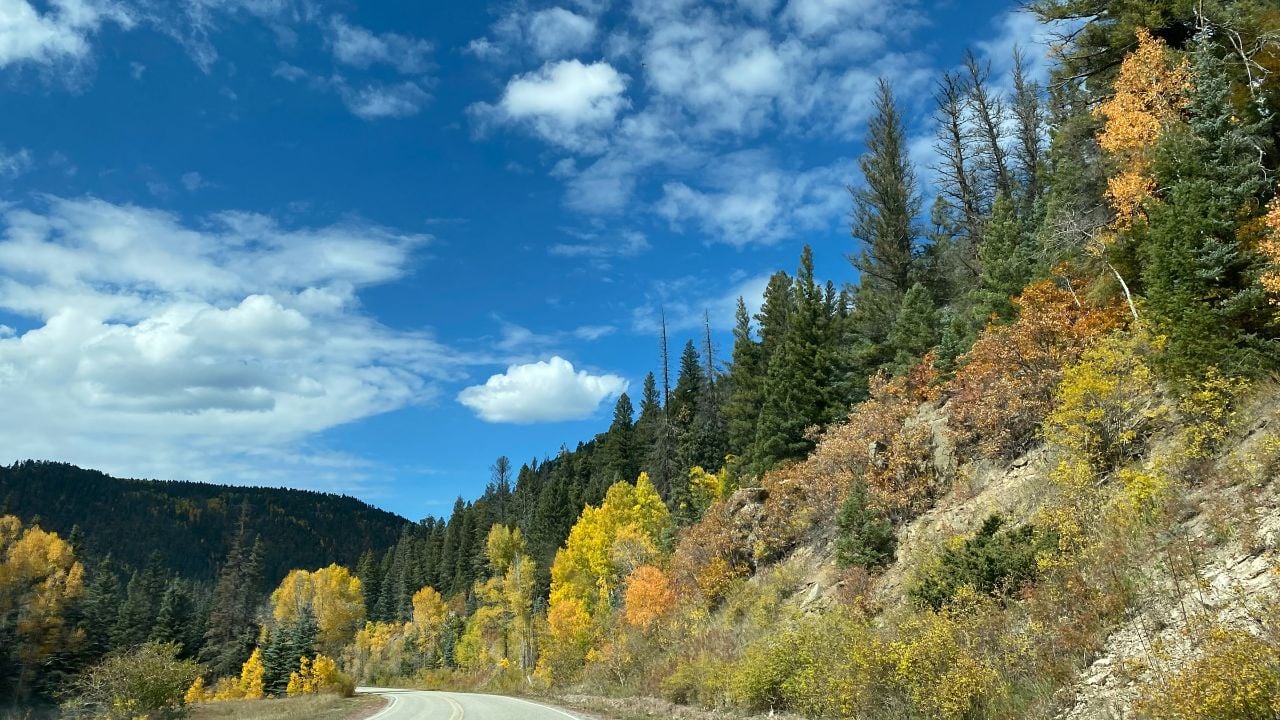
The High Road north should fill a travel day rather than hide inside one. The route leaves Santa Fe and moves through high desert, old villages, churches, mountain views, piñon, juniper, and roads where the landscape keeps widening and tightening again.
New Mexico’s official tourism site describes the High Road to Taos Scenic Byway as passing through an “authentic remnant of Old Spain,” with religion, architecture, topography, history, and local communities shaping the route. Chimayó is the stop many travelers remember: the Santuario, low adobe buildings, woven goods, quiet lanes, and the feeling that the drive has become more than scenery.
Taos tourism lists the High Road between Santa Fe and Taos at 105 miles, with about two and a half hours of no-stop driving time and four to seven hours when stops are included. Use the longer number in your head. The road is better with pauses for a church, a gallery, a lunch table, a village street, or a view where the mountains suddenly take over the windshield.
Arrive in Taos before dark if possible. The final approach feels better when there is still light on the mountains, and the first evening in town should not begin with tired eyes and a rushed search for dinner.
4. Stay in Taos for Pueblo History, Plaza Wandering, and Mountain-Desert Light
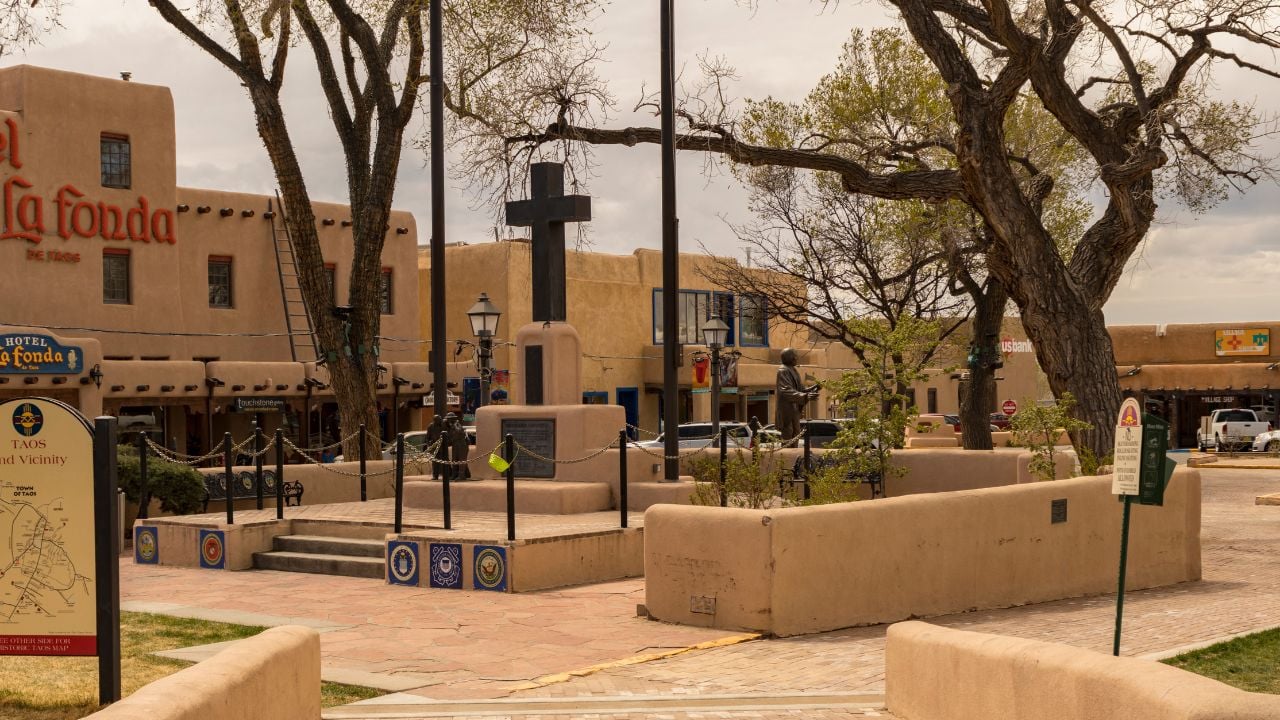
Taos has a quieter intensity than Santa Fe. The town sits closer to open land and mountain edges, with adobe walls, gallery windows, cottonwoods, dusty lots, plaza shops, and light that can make an ordinary street look painted near sunset.
Taos Pueblo is a living community, not a backdrop. The Pueblo’s official site lists visitor hours, admission, calendar updates, and photography rules, while UNESCO describes Taos Pueblo as a settlement with ceremonial buildings and multi-story adobe dwellings that exemplify the living culture of the Taos Pueblo people. Check current hours before going, and do not photograph people without permission.
Back in town, Taos Plaza gives the day a compact center. Taos tourism describes it as the heart of the Taos Historic District, where locals gather for live music and farmers markets and visitors walk through shops and galleries. Stay long enough for the plaza to feel like more than a stop: a bench in the shade, a shop doorway, a café, a gallery, a slow dinner, and the mountains waiting beyond the streets.
Taos is strongest when the afternoon has fewer obligations. Visit the Pueblo with respect, return to town, look through a gallery or two, then watch the light change on adobe walls before dinner.
5. Add Rio Grande Gorge or Ghost Ranch for the Big Desert View
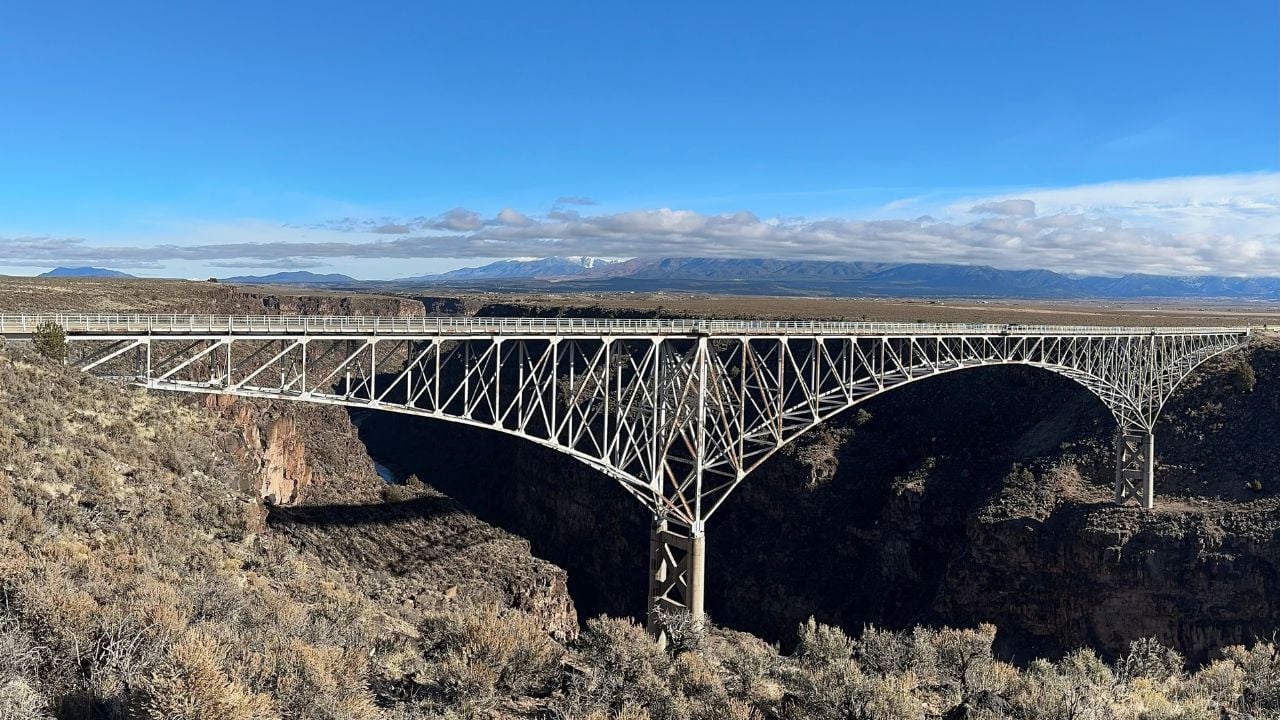
The final desert view depends on timing, weather, and access. Near Taos, the Rio Grande Gorge Bridge crosses a deep cut in the landscape, with Taos tourism describing it as 650 feet above the river and the second-highest bridge on the U.S. Highway System. The road reaches open mesa country quickly, and the gorge can feel almost invisible until the land suddenly drops away.
Pedestrian access at the bridge has been restricted in recent years, so check current local updates before making it the center of the day. Even from a short stop, the setting has force: wind over the mesa, a hard line in the earth, the river far below, and the Sangre de Cristo Mountains holding the horizon behind you.
Ghost Ranch is the softer, more spacious finale if the route bends toward Abiquiú. New Mexico Tourism lists Ghost Ranch with workshops, hiking trails, horseback riding, massage therapy, ropes courses, and kayaking on Abiquiu Lake, while Ghost Ranch describes its landscape as 21,000 acres of towering rock walls, vivid colors, and vast skies made famous by Georgia O’Keeffe.
Go for the color as much as the activity. Red and gold cliffs, pale tracks, desert plants, broad sky, and late light on the rock walls can end the trip without another crowded stop. The road back feels different after that kind of view: quieter, wider, and full of the colors that made the route worth slowing down for.