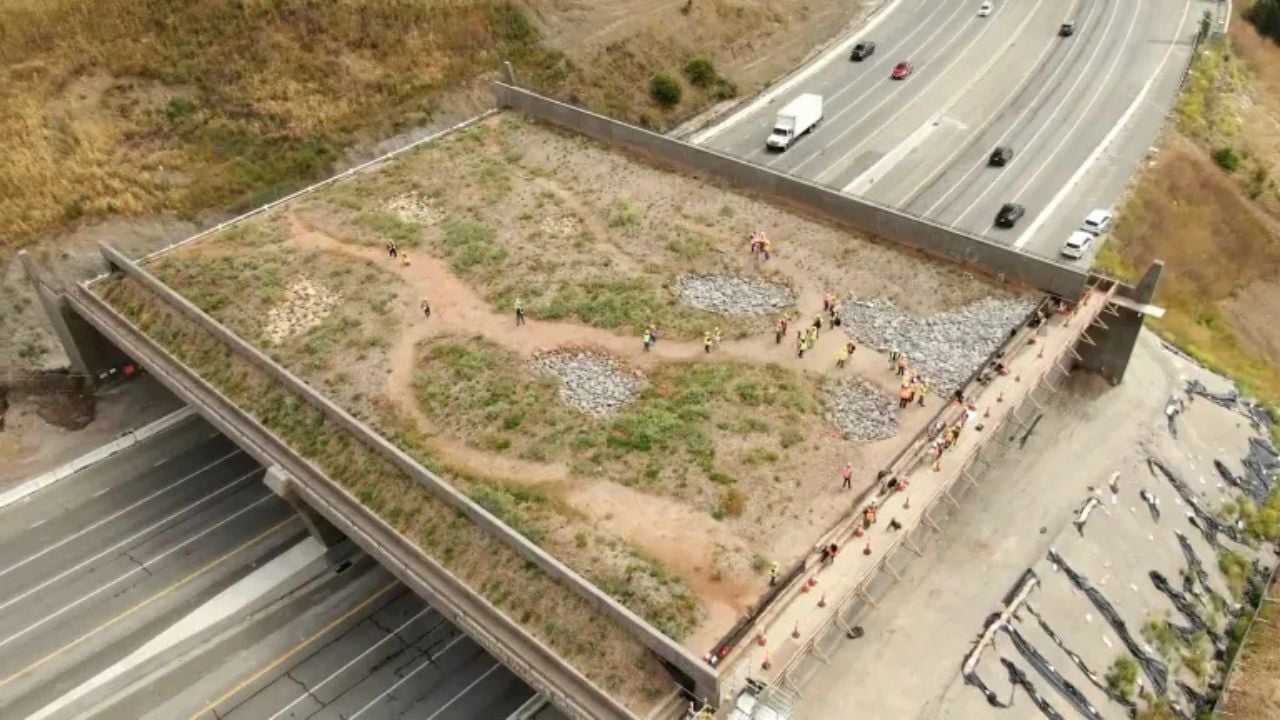

The Wallis Annenberg Wildlife Crossing, hailed as the world’s largest of its kind, finally has an opening date after years of delays and cost overruns. Scheduled to open on December 2, 2026, the bridge spans ten lanes of the 101 Freeway in Agoura Hills, California.
Construction began in 2022 with a $90 million budget and a 2025 completion target, but costs have since risen to $114 million, funded through a mix of private donations and public money.
Project leaders cite near-record rainfall, inflation, labor shortages, and the complexity of building a “living ecosystem” over one of the busiest freeways as reasons for the setbacks.
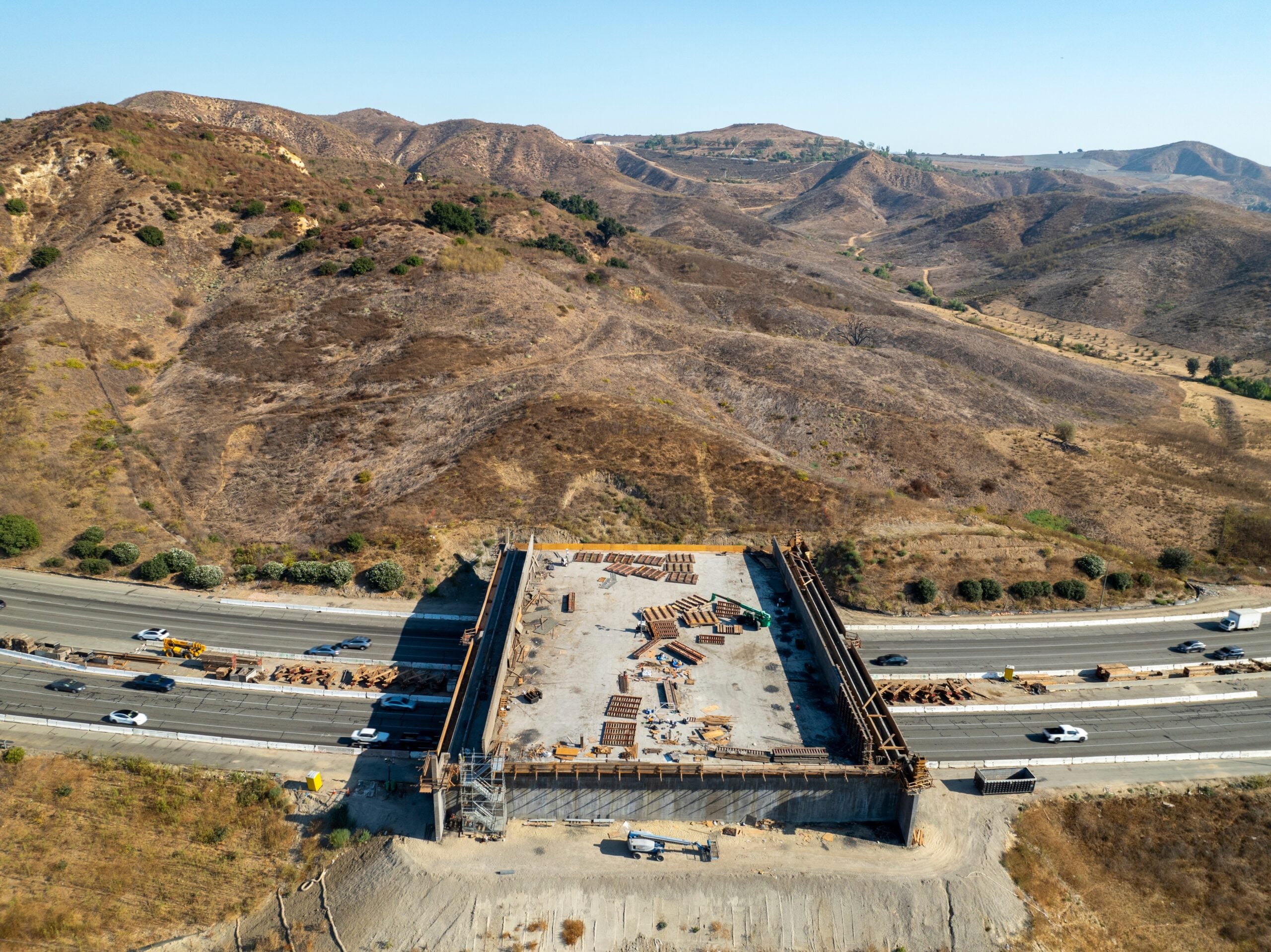
The crossing is designed to restore genetic diversity among Southern California’s mountain lions and protect other species like bears, bobcats, coyotes, and deer from vehicle collisions. Though not yet fully connected to surrounding landscapes, birds, butterflies, and raptors are already using the structure.
The final phase involves linking the bridge to open space via Agoura Road. Despite criticism from some who view it as wasteful spending, conservationists emphasize its ecological importance. To engage the public, organizers even invite votes on which animal might be the first to cross once it opens.
A Floating Hillside
Drivers on Los Angeles’ 101 Freeway will soon pass beneath a striking new landmark: the Wallis Annenberg Wildlife Crossing, set to open in December 2026.
Suspended above ten lanes of traffic, the bridge is more than an engineering feat—it’s a living landscape designed to reconnect fragmented habitats. Packed with native soil, plants, and sound barriers, the structure mimics the surrounding hillsides, guiding animals safely across instead of into headlights.
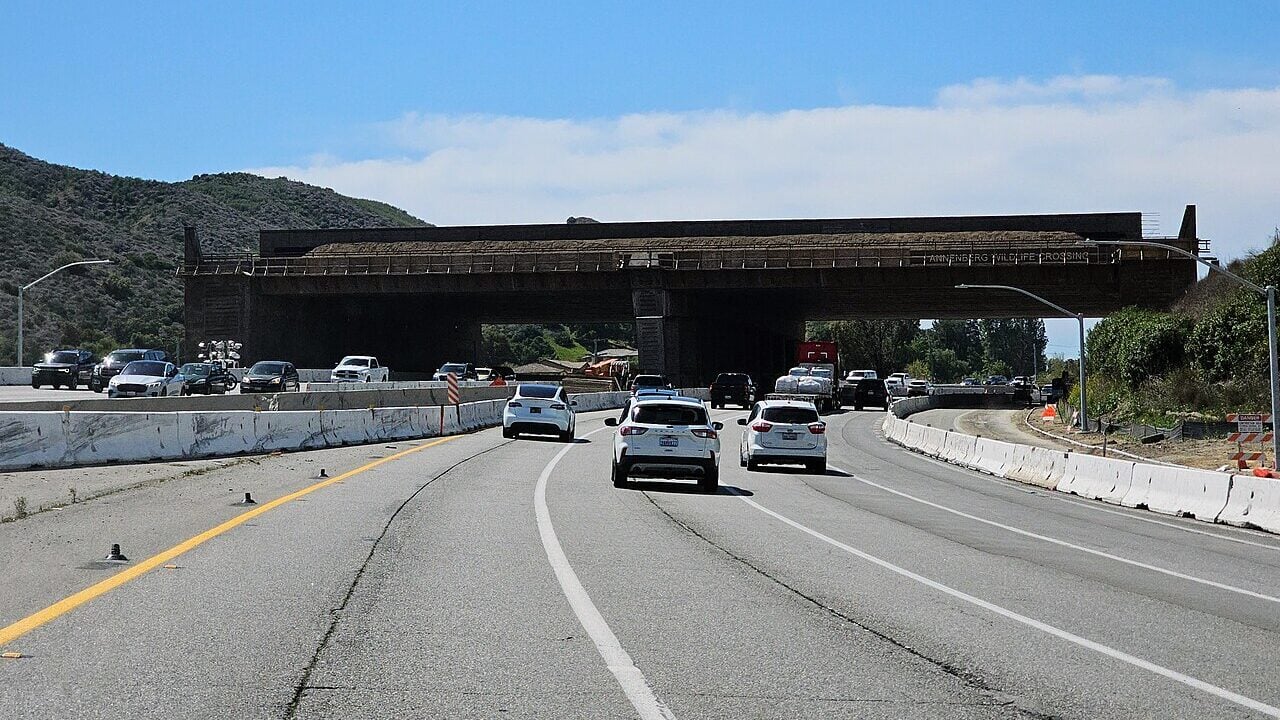
For commuters, it looks like a hillside floating above the freeway, but for mountain lions, bobcats, deer, and countless smaller species, it’s a lifeline.
The crossing flips the traditional script of highway design, transforming a collision hotspot into a green corridor that protects both wildlife and drivers.
By restoring safe passage, it aims to preserve genetic diversity among Southern California’s iconic predators while reducing deadly accidents. In essence, it’s a bridge that carries ecosystems forward as much as it carries animals.
Fewer Crashes, Safer Roads
Wildlife officials have spent decades documenting collisions along the 101, and the Annenberg Crossing is their answer. The bridge promises fewer surprise encounters with deer, coyotes, and mountain lions, which in turn means fewer high-speed crashes for drivers.
Engineers poured more than 26 million pounds of concrete into the span, but softened its appearance with ecology: over a million seeds and thousands of native plants will disguise the structure as a hillside rather than a stark overpass.
Rush-hour traffic will barrel beneath what is essentially a wildlife highway, carrying bobcats, bears, and countless smaller species.
The result is a rare win-win—commuters enjoy smoother drives while animals regain safe migration routes, each side shielded from the other. Construction crews, however, faced record rains and unstable ground, stretching the timeline into late 2026.
Those delays, though frustrating, may ultimately yield a sturdier bridge built to withstand both nature’s unpredictability and the relentless pace of freeway traffic.
Reconnecting Mountains, Saving Lives
Urban planners have long watched the 101 Freeway carve ecosystems apart, but the Wallis Annenberg Wildlife Crossing is designed to stitch them back together.
By reconnecting the Santa Monica Mountains, the bridge could reduce the sudden braking and swerving that often turns animal encounters into pileups. Drivers may never set foot on the crossing, yet they’ll feel its impact as fencing, sound walls, and carefully shaped habitats keep wildlife off the asphalt and away from headlights.
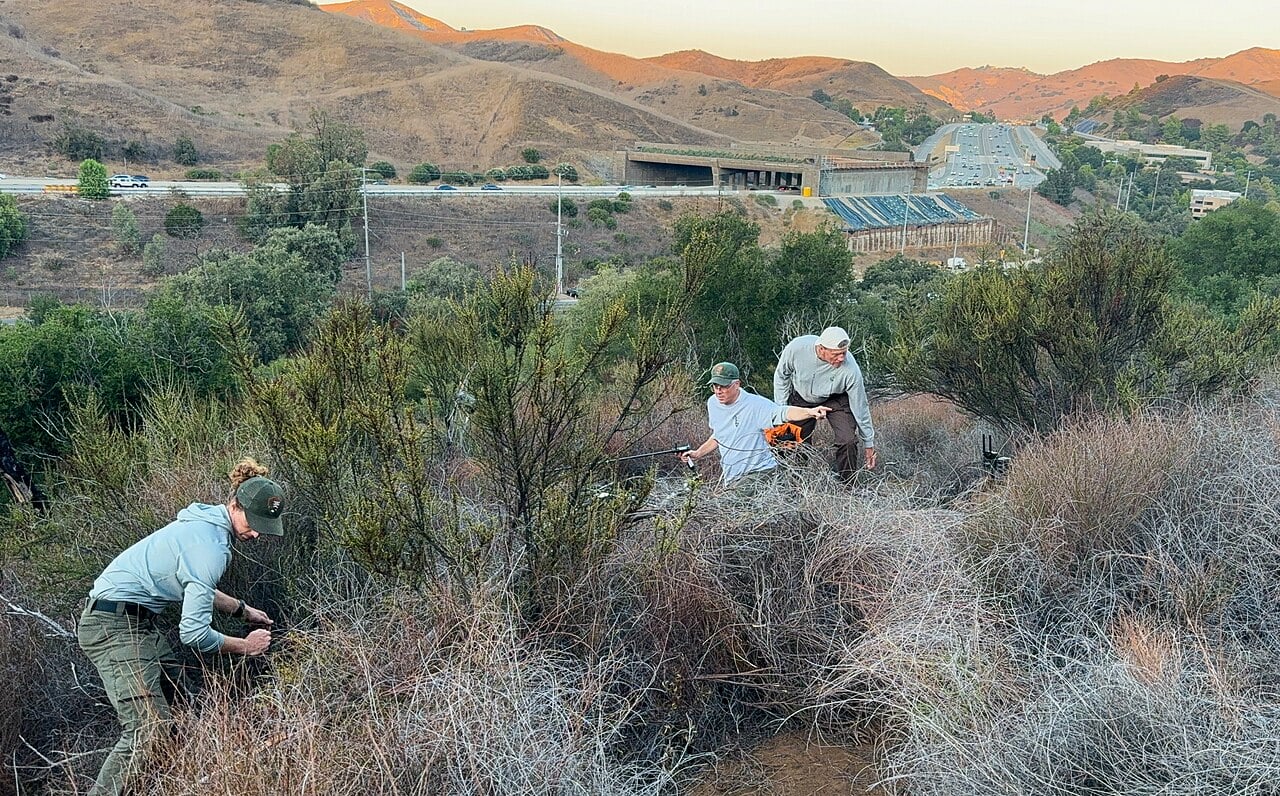
Scientists are preparing cameras and tracking systems to monitor the bridge once it opens, gathering data that could reveal whether fewer animals on the road directly translates into fewer accidents and insurance claims.
The project’s momentum owes much to the legacy of P-22, the famed mountain lion whose story galvanized public support. Even motorists unfamiliar with his name will benefit from safer, more predictable roads.
California’s effort stands as one of the most ambitious attempts to separate human speed from animal movement, offering a glimpse of highways that protect both commuters and wildlife.
Sources: FOX 11 Los Angeles, Governor of California, The Guardian, Secret Los Angeles