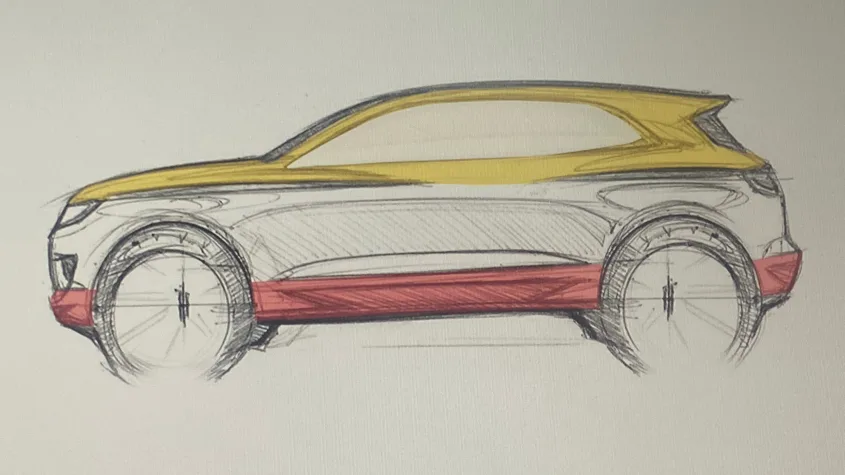
Electric vehicles have a reputation problem, and it is not the range anxiety everyone keeps arguing about online. It is weight. Modern EVs are genuinely heavy machines, and that bulk quietly works against everything drivers and engineers are trying to accomplish. When a Hyundai Kona Electric tips the scales at around 1,870 kilograms (4,120 lbs), you start to wonder whether the industry has been solving the wrong problem this whole time.
Shell, better known for the gas stations you pull into when you are already running on fumes, has apparently been thinking about this exact issue. The company is developing a concept electric vehicle with a target curb weight of roughly 1,000 kilograms (2,200 lbs). That is not just a modest improvement. That is cutting the Kona Electric’s weight nearly in half, which is the kind of number that makes engineers either very excited or deeply skeptical.
The concept is sized similarly to a Volvo EX30 or Nissan Kicks, placing it firmly in the small crossover and subcompact category that everyday drivers actually buy. This is not a vanity project aimed at billionaires or a track day machine for enthusiasts. Shell appears to be taking aim at something far more ambitious: proving that practical, affordable electric transportation does not have to come in a package that weighs as much as a baby elephant.
With gas prices continuing to squeeze household budgets and EV adoption still facing real barriers for everyday consumers, the timing of this concept is worth paying attention to. Whether it leads anywhere beyond the showroom floor is a different question, but the engineering ideas behind it deserve a serious look.
How Shell Is Actually Pulling This Off

The weight reduction strategy here is not a gimmick, and it does not rely on some futuristic material that does not exist yet. Shell is leaning on a combination of a smaller battery pack, smarter thermal management, and lightweight composite materials including carbon fiber components.
The battery approach is counterintuitive at first glance. Conventional EV wisdom says bigger battery equals better car. Shell is pushing back on that by prioritizing efficiency over raw capacity. A smaller pack obviously weighs less, but the clever part is how they are keeping it performing well despite its reduced size.
The thermal management system submerges battery cells in a non-conductive fluid, which sounds exotic but is an increasingly viable technique for managing heat during both charging and driving. Heat is the enemy of battery performance, and when you manage it well, you get to sustain higher charging speeds and extract more usable energy from every kilowatt-hour. In other words, a smaller, cooler battery can punch closer to the weight of a larger, thermally stressed one in terms of real-world usefulness.
Carbon fiber and other composite materials round out the weight savings on the structural side. These materials are not new, but deploying them in a mass-market-adjacent concept signals that Shell believes the cost curve has moved enough to make this kind of engineering realistic at scale.
What the June Reveal Actually Means
Shell has confirmed the concept will make its public debut in June as a fully functional, driveable vehicle. That last part matters more than it might seem. Concept cars that exist only as static displays or computer renderings are easy to dismiss as wishful thinking. A car you can actually drive is a proof of concept in the most literal sense.
The company is not pretending this vehicle is headed to a dealership. It will not go into production. What it will do is demonstrate that every technology used to build it already exists and could, in theory, be scaled. That is a meaningful distinction. This is Shell essentially saying to the automotive industry: here is what is possible right now, with tools that are already on the shelf.
Given that this concept comes from an energy company rather than an automaker, it also raises interesting questions about where innovation in the EV space is actually coming from. The traditional car brands are not the only ones with something to say about what the next generation of electric vehicles should look like.
What We Can Actually Learn From This
The most valuable takeaway from Shell’s concept is not the specific number on the scale. It is the underlying philosophy. The EV industry has largely been in a feature-stacking mode, adding range, adding screens, adding features, and accepting the weight that comes with all of it. Shell is making the case that subtracting strategically can be just as powerful as adding.
For everyday drivers, a lighter electric vehicle means better handling, less stress on tires and brakes, and potentially lower manufacturing costs over time. For the grid, more efficient vehicles drawing less power per mile means less strain during charging peaks. For consumers watching gas prices climb and sticker prices on new EVs sit stubbornly high, anything that makes the math work better is genuinely welcome news.
The concept also highlights that immersion cooling for battery cells is closer to mainstream deployment than many realize. If that technology trickles into production vehicles at scale over the next several years, the weight and efficiency benefits Shell is demonstrating today could become a standard expectation rather than a headline.
Shell may be best known for fuel pumps, but this June reveal suggests they have been doing their homework on what comes after them.