Kelly and Katherine Graves thought the hardest part of their Edmonton vacation was behind them the moment they dropped off the rental car keys. No damage noted, no issues flagged, car accepted without complaint. They went home, unpacked, and moved on with their lives. That sense of relief lasted exactly one week.
That’s when an email from Enterprise landed in their inbox claiming the couple had pumped diesel fuel into the 2025 Dodge Durango they had rented, and that the vehicle would no longer start as a result. The bill? A staggering $9,500 CAD. The couple was presented with two options: file an insurance claim or pay up. They chose a third option: fight back.
What followed was nearly a year of back-and-forth between the Graves and one of the largest rental car companies in North America. It’s a story that would have ended very differently had they not done something most travelers forget to do: keep their receipts and take photos at the pump. As it turns out, those small habits became the backbone of their entire defense.
The case ultimately resolved in the couple’s favor after media attention and legal representation got involved, but it raises some uncomfortable questions about how rental car damage claims work, and why customers often feel powerless against corporate billing departments even when the facts are squarely on their side.
Why the Diesel Claim Never Made Physical Sense
Before even getting into the paper trail, there’s a mechanical argument worth understanding. Modern vehicles, including the Dodge Durango the Graves rented, are built with misfueling prevention in mind. Diesel fuel nozzles are physically wider than standard gasoline nozzles, so they simply will not fit into the filler neck of a gas-powered vehicle. In other words, even if the couple had somehow wandered over to a diesel pump, the car itself would have blocked the attempt.
Beyond the hardware, diesel and gasoline don’t play nicely together in a gas engine. A tank filled with diesel instead of regular fuel tends to make itself known quickly, through rough running, misfires, and potential engine stalling. The Graves drove the Durango roughly 30 miles from their last fuel stop to the Edmonton International Airport with no issues whatsoever. Kelly Graves specifically noted the engine ran smoothly the whole way. The car was then processed at the National Car Rental return desk without any problems flagged.
The Receipts and Photo That Changed Everything

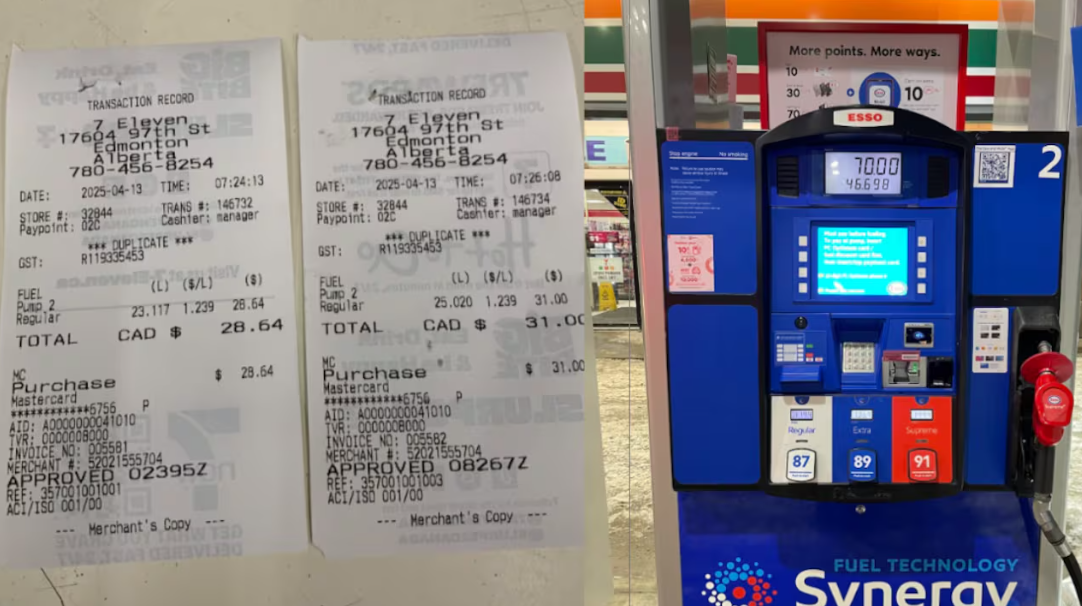
Here is where the story gets satisfying. The Graves had stopped to fill up before returning the vehicle and ended up making two separate fuel transactions at the same pump after it cut off prematurely. Not only did they keep both receipts showing just over 48 liters of regular gasoline purchased, they also photographed the actual pump. That image showed a standard pump dispensing regular, mid-grade, and premium gasoline options. There was no diesel nozzle on that pump at all.
That combination of documentation, physical receipts plus a timestamped photo of the specific pump, essentially dismantled the entire premise of Enterprise’s claim. The evidence didn’t just suggest they hadn’t put diesel in the car. It made the allegation look like something that couldn’t have happened even if they had tried.
How Enterprise Responded When People Started Asking Questions
Enterprise reached out to the couple two more times after the initial email. The Graves pushed back each time, insisting they had done nothing wrong. For a while, it seemed the company had dropped the matter. Then, nine months later, an actual billing notice for $9,500 arrived at their door.
At that point, the couple brought in legal representation and also connected with Go Public, an investigative segment through the Canadian Broadcasting Corporation. Once lawyers and journalists started making calls and asking pointed questions, Enterprise’s position changed quickly. The company announced it would not be pursuing the claim, citing its inability to “verify additional details regarding the fuel source.” That explanation, of course, raises its own question: shouldn’t that verification have happened before sending a nearly $10,000 bill to a family in the first place?
What Every Rental Car Customer Should Take Away From This
The Graves were fortunate in a specific way that many people in similar situations are not. They had receipts. They had photos. They had the kind of documentation that turned an unsubstantiated corporate claim into an open-and-shut case once scrutinized. Most travelers don’t think to photograph a gas pump, and most people who receive a frightening bill from a large company feel pressured to either pay or file an insurance claim rather than fight.
A few practical habits can make an enormous difference. Document the car before and after your rental with timestamped photos or video. Keep every fuel receipt, especially from your final fill-up before returning the vehicle. If a pump cuts off or anything unusual happens during fueling, photograph the pump itself. And if a damage claim arrives that doesn’t match your experience, don’t assume the company has the facts right. Push back, ask for documentation of their findings, and know that damage claim disputes are winnable, especially when you have the receipts to prove your case.