The global rise of Chinese electric vehicles is accelerating at a rapid pace. BYD overtook Tesla in 2025 to become the world’s largest EV manufacturer. The Chinese government is investing billions into producing lower-cost, high-tech, and reliable models, and it is no surprise that the Asian powerhouse accounts for the largest share of global EV sales.
These figures show just how much China has already established itself as a major player, but there is one large market where its EV makers have yet to sell vehicles: the United States. Partially due to U.S. President Donald Trump’s 100% tariffs on Chinese EVs, brands such as BYD, Li Auto, XPeng, and Nio still haven’t sold cars in America, leaving a potentially huge market untapped.
Cox Automotive carried out a study to determine whether American consumers would hypothetically consider switching to a Chinese EV and to test the extent of their knowledge of this section of the market.
BYD is the Most Recognized Brand
Firstly, U.S. consumers recognized BYD, with 35% saying they were aware of the brand. It also topped the charts in terms of familiarity at 17%.
Awareness and familiarity are different because awareness simply means consumers have heard of a brand, while familiarity suggests they know more about it.
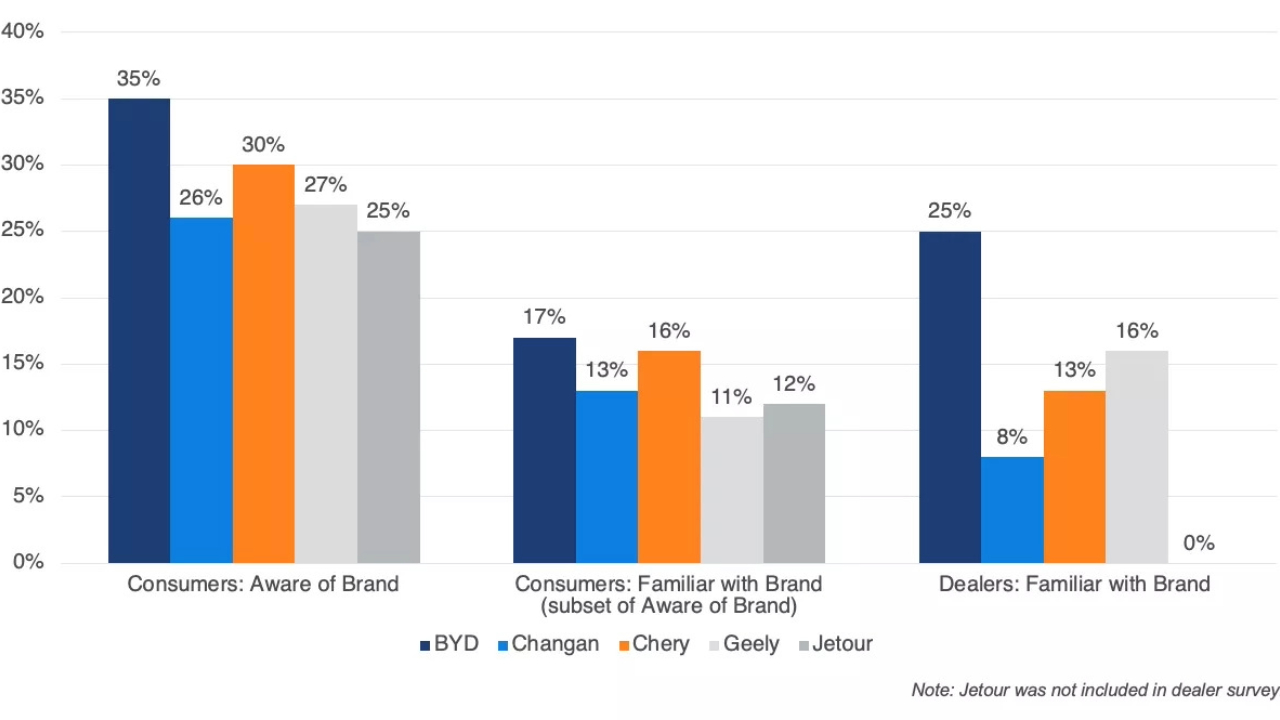
After all, BYD is the world’s largest EV manufacturer, so recognition and familiarity will certainly play a role. Chery, Geely, Changan, and Jetour were also brands respondents were aware of.Still, the common denominator was that people had heard of the brands rather than having deeper knowledge about them.
The lack of deeper knowledge about them could be attributed to several factors: almost no cars on the roads, President Trump’s decision to make it harder for Chinese manufacturers to produce and sell EVs in the country, and the simple fact that American EV brands are what consumers can most easily differentiate.
Consumers Trust Chinese EVs More Than Sellers
Despite a low percentage of familiarity with Chinese EVs, consumers are far more likely to trust Chinese car makers’ pricing structures and compliance with U.S. regulations than sellers are.
Notably, Autoblog reports that the BYD Seagull is sold for around $10,000 domestically in China, or about $25,000 in Europe after meeting regulations, making it significantly more affordable for a wider range of households.
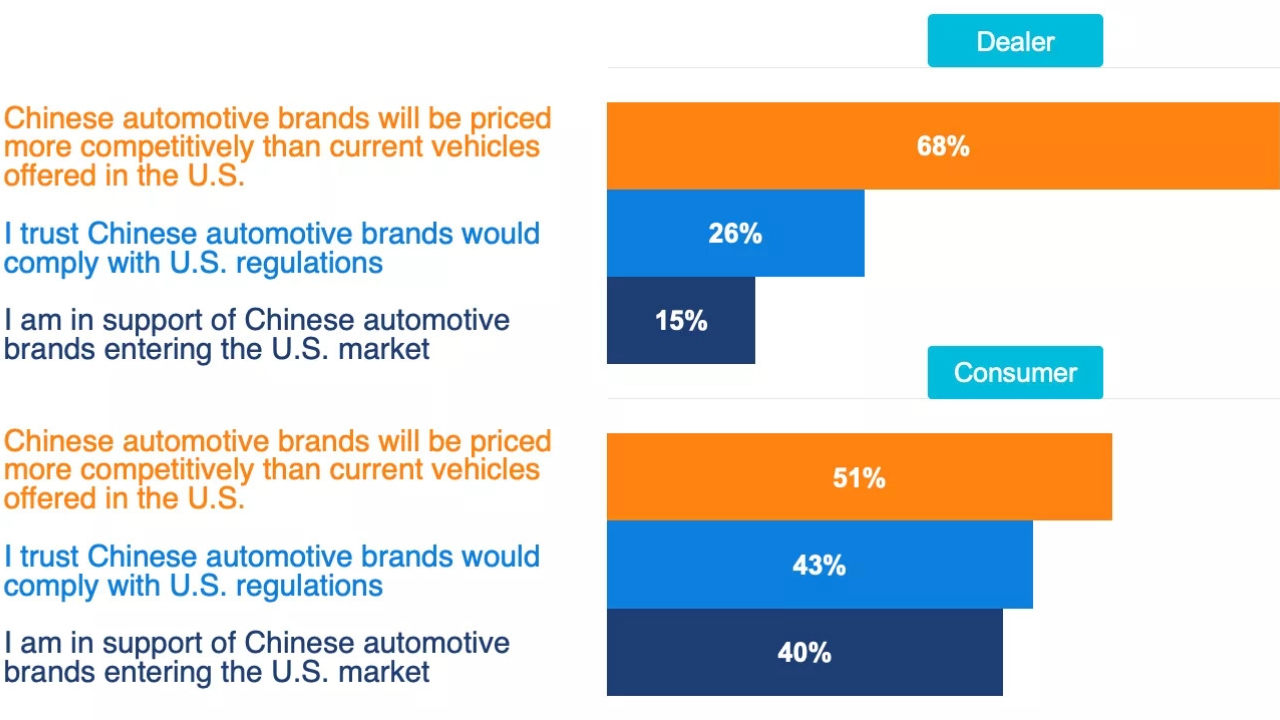
With trust in products meeting strict regulations and offering affordability, the most staggering finding from Cox Automotive’s survey is that consumers are two and a half times more supportive of Chinese EVs entering the market. Dealers are far less supportive, at just 15%, compared to 40% of consumers.
This shows a clear disconnect between consumer curiosity and dealer caution when it comes to Chinese EVs. While buyers appear open to diversification and new brands offering affordability and technology, dealers remain wary of international competition, regulatory challenges, and market uncertainty, highlighting a potential hurdle for Chinese automakers hoping to enter the U.S. market.
Gen Z Far More Likely to Purchase EV
When questioned on whether they were extremely or very likely, or not very or not at all likely, to consider buying a Chinese EV, the results were nearly neck and neck. Around 38% said they would consider it, while 39% said they were not very or not at all likely, highlighting lingering scepticism.
But the generational divide is what stands out, with 69% of Gen Z respondents reportedly most likely to consider purchasing from a Chinese brand. While data on other generations is less clear, the strong interest among younger consumers suggests that if Chinese automakers enter the U.S. market, a new entrant could gain significant traction.