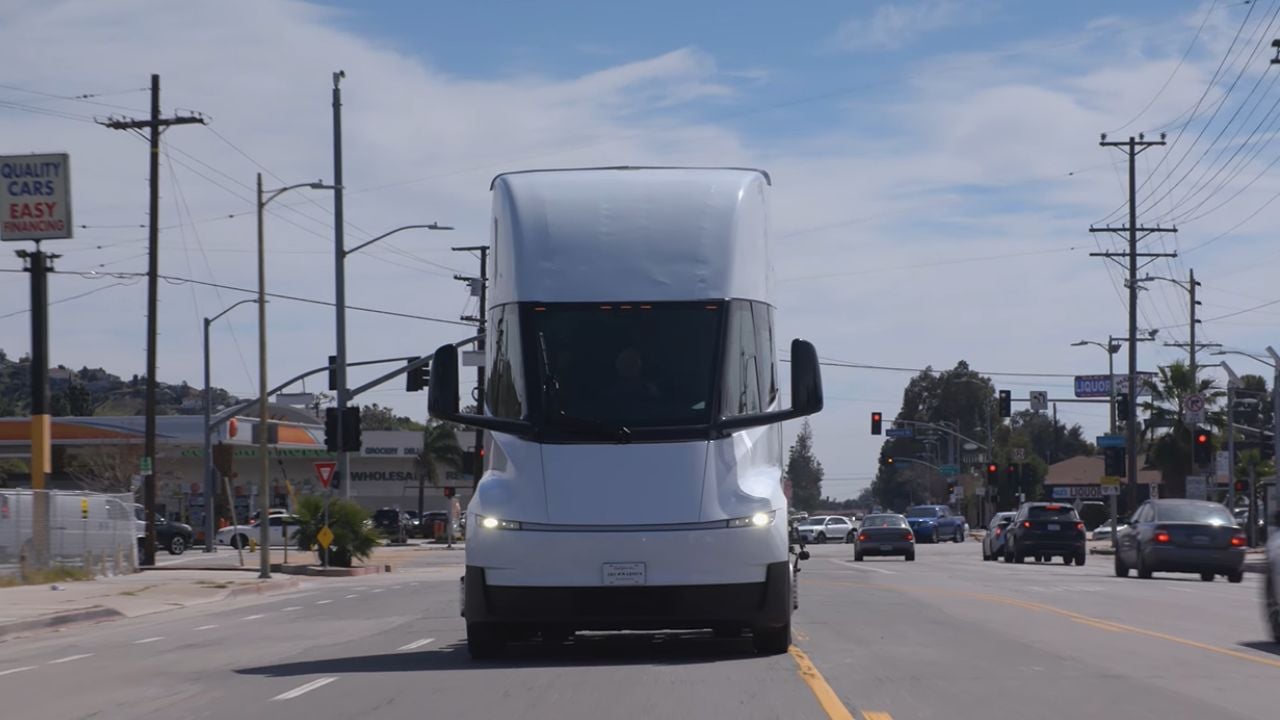
Jay Leno has driven all sorts of crazy cars for his popular YouTube show Jay Leno’s Garage. While the show mostly features rare and exotic collectibles, some episodes stand out as they feature unexpected vehicles like fire engines, buses, tractors, and even steam locomotives.
If it has wheels and can be driven, there’s a good chance that Jay Leno has had a chance to get behind the wheel at least once. That’s one of the reasons why he’s considered a national treasure and why his opinion on all things automotive matters.
About three years ago, Jay Leno featured a pre-production Tesla Semi truck on the show and gave the viewers a glimpse of what it was all about. In a recent video, the famous car collector and TV personality got to drive the facelifted production-spec version, and judging by his reaction, it might be a disruptive force in an industry that has seen little change in decades.
The Tesla Semi Has An Updated Design
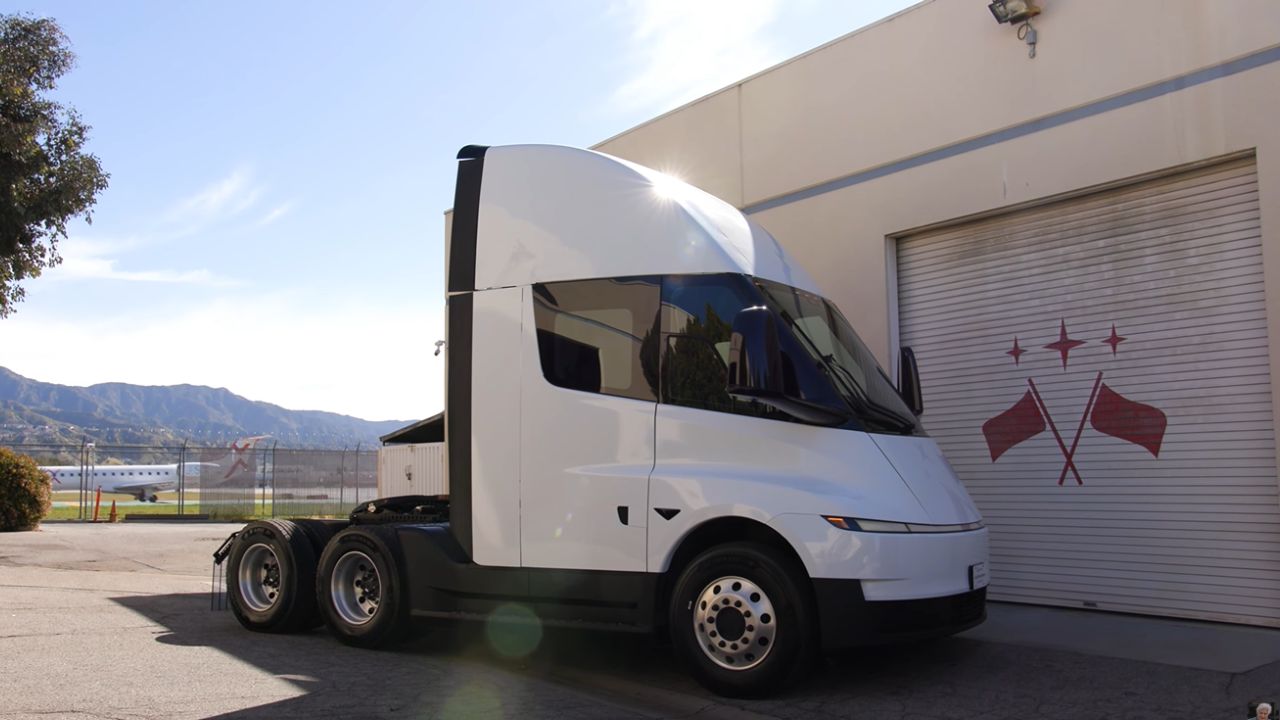
The episode kicks off with Jay Leno examining the Tesla Semi’s updated design outside his famous garage since it’s too big to fit inside, and he’s soon joined by Tesla’s Director of Styling, Franz von Holzhausen, and Semi Program Director Dan Priestley—the same guys who gave him the first tour three years ago. Compared to the pre-production example Tesla showed earlier, the Semi in Jay Leno’s video looks familiar at first glance but has several notable changes aimed at making the truck slipperier, more practical, and better suited for volume production.
The most noticeable change is on the outside, where the truck’s design has been further refined in the name of aerodynamics. Priestley says the latest version improves aerodynamic efficiency by 7% over the earlier truck while still keeping the core shape that defined the original concept.
The central driving position remains a defining part of the design because it lets the company shape a rounder front end and a narrower upper cab, helping the truck move through the air more efficiently as it tapers back toward the trailer. That matters because better aerodynamics reduce the energy needed to move a Class 8 truck at highway speeds, which in turn helps extend range and lowers operating costs.
Tesla has also updated the front-end look with a more modern full-width light bar and revised graphics, while replacing the older single-pane side glass with a drop window to make life easier for drivers at gates and checkpoints. Tesla presents the Semi in two forms: a larger 500-mile long-range model and a shorter 325-mile version that trims one battery pack and reduces the wheelbase, a change the company says makes it lighter, less expensive, and easier to maneuver for port, delivery, and regional work.
Why Tesla Is Banking On The Semi To Disrupt The Trucking Industry
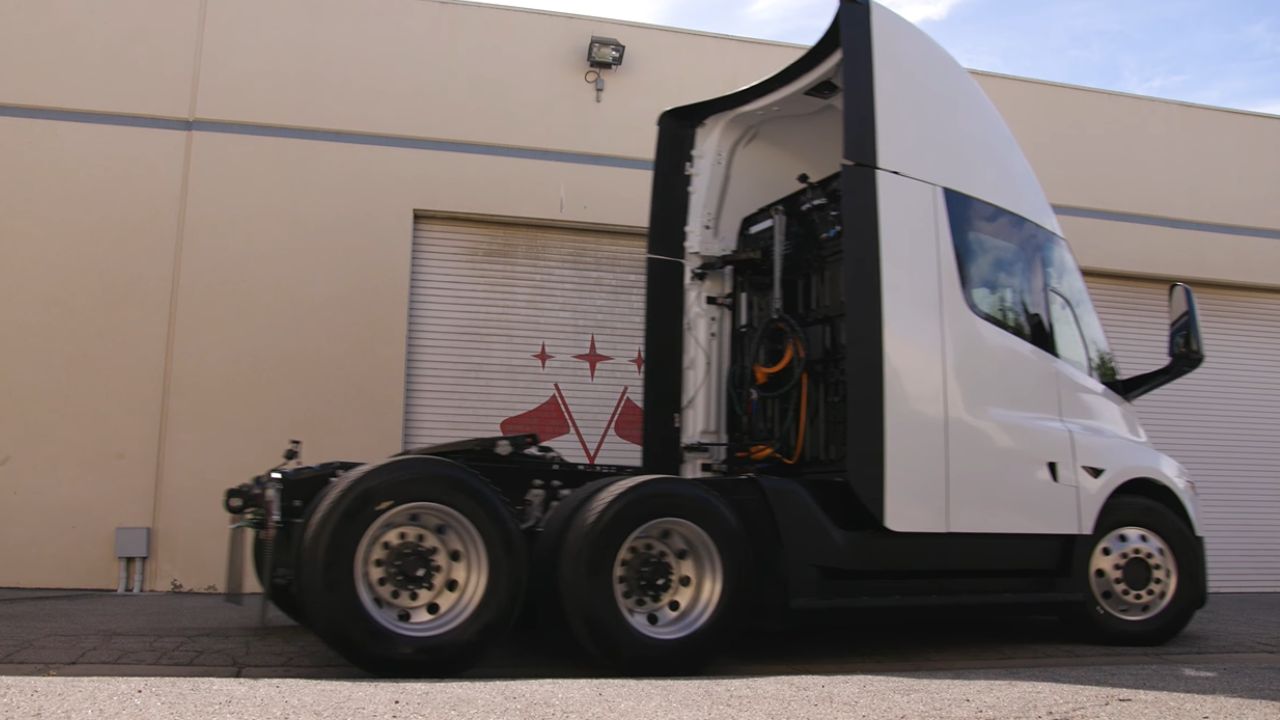
Tesla is pitching the truck as more than just an electric alternative. Priestley presents it as a better tool for the job and says the latest 500-mile version is now “about on par” for weight with a diesel rival, thanks in part to a 2,000-pound EV exemption, while still being able to handle the kinds of 45,000-pound payloads many fleets want. Range is central to that pitch: Priestley highlights a 500-mile long-range model for heavier-duty work, alongside a 325-mile version aimed more at regional and urban routes.
The timing also helps Tesla make its case. Jay Leno points to the war involving Iran as a reminder of why alternative forms of transportation matter.
Tesla also leans hard on drivability. We learn from the video that the truck uses a twin-axle motor strategy, with one axle geared for acceleration and hill climbs and the other for highway efficiency, instead of a traditional multi-speed setup. The company says regenerative braking lets the semi descend long grades at highway speeds without touching the brakes, which should cut brake wear and improve control.
Tesla says the Semi’s lithium-ion battery is designed to last for 1 million miles and can recover up to 60% of its range in 30 minutes. Just as important, the company argues that an electric powertrain should need less maintenance than a diesel truck, while cheaper electricity could further lower running costs over time.
Driver Feedback on the Tesla Semi So Far
The semi has already gone through substantial real-world testing before this broader push. Priestley says Tesla has built “a few hundred” trucks so far and that the pilot fleet has logged more than 13.5 million miles. He adds that the lead truck is now approaching 440,000 miles, a figure Tesla is clearly using to show the Semi is no longer just a prototype.
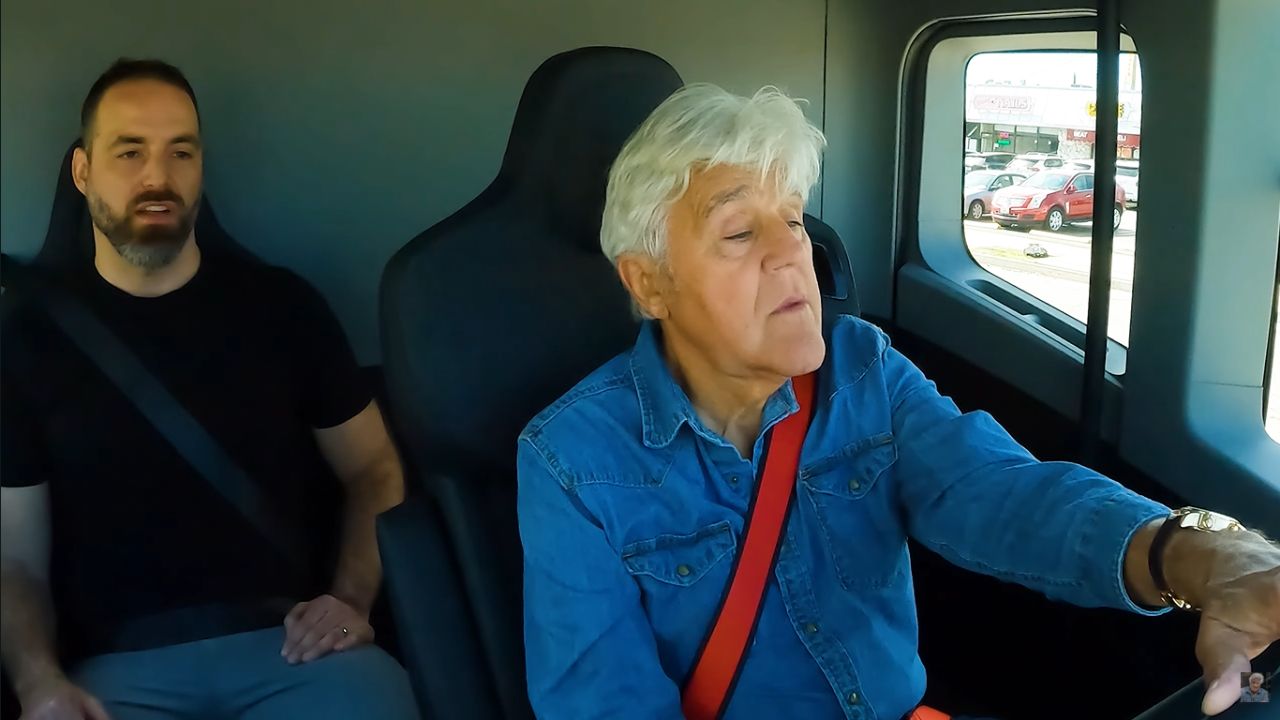
Priestley says driver feedback has been especially positive on the day-to-day experience inside the cab, highlighting the quiet ride, smooth power delivery, strong visibility from the central seating position, and a reclining seat that drivers “love.” The drivers also stand to benefit from various practical touches aimed at fleets, including memory settings that let a driver’s seat position and preferences carry over from truck to truck.
Leno comes away impressed by how easy and natural it feels to drive, comparing the experience more to a big Tesla than a conventional heavy truck.
Why Tesla Believes Fleets Are Ready for the Semi
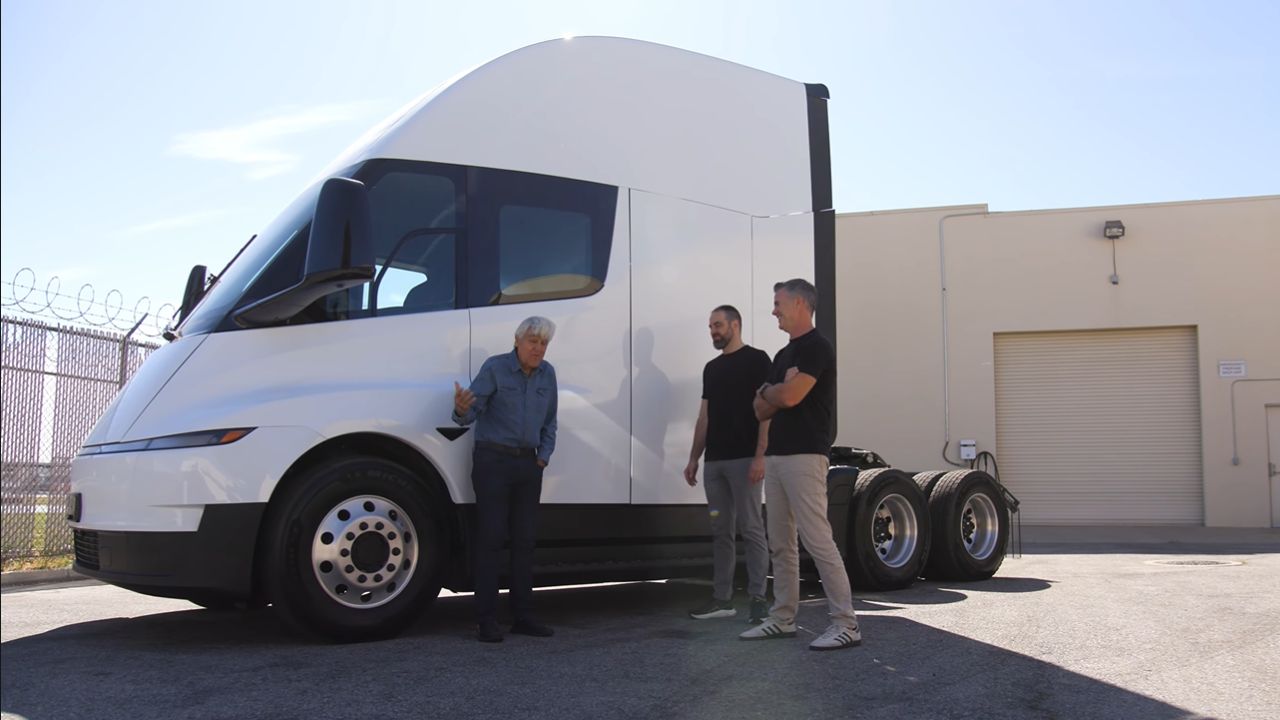
Jay Leno points out that trucks have looked broadly the same for generations, with diesel-powered rigs continuing to dominate the segment and set the standard for long-haul freight. Priestley believes that “the economics are right” and “the product is ready” after years of fleet testing, feedback gathering, and gradual refinement of the Semi. He also says Tesla is seeing ample demand, especially now that the truck’s range, charging, payload capability, and operating costs are lining up more closely with what real-world fleets need.
That confidence is now feeding directly into Tesla’s production plans. Tesla is building a semi factory from the ground up outside Reno, Nevada, and the dedicated plant is designed for a capacity of 50,000 trucks a year. Industry reporting suggests that Tesla expects the first Semi units to reach the production line by the end of 2025, with a broader ramp through 2026.
If Tesla is right, the Semi could mark one of the first serious attempts to modernize a corner of transportation that has resisted change for decades. The bigger question now is whether Tesla can turn that purpose-built factory and years of development into sustained output at scale.