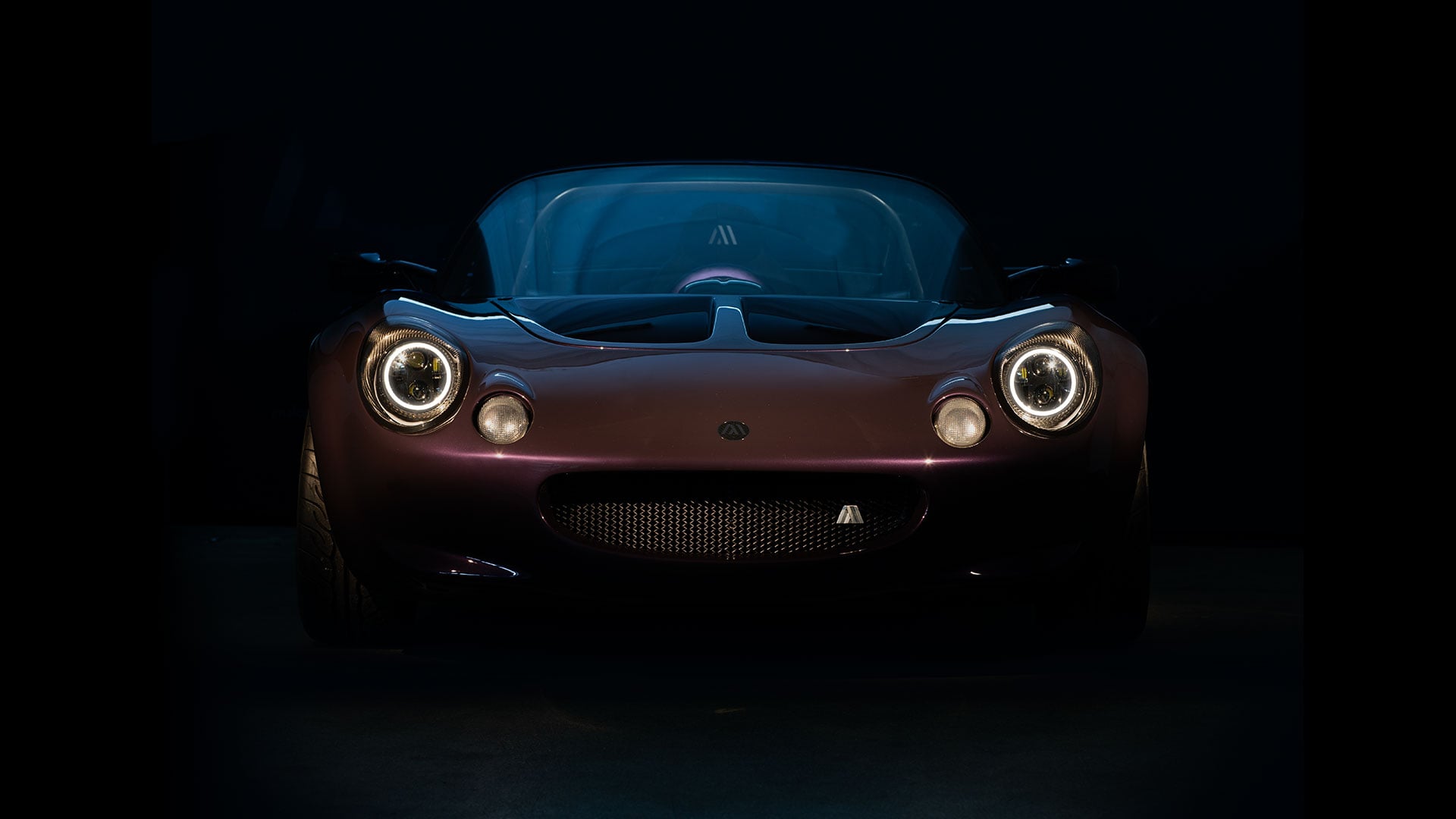
Just when you thought the Lotus Elise couldn’t get any more impractical, along comes Analogue Automotive with the VHPK: a single-seat interpretation of Colin Chapman’s masterpiece that makes the original look like a family hauler.
Let’s be honest: the standard Elise was never built for practicality. With its fiberglass tub, non-existent storage space, and entry procedure that requires the flexibility of a gymnast, it’s always been a car that demands sacrifice from its owner. No cup holders, minimal weather protection, and a boot that can barely fit a weekend bag; these weren’t bugs in the Elise design, they were features that separated true enthusiasts from fair-weather drivers.
But that’s precisely why we fell in love with it. In an era of increasingly sanitized sports cars loaded with creature comforts, the Elise remained beautifully, stubbornly analog. It was a car that didn’t care about your coffee or your golf clubs: it cared about making you a better driver.
Enter the VHPK: Peak Impracticality Achieved
View this post on Instagram
Now Analogue Automotive has taken that philosophy to its logical extreme. The VHPK (Very High Performance Kit) strips away the Elise’s last vestige of practicality – the passenger seat – placing the driver dead center in a configuration reminiscent of the McLaren F1. It’s a move that has the enthusiast community buzzing with equal parts excitement and bewilderment.
The inspiration comes from the single-seat Elise racers used in the now-legendary Autobytel Lotus Championship of the late 1990s. Those stripped-out track weapons proved that sometimes less really is more, delivering a purity of experience that left drivers grinning like maniacs despite the complete absence of comfort or convenience.
Analogue’s interpretation takes this concept even further. At just 1,323 pounds – nearly 250 pounds lighter than an already featherweight Elise – the VHPK represents weight reduction taken to obsessive levels. Carbon fiber wheels, ceramic brakes, and what appears to be carbon everything else contribute to a curb weight that would make a Caterham Seven jealous. Said VHPK: “Thirty years to the day since the Elise first stunned the automotive world at the 1995 Frankfurt Motor Show, a new chapter in lightweight performance begins.”
More Power, Less Everything Else

The heart of the VHPK remains Rover’s venerable K-series engine, but don’t let that fool you into thinking this is some nostalgic exercise. Analogue has extracted 250 horsepower from the aluminum four-cylinder through increased displacement and forged internals – a 40-horsepower bump over their previous Supersport model and a far cry from the 118 horsepower the K-series made in early Elises.
In a 1,323-pound car, those numbers translate to a power-to-weight ratio that would embarrass many supercars. The company claims they’ve taken “the K Series to its ultimate form,” which is saying something considering the engine’s three-decade evolution from economy car workhorse to track-bred screamer.
Will 35 Be Enough?

Analogue Automotive plans to build just 35 examples of the VHPK, with orders opening in 2026. At that production volume, each car becomes something approaching automotive art – a statement piece for collectors who already have everything else in their garage.
The exclusivity factor cannot be understated. In a world where even Ferrari builds thousands of cars annually, owning one of 35 examples of anything carries serious bragging rights. Whether that justifies what will undoubtedly be a six-figure price tag remains to be seen.
The Elise Legacy Lives On

What’s remarkable is that we’re still talking about new interpretations of a car that debuted 30 years ago at the 1995 Frankfurt Motor Show. The Elise’s influence on modern sports car design cannot be overstated: from the Alfa Romeo 4C to the latest Caterham offerings, the DNA of Chapman’s last great creation continues to inspire new generations of driving machines.
The VHPK represents both the logical conclusion of that influence and perhaps its most extreme interpretation. It’s a car that will appeal to a very specific type of enthusiast – one who sees a two-seat sports car and thinks, “I wish this car were even more cramped and impractical!”
In an automotive landscape increasingly dominated by SUVs and electric crossovers, perhaps we need more companies willing to chase impracticality to its logical extreme. After all, the most memorable cars in history weren’t built for everyone – they were built for the few who truly understood what driving could be.
Whether you love it or hate it, the VHPK proves that 30 years later, the Elise continues to inspire people to build cars that make absolutely no practical sense. And in a world that often makes too much sense, that might just be exactly what we need.