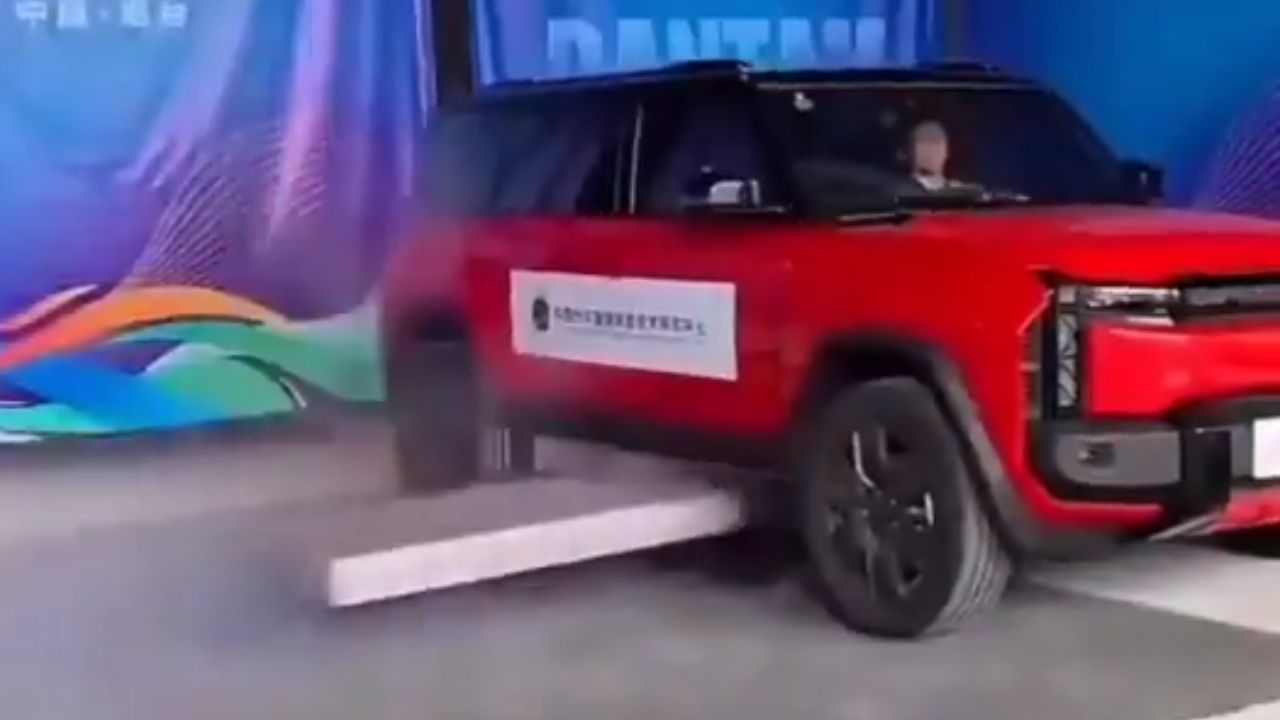

A dramatic new EV (electric vehicle) safety concept emerging from China has left intense online debate in its wake. But the relative silence on the matter in mainstream discourse reflects a deeper reality: this is less a breakthrough ready for roads and more a provocative experiment that exposes the limits of current EV safety thinking.
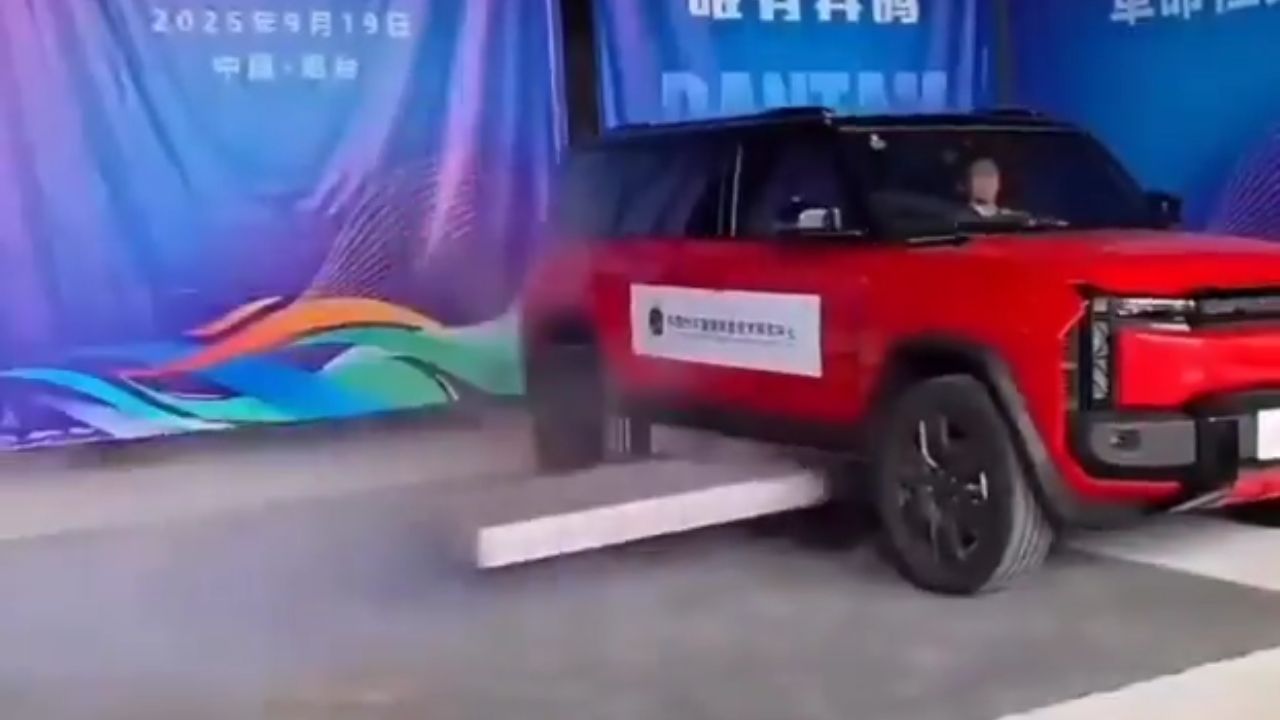
Recent viral footage shows a prototype system that ejects an EV battery pack during a fire or thermal runaway event, effectively launching it several meters away from the car. It is an innovative idea, theoretically speaking, that is.
Lithium-ion battery fires are notoriously difficult to extinguish and can escalate into chain reactions that generate extreme heat and explosive gases. By forcibly ejecting the battery from the vehicle, engineers hope to protect occupants from the most dangerous phase of the incident.
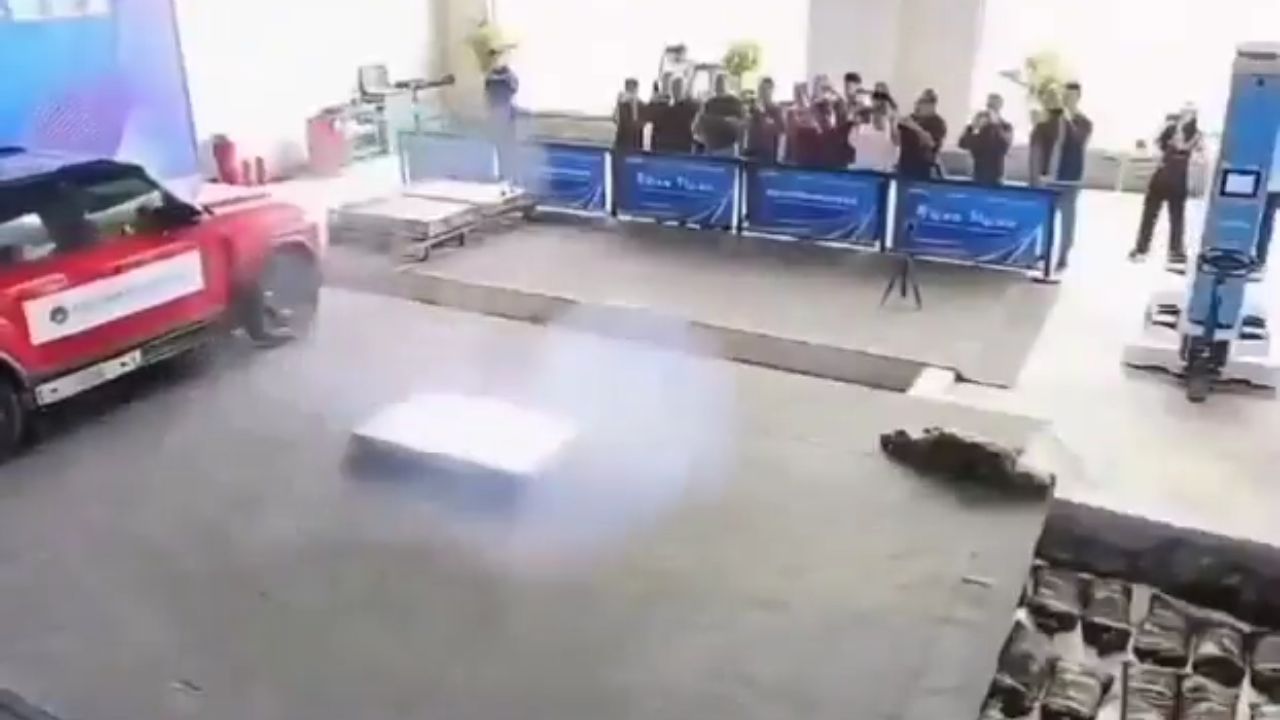
Yet the concept sits in an awkward space between innovation and impracticality. Battery packs in modern EVs are hardly small components. They can weigh hundreds of kilograms and are structurally integrated into the vehicle’s chassis. In testing scenarios, the ejection system acts almost like an airbag with vastly more force, propelling the battery outward within seconds of detecting failure.
“Save Yourself by Killing Others”
That visual spectacle is exactly why the footage spreads so easily on platforms like X. It is also why many viewers react with alarm skepticism. Critics point out that turning a burning battery into a high-speed projectile introduces a new category of risk.
A system designed to protect passengers could endanger pedestrians, nearby vehicles, or property if deployed in a real-world environment. As one X comment summed up the demonstration: “The ‘not my problem anymore’ Chinese way.”
Most of the response reflected viewers’ concern that the system merely replaces one problem with another, sacrificing the safety of those near the vehicle at the time the batteries are a expelled for the occupants’ safety.
What could possibly go wrong? pic.twitter.com/iyGn2ozLkY
— Anim8Studio.ai (@Anim8Studio) April 8, 2026
“Save yourself by killing others, perfectly balanced as all things should be,” came one sarcastic comment. The next one suggested the system can be a perfect weapon for road rage encounters: “This can be used as a missile to attack overtaking cars.”
This tension helps explain why the story has not gained sustained traction in serious automotive or regulatory circles. The industry is already moving in a very different direction.
China, the world’s largest EV market, is tightening safety standards with a clear objective: batteries should not catch fire or explode at all. New regulations taking effect from 2026 mandate “no fire, no explosion” performance under extreme conditions, pushing manufacturers toward prevention rather than dramatic last-resort interventions.
Prevention Over Ejection
In that context, ejecting a battery looks less like a future solution and more like a conceptual outlier. Automakers and regulators are prioritizing improved thermal management, stronger enclosures, and chemical stability. The goal is to eliminate catastrophic failure modes, not manage them after they begin.
There is also a structural issue. EV platforms are designed around the battery pack as a load-bearing element. Removing it during an emergency could compromise vehicle integrity in ways that extend beyond fire risk.
Engineers would need to redesign entire architectures to accommodate such a system, adding cost, weight, and complexity for a scenario that safety standards aim to make exceedingly rare.
Apparently, public perception plays a significant role as well. Electric vehicle fires, while statistically less frequent than those in internal combustion cars, attract outsized attention when they occur. A technology that visibly launches a flaming battery into the air risks amplifying those fears rather than reassuring consumers.
Why “No One Is Talking About This” (And Why That Makes Sense)
So why is “no one talking about this”? In reality, the people shaping the future of EV safety are talking about it, but mostly as an example of what not to pursue. The concept highlights the severity of thermal runaway events, yet it clashes with the broader engineering consensus that the safest failure is the one that never happens. One X user underscored this with a comical but profound soliloquy:
“Why don’t we just make batteries that don’t catch fire?”
“But I made this flaming battery ejector that breaks ankles.”
“Never mind, problem solved.”
China is testing EVs that eject their batteries in emergencies in order to promote driver safety. pic.twitter.com/18IwDcW3ri
— Massimo (@Rainmaker1973) April 8, 2026
What the viral clip ultimately reveals is not a hidden revolution, but a moment of experimentation at the edges of feasibility. It captures the urgency of solving battery safety challenges, even as it underscores how far the industry still is from a universally accepted answer.