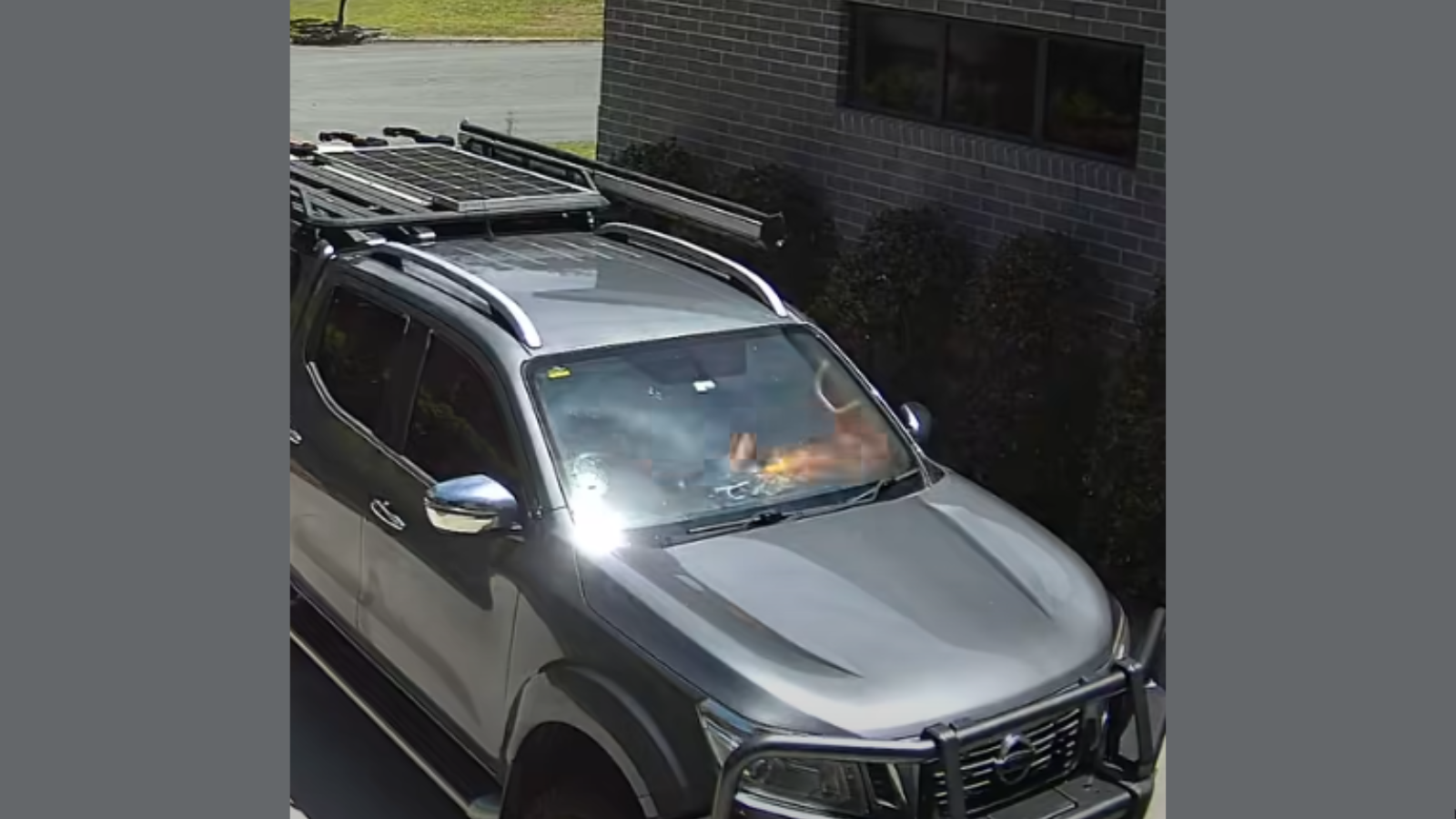
A lithium-ion battery fire inside a parked vehicle is one of those things that sounds rare and freakish right up until you see the footage. That is exactly why the Queensland Fire Department in Australia recently shared a dramatic warning video showing the aftermath of a battery-powered device igniting inside a hot vehicle, sparking both awareness and debate across Facebook.
According to the department, crews responded after lithium-ion batteries left inside the vehicle overheated and failed, causing significant interior damage. Video shared by firefighters shows a silver Nissan pickup truck with a shattered windshield and extensive fire damage across the dashboard. Officials said the fire was linked to a phone power bank and a bike computer that had reportedly been left inside the hot vehicle.
While the incident happened in Australia, the broader warning is not limited to Queensland. Firefighters and safety officials in other countries, including the United States, have issued similar reminders about the dangers of leaving lithium-ion battery-powered devices inside vehicles during extreme heat.
That warning also comes as many areas around the world are already seeing unusually warm temperatures and early-season heat waves. Even when outside temperatures feel manageable, the inside of a parked vehicle can become brutally hot, surprisingly quickly, especially in direct sunlight with the windows closed.
Hot Cars Can Become Brutally Hot Faster Than People Realize
The warning quickly gained traction online because, frankly, almost everyone leaves rechargeable devices in their vehicle at some point. Phones, battery packs, laptops, cordless tools, vape devices, bike computers, cameras, tablets, jump packs, and even spare lithium batteries often end up baking inside parked cars during warmer months without people thinking much about it.
Embedded media follows. Please allow a moment for it to load.
The Queensland Fire Department used the incident to remind people that most modern rechargeable electronics rely on lithium-ion batteries, which are generally safe but can become dangerous when exposed to excessive heat, physical damage, poor charging practices, or manufacturing defects.
Officials advised people to avoid leaving battery-powered devices in parked vehicles, especially in direct sunlight, and to only use chargers and batteries designed for the specific device.
That warning also arrives as many regions are already seeing unusually warm temperatures and early-season heat waves. Even when outside temperatures feel manageable, the inside of a parked vehicle can heat up surprisingly fast, especially in direct sunlight with the windows closed.
This Warning Applies Far Beyond Australia
Similar heat-related battery incidents have also happened in the United States, which is part of why the Queensland Fire Department’s warning is resonating with so many people online.
In 2024, firefighters in Lake Charles, Louisiana, warned about the dangers of leaving lithium-ion battery-powered devices in hot vehicles after a children’s electronic book reportedly ignited a car seat during extreme heat. The fire spread through the vehicle’s interior before crews could extinguish it.
While the exact circumstances differed, the incident highlighted similar concerns about rechargeable battery-powered devices being exposed to extreme heat in parked vehicles.
That overlap is part of why the Queensland post started generating discussion online. Some commenters admitted they regularly leave power banks, tools, or rechargeable devices in vehicles without considering the risk, while others argued that the danger remains relatively uncommon given how many lithium-ion batteries people use every day.
The Risk May Be Rare, but the Damage Can Be Severe
Millions of lithium-ion batteries are used safely every single day, and incidents like this remain relatively uncommon. However, firefighters say extreme heat, damaged cells, improper charging equipment, or battery defects can increase the risk of thermal runaway events when failures do occur.
And when lithium-ion batteries fail, they can fail violently. Fires involving lithium-ion cells can spread rapidly and produce intense heat, which is part of why firefighters continue trying to raise awareness about proper storage and charging practices.
The broader takeaway here is less “panic about batteries” and more “maybe stop treating your dashboard like long-term electronics storage.” Because while a ruined power bank is annoying, a vehicle fire is a whole different level of expensive.