Two New York residents have filed a lawsuit against Tesla in the U.S. District Court for the Eastern District of New York, alleging that their 2021 Model 3 Long Range AWD vehicle accelerated suddenly on its own and crashed.
The incident allegedly caused injuries that resulted in more than $2 million in medical expenses for the plaintiffs. They claim that several functions on their Model 3 were defective, which led to the crash.
The crash raises significant questions about sudden acceleration on the Model 3, if the plaintiffs’ claims are proven.
This is especially concerning, given the driver’s claim that he stomped the brake pedal several times, yet the car continued to accelerate.
The Tesla Model 3 Crashed Into a Garage
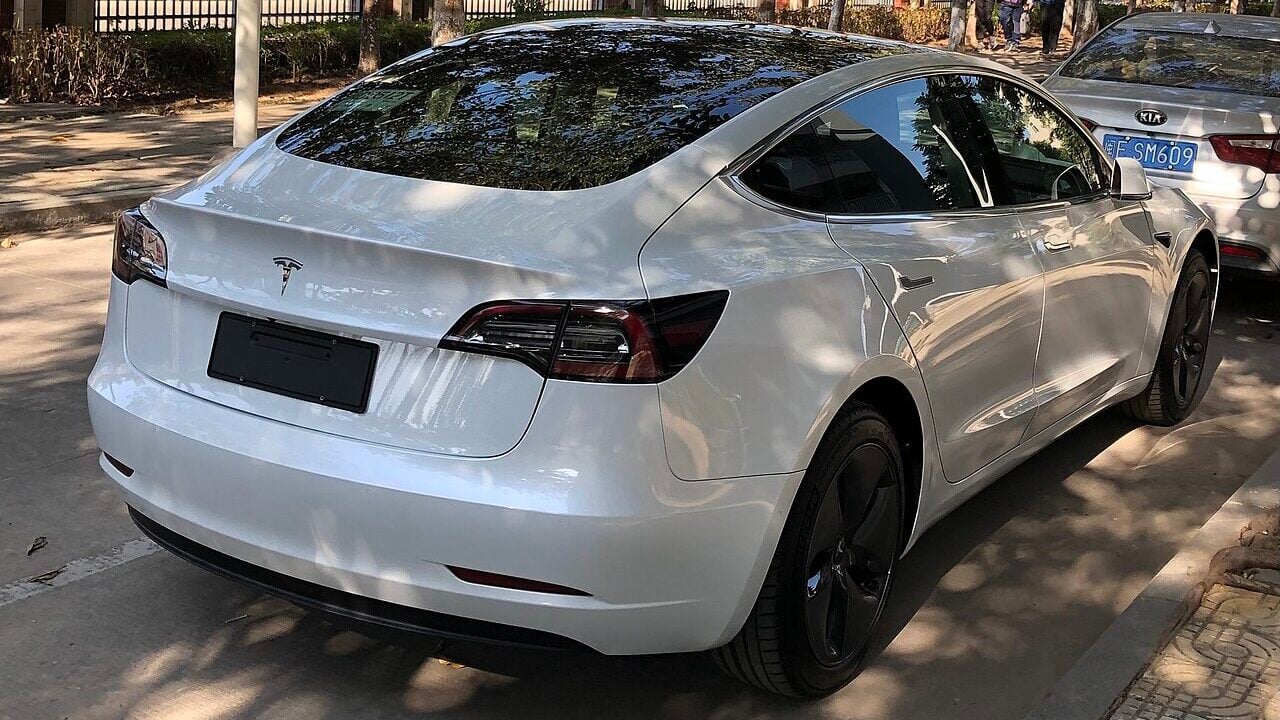
According to Carcomplaints.com, a father and daughter, Peng Sheng Huang and Ying Huang, bought the Tesla Model 3 in 2021. But two years later, in 2023, the vehicle crashed just as it was being reversed into their driveway.
Mr. Huang stated that the Model 3 stopped and accelerated on its own. As a natural reaction, he tried braking multiple times, even trying the kinetic energy recovery system.
But none of that worked. The Model 3 reportedly kept going and crashed into a detached garage. If you thought that was the end of the troubles the car gave them, you could be mistaken.
Mr. Huang said that the number 4 side airbag failed to deflate after the incident. A good Samaritan had to cut open the driver’s side airbag so Mr. Huang could be taken out. His daughter allegedly lost consciousness after the crash due to injuries.
Mr. Huang “sustained neck and back injuries and suffered severe emotional trauma, including immediate fear of death,” according to the lawsuit.
“Plaintiff Ying Huang sustained catastrophic spinal cord injury, intracranial hemorrhages, neurological impairment, lung contusions, neurogenic bowel and bladder dysfunction, permanent reproductive loss, and emotional distress. The medical expenses of Plaintiff Ying Huang exceed $2,000,000 and are continuing,” the lawsuit added.
Alleged Defects on Tesla Model 3
The lawsuit lists several features of the Tesla Model 3 that were allegedly defective and did not prevent the crash from occurring.
The lawsuit alleges that Tesla’s Kinetic Energy Recovery System (KERS) is defective and contributed to the crash. KERS uses regenerative braking to convert kinetic energy into electrical energy, but the plaintiffs claim that instead of slowing the vehicle, the system failed to do so at the critical moment.
The Automatic Emergency Braking System did not work as intended, since the lawsuit alleges that Tesla removed range-measuring radar sensors. They were instead replaced with cameras to detect potential obstacles and to control automatic braking functions.
Tesla’s Brake Control and Mechanic System allegedly failed to stop the car on time. The report stated that “the hydraulic cylinder brake system, brake pads and rotors all failed, along with the electronic brake booster and ABS system.”
In addition, the lawsuit states that multiple failures of the Model 3’s airbags added significantly to the injuries, as the curtain airbag failed to deflate, while the side seat airbags failed to deploy.
Lastly, the lawsuit alleges that the Electronic Control System, consisting of the drive-by-wire throttle system and braking system, which are controlled by proprietary software, can cause unintended acceleration instead of braking.