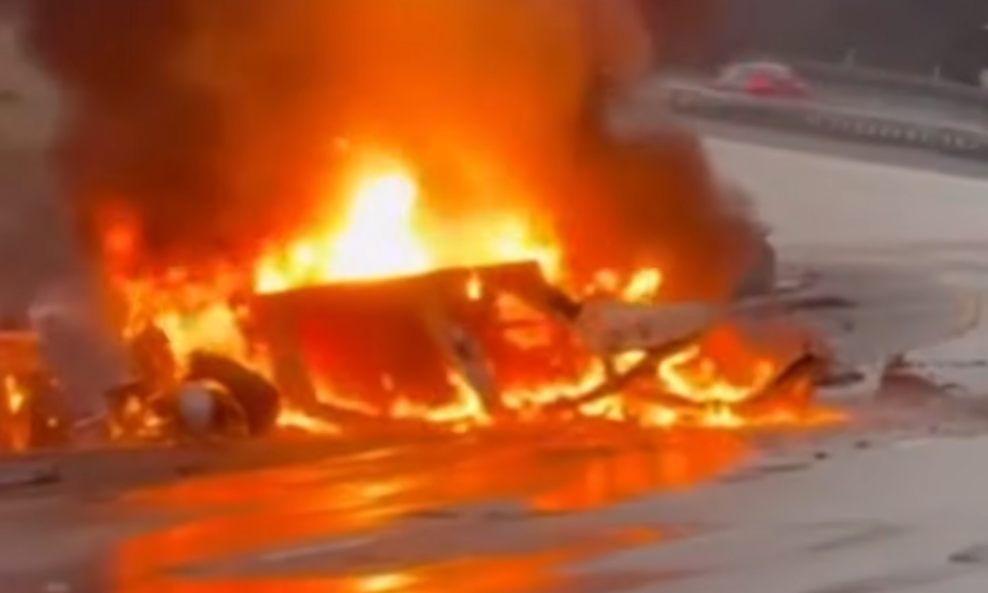
Early Tuesday morning, commuters heading northbound on Interstate 280 in Daly City got a rude awakening when an electric vehicle burst into flames and transformed a stretch of highway into something that looked more like a Fourth of July finale than a traffic incident. The blaze shut down northbound lanes for hours, creating significant delays during a time when Bay Area drivers can least afford them.
North County Fire Authority crews were dispatched around 5:30 a.m. after reports came in of a smoking vehicle on the roadway. What they found when they arrived was something most firefighters have rarely trained for: a high-voltage electric vehicle battery fully engulfed, shooting flames and debris in all directions. Captain Jeff Higgins described the scene as looking like a fireworks show, and not the fun kind you watch from a lawn chair.
The driver of the vehicle managed to get out safely before the situation escalated, and was reported to be doing OK. That was arguably the best news of the morning, because from that point forward, there was little firefighters could do except keep a safe distance and make sure the fire did not spread to surrounding areas. Water, the tool firefighters have relied on for centuries, was simply not going to work here.
By 9:15 a.m., two of the northbound lanes at Hickey Boulevard had been reopened, and the southbound side, which had also been closed temporarily, was back to normal operations. The cause of the fire remains under active investigation, leaving a lot of questions about exactly what triggered the dramatic event.
What Is Thermal Runaway and Why Can Water Make It Worse
The phrase that kept coming up Tuesday morning was one that most people outside of the EV industry have probably never heard before: thermal runaway. Captain Higgins confirmed that the vehicle entered this state, and it fundamentally changed how crews had to respond.
Thermal runaway is a chain reaction that occurs inside a lithium-ion battery pack when heat causes cells to break down, releasing more heat, which causes more cells to break down, and so on. Once the process starts, it is extremely difficult to stop. The battery essentially feeds itself, generating intense heat and sometimes releasing toxic gases and flammable materials in the process.
Traditional firefighting with water is largely ineffective against a lithium-ion battery fire in full thermal runaway. In some cases, applying water can actually agitate the situation by causing rapid steam generation or spreading burning battery material. The standard approach recommended by fire authorities is often to use massive quantities of water to cool surrounding structures and let the battery burn itself out in a controlled manner, which is precisely what crews did Tuesday.
How First Responders Handled a Fire They Could Not Extinguish
When North County Fire Authority units pulled up to the scene just after 5:30 a.m., they were greeted by what Captain Higgins called a ball of flame. The vehicle was fully involved, and material was being ejected from it in multiple directions. It was a dramatic and dangerous scene, and the crew had to make a rapid decision about how to respond safely and effectively.
That decision was to back off and set up a defensive perimeter. Crews focused on protecting surrounding areas from the spread of fire rather than attempting a direct attack on the burning vehicle. This is an increasingly common approach for EV battery fires and represents a significant departure from how structure and vehicle fires have historically been fought.
The strategy worked. The fire was contained to the vehicle and did not spread, but it also meant highway crews and CHP had to close the northbound lanes entirely while the battery burned through its stored energy. That process took several hours, which is not unusual for a large EV battery pack.
What This Incident Teaches Us About EV Safety and Emergency Response
Incidents like the one on I-280 Tuesday morning are becoming more frequent as electric vehicles make up a growing share of California’s roads. The state has been at the forefront of EV adoption nationally, which means California’s first responders are also on the front lines of figuring out how to handle these situations safely and efficiently.
One of the clearest lessons is that traditional firefighting playbooks do not always apply. Fire departments across the country have been updating their training to account for the unique challenges posed by high-voltage battery systems. Some departments have invested in specialized foam, thermal blankets designed to contain battery fires, and additional protective gear for responders who may be exposed to toxic gas releases during EV incidents.
For drivers, this incident is a reminder to pay attention to any unusual behavior from an EV, including warning lights related to battery temperature, strange smells, or visible smoke. Experts recommend pulling over immediately and getting away from the vehicle if any of these signs appear, as the window between early warning and full thermal runaway can be very short.
The good news from Tuesday is that the driver got out. That outcome, more than anything else, is the metric that matters most in these situations. The car can be replaced. The person cannot.
The Investigation Ahead and What Authorities Will Be Looking For
With the fire now out and the lanes back open, investigators will turn their attention to figuring out what actually started the battery fire in the first place. Lithium-ion battery fires in EVs can be triggered by a number of factors, including manufacturing defects, damage from a collision or road debris, problems with the battery management system, and in some cases, issues related to charging.
The investigation may take some time, particularly because battery packs are often severely damaged in these events and can be difficult to analyze afterward. Vehicle identification and data from the car’s onboard systems, if recoverable, will likely play a role in determining what happened.
As EV adoption continues to climb in California and across the country, incidents like this one will inevitably become part of a broader data set that informs how manufacturers design battery systems, how regulators approach safety standards, and how fire departments train their crews. Tuesday morning on I-280 was disruptive and alarming, but it also added another chapter to an ongoing and important conversation about what it really means to safely share the road with the next generation of vehicles.