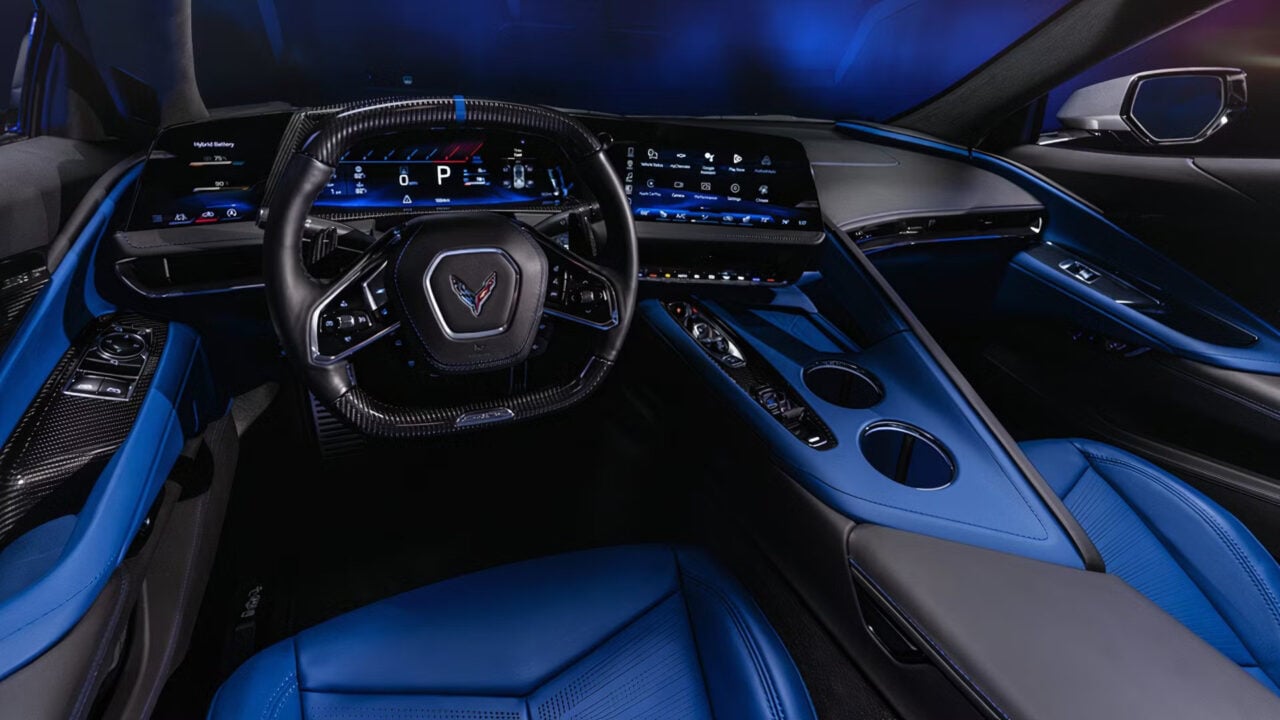
For years, the Chevrolet Corvette had one persistent weakness that critics never stopped mentioning: the interior. No matter how fast the car became or how impressive the performance numbers looked, earlier Corvette cabins often struggled to match the expectations set by the price and badge.
That reputation may finally be gone for good. The 2026 Chevrolet Corvette ZR1X has officially earned a place on the 2026 Wards 10 Best Interiors & UX list, one of the automotive industry’s most respected awards for cabin design and usability.
The recognition is significant because the Corvette was not competing solely against sports cars. Wards evaluated 28 vehicles across multiple categories, judging everything from materials and comfort to infotainment usability, displays, and driver-assistance integration.
Even more importantly for buyers, the award-winning interior is not exclusive to the quarter-million-dollar ZR1X. Chevrolet’s entire refreshed 2026 Corvette lineup, including the Stingray, E-Ray, Z06, and ZR1, receives the same dramatically revised cabin design.
The “Great Wall Of Buttons” Is Finally Gone
The most obvious change inside the 2026 Corvette is the removal of the infamous vertical strip of climate-control buttons that divided the cabin. Corvette owners nicknamed it the “Great Wall of Buttons,” and it became one of the most polarizing elements of the C8 interior from the moment the mid-engine car launched.
For 2026, Chevrolet completely redesigned the layout. Frequently used climate controls now sit beneath the central air vent in a more traditional row of physical buttons, while secondary functions have moved into the touchscreen interface.
The redesign also freed up additional space along the center console. Chevrolet used that area to add a passenger grab handle, revised cupholders, a wireless charging pad, and additional USB-C ports.
It sounds simple, but small usability fixes matter in daily driving. Earlier C8 owners often complained about the retractable cupholder cover and awkward control placement, issues Chevrolet clearly paid attention to during the refresh process.
Bigger Screens And Smarter Technology

The updated Corvette interior also receives a major technology overhaul. Chevrolet fitted the car with a larger 12.7-inch central touchscreen, a 14-inch digital driver display, and a new 6.6-inch auxiliary touchscreen.
The system now runs on an Android-based software platform with integrated Google services. That allows for improved navigation, voice controls, and app functionality compared with earlier versions of GM’s infotainment system.
Despite the larger displays, the redesign appears focused more on usability than screen count alone. Wards judges repeatedly highlighted the industry’s gradual return toward balancing touchscreens with physical controls rather than forcing every function into menus.
That balance is increasingly important as drivers grow frustrated with overly complicated digital interfaces. Carmakers spent much of the last decade chasing minimalist touchscreen-heavy interiors, only to discover that convenience often matters more than futuristic aesthetics.
The Corvette Finally Feels Expensive Inside
The C8 Corvette already transformed the car mechanically by moving the engine behind the driver and pushing the platform into exotic-car territory. The problem was that portions of the cabin still felt more mainstream GM than true six-figure sports car.
This refresh appears to address that disconnect. Material quality, lighting, trim finishes, and overall presentation have all improved significantly, helping the Corvette feel more aligned with its performance credentials.
Wards judges evaluate interiors across categories including aesthetics, fit and finish, comfort, connectivity, and overall value. The fact that the Corvette earned recognition alongside vehicles like the Porsche Macan, Mercedes-Benz CLA Electric, and Genesis GV70 suggests Chevrolet’s overhaul genuinely resonated.
The Corvette also benefited from retaining some sense of theater. Features like the front-end lift system for clearing steep driveways and the layered cockpit-style layout still give the car a dramatic personality that buyers expect from a mid-engine sports car.
A Long Time Coming For Corvette Fans

The Corvette community has spent decades defending the car against criticism that often centered less on performance and more on interior execution. Earlier generations like the C5, C6, and even C7 were regularly praised for speed while simultaneously criticized for cheap plastics and questionable ergonomics.
The 2026 update feels like Chevrolet is finally closing that chapter completely. The Corvette no longer appears to require excuses or disclaimers when conversations turn to cabin quality.
Modern sports cars increasingly compete on overall experience rather than performance numbers alone, and when nearly every high-end performance car today is fast, the interiors are often what separate the memorable ones from the rest.
With this redesign, Chevrolet may have finally given the Corvette a cabin worthy of the car wrapped around it.