

California has just flipped the switch on a major traffic enforcement change and drivers are scratching their heads about what it really means for their wallets and their rights.
As automated red-light cameras spread across cities from San Diego to San Francisco, more motorists are finding tickets in the mail and wondering if the instinctive thing to do (pay them) is the smartest play anymore. In some corners of the legal world, the advice is downright provocative: don’t pay. Not yet anyway.
The system sounds straightforward on paper. Running a red light is a well-established danger on American roads. Recent data from the IIHS (Insurance Institute for Highway Safety) shows more than a thousand people are killed each year in crashes involving red-light runners.
Automated systems have helped reduce fatal crashes by roughly 21 percent in major cities where they are deployed. That’s a clear safety upside politicians can point to.
The Safety Upside vs. The Revenue Reality

But the political reality is less about saving lives and more about revenue and legal mechanics. We recently reported that, over in DC, just one automated speed camera raked in nearly $10 million in 2025. Under California Senate Bill 720, the so-called Safer Streets Act that took effect in January 2026, cities can choose to classify red-light camera violations as civil, not criminal, violations.
For first-time offenders, the fine is typically capped at around $100 with no point on the driver’s record. Repeat offenses within a three-year window can balloon to about $500.
That sounds reasonable compared with traditional moving violations that ding your record and jack up insurance. But here’s where things get messy. The tickets aren’t issued by a uniformed officer.
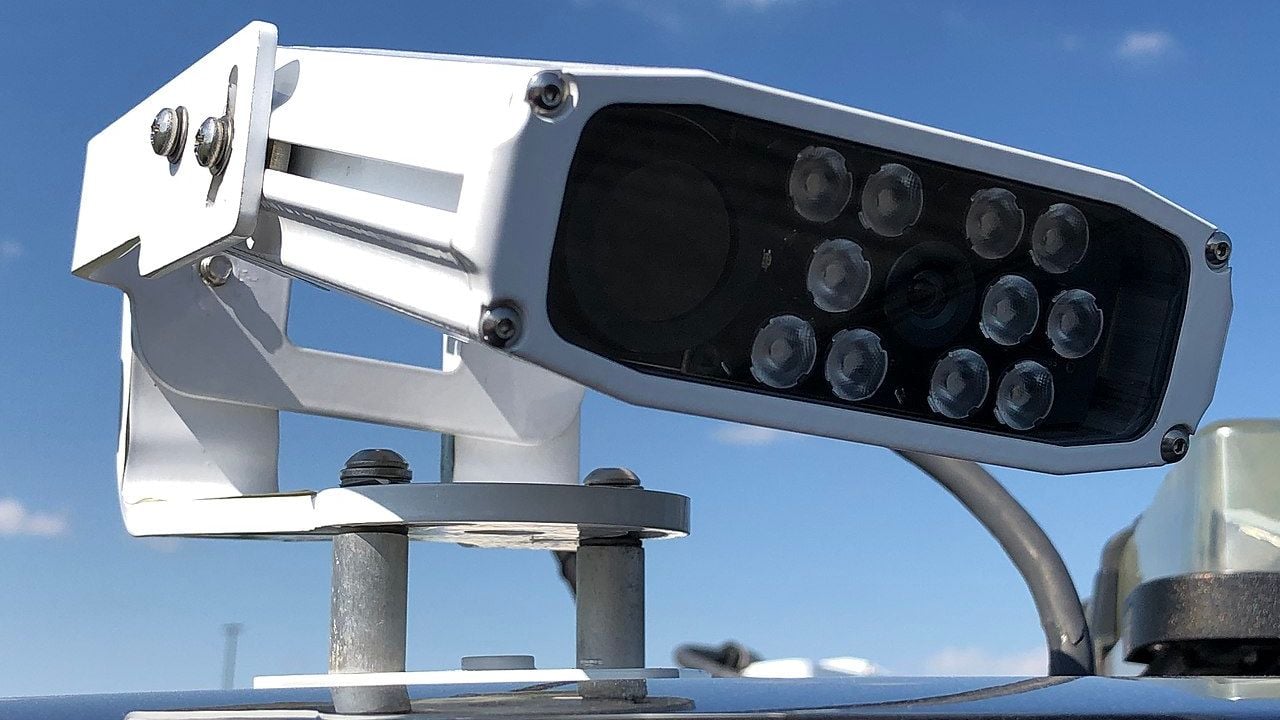
Instead, cameras and sensors capture a license plate photo after the light turns red, a private company reviews the footage and then the citation gets mailed to the vehicle owner. It’s an automated sequence with no human field witness, no sworn law enforcement testimony and, in many cases, a blurry flash in the fog of rush-hour traffic.
Now, some say this MO weakens the ticket’s legal backbone.
The “Fight, Don’t Pay” Loophole

Jay Beeber of the National Motorists Association says the courts can technically only refer unpaid fines to collection agencies, which lack real enforcement muscle. They cannot report the debt to credit bureaus and typically have no power to garnish wages. By that logic, a ticket could linger in a limbo where its practical consequences are murky at best.
That ambiguity has spawned a niche economy of ticket-fighting services charging between roughly $129 and $179 to contest citations in court. Their founders boast thousands of successful challenges, arguing that calibration issues, misreads and “fraction-of-a-second violations” make many tickets questionable at best.
Indeed, several California-based ticket-fighting services have sprang up and built businesses around exploiting the ambiguities of red-light camera enforcement. The most prominent include TicketBust, GetDismissed, and ClerkHero Traffic Defense. Both charge in the $129–$179 range and specializes in contesting citations by highlighting calibration errors, blurry images, or “fraction-of-a-second” violations.
TicketBust built its reputation around offering a flat-fee service of about $150. What they provide is a Trial by Written Declaration (TR-205), which allows drivers to contest traffic tickets without ever stepping foot in court.

Their strategy hinges on the argument that many red-light camera tickets are fundamentally flawed because they lack sworn officer testimony and instead rely on private contractors, which weakens their admissibility in court.
Over the years, TicketBust has publicized thousands of dismissals, particularly in Los Angeles and Orange County. One example they highlight involves drivers cited for entering an intersection just 0.2 seconds after the light turned red.
In those cases, the tickets were dismissed because the timing data didn’t align with California’s calibration standards, ultimately exposing the fragility of the evidence.
GetDismissed’s follows a slightly different approach by offering both DIY kits and attorney-backed services to help motorists fight citations. They capitalize on technical flaws in the evidence—things like incorrect license plate reads, poor photo quality, or missing documentation that proves the chain of custody for the footage.
They’ve had success in San Diego, where one case involved a driver whose license plate was partially obscured by glare in the photo. The court ruled that the evidence was insufficient, and the fine was dismissed.
They also report frequent wins in “rolling right turn” cases, where drivers slowed down but didn’t come to a complete stop before turning right on red. In many of those instances, judges agreed that the violation was too minor or the evidence too ambiguous to justify a fine.
ClerkHero Traffic Defense is a newer entrant to the market. Entering the space in 2025, they charge about $179 for full-service representation, with a strong emphasis on written declarations and appeals. Their legal argument leans heavily on California’s Senate Bill 720; the Safer Streets Act that took effect in 2026.
Under this law, red-light camera tickets are classified as civil violations rather than criminal ones. ClerkHero points out that civil fines don’t carry the same enforcement power. With no credit reporting or wage garnishment, they’re easier to contest.
They’ve documented wins in San Francisco, where judges dismissed tickets because the city’s private vendor failed to submit proper calibration logs. They also highlight cases involving “fraction-of-a-second” violations, which were thrown out after courts acknowledged that the margin of error in the camera sensors was greater than the alleged violation time.
These services capitalize on the technical and procedural weaknesses of automated traffic enforcement to turn what looks like an open-and-shut ticket into a contestable case.
To Pay or Not to Pay?
Still, legal analysts are split on the matter. While some traffic law experts note that a ticket must meet strict technical requirements to be valid (if the evidence falls short, the citation may be vulnerable in court), other voices caution drivers not to assume they can simply ignore a ticket.
According to multiple traffic defense resources, letting a citation go unaddressed can lead to late fees and potentially a hold on vehicle registration renewal. Some municipalities outside Los Angeles County can even escalate unpaid tickets through the State Franchise Tax Board.
This contradiction creates a high-stakes guessing game for drivers with more questions than answers. Are the systems genuinely reducing dangerous driving or just snagging motorists on technicalities? Is civil classification a public safety tool or a cash cow? And crucially, what should a driver do when that envelope arrives at the mailbox?
One clear takeaway is that blindly paying every ticket may not be the rational move it once was.