

Digital insurer Lemonade (NYSE: LMND) recently unveiled its groundbreaking Autonomous Car Insurance product, offering a staggering 50% per-mile rate reduction for Tesla vehicles when Full Self-Driving (FSD) is engaged.
Announced on January 21, 2026, this first-of-its-kind policy is debuting with Tesla FSD, allowing it to leverage real-time vehicle data to differentiate between autonomous and human-driven miles. While the launch stems from a technical collaboration with Tesla, it’s important to note that Lemonade isn’t a Tesla company.
Lemonade is an independent insurer founded in 2015 by Daniel Schreiber (former president of Powermat) and Shai Wininger (Fiverr co‑founder). It is a publicly traded company headquartered in New York City and specializing in renters, homeowners, pet, car, and life insurance, using AI and behavioral economics to streamline claims and underwriting.
Insurance is half price when Tesla self-driving is activated, because it increases safety so much https://t.co/0aBO99Pgns
— Elon Musk (@elonmusk) January 21, 2026
Tesla does have a separate insurance product called Tesla Insurance that it launched in 2019, designed specifically for Tesla vehicle owners. It has no corporate connection to Lemonade.
The Tesla-Lemonade partnership grants Lemonade access to previously unavailable telemetry that feeds into advanced risk prediction models. For car enthusiasts who’ve long debated FSD’s viability, this appears like external validation of Tesla’s autonomy tech, potentially accelerating adoption among skeptical drivers.
Musk’s Viral Post as Fuel for Hype and Scrutiny
The buzz ignited when Tesla CEO Elon Musk amplified the news on X (formerly Twitter), quoting a post from EV analyst Sawyer Merritt and declaring, “Insurance is half price when Tesla self-driving is activated, because it increases safety so much.”
Musk’s post, which garnered over 91,000 likes and 30 million views within days, underscores the seismic shift. Replies poured in from the Tesla faithful: some hailed it as a “life-saving feature,” while others questioned why Tesla’s own insurance arm isn’t matching the offer.
One user lamented, “Why push Lemonade instead of Tesla Insurance? Critics, like those warning of “incentivized loss of freedom,” raised dystopian concerns about mandatory autonomy for safety. Yet, the core message resonates: data proves FSD isn’t just convenient; it’s quantifiably safer.
The Numbers: Just How Much Safer Is Autonomous Driving?

Diving into the numbers, Tesla’s latest safety reports paint a compelling picture. In Q3 2025, vehicles using Autopilot experienced one crash every 6.36 million miles—nearly nine times safer than the U.S. national average of one accident every 699,000 miles. FSD Beta users fare even better, logging just 0.31 accidents per million miles, per Tesla’s Impact Report.
Compare that to human drivers: the baseline major collision rate stands at one every 1.5 million miles on highways and 505,000 miles on non-highways, making non-autonomous driving up to 2.97 times riskier. Lemonade’s analysis echoes this, citing data showing significantly reduced risk during FSD operation.
As Shai Wininger, Lemonade’s co-founder, put it: “A car that sees 360 degrees, never gets drowsy, and reacts in milliseconds can’t be compared to a human.” The insurer anticipates further rate drops as Tesla’s FSD software updates (expected in 2026) enhance safety, potentially making autonomous miles even cheaper.
Navigating the Data Privacy Minefield
This Lemonade–Tesla arrangement lands right in the middle of a regulatory and cultural minefield, and the potential backlash over data-sharing concerns is not just noise. It reflects years of unresolved tension around vehicle data, consent, and who ultimately controls the digital exhaust modern cars generate.
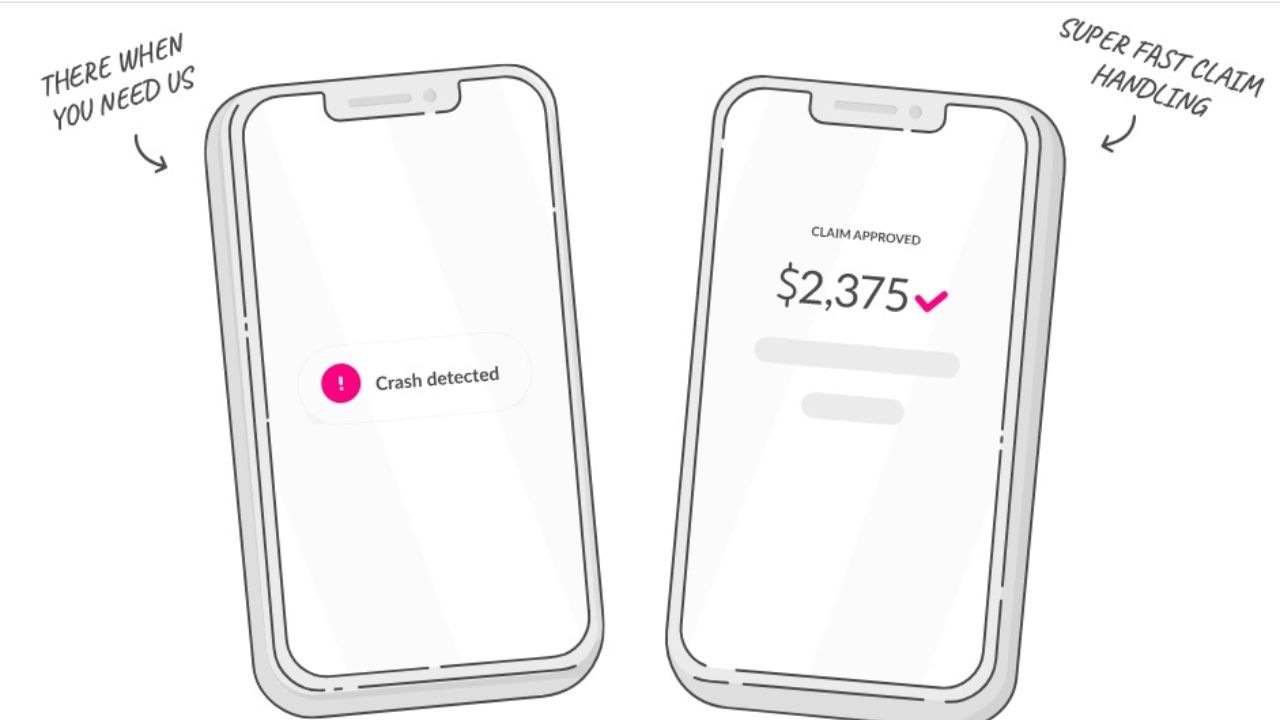
Regulators in the U.S. and EU have been increasingly vocal about automakers monetizing driver data. The fear is that insurers could penalize drivers for behavior patterns, eroding privacy. Several automakers (GM, Honda, Toyota) have come under fire for selling telematics data to third-party brokers, which insurers then used to raise premiums.
Notably, California, the EU’s GDPR framework, and U.S. congressional hearings have all emphasized driver consent and transparency. We recently published the story of a Florida man who sued Toyota for $56 million, claiming his RAV4 collected and shared data without his consent.
The Lemonade-Tesla partnership will expectedly be scrutinized for whether Tesla owners explicitly opt in, or whether data flows automatically once FSD is activated.
At a technical level, Lemonade’s Autonomous Car Insurance is undeniably clever.
Pricing insurance differently based on whether a car is driven by a human or software is something insurers have talked about for more than a decade. The missing piece has always been reliable, verifiable data.
Why This Discount Could Be a Slippery Slope for Privacy

Tesla is one of the very few automakers that can provide granular, real-time telemetry showing when Full Self-Driving is engaged, when it disengages, and under what conditions. From a pure actuarial standpoint, Lemonade is doing what insurers are supposed to do: price risk more precisely.
But that same precision is exactly why regulators and privacy advocates might be alarmed.
Across the US and EU, lawmakers have been tightening rules around vehicle data sharing, often reacting to fears that automakers could become silent data brokers. Cars now collect location history, driving style, biometric identifiers, cabin audio, and even camera footage.
Regulators worry that once this data flows to insurers, it could be used not only to reward good behavior but to quietly penalize drivers in ways they do not fully understand.
The predictable outrage over Lemonade’s announcement won’t be about the discount but about precedent. Once an insurer can see when autonomy is engaged, the next logical step is asking what happens when it is not.
Drivers fear a future where opting out of FSD, driving at night, or choosing certain routes could raise premiums. Even if Lemonade insists the policy only discounts autonomous miles, critics will see a slippery slope toward hyper-surveillance underwriting.
Regulatory Guardrails Are Already in Motion
Regulators have already drawn lines in this area. Several US states restrict how telematics data can be used in insurance pricing. In the EU, GDPR treats vehicle telemetry as personal data that requires explicit, informed consent and strict limitations on secondary use.
Ongoing investigations into automakers sharing driving data with insurers without clear disclosure have made agencies especially sensitive to anything that looks like backdoor collaboration.
Lemonade will argue, with some justification, that this program is opt-in and transparent. Drivers must actively choose the policy, and the discount applies only when FSD is engaged. From a legal standpoint, that consent framework matters.
Regulators generally tolerate data sharing when consumers knowingly trade data for savings. The challenge is proving that consent is meaningful rather than buried in dense terms and conditions.
There is also a deeper liability question hiding beneath the headlines. By pricing FSD miles as lower risk, Lemonade is implicitly making a claim about Tesla’s autonomy performance.
That could become problematic if regulators later determine that Full Self-Driving does not meet safety thresholds implied by the discount. If a serious crash occurs during an FSD-discounted mile, plaintiffs may argue that the insurer endorsed the system’s safety in ways that influenced consumer behavior.
The Hidden Liability in Endorsing Autonomy’s Safety
This is where automaker data sharing becomes especially sensitive. Regulators do not want insurers or manufacturers nudging drivers into using semi-autonomous systems more often through financial incentives before safety oversight has fully caught up.

The concern is not hypothetical. Transportation agencies have repeatedly warned against overstating autonomy capabilities, and insurance discounts tied to software engagement could be seen as indirect marketing.
At the same time, it would be simplistic to frame this purely as corporate overreach. Usage-based insurance already exists. Millions of drivers allow apps or dongles to track acceleration, braking, and mileage in exchange for lower premiums.
What makes the Lemonade–Tesla arrangement different is scale and asymmetry. Tesla controls both the vehicle and the data pipeline, giving it an unusually powerful role in shaping insurance outcomes without being the insurer itself.
Indeed, this partnership may survive regulatory scrutiny, but not without guardrails. Expect pressure for clearer disclosures, tighter limits on secondary data use, and possibly rules that prohibit insurers from penalizing drivers for opting out of autonomy features.
The predictable outrage is less about this specific discount and more about anxiety over a future where your car quietly negotiates your insurance behind your back.
A Glimpse into a Radically Different Insurance Future
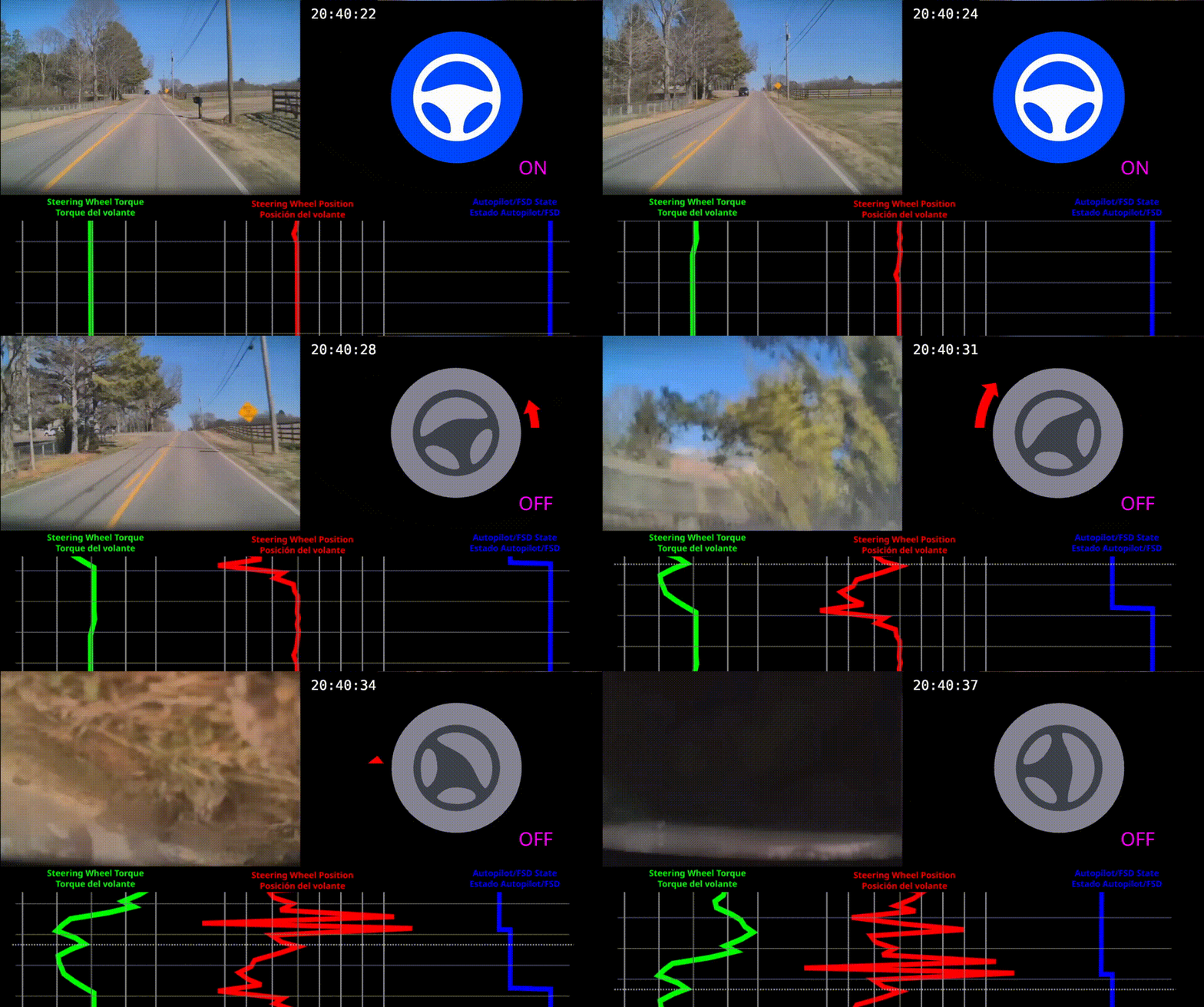
But why the premium slash now? Tesla owners know insurance pain all too well. Average full-coverage rates for a 2023 Tesla hit $271 monthly, or $3,252 annually—49% higher than gas-powered cars due to pricey repairs and battery tech.
Models like the Model X average $4,254 yearly, while the Cybertruck pushes $5,000. EVs overall cost $4,058 to insure annually, versus $2,726 for ICE vehicles. Lemonade’s usage-based model flips this script by using Tesla’s sensors for precise risk assessment.
Traditional insurers treat Teslas like any car, but this tech stack collects massive real-time data for dynamic pricing—something no legacy player has matched.
By broader implication, autonomous vehicles could slash road accidents by 90%, per industry forecasts, decimating claims and fraud while shifting liability from drivers to manufacturers. This might shrink the $175 billion U.S. auto insurance market, but it boosts profitability for adaptive firms like Lemonade.
Repair costs may rise (AV sensors are expensive) but fewer incidents (projected 80% drop in premiums long-term) could make owning a Tesla more affordable. Implicitly, this means FSD is a game-changer. After all, with 2026 poised for FSD expansions, expect rivals like Waymo or GM’s Super Cruise to pressure insurers similarly.
Ultimately, Lemonade’s launch demystifies autonomy’s edge in the sense that its isn’t mere hype but data-driven disruption. In the sense that the market gains cheaper coverage, safer roads, and incentive to embrace tech that outperforms humans.
If nothing else, Lemonade’s move forces regulators to confront a question they can no longer avoid. In an era of software-defined vehicles, who owns the risk model: the driver, the insurer, or the automaker controlling the data?