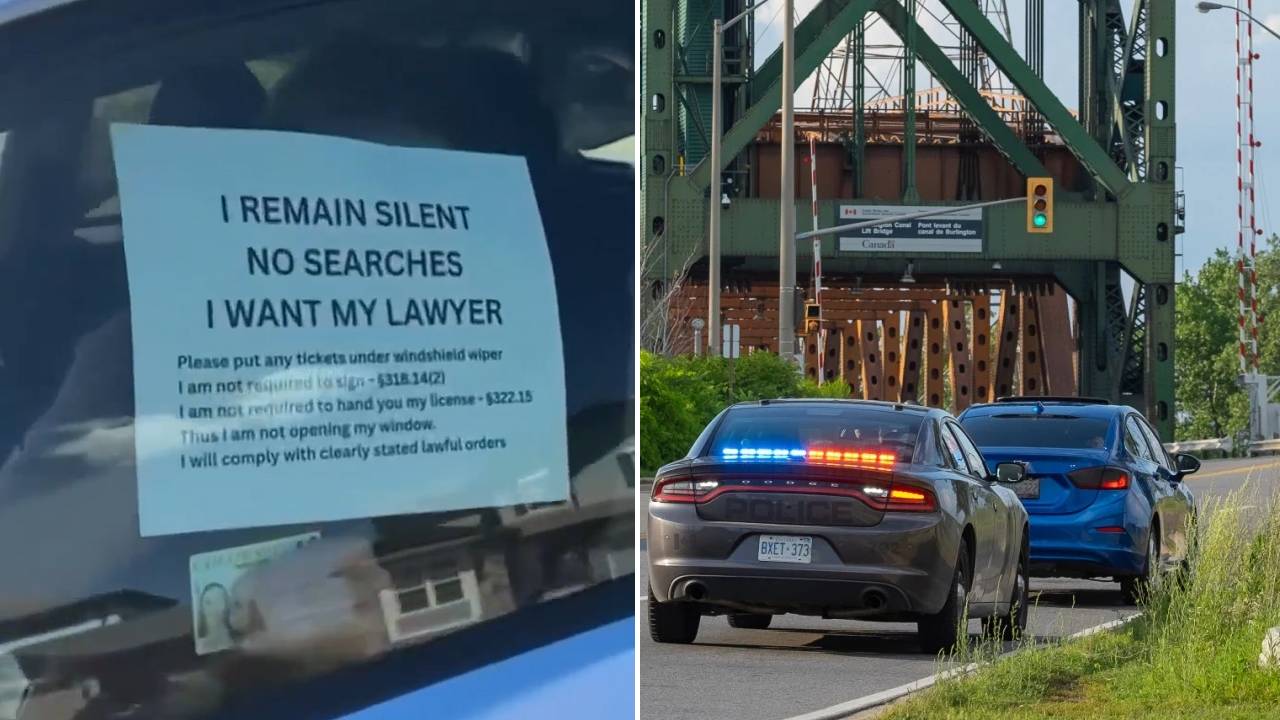
A viral video showing a driver using an “I Remain Silent” card during a traffic stop is sparking major debate online.
The clip, which has racked up millions of views on X, shows a printed sign taped to a car window instead of a driver speaking to police.
The sign reads: “I REMAIN SILENT, NO SEARCHES, I WANT MY LAWYER.”
It also includes legal citations and claims the driver doesn’t need to lower the window, speak to officers, or physically hand over their license. That last part is where things get complicated.
The Right To Remain Silent Is Real
This video went viral recently for using a window sign during a traffic stop.
It’s part of a new trend where drivers are displaying cards asserting their rights instead of speaking to the police.
Thought on this? pic.twitter.com/abMCqwgYBi
— illuminatibot (@iluminatibot) April 24, 2026
The Fifth Amendment does protect your right to remain silent.
Drivers generally do not have to answer investigative questions beyond basic identification requirements during a lawful traffic stop.
You’re also legally allowed to refuse consent for a vehicle search.
That part of these cards is legitimate.
Many legal experts agree that politely declining unnecessary questioning is well within your rights.
The Window Rule Is Where Things Fall Apart

This is where some of these viral cards become legally questionable.
Many versions circulating online cite Florida statutes that allegedly allow drivers to keep their windows rolled up and avoid handing over identification.
That’s misleading, as Florida law actually requires drivers to present their license when lawfully requested by an officer.
Most states have similar laws.
Holding your license against the glass may not satisfy that requirement.
Police Can Also Order You Out Of The Vehicle

This is backed by long-standing Supreme Court rulings.
In Pennsylvania v. Mimms (1977), the court ruled that officers can order drivers out of their vehicles during lawful traffic stops.
That ruling was later extended to passengers through Maryland v. Wilson (1997).
If an officer gives a lawful order and a driver refuses while pointing at a laminated card, things can escalate quickly.
Yes, that could potentially end with a broken window.
Why These Cards Are Becoming Popular
The idea appears to have spread from civil rights guides and online legal forums.
Some drivers see the cards as a way to avoid saying something that could be used against them.
Others simply don’t trust law enforcement interactions.
That explains why the concept keeps gaining traction online.
Legal Experts Say Simpler Is Better

Most civil liberties groups recommend a much simpler approach.
Provide your license, registration, and proof of insurance when requested.
Don’t consent to searches. Avoid unnecessary conversation. Ask if you’re free to leave.
That’s usually far safer than turning a basic traffic stop into a constitutional showdown through your side window.