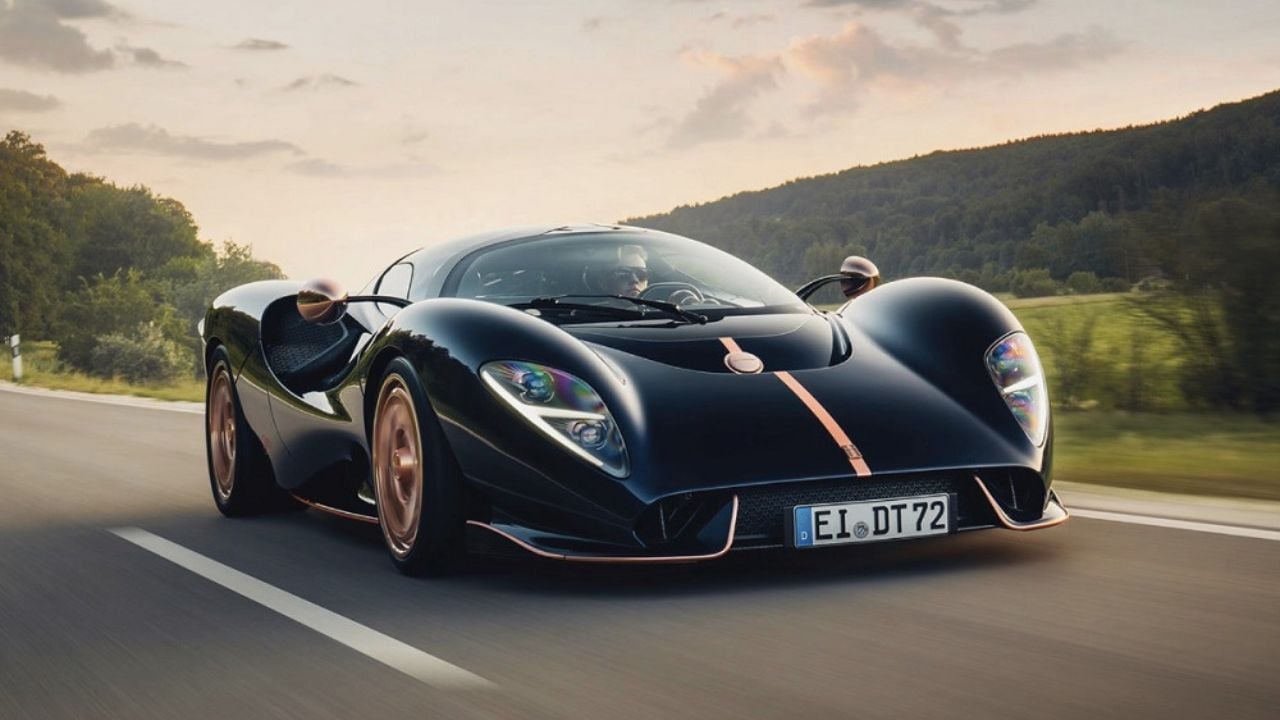
After years of waiting, delays, and technical hurdles, De Tomaso has finally shown the first customer version of the P72. The car first stunned crowds at the 2019 Goodwood Festival of Speed, and now it has moved from dreamlike concept to road-ready reality.
That alone makes the P72 one of the most interesting modern supercars. In an era shaped by electrification, software, and touchscreens, De Tomaso has created something deliberately mechanical.
The project also proves that there is still a place for cars inspired by the golden age of racing. The P72 is not trying to chase every current trend.
Instead, it celebrates design, sound, craftsmanship, and the connection between driver and machine. That makes its long road to production feel like part of the story rather than a simple delay.
A Long Road From Concept To Customer Car
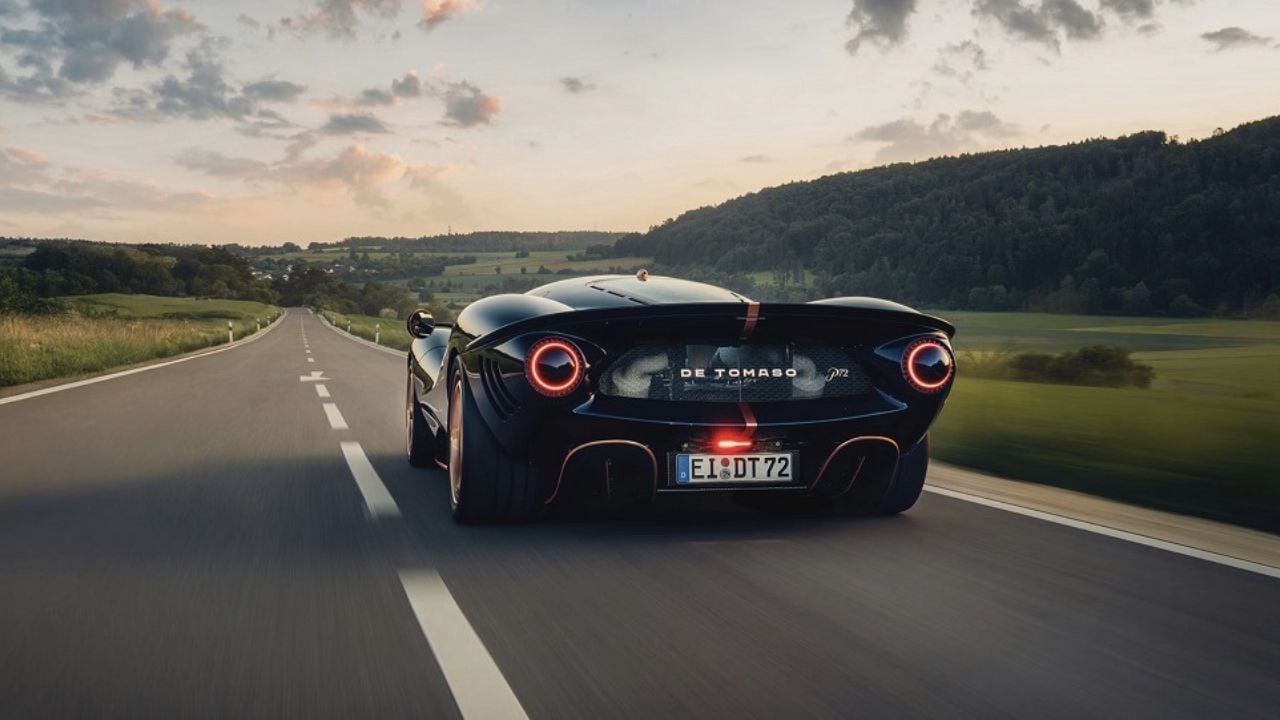
The P72 story began in 2019, when the revived De Tomaso brand revealed a prototype that immediately attracted global attention. Its shape looked unlike almost anything else in the modern supercar world.
Turning that concept into a production vehicle proved much harder than expected. The pandemic, supply chain problems, and changes in manufacturing plans all slowed the project.
The first fully functional prototype was completed only after years of development. Now the first customer car has been shown, confirming that the P72 is finally becoming a real hand-built production model.
That matters because many small-volume supercar projects never reach this stage. The P72 has survived the difficult move from beautiful show car to finished customer machine.
Aurelian Night Gives The First Car A Dramatic Look
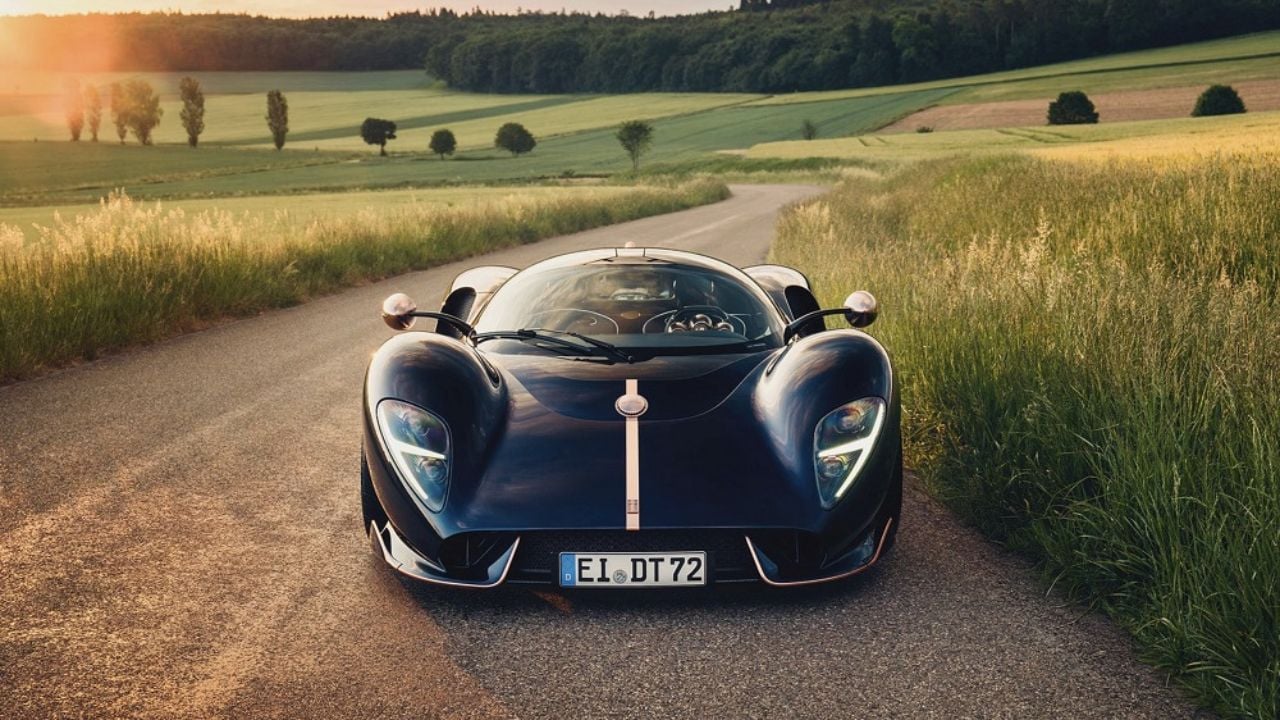
The first customer example is finished in a special color called Aurelian Night. At first glance, it looks nearly black, but direct sunlight reveals deep blue tones beneath the surface.
Rose gold accents give the car an even more distinctive character. They appear on the front splitter, air intakes, rear diffuser, mirror housings, wheels, and the central line running along the body.
The design comes from Jowyn Wong of Wyn Design and takes inspiration from 1960s endurance racing prototypes. Instead of sharp creases and aggressive angles, the P72 uses flowing surfaces, rounded forms, and balanced proportions.
The result feels closer to a classic Le Mans prototype than a typical modern hypercar. It has drama, but the shape is smoother and more elegant than many of today’s extreme performance cars.
The Cabin Avoids Modern Digital Distractions
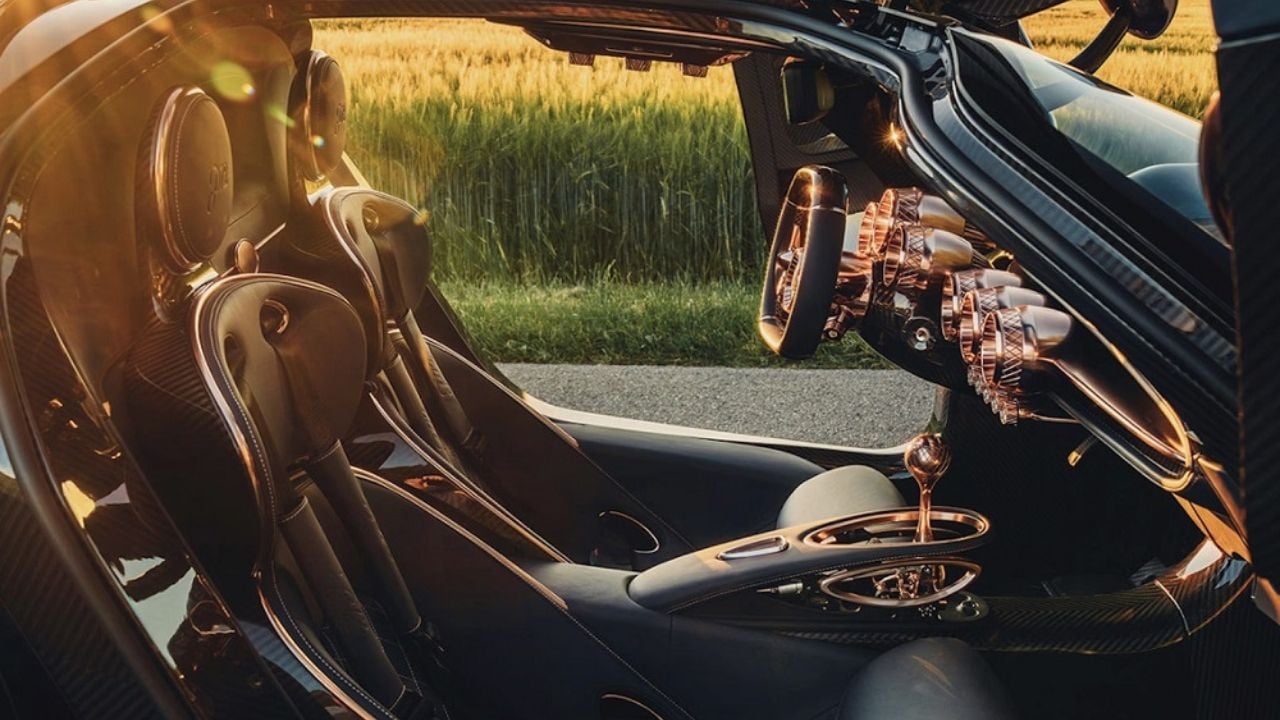
The interior follows the same philosophy as the exterior. The first customer car uses blue leather, rose gold details, and metal components that make the cabin feel closer to a mechanical watch than a conventional supercar interior.
There are no large multimedia screens, digital instrument panels, or complex menus dominating the dashboard. De Tomaso chose analog gauges, physical controls, and carefully finished metal details.
That approach is rare in today’s seven-figure performance car market. Most modern supercars are filled with screens, configurable modes, and digital interfaces.
The P72 goes in the opposite direction. It wants the driver to focus on the machine, the road, and the manual gearshift, rather than a layer of electronic menus.
A Supercharged Ford V8 Keeps The Car Mechanical
Power comes from a supercharged 307 cubic inch Ford Coyote V8 developed with Roush Performance. The engine produces about 700 HP, with recent customer-car reports listing roughly 605 lb ft of torque.
That engine choice fits De Tomaso history. The original brand was famous for blending Italian design with American V8 power, most notably in the Pantera.
The P72 uses that same broad idea in a much more expensive and sophisticated form. A Roots-style supercharger, a dry-sump lubrication system, and upgraded internal components give the engine the strength needed for a limited-production supercar.
Power goes only to the rear wheels through a six-speed manual transmission. In today’s world of dual clutch gearboxes and launch control systems, that decision gives the P72 a very different personality.
The Suspension Must Be Adjusted By Hand
De Tomaso also avoided the usual modern drive mode menu. Owners do not simply press a button to move from comfort to track settings.
Instead, the P72 uses a manually adjustable suspension. The setup can be tuned with tools, much like older racing cars that required physical adjustment rather than electronic presets.
That detail says a lot about the car’s purpose. The P72 is not trying to make performance effortless for everyone.
It asks the owner to understand the machine and interact with it more directly. That may limit convenience, but it also gives the car the kind of mechanical honesty that has become rare.
Only 72 Cars Will Be Built
Production of the De Tomaso P72 will be limited to just 72 examples. Each one will be hand-built and commissioned around the buyer’s preferences.
Pricing is expected to sit around $1.7 million to $1.8 million before options, personalization, and taxes. With bespoke materials and individual commissions, many finished cars will likely cost considerably more.
That makes the P72 deeply exclusive even by modern supercar standards. It is not designed for volume, broad appeal, or daily practicality.
It is a collectible object with a clear point of view. De Tomaso is selling an experience built around craftsmanship, analog controls, and old-school emotional appeal.
The P72 Celebrates A Different Kind Of Supercar
In a world where performance cars are becoming quieter, more digital, and more automated, the De Tomaso P72 feels intentionally different. It is not trying to beat every rival through the newest software or the most advanced hybrid system.
Its appeal comes from proportion, sound, materials, and mechanical connection. Those qualities explain why the car attracted so much attention when it first appeared at Goodwood.
The first customer car shows that De Tomaso has managed to preserve much of that original magic. The P72 still looks like a concept, but it is now entering the real world.
That makes it one of the most unusual supercars of the moment. It is modern in construction, but its soul belongs to an earlier age of racing, craftsmanship, and driver involvement.
This article was originally published by Autorepublika.com and is republished with permission. It has been reviewed and edited by Guessing Headlights.