Every year, the automotive world gives us a parade of new models, refreshed grilles, and upgraded infotainment systems. But every once in a while, a car rolls onto the scene that makes everyone stop mid-conversation and stare.
These cars have continued to redefine what we thought possible on four wheels. From the chrome-laden beauties of the 1950s to today’s electric speed demons, certain vehicles have managed to capture the zeitgeist so perfectly that they become cultural icons. Whether through jaw-dropping styling, groundbreaking technology, or simply an indefinable “it” factor, these cars didn’t just participate in automotive history, they wrote whole chapters of it.
Let’s take a cruise through the decades and revisit the showstoppers that left tire marks on our collective consciousness.
1957 Chevrolet Bel Air

The ’57 Chevy Bel Air didn’t just steal the show, it practically owned the decade. With its distinctive tail fins, chrome-heavy grille, and those iconic dual headlights, this car turned suburban driveways into showrooms across America. The Bel Air represented the optimism of post-war prosperity wrapped in sheet metal and painted in colors like “Tropical Turquoise” and “Surf Green.”
Beyond the styling, Chevy offered their new fuel-injected V8 engine option, which brought legitimate performance to match those good looks. Even today, spotting a pristine Bel Air at a car show draws crowds like moths to a beautifully polished flame.
It’s the car that made “classic American” mean something specific and wonderful.
1961 Jaguar E-Type

A famous quote often attributed to Enzo Ferrari calls the Jaguar E Type the most beautiful car ever made, but the attribution is not definitively documented.
The Jaguar E-Type burst onto the scene at the 1961 Geneva Motor Show and literally stopped traffic with its sleek, aerodynamic body that looked like it was doing 150 mph while standing still. That long hood, covered headlights, and curvaceous rear end weren’t just for show, the E-Type could actually hit 150 mph, making it one of the fastest production cars of its era.
British engineering met Italian styling sensibilities, all at a price point that undercut competitors by thousands. The E-Type became an instant icon, gracing the driveways of celebrities and appearing in countless films.
It proved that sports cars could be both breathtakingly beautiful and genuinely fast.
1964 Ford Mustang

Ford’s Mustang didn’t invent the sporty car, but it absolutely invented the “pony car” segment and became a cultural phenomenon almost overnight. Introduced on April 17, 1964, the Mustang took about 22,000 orders on its first day and sold 418,812 units in its first 12 months, numbers that seemed impossible for a completely new model.
The formula was brilliant: take a compact car platform, add long-hood-short-deck styling, offer V8 power as an option, and price it so the average American could actually afford one. The Mustang appeared in movies, inspired Beach Boys songs, and became the automotive symbol of youth culture in the 1960s. Its influence spawned competitors like the Camaro and Challenger, creating a performance segment that’s still thriving today.
The original Mustang proved that accessible performance could be just as exciting as exotic European machinery.
1966 Lamborghini Miura

The Miura arrived like a thunderbolt from Sant’Agata and changed supercar design forever. This was not just another expensive Italian GT. It was one of the first high performance production road cars to use a rear mid engine layout, with a transversely mounted V12 sitting right behind the cabin.
Designer Marcello Gandini gave it impossibly low proportions, sweeping curves, and those famous “eyelashes” around the headlights that made it look perpetually seductive. The Miura could hit 170 mph, making it the fastest production car in the world when it debuted. More importantly, it established the mid-engine layout and sleek design that virtually every supercar since has followed.
Seeing a Miura today still feels like encountering automotive royalty, it’s the car that taught the world what a supercar should look like.
1970 Plymouth Barracuda

The third-generation Barracuda showed up for 1970 with styling so aggressive it still looks modern over 50 years later. Plymouth ditched the fish-inspired curves of earlier models for sharp, angular lines and a wide range of performance V8 options for the era.
The top-spec ‘Cuda could be ordered with the legendary 426 Hemi or the 440 Six Barrel, making it a drag strip terror in factory trim. That distinctive “gill” design on the rear fenders and the split grille design gave it an unmistakable presence on the street. While Mustangs and Camaros sold in much higher numbers, the Barracuda became the connoisseur’s choice for muscle car enthusiasts who wanted something different.
Today, Hemi ‘Cuda convertibles and other top tier, numbers matching examples are among the most valuable American muscle cars, with some commanding seven figure prices at auction.
1984 Dodge Caravan

Hear me out, the original Dodge Caravan might not quicken your pulse, but it absolutely revolutionized how American families thought about transportation. Before the Caravan, families either squeezed into station wagons or bought full-size vans that drove like trucks.
Chrysler’s front-wheel-drive minivan offered car-like handling, sliding doors for easy access, and enough space for seven people plus their luggage. The Caravan spawned an entirely new vehicle category and sold over 200,000 units in its first year, proving Americans were desperate for this exact solution. By the 1990s, the minivan had become the default family hauler, appearing in countless suburban driveways.
While SUVs have largely replaced them today, the Caravan’s influence on automotive design and family life remains undeniable.
1990 Mazda Miata

The Mazda Miata arrived at exactly the right moment to save the roadster from extinction.
By the late 1980s, British sports cars had mostly disappeared, killed by reliability issues and safety regulations. Mazda looked at the classic British roadster formula, lightweight, nimble, affordable, convertible, and asked, “What if we built one that actually started every morning?” The result was the NA Miata, a car that weighed just 2,100 pounds, featured perfect 50/50 weight distribution, and cost under $14,000.
It became an instant success, selling over 400,000 units in its first generation and proving there was still a massive market for simple, fun-to-drive cars. The Miata didn’t just steal the show, it created a whole new genre of modern roadsters.
With production now beyond one million, it is recognized by Guinness World Records as the best selling two seater sports car.
1997 Toyota Prius
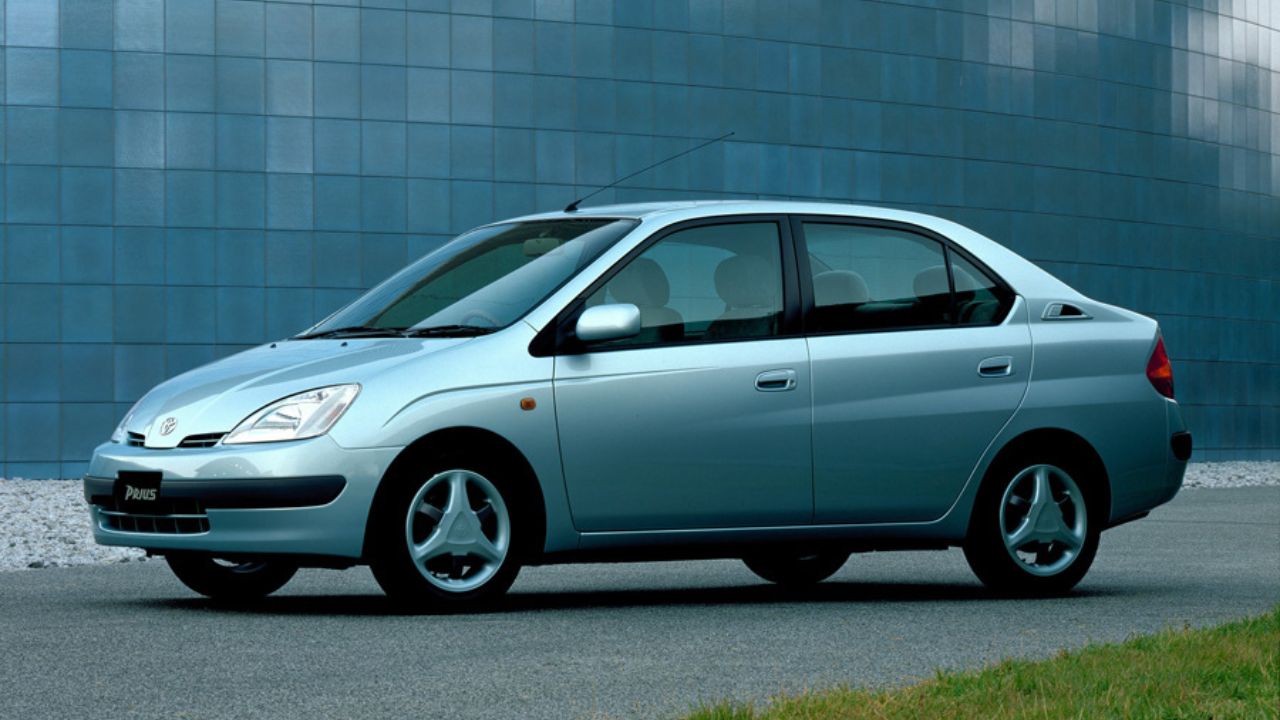
The first-generation Prius landed in Japan in 1997, looking like a slightly awkward sedan, but it represented a seismic shift in automotive thinking. Toyota had achieved something engineers thought would take another decade: a mass-market hybrid vehicle that actually worked.
When it reached the U.S. for the 2001 model year, the Prius combined a gasoline engine with an electric motor and carried an EPA estimate of about 41 mpg combined, far higher than most comparable sedans of the era. Early adopters were primarily environmentally conscious buyers, but Hollywood celebrities soon made the Prius a status symbol, proving “green” could be cool. The technology Toyota pioneered has since spread across its entire lineup and influenced virtually every manufacturer’s electrification strategy.
The Prius might not win styling awards, but its impact on the automotive industry is impossible to overstate.
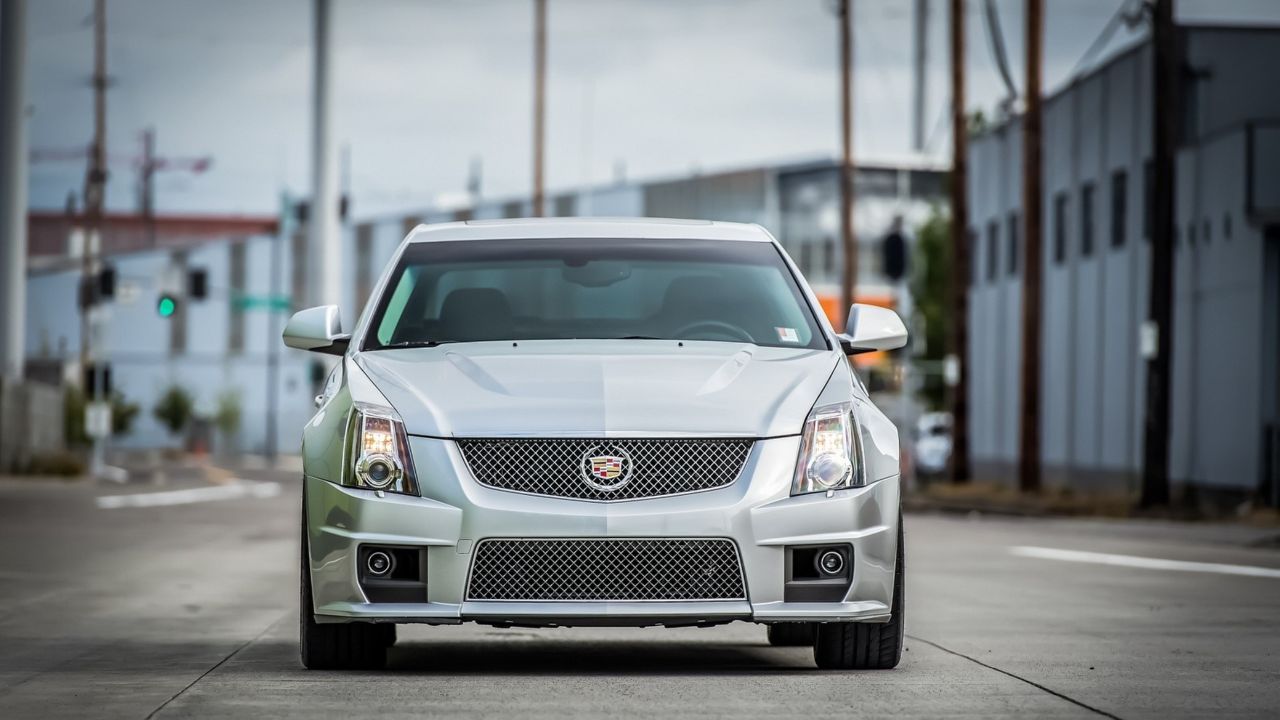
2004 Cadillac CTS-V

The original CTS-V announced that your grandfather’s Cadillac was officially dead and buried. By stuffing the Corvette’s LS6 V8 under the hood of their angular sport sedan, Cadillac created a legitimate BMW M5 competitor that could hit 60 mph in under five seconds.
This wasn’t badge engineering or half-hearted performance: the CTS-V featured upgraded brakes, suspension, and a proper six-speed manual transmission. Starting around $50,000, it undercut German rivals by tens of thousands while delivering comparable performance. The CTS-V proved American manufacturers could build sophisticated performance sedans that didn’t just go fast in straight lines.
It kicked off Cadillac’s performance renaissance and established the V-Series as a credible performance brand that continues today.
2008 Tesla Roadster
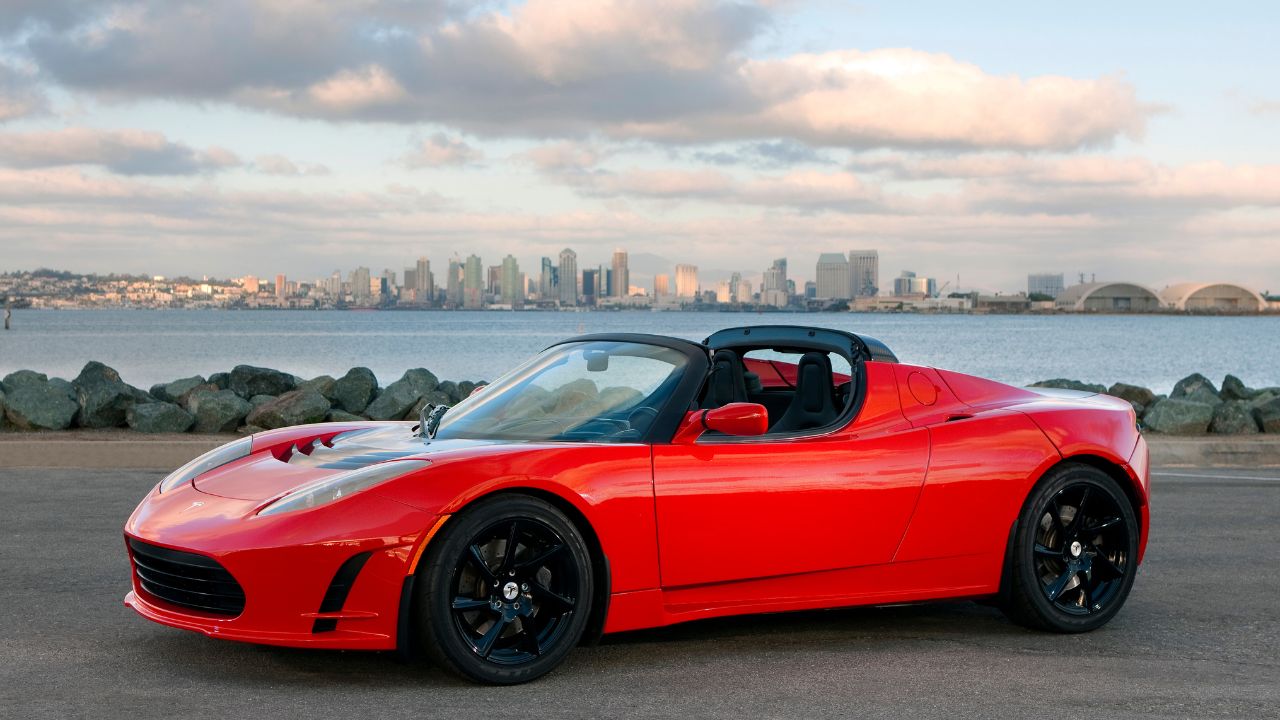
Before Tesla became a household name, they had to prove electric cars could be exciting rather than merely practical. The Tesla Roadster did exactly that, using Lotus Elise underpinnings and a revolutionary battery pack to create an electric sports car that could accelerate from 0-60 mph in under four seconds.
Its 244-mile range shattered expectations for electric vehicles, which had previously been limited to glorified golf carts with 50-mile ranges. The Roadster was essentially a proof-of-concept for the entire company, demonstrating that electric powertrains could deliver supercar performance without emissions. Tesla sold about 2,450 Roadsters worldwide from 2008 to 2012, but its impact reverberated throughout the industry.
Every electric vehicle on the road today owes something to the Roadster proving that electric could mean exciting.
2017 Ford GT

Ford’s second-generation GT arrived as a carbon-fiber love letter to aerodynamics and racing heritage. Unlike the retro-styled 2005 GT, this new version pushed boundaries with flying buttresses, an active rear wing, and aggressive aero channels throughout the body. The twin-turbocharged 3.5-liter EcoBoost V6 raised eyebrows initially, who puts a V6 in a supercar?, until it started producing 647 horsepower and propelling the GT to a 216 mph top speed.
Ford strictly limited production and required potential buyers to apply for the privilege of purchasing one, creating instant collectibility. The GT went on to win its class at Le Mans in 2016, proving it wasn’t just a pretty face. It demonstrated that American manufacturers could compete with European exotics on every level, from technology to performance to exclusivity.
2025 Hyundai Ioniq 5 N
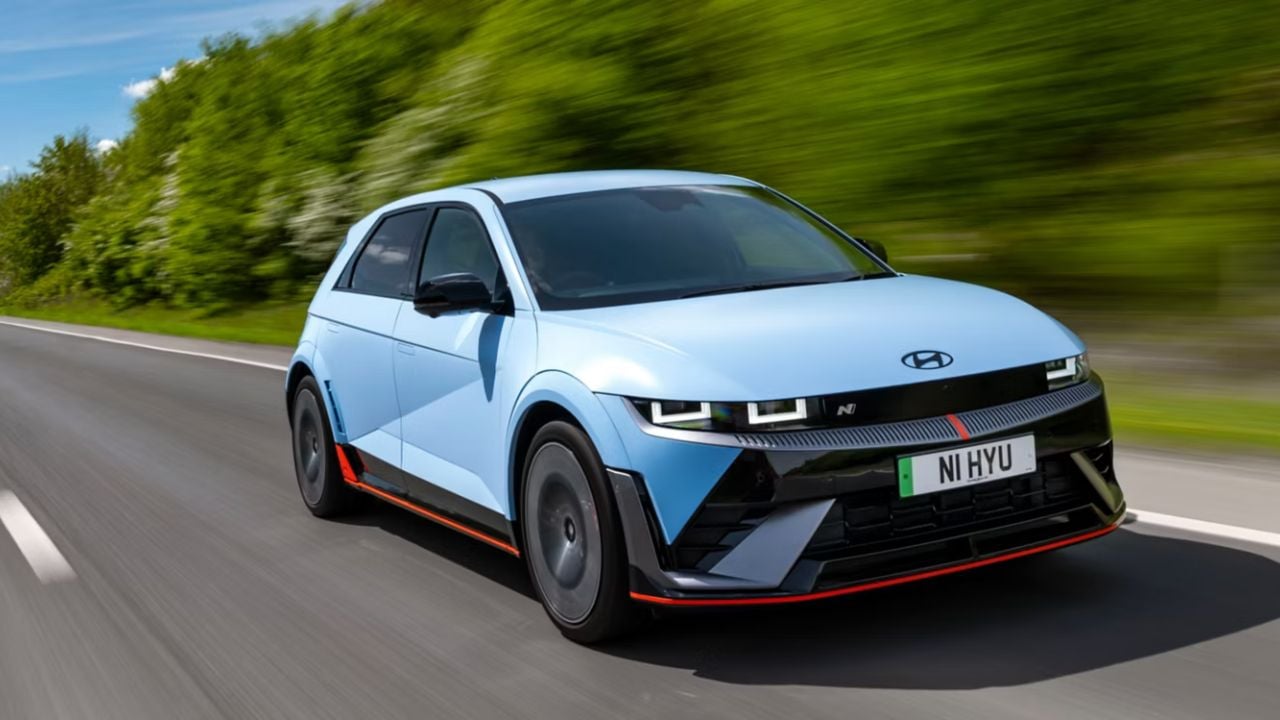
Hyundai raised eyebrows across the automotive world when they announced a high-performance electric hot hatch that could deliver simulated gear shifts and engine sounds. The Ioniq 5 N makes 601 horsepower in normal driving and up to 641 horsepower with its N Grin Boost feature, with Hyundai quoting 0 to 62 mph in 3.4 seconds, all while maintaining the practical hatchback shape of the standard Ioniq 5.
The engineering team included fake shifting and synthesized engine noise because they understood that driving emotion matters as much as raw performance numbers. With track-tuned suspension, massive Brembo brakes, and drift mode, Hyundai created an electric vehicle that enthusiasts actually want to drive hard. Starting around $66,200, it undercuts competitors like the BMW i4 M50, which starts around $72,050, while delivering similar straight line performance.
The Ioniq 5 N proves that electric performance cars can capture the joy of driving, not just the speed.
Conclusion

Looking back through these decades of automotive excellence, what strikes you most is how each of these cars reflected their specific moment in time while somehow transcending it. The ’57 Bel Air captured post-war optimism, the E-Type embodied 1960s sophistication, and the Tesla Roadster kicked off the electric revolution.
These weren’t just well-executed vehicles, they were statements that pushed the entire industry forward and changed what consumers expected from their cars. Some created entirely new categories, while others perfected existing formulas so thoroughly they became the definitive example. Whether you prefer the rumble of a Hemi V8 or the instant torque of an electric motor, there’s something special about cars that dare to be different.
These showstoppers remind us that the automobile, at its best, isn’t just transportation, it’s inspiration on wheels.