
We’ve all been there: sitting in a dealership while someone enthusiastically walks you through a dozen trim levels, each promising to unlock the “true potential” of the car you’re considering. But here’s a secret the auto industry doesn’t always advertise: some vehicles are so well-executed in their base form that climbing the trim ladder feels more like diminishing returns than genuine upgrades.
These aren’t stripped-down penalty boxes designed to lure you into spending more. They’re genuinely compelling machines that deliver the driving experience you’re after without requiring you to check a single option box.
Whether it’s a sports car that already has the performance goods or a daily driver with all the essentials nailed down, these base models prove that sometimes less really is more.
Mazda MX-5 Miata Sport

The Miata has always been about one thing: pure driving joy distilled to its essence. The base Sport trim starts around $28,000 and gives you everything that matters — a rev-happy 181-horsepower engine, perfectly weighted steering, and a manual transmission that snicks through gears like a dream.
Sure, the higher trims add niceties like upgraded audio and heated seats, but they don’t add a single ounce of fun to the driving experience. With its near-perfect 50/50 weight distribution and communicative chassis, the Sport trim delivers the same roadster thrills that have made the Miata legendary.
The cloth seats are actually lighter than the leather ones in pricier trims, which is exactly the kind of engineering purity enthusiasts appreciate.
Honda Civic LX

Honda’s base Civic LX proves that mainstream manufacturers haven’t forgotten how to build an engaging economy car. Starting at around $25,000, it comes with a punchy 158-horsepower turbocharged engine that makes merging and passing genuinely satisfying.
The continuously variable transmission is one of the better examples out there, and if you opt for the sedan with the manual gearbox, you’re getting one of the best-shifting transmissions in any affordable car. The chassis is composed and confidence-inspiring through corners, and the interior feels far more upscale than its price tag suggests.
Honda didn’t phone in the base model to push buyers upmarket: they made it good enough that upgrading feels optional rather than necessary.
Subaru WRX Base

The WRX has always been a performance bargain, and the base model continues that tradition at around $31,000. You get the full 271-horsepower turbocharged boxer engine, Subaru’s legendary all-wheel-drive system, and a six-speed manual transmission that’s perfectly suited to spirited driving.
The suspension is firm enough to handle back roads with enthusiasm but compliant enough for daily duty. While higher trims add features like upgraded infotainment and better interior materials, they don’t make the car any faster or more engaging to drive.
For pure performance per dollar, the base WRX is hard to beat, delivering rally-bred capability without requiring you to spring for GT or Limited badges.
Toyota GR86 Base

Toyota and Subaru’s collaborative sports car proves that rear-wheel-drive fun doesn’t require a luxury price tag or a loaded spec sheet. The base GR86 starts around $30,000 and includes the responsive 228-horsepower flat-four engine, a slick-shifting six-speed manual, and one of the best chassis balances in any modern sports car.
The lightweight construction means every input feels immediate and connected, and the naturally aspirated engine encourages you to explore the full rev range. Premium and Limited trims add convenience features, but the driving dynamics remain identical.
This is a car designed from the ground up to be entertaining in its purest form, and that philosophy shines through in the base model.
Volkswagen GTI S

The GTI has long been the thinking person’s hot hatch, and the base S trim delivers everything that made this car an icon. At around $32,000, you’re getting 241 horsepower from a turbocharged four-cylinder, a wonderfully balanced chassis, and either a six-speed manual or a quick-shifting dual-clutch automatic.
The standard equipment includes the essential performance features: proper adaptive dampers, a limited-slip front differential, and progressive steering that communicates road feel beautifully. The plaid cloth seats have become a GTI trademark, and they’re arguably more appealing than the leather in higher trims.
Volkswagen understands that GTI buyers want a performance-focused package, and the base model delivers exactly that.
Ford Mustang EcoBoost

There’s still some old-school thinking that the V8 is the only “real” Mustang, but the base EcoBoost proves that notion outdated. Starting around $32,000, the turbocharged 2.3-liter four-cylinder produces 315 horsepower and actually handles better than the heavier GT thanks to improved weight distribution.
The chassis is sharp and responsive, the brakes are strong, and the manual transmission offers genuine engagement. For drivers who prioritize handling dynamics over straight-line muscle, the EcoBoost delivers a more balanced and tossable experience.
The performance is genuinely impressive — 0 to 60 mph in under five seconds is nothing to dismiss — and it does all this while returning reasonable fuel economy.
Mazda3 Base

Mazda’s commitment to driving enjoyment extends even to its compact sedan and hatchback, where the base trim refuses to feel like a compromise. Starting around $24,000, the base Mazda3 features the refined 2.5-liter engine with 191 horsepower, a smooth-shifting six-speed automatic, and Mazda’s beautifully tuned suspension that balances comfort and engagement.
The interior quality rivals many luxury brands, with clean design and thoughtful ergonomics throughout. Every control feels precisely weighted, from the steering to the pedals, creating a sense of cohesion that’s rare in this price range.
Mazda designed this car for people who actually enjoy driving, and it shows in every mile.
Hyundai Elantra N Line

Hyundai’s N Line treatment takes the sensible Elantra and transforms it into something genuinely fun without requiring a jump to the full-blown N model. Around $27,000 gets you a spirited 201-horsepower turbocharged engine, sport-tuned suspension, and a standard manual transmission that’s satisfying to row through.
The handling is playful and engaging, with just enough stiffness to feel sporty without punishing your lower back on longer drives. The exterior styling is aggressive enough to turn heads without veering into boy-racer territory.
For buyers who want most of the fun without going full hot hatch, the base N Line hits an appealing sweet spot.
BMW 230i Coupe
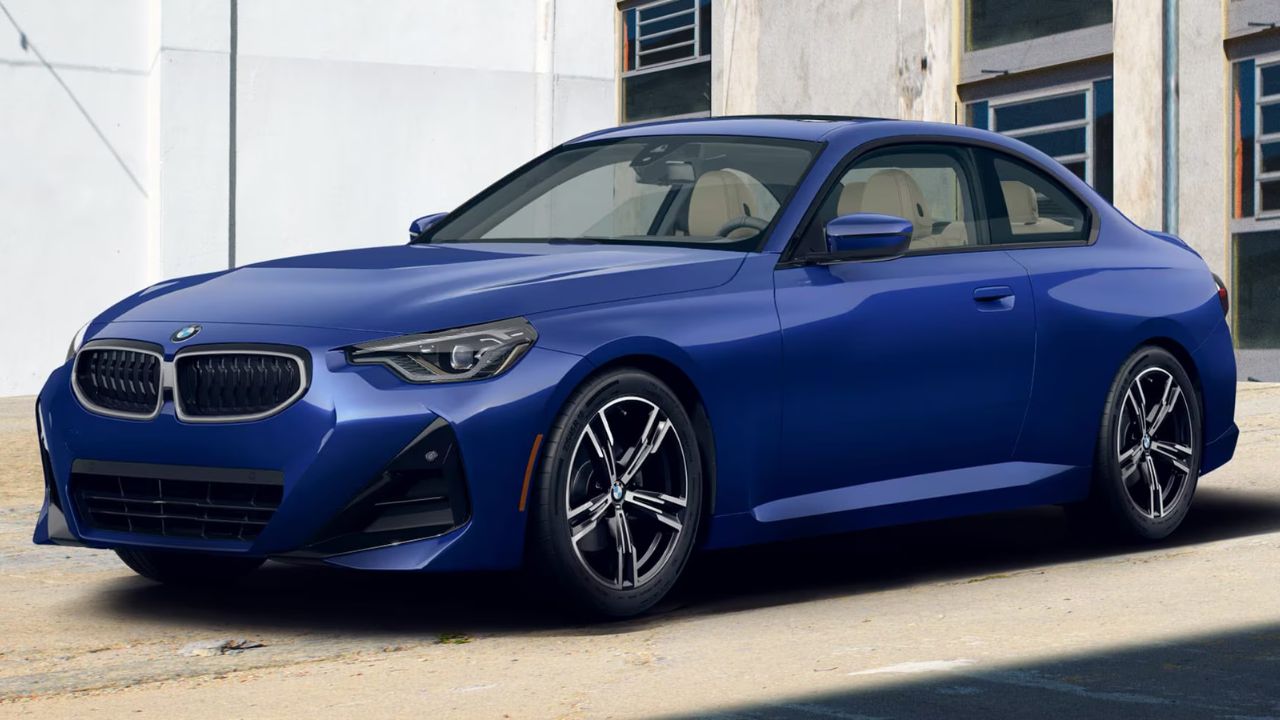
BMW’s smallest coupe proves that you don’t need the top-tier engine to enjoy the brand’s driving character. The base 230i starts around $38,000 with a turbocharged 2.0-liter engine making 255 horsepower — plenty for exploiting the car’s nimble handling and rear-wheel-drive layout.
The chassis is quintessential BMW: balanced, communicative, and eager to play in the corners. The eight-speed automatic transmission is responsive and well-programmed, though a manual is available for purists.
While the M240i offers more power, the lighter 230i feels more agile and connected, rewarding smooth driving rather than just rewarding your right foot.
Porsche 718 Cayman Base

Yes, a Porsche made this list, because even at around $68,000, the base Cayman delivers supercar levels of engagement without requiring a single option. The turbocharged 2.0-liter flat-four produces 300 horsepower, which might seem modest on paper but feels perfectly matched to the mid-engine chassis.
The steering is telepathic, the brakes are confidence-inspiring, and the six-speed manual transmission is one of the best in the business. Porsche’s options list is famously expensive, but the base Cayman proves the company didn’t hold anything back in the fundamentals.
This is a car that teaches you to be a better driver, and that quality exists independent of trim level.
Mini Cooper Hardtop

The base Cooper captures everything that makes this modern interpretation of a British icon so charming. Starting around $32,000, it features a peppy 134-horsepower turbocharged three-cylinder that delivers surprising punch thanks to the car’s light weight.
The go-kart handling dynamics are fully present, with quick steering and minimal body roll making every drive feel like an autocross run. The interior is quirky and well-built, with circular design elements that honor the original Mini’s aesthetic.
While the Cooper S adds more power, the base model’s lighter curb weight and lower price make it the value pick for drivers who appreciate nimble handling over straight-line speed.
Volkswagen Jetta GLI Base

VW’s sport sedan sibling to the GTI delivers similar thrills in a more practical package. The base GLI starts around $30,000 and includes the same 228-horsepower turbocharged engine, limited-slip differential, and adaptive dampers that make the GTI so engaging.
The longer wheelbase actually improves high-speed stability compared to the Golf, and the trunk space makes it more practical for real-world use. The six-speed manual transmission remains one of the most satisfying in the segment, with short throws and positive engagement.
For buyers who need four doors and a trunk but still want genuine performance, the base GLI doesn’t ask for compromise.
Conclusion

The automotive industry has trained us to think that base models are just marketing tools—deliberately underwhelming to push us toward pricier trims. But the cars on this list prove that philosophy doesn’t always hold true.
These vehicles were engineered with clear performance or driving goals from the start, and those goals were achieved before anyone started adding heated seats and premium sound systems. The beauty of these base models is that they let you put your money where it actually matters: into the driving experience itself.
Next time someone suggests you need to upgrade to “really enjoy” a car, remember that some of the best-driving machines on the road are perfectly complete exactly as they come off the factory floor