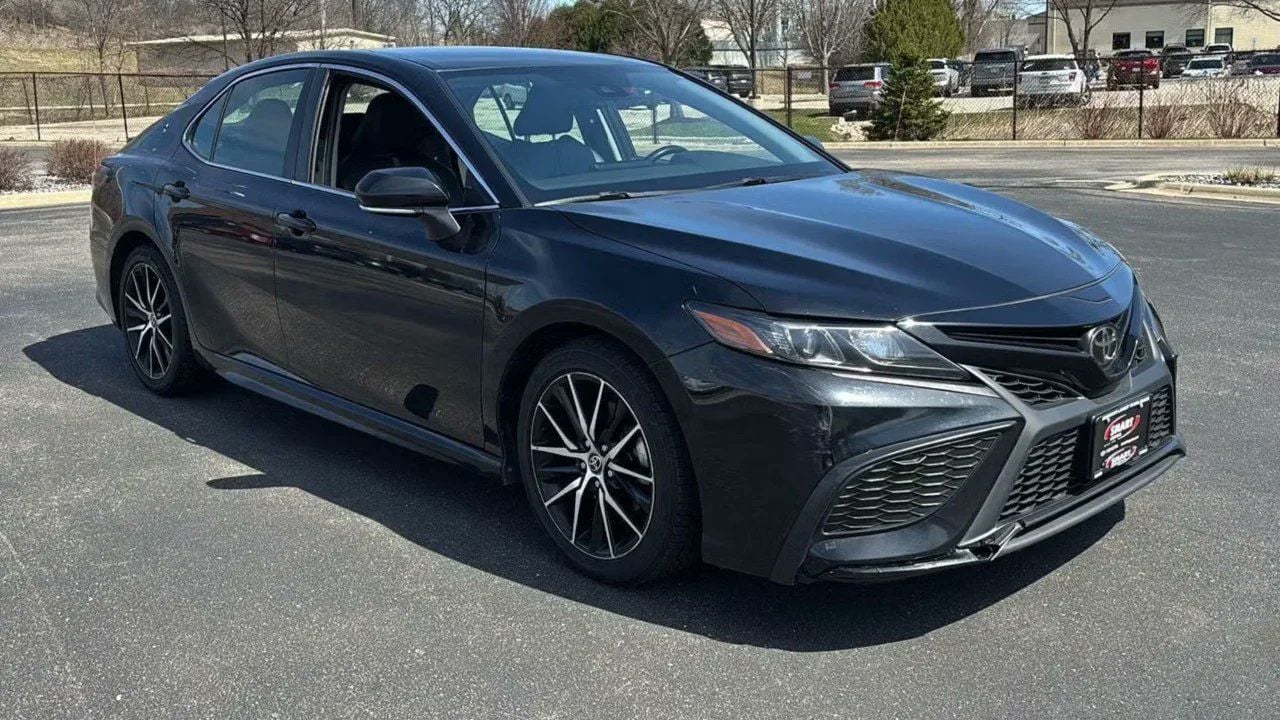

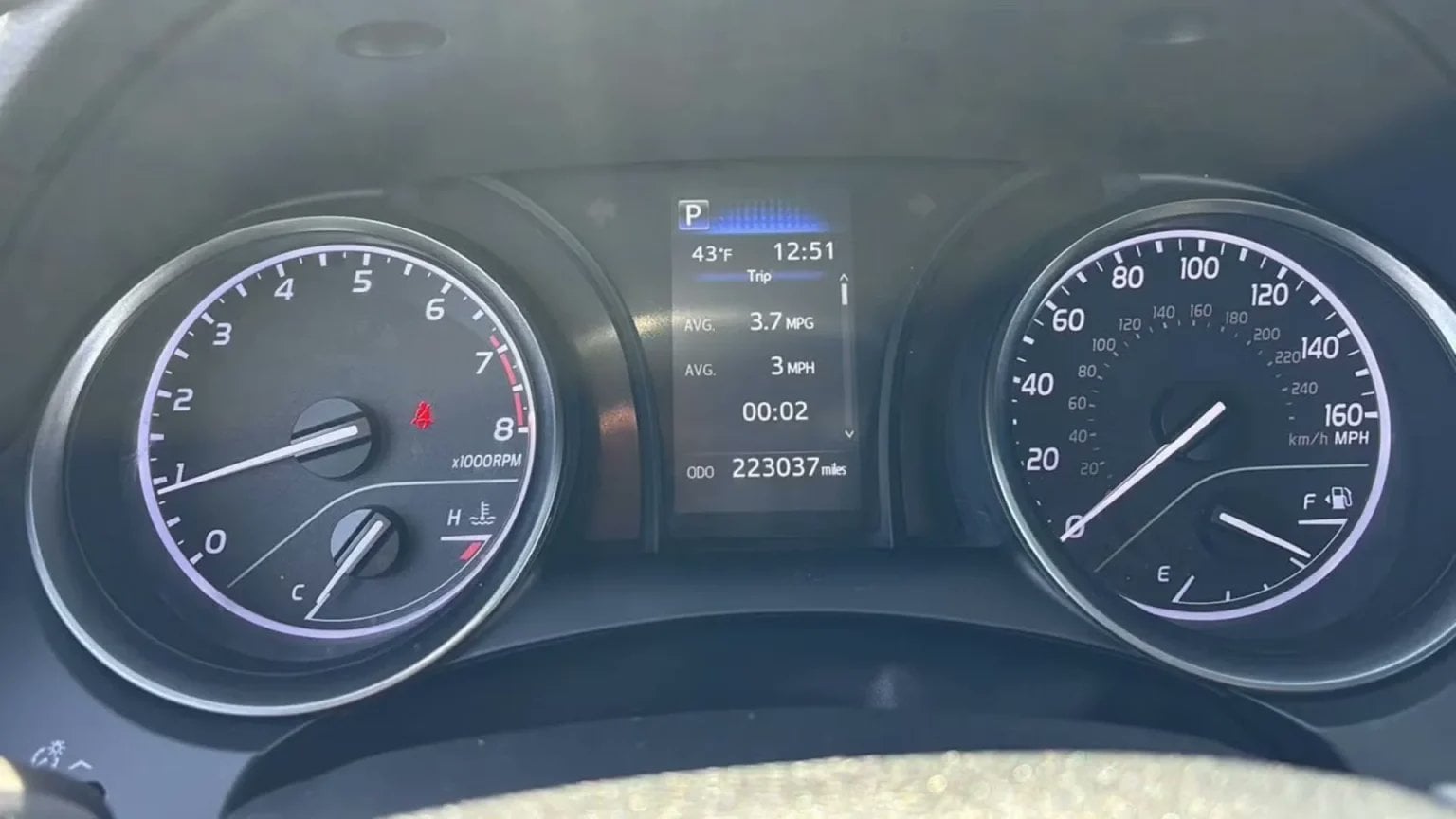
A Wisconsin woman may have discovered the closest thing the auto world has to a cheat code. She leased a 2023 Toyota Camry SE, drove it hard for Uber and Lyft work, then handed it back three years later with a jaw-dropping 223,037 miles on the odometer.
That works out to around 215 miles every single day. Most private owners would need more than a decade to pile on that kind of mileage, yet this Camry managed it before its third birthday.
The financial side of the story is even wilder. Under a normal lease agreement, going tens of thousands of miles over the limit can trigger painful penalties, but this driver found a loophole hiding in plain sight.
Instead of paying the massive mileage bill, she used the lease’s guaranteed buyout price to sidestep the damage. The dealer reportedly offered the car back to her for $3,000 below the preset residual value, allowing her to walk away without the sort of bill that could buy another new Camry.
A Camry That Lived Three Lifetimes in One Lease
The story surfaced through an X post from Mileage Impossible, which documented the sedan’s astonishing life as a rideshare workhorse in Wisconsin. The dark gray 2023 Toyota Camry SE is now reportedly sitting at Smart Toyota of Madison with an asking price of around $15,000.
The mileage timeline reads almost like a typo. One month into the lease, the car had already covered 5,400 miles, and just nine days later it reached the 10,000-mile service interval.
That pace never really slowed down. By the time the lease ended in May 2026, the sedan had covered 358,941 kilometers, equivalent to driving from New York to Los Angeles nearly 80 times.
Yet the photos posted online show a car that still appears presentable enough to return to dealer inventory. That detail says as much about modern Toyota durability as the odometer itself.
How She Beat a Potential $40,000 Lease Nightmare
Most leases are designed around modest yearly mileage limits. Typical agreements allow somewhere between 10,000 and 15,000 miles annually before overage charges begin stacking up.
This Camry obliterated those numbers. If the contract carried a 12,000-mile annual cap, the driver would have exceeded the allowance by roughly 187,000 miles over three years.
At an overage fee of $0.25 per mile, the penalty could have reached around $46,750. For perspective, that is more than the original sticker price of many Camry trims.
Instead of surrendering the car and absorbing the fees, the driver exercised the guaranteed buyout option baked into the lease. That residual value had been calculated years earlier, long before anyone imagined the sedan would become a full-time rideshare machine.
Because the buyout figure was locked in, she effectively converted the lease into a heavily discounted ownership experience. The dealer’s reported offer of $3,000 below the buyout price made the exit even more favorable. In simple terms, she extracted hundreds of thousands of miles of transportation and income-generating use from the car without ever paying the crushing overage costs the contract normally demands.
Why the Camry’s Reputation Just Got Even Stronger
The internet loves stories about indestructible Toyotas, and this one landed right on cue. Replies to the post filled with tales of Camrys, Corollas, and Hondas surviving brutal commuting schedules and fleet duty with little drama.
Someone in Wisconsin leased a 2023 Toyota Camry SE, used it for Uber and Lyft, and returned it after three years with 223,037 miles (358,941 km) on the clock averaging around 215 miles (346 km) every day.
At the standard overage rate of $0.25 per mile, the extra mileage bill… pic.twitter.com/91hFDpgqo6
— Mileage impossible (@Mileage_impo) May 20, 2026
There is a reason high-mileage taxi operators often favor cars like the Camry. Much of rideshare driving involves steady highway cruising, which is less stressful on engines and transmissions than endless cold starts and short city hops.
Even so, 223,000 miles in three years is extreme by any standard. Many vehicles would be showing major wear, mechanical fatigue, or serious depreciation concerns long before reaching that point.
Instead, this Camry completed its marathon stint, avoided a financial disaster for its driver, and still returned to the used-car market. That is the kind of real-world durability test automakers could never fully recreate in a laboratory.