
A school district in eastern Washington is sending some of its bus drivers across state lines into Idaho to fill up on cheaper diesel, highlighting how fuel costs are reshaping transportation decisions in parts of the United States. The story, first reported by the Daily Mail and based on reporting from The Spokesman-Review, reflects the growing financial pressure facing public agencies as fuel prices continue to climb.
The East Valley School District, located near Spokane Valley, said it spent roughly $45,000 on diesel fuel in April alone. That represented an increase of more than $16,000 compared to the same month a year earlier, according to district officials quoted in the report.
Faced with rising costs, some drivers have started crossing into neighboring Idaho, where diesel prices are nearly a dollar per gallon lower than in Washington. Officials say the savings can approach $100 per tank for larger buses, an amount that becomes significant across a fleet operating daily routes over a 100-square-mile district.
The situation also reflects a long-running economic and political contrast between Washington and Idaho. Washington has leaned heavily Democratic for decades and has adopted stricter environmental policies and higher fuel taxes, while Idaho has maintained a more conservative, lower-tax approach that many residents along the border view as friendlier to motorists.
Fuel Costs Push District Budgets Into Crisis
East Valley School District operates 34 buses, including six units with 100-gallon fuel tanks and dozens more with 50- to 60-gallon capacities. According to district chief financial officer Neale Rasmussen, the burden of diesel expenses is becoming difficult to absorb without affecting other parts of the education budget.
“We’re just trying to survive, because we have to buy the diesel,” Rasmussen told The Spokesman-Review. He added that if the district cannot reduce fuel spending, cuts in other areas may become unavoidable. Transportation director Michelle Monzingo said drivers themselves proposed the Idaho fueling strategy after monitoring regional fuel prices.
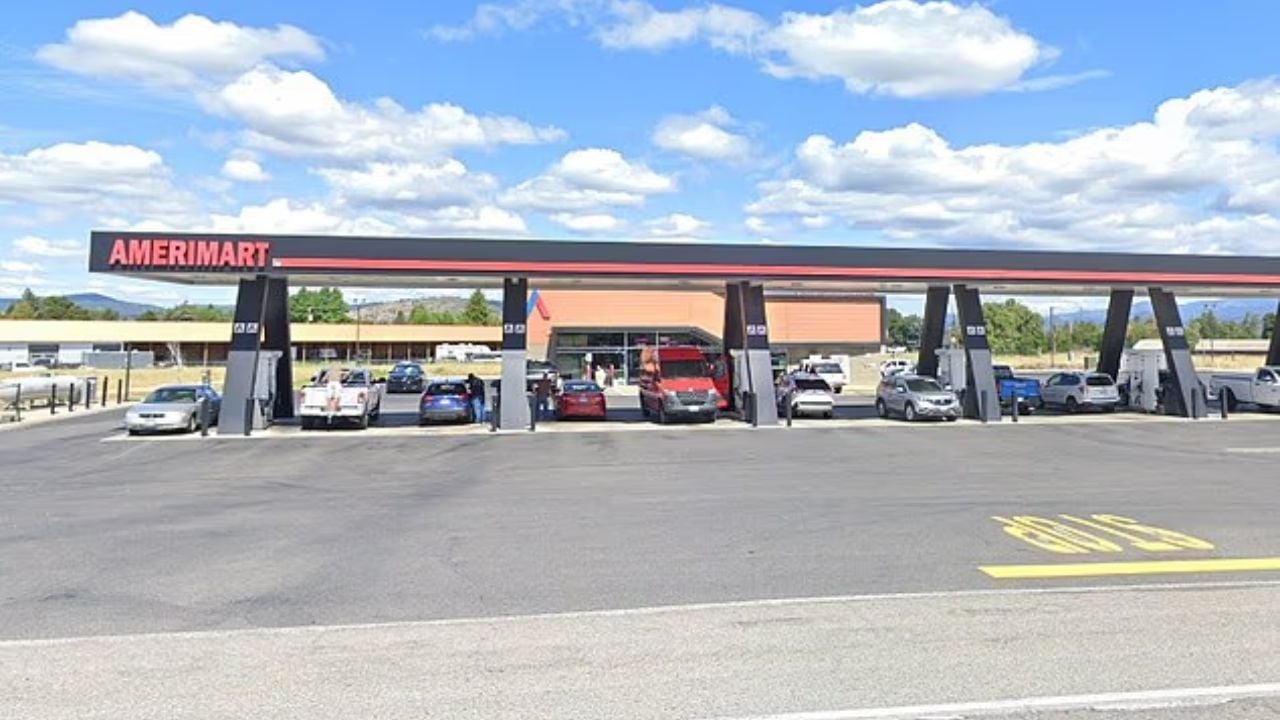
Using radio communication, drivers alert one another about stations offering the lowest diesel prices across the border. The district’s location gives it a unique advantage. Its bus barn sits only three miles from Post Falls, Idaho, where stations such as AmeriMart have become popular stops for Washington drivers seeking lower prices.
Washington and Idaho Reflect Different Energy Policies
The fuel-price divide between the two neighboring states has become a politically charged issue in the Pacific Northwest. Washington currently imposes some of the highest gas and diesel taxes in the United States, with state fuel taxes totaling roughly 55 cents per gallon.
Idaho’s state fuel taxes are significantly lower at around 33 cents per gallon. For fleets consuming thousands of gallons annually, that gap creates major operational savings.
Washington’s climate-focused policies have also played a role in rising fuel prices. The state’s Climate Commitment Act, introduced under Democratic Governor Jay Inslee, established a cap-and-invest carbon market intended to reduce greenhouse gas emissions. Critics argue the program has contributed to higher fuel costs for consumers and businesses.
Conservative lawmakers in eastern Washington have frequently pointed to Idaho’s lower fuel prices as evidence that taxation and environmental regulation are widening the economic divide between the two states. The issue has become particularly sensitive in rural communities where residents rely heavily on long-distance driving.
Diesel Prices Continue Climbing Ahead of Memorial Day
According to AAA data cited in the report, average diesel prices in Spokane County climbed to $6.51 per gallon, compared to $4.37 during the same period last year. In Idaho, diesel averaged around $5.62 per gallon, still sharply higher than a year ago but substantially cheaper than prices across the border.
National fuel prices have also been trending upward ahead of the Memorial Day holiday travel period. Analysts cited tensions surrounding Iran and disruptions linked to the Strait of Hormuz, a vital shipping corridor through which roughly one-fifth of the world’s oil supply passes.
The national average gasoline price rose for three consecutive days, reaching $4.53 per gallon this week. That figure stood nearly 50 cents higher than prices recorded one month earlier.
For school districts already operating under tight financial constraints, the sustained increase in diesel prices is creating difficult choices. East Valley officials say the Idaho fueling strategy may not solve the broader issue, but it is helping preserve funds that would otherwise have to come from classrooms or student services.