
Nobody in the car was driving. The officer still had to figure out what to do. Welcome to 2025, where the rules of the road have not quite caught up to the roads themselves.
A TikTok posted by user joe_setaro recently sent the internet into a minor but well-deserved spiral. The clip shows him sitting inside a Waymo robotaxi, completely driverless as intended, when a police officer pulls the vehicle over. Setaro’s reaction was perfect: he started laughing and asked out loud, “What do we do in this situation?” It was the exact question every person watching was also asking.
The comments section lit up immediately with the same confused energy. People wanted to know who was getting arrested if things went sideways. Who receives the citation? Can you even write a ticket to a car that runs on software? These are not hypothetical law school questions anymore. They are real things happening on real streets, and nobody seems to have a clean answer ready.
What made the clip even more surreal was watching the officer apparently call Waymo’s customer service line directly, with the conversation coming through the car’s own speaker system. The rep asked if everything was okay. The officer explained that the vehicle had been stopping and starting erratically and had even come to a halt in the middle of the road. Setaro, for his part, stayed quiet and unbothered throughout, which makes it hard to know the full story of what went wrong. But the bigger story here is less about this one ride and more about what it reveals.
What Actually Happened During the Stop
@joe_setaro Someone has to be out to get me because this wasn’t on my bingo card #fyp #waymo #pulledover #selfdrivingcar #foryoupage ♬ Horror Movie Sounds 2 (Ambient Halloween Music) – Jimmy C’s Horror Tracks
Based on what is visible in the video, the Waymo appeared to behave unpredictably on the road. The officer described the vehicle stopping and starting repeatedly before eventually sitting still in the middle of the street. That kind of behavior from any vehicle would warrant a traffic stop, driverless or not.
The fascinating part was watching the officer essentially conduct his interaction with a customer service representative through a speaker rather than with a person behind the wheel. There was no driver to make eye contact with, no one to hand over a license and registration, and no human being to explain what happened. The officer was left talking into the air of an empty front seat, trying to get answers from a remote support team.
Setaro did not offer any explanation, commentary, or concern during the clip. Whether that is because he was unbothered, unsure, or simply enjoying the chaos for content purposes, it is impossible to say. But his silence is actually part of what makes the video so compelling.
Who Gets the Ticket When There Is No Driver?
This is where things get genuinely complicated, and legal systems across the country are still catching up. In a traditional traffic stop, the answer is simple. The driver gets the citation. But when the car is the driver, everything gets murky fast.
In most states, traffic laws are written around the assumption that a human is operating the vehicle. Autonomous vehicle legislation varies wildly depending on where you are. California, where Waymo operates heavily, has some of the more developed frameworks for this, but even those frameworks do not always spell out exactly what happens when a robotaxi does something wrong in front of a police officer at 9 p.m.
In a situation where the autonomous system itself causes a traffic violation, liability would most likely fall on the company operating the vehicle rather than the passenger inside. The passenger is not controlling anything. They are essentially a very stressed-out ride-share customer. Waymo, as the operator of the vehicle and the technology behind it, would be the party responsible for the car’s behavior. That does not mean there is a simple mechanism for the officer on the scene to issue a citation to a corporation in real time, though. That paperwork gets complicated quickly.
What Would Happen If Waymo Is Actually at Fault
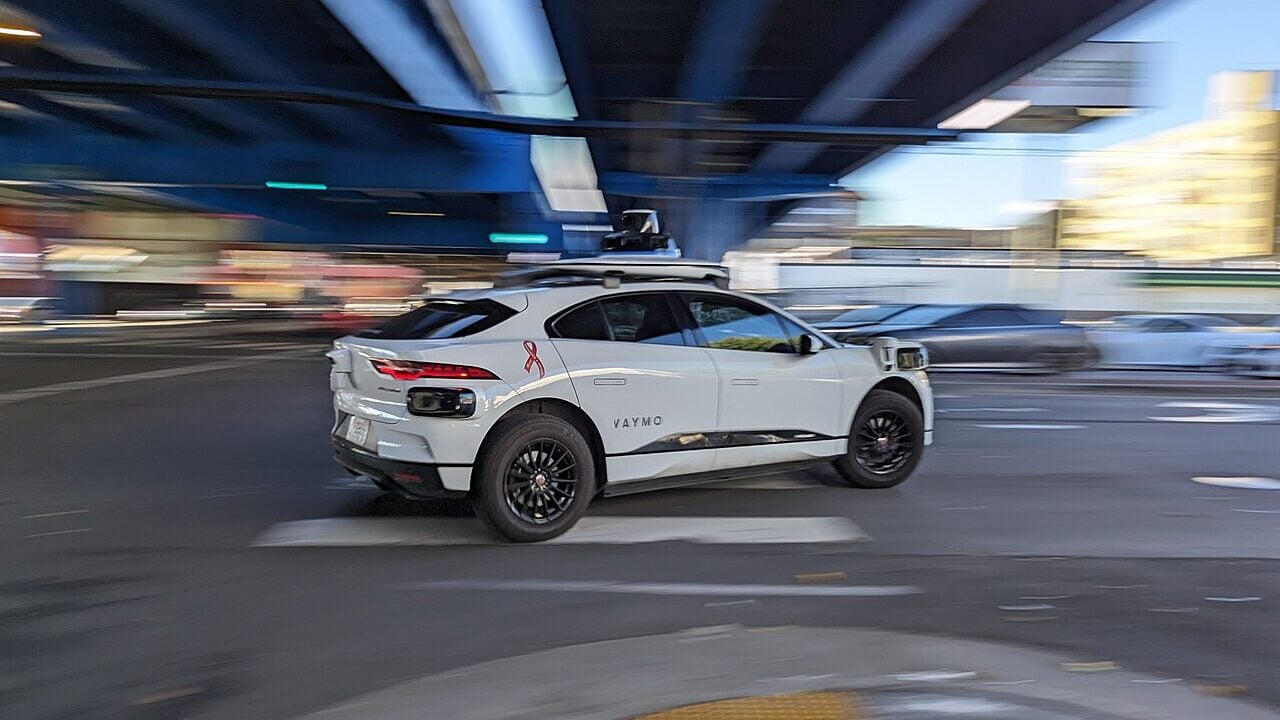
If the vehicle malfunctioned or made a bad decision that caused a traffic violation or, in a worse scenario, an accident, the legal burden would shift to Waymo as both the manufacturer and operator of the autonomous system. Passengers in self-driving vehicles are generally not considered liable for what the vehicle does on its own, which makes sense. You would not blame someone in the back seat of a taxi for the driver running a red light.
Where it gets thornier is in cases involving property damage or personal injury. Waymo carries its own insurance and has an established process for handling incidents involving its fleet. But the officer on the ground does not have a clean protocol for issuing a citation to a cloud-based decision-making system. The practical reality is that the officer likely documents the incident, contacts the company, and the rest gets sorted out later through channels that do not involve a roadside conversation.
For now, companies like Waymo typically respond quickly to these situations, remotely monitor their vehicles, and have support teams available around the clock, which is exactly what appeared to happen in the video.
What This Incident Can Teach Us About the Future of Self-Driving Cars
The Waymo clip is funny on the surface, but it is actually a useful stress test for a system that is still very much being built in real time. A few things become clear watching it.
First, law enforcement needs better training and clearer protocols for autonomous vehicle encounters. Officers should not have to figure out on the fly how to handle a car with nobody in the front seat. That kind of preparation should already be built into training programs in cities where these vehicles operate.
Second, companies deploying autonomous vehicles on public roads have a responsibility to communicate more clearly with both passengers and local authorities about how to handle unexpected situations. A speaker connecting to customer service is creative, but there should probably be more structured guidance available in the vehicle itself.
Third, and maybe most importantly, passengers need to understand what their role is during a stop. If a police officer pulls over your Waymo, what are you supposed to do? Can you be asked to exit the vehicle? Are you responsible for anything? These are questions worth having answered before you are sitting in a driverless car watching a cop talk to a speaker.
The technology is moving fast. The legal and social infrastructure around it is moving considerably slower. Clips like this one are a reminder that the gap between those two speeds is where things get interesting, and occasionally a little chaotic.