Lucid Motors is making another major round of cuts as the electric vehicle startup works to reduce costs and better align production with demand. According to a recent SEC filing, the company is laying off a significant portion of its workforce while also scaling back manufacturing operations at its Arizona assembly plant.
The latest restructuring marks the second substantial reduction in staffing this year. Earlier in 2026, Lucid announced workforce cuts affecting roughly 12 percent of its U.S. employees. Now the automaker is taking even more aggressive action as it continues its push toward long-term profitability.
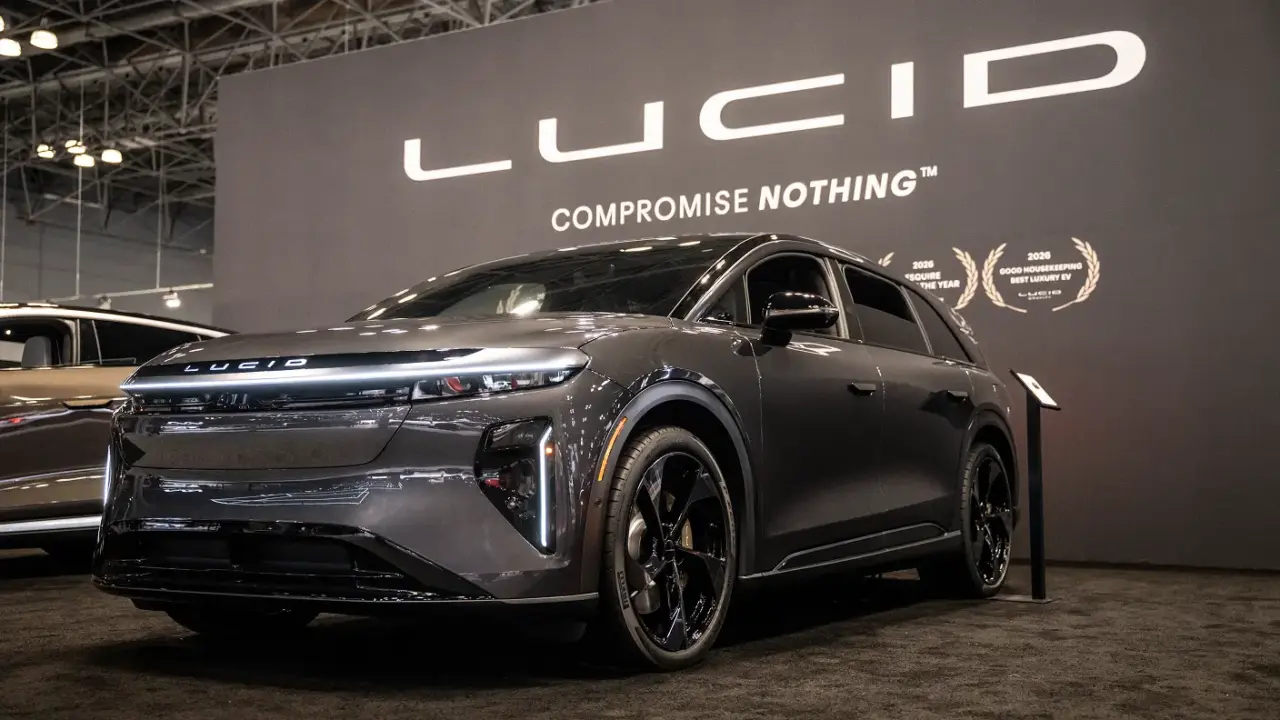
The move comes at a pivotal moment for the company. Lucid recently expanded beyond the Air sedan with the launch of the Gravity SUV and is preparing to introduce additional, more affordable models aimed at reaching a broader customer base.
Despite those future product plans, the company appears focused on controlling costs in the near term. The latest measures highlight the ongoing challenges facing many EV startups as they attempt to balance growth ambitions with financial realities.
Nearly One-Fifth Of U.S. Workforce Affected

According to Lucid’s filing, approximately 18 percent of its U.S. workforce will be impacted by the restructuring effort. The reductions will affect full-time employees, contractors, and hourly production workers across various parts of the business.
As of the end of 2025, Lucid employed roughly 9,000 people globally. While the company did not specify exactly how many employees would be affected by the latest cuts, the reduction represents one of the most significant workforce adjustments in its history.
The layoffs are part of a broader cost-saving initiative designed to streamline operations and improve financial efficiency. Lucid estimates the restructuring could generate approximately $158 million in savings.
The company expects to incur charges related to severance payments, employee benefits, and other restructuring costs as the plan is implemented.
Arizona Factory Production Will Slow
In addition to workforce reductions, Lucid is lowering production output at its manufacturing facility in Casa Grande, Arizona. The plant currently builds both the Air luxury sedan and the Gravity SUV.
One of the most notable changes involves the elimination of the factory’s second production shift. By reducing manufacturing capacity, Lucid hopes to better match production levels with current market demand while reducing operating expenses.
Inventory management has become an increasingly important issue for many automakers, particularly in the EV sector. Producing vehicles faster than they can be sold creates additional costs and ties up capital that could otherwise be invested elsewhere in the business.
Lucid’s decision suggests the company is prioritizing operational efficiency over production volume as it navigates a highly competitive electric vehicle market.
Executive Changes Continue

The restructuring also coincides with another leadership shakeup at the company. Marc Winterhoff, who served as chief operating officer and briefly held the role of interim CEO, has departed Lucid.
Rather than replacing Winterhoff, the company has elected to eliminate the COO position entirely. The move follows the departure of former CEO Peter Rawlinson earlier this year, marking another significant change within Lucid’s executive ranks.
Leadership turnover has become a recurring theme at the automaker in recent months. Several key engineering figures have also left the company, including senior executives involved in powertrain development and future vehicle platforms.
While executive transitions are not uncommon in the automotive industry, frequent changes can create additional challenges for companies working to bring new products to market.
Future Growth Still Centers Around New Models
Despite the latest cost-cutting measures, Lucid remains committed to expanding its lineup. The company continues to position the Gravity SUV as a key growth product while preparing to unveil the smaller Cosmos crossover later this year.
The Cosmos is expected to play a particularly important role in Lucid’s future. Unlike the premium-priced Air and Gravity, the new crossover is expected to target a lower price point, potentially starting below $50,000.
Lucid is also aiming for impressive efficiency figures. Early targets include a drag coefficient of just 0.22 and driving range exceeding 300 miles, helping the vehicle compete in one of the industry’s most important segments.
Additional models are planned beyond the Cosmos, including another SUV known as the Earth and a more rugged utility-focused variant built on the same architecture.
A Critical Period For Lucid

Lucid’s latest restructuring underscores the difficult balancing act facing many emerging EV manufacturers. Building advanced electric vehicles requires substantial investment, but companies must also control costs while demand and market conditions evolve.
The company still possesses strong technology credentials and has earned praise for the efficiency and performance of its vehicles. However, turning those strengths into sustainable financial success remains the next major challenge.
With workforce reductions, lower production volumes, and ongoing leadership changes, Lucid is clearly entering a period of transition. The success of upcoming models such as the Cosmos could ultimately determine whether these difficult decisions help position the automaker for long-term growth or merely buy additional time in an increasingly competitive EV market.