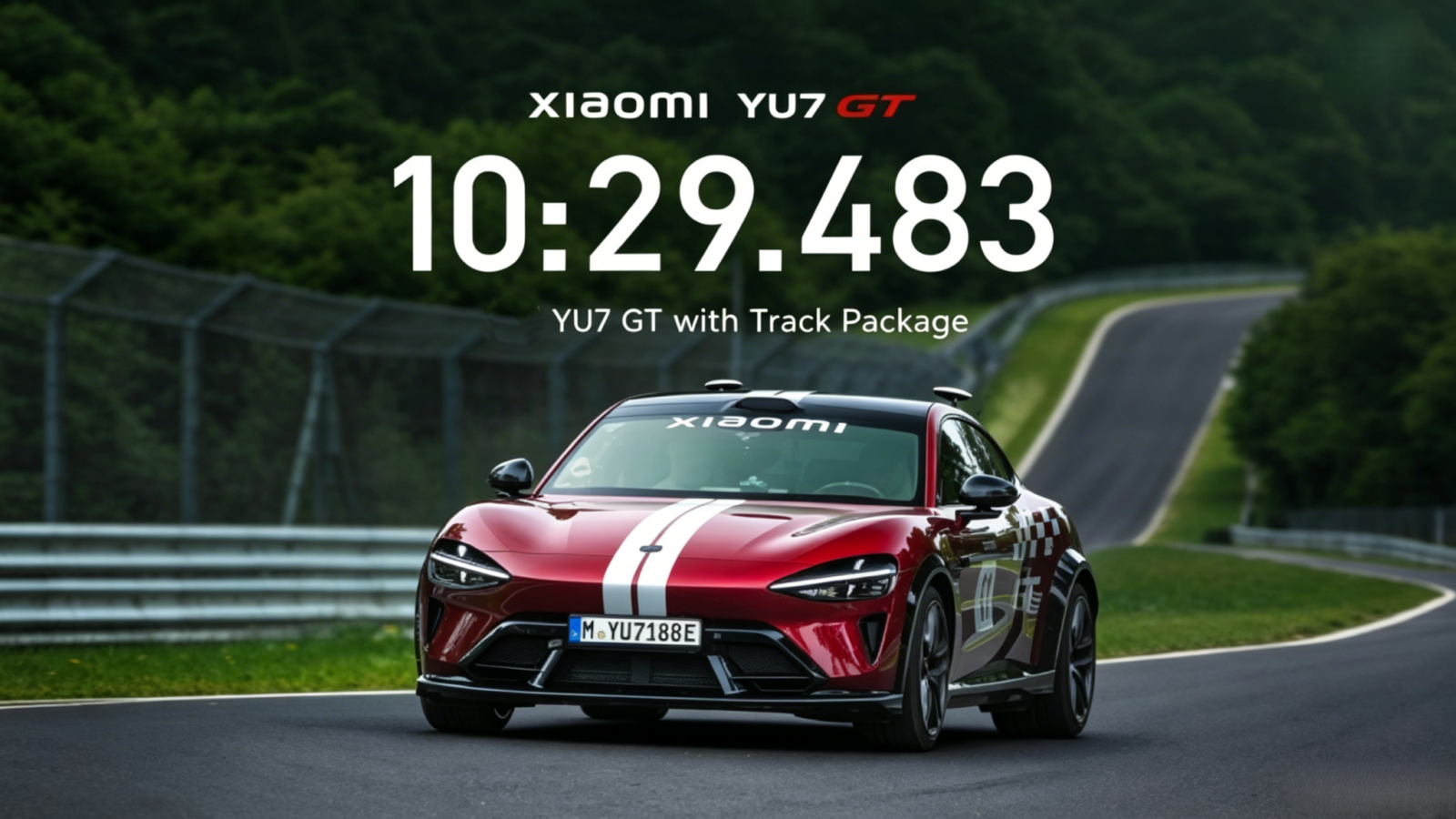
Xiaomi has become one of the Nürburgring’s most active newcomers in recent years. The Chinese automaker has repeatedly grabbed headlines with record-setting laps from its high-performance electric vehicles, challenging established manufacturers on one of the world’s most demanding race circuits.
This time, however, Xiaomi’s latest achievement is very different. Instead of chasing outright speed with a professional driver behind the wheel, the company sent a YU7 GT around the Nürburgring completely autonomously, setting what is officially the first recorded driverless lap of the famous Nordschleife.
The lap was completed in 10 minutes and 29.483 seconds, establishing a new benchmark for autonomous vehicles at the track. Since no other manufacturer has previously recorded an official driverless Nürburgring lap, Xiaomi now holds a record category all to itself.
While the accomplishment represents a significant technological milestone, it also raises an interesting question. Is a driverless lap record actually exciting, or does removing the human element strip away much of what makes Nürburgring achievements so compelling in the first place?
A First-Of-Its-Kind Nürburgring Achievement

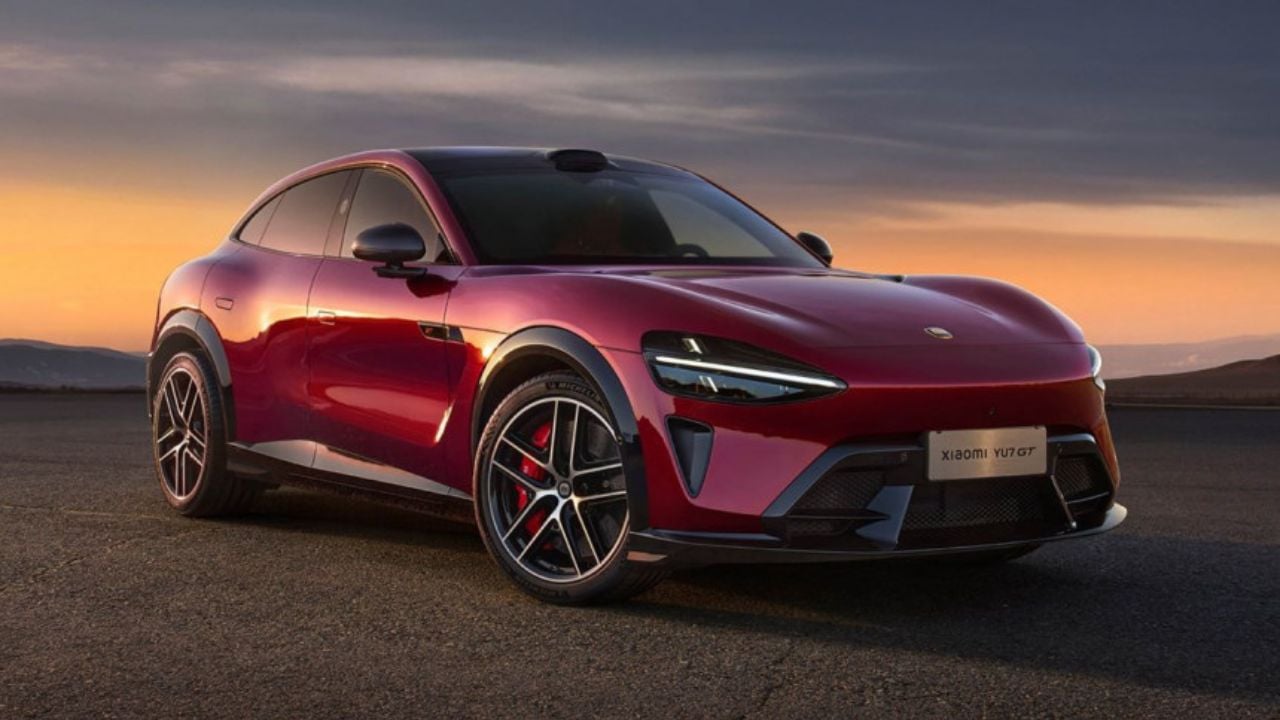
The autonomous run took place in a Xiaomi YU7 GT, the performance version of the company’s electric SUV. Unlike conventional record attempts, there was no driver inside the vehicle during the lap.
Video footage released by Xiaomi and Nürburgring officials shows the SUV navigating the 12.9-mile circuit entirely on its own. The vehicle maintained a cautious approach throughout much of the lap, accelerating smoothly and consistently while avoiding the aggressive cornering typically seen during record attempts.
Although the lap time falls well short of the fastest production vehicles, that was never the primary objective. The goal was to demonstrate that an autonomous system could successfully complete one of the world’s most complex and challenging racetracks without human intervention.
The Time Is Respectable, But Not Record-Breaking
A 10:29 lap would not attract much attention in traditional Nürburgring competition. Modern sports cars regularly complete the circuit several minutes faster, while dedicated performance machines operate in an entirely different league.
For perspective, Xiaomi’s own driver-driven YU7 GT recently set an SUV lap record with a time of 7:22.755. That leaves the autonomous run more than three minutes slower than the same vehicle piloted by a professional driver.
Even so, the result is not necessarily poor, as it’s comparable to what a competent enthusiast might achieve during a first visit to the Nordschleife without extensive track-specific experience.
The vehicle also reached speeds of approximately 130 mph on the circuit’s long straights, showing that the autonomous system was capable of operating at relatively high speeds despite its conservative overall approach.
What Does It Actually Prove?
That question has sparked considerable debate among automotive enthusiasts. Supporters argue that completing a driverless Nürburgring lap demonstrates the growing sophistication of autonomous driving systems and highlights how quickly the technology continues to advance.
The Nürburgring presents unique challenges that differ significantly from public-road driving. Blind corners, elevation changes, varying pavement conditions, and high-speed transitions create a demanding environment that pushes both drivers and machines to their limits.
Successfully navigating the circuit without human input is undoubtedly an engineering achievement. It showcases advances in sensors, computing power, software development, and vehicle control systems that could eventually improve autonomous driving technologies used in everyday transportation.
The Missing Ingredient Is The Human Element
Despite the technological significance, many enthusiasts remain unconvinced that autonomous lap records carry the same appeal as traditional Nürburgring achievements. Motorsport has always been about more than mere machinery.
Part of the attraction comes from watching skilled drivers push themselves alongside the cars they pilot. Whether it’s a professional racer chasing tenths of a second or an amateur attempting a personal best, the human component creates drama, uncertainty, and emotion.
A driverless vehicle following a predetermined strategy inevitably feels different. The precision may be impressive, but the spectacle lacks the risk-taking, decision-making, and personality that make racing and performance driving so captivating.
A Glimpse Of The Future
Even if autonomous Nürburgring records fail to capture the imagination of traditional enthusiasts, they may represent the beginning of a new technological battleground. Manufacturers increasingly view software capabilities as a critical part of vehicle development, and proving those systems in demanding environments has marketing value.
Xiaomi itself described the run as a starting point rather than a final destination. Future autonomous vehicles will almost certainly become faster, more confident, and more capable around challenging circuits.
Whether that evolution becomes genuinely exciting remains open to debate. The first driverless Nürburgring lap is an impressive engineering accomplishment, but for many enthusiasts, watching a machine drive itself around the track simply cannot match the thrill of seeing a talented human attack the same corners at the limit.