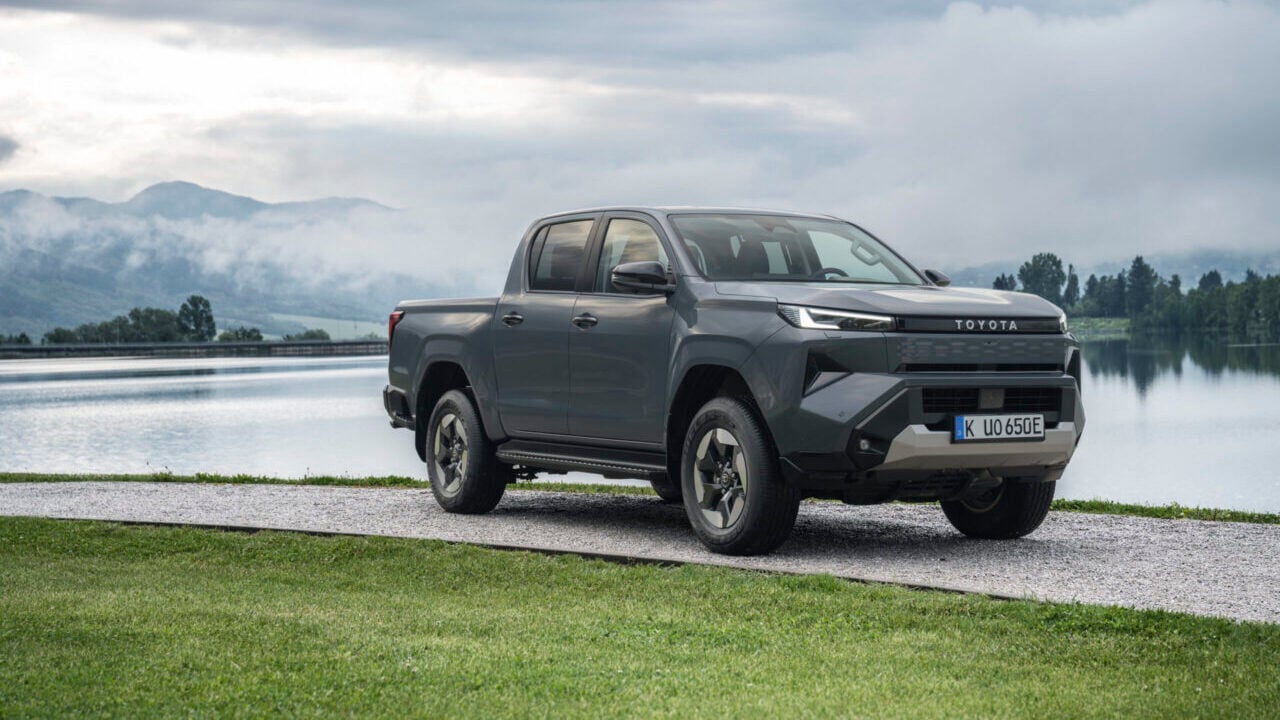
Toyota has finally revealed its first fully electric Hilux, giving one of the world’s most trusted pickup nameplates a zero-emissions option for the first time. The new Hilux BEV also becomes Toyota’s first battery-electric body-on-frame vehicle, making it an important milestone for the brand’s broader electrification strategy.
The electric pickup arrives as part of the ninth-generation Hilux lineup, which also includes a 2.8-liter diesel mild hybrid, conventional diesel and petrol options in select markets, and a hydrogen fuel-cell version planned for 2028. Toyota calls this its multipath approach, offering different powertrains for different customers rather than forcing one solution across the entire lineup.
On paper, the Hilux BEV still sounds properly rugged. It uses permanent all-wheel drive, dual electric eAxles, a water-cooled lithium-ion battery, and off-road technology designed to preserve the Hilux’s reputation for durability.
The problem is that its working numbers are modest. With limited range, reduced payload, and far lower towing capacity than diesel models, the electric Hilux looks better suited to fleets than traditional pickup buyers.
The Electric Hilux Has Real Off-Road Hardware
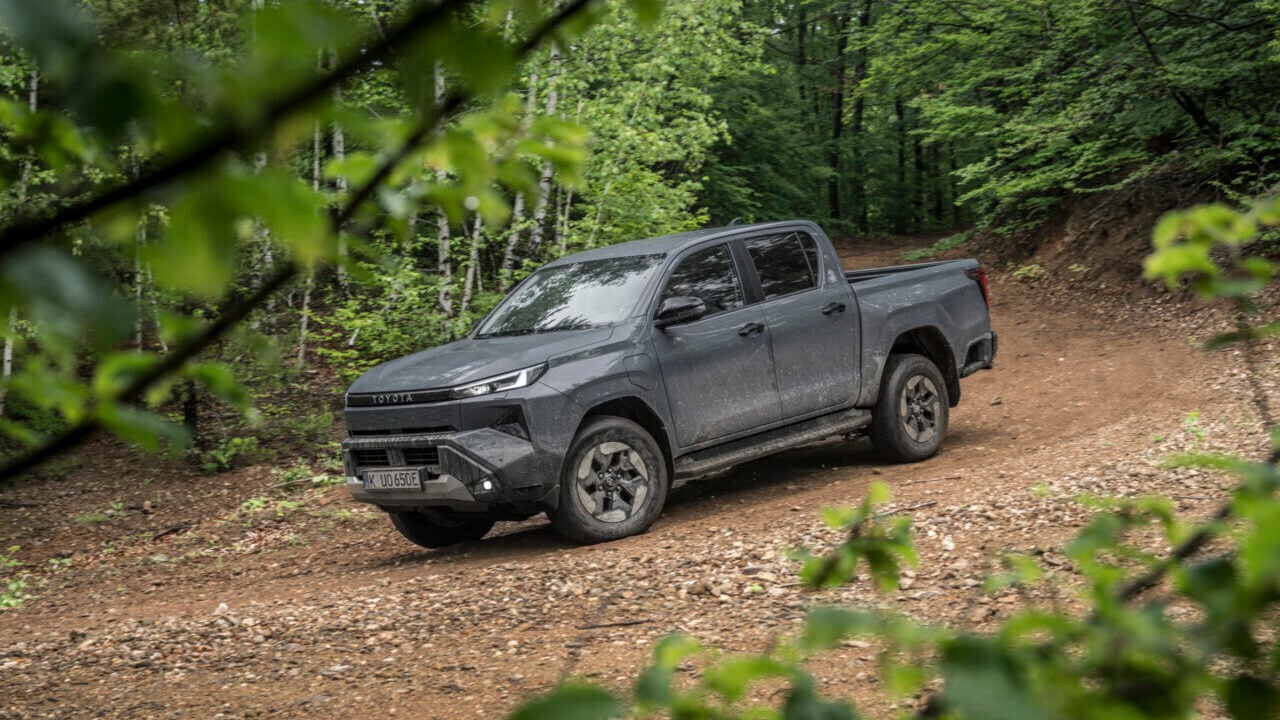
The Hilux BEV uses a 59.2-kWh battery mounted within the frame and protected by reinforced structures and an underbody cover. Toyota says the pack was engineered specifically for the truck and tested for deep-water driving, off-road durability, and even battery immersion.
Power comes from front and rear eAxles producing a combined 278 horsepower and 348 lb-ft of torque. The truck also keeps a 700 mm wading depth, matching other Hilux variants, which is impressive for a battery-electric pickup.
Toyota also fits a BEV-specific Multi-Terrain Select system with Rock, Sand, Mud, Dirt, Mogul, and Auto modes. Instead of using low-range gearing, the system manages electric torque and braking to mimic the control needed for rough terrain.
Range And Towing Are The Big Compromises
The biggest weakness is range. Toyota lists the Hilux BEV at up to 257 km, or about 160 miles, on the WLTP combined cycle. City range improves to 380 km, or roughly 236 miles, but that does little for buyers who regularly cover long rural distances.
Payload is rated at 710–715 kg, equal to about 1,565–1,576 pounds depending on grade. That is usable, but lower than the diesel mild-hybrid Hilux, which offers payload in excess of 1,000 kg.
Towing is the tougher sell. The BEV can tow up to 1,600 kg, or about 3,527 pounds, while the Hybrid 48V diesel is rated for 3,500 kg, or around 7,716 pounds. For customers who use a Hilux as a serious workhorse, that difference is impossible to ignore.
Charging Is Respectable, But Not Game-Changing
Toyota says the Hilux BEV can charge from 10 to 80 percent in about 30 minutes using a 125-kW DC fast charger. AC charging at up to 10 kW takes around 6.5 hours from 10 to 100 percent.
Those figures are reasonable for fleet operators returning to a depot each night. They are less convincing for long-distance users who may tow, haul, or work in remote areas far from reliable charging infrastructure.
That explains Toyota’s target audience. The company says the electric Hilux is aimed mainly at businesses, municipal fleets, industrial sites, airports, forestry operations, and customers with predictable daily routes.
Diesel And Hybrid Models Still Make More Sense For Many Buyers
For private buyers and tradespeople who need maximum flexibility, the diesel mild-hybrid Hilux remains the stronger all-around option. It produces 204 horsepower and 500 Nm of torque while keeping the payload and towing figures expected from a serious pickup.
The electric model does add meaningful benefits, including zero tailpipe emissions, permanent AWD, strong low-speed torque, and lower operating costs for controlled fleet use. In that environment, Toyota’s reliability reputation could help the BEV win contracts even against cheaper electric rivals.
Still, this first electric Hilux is not a true replacement for the diesel truck. It is a focused fleet tool with familiar Hilux toughness, but its range and towing limitations make it difficult to recommend as a do-it-all pickup.
For now, Toyota’s electric Hilux is an important first step rather than the definitive electric work truck many buyers may have been waiting for.