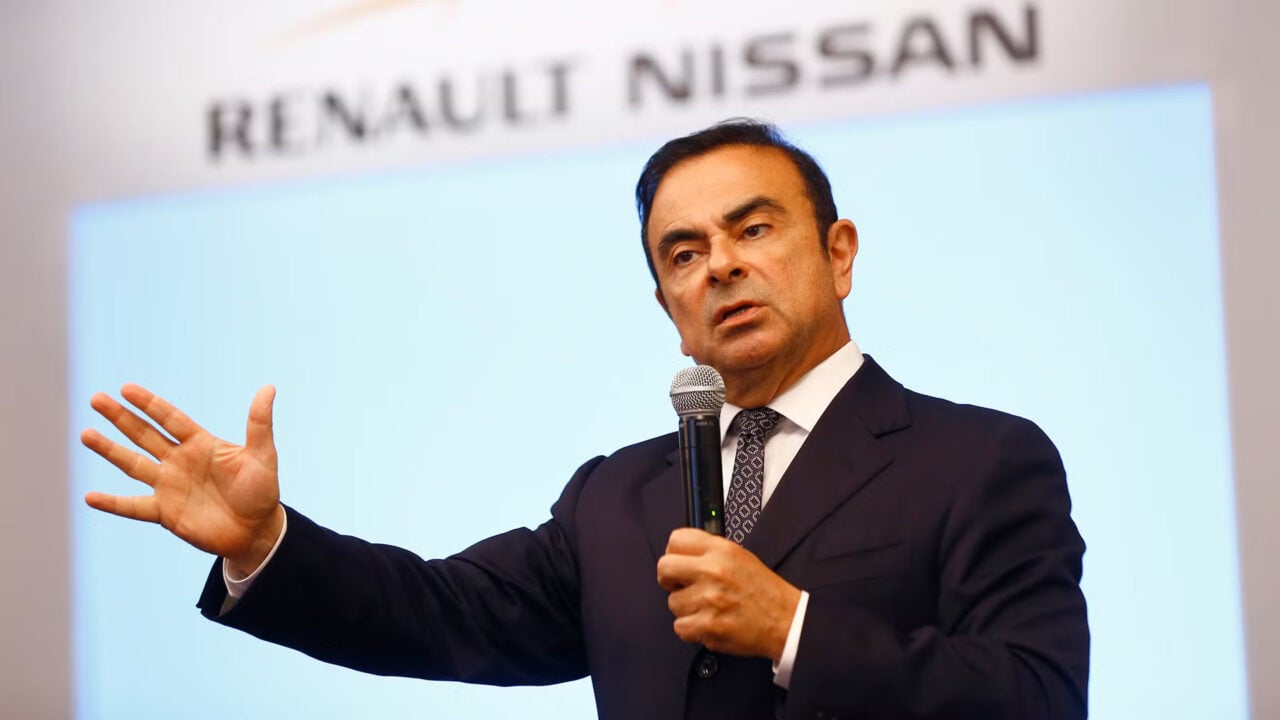
Former Nissan boss Carlos Ghosn says the European automotive industry is being “suffocated” by excessive regulation, arguing that automakers across the continent are losing competitiveness while rivals from China move faster and cheaper.
Ghosn, who remains a fugitive from Japanese authorities after fleeing the country in 2019 while awaiting trial on financial misconduct charges, made the comments in a social media video discussing the future of Europe’s car industry.
While he stopped short of calling the industry dead, Ghosn warned that Europe’s manufacturers are struggling under mounting regulatory pressure at a time when global competition is intensifying rapidly.
“European automotive is not dead yet, but it is being suffocated,” Ghosn said. “Less unnecessary regulation, lower energy costs, more openness to competition is needed. Europe has the talent, the brands, and the quality. What it needs now is speed.”
Europe Faces Pressure From Multiple Directions
View this post on Instagram
Ghosn did not specify which regulations he believes are causing the greatest harm, but Europe’s automotive sector currently faces some of the world’s strictest emissions, safety, and carbon neutrality targets.
The European Union has committed to aggressive climate goals that include phasing out combustion-engine vehicle sales and dramatically reducing overall industrial emissions by 2050. Automakers operating in Europe are investing billions into electrification, battery development, and manufacturing changes to meet those requirements.
At the same time, Chinese automakers are rapidly expanding into global markets with aggressively priced electric vehicles that are often developed and launched far faster than traditional European competitors can manage.
That growing imbalance appears to be central to Ghosn’s criticism. Chinese manufacturers have benefited from lower production costs, strong domestic government support, and a far less restrictive regulatory environment in several key areas of manufacturing.
European automakers, meanwhile, are attempting to balance strict climate mandates with slowing demand and rising production costs.
Chinese Competition Is Reshaping The Global Industry
Chinese brands including BYD, Geely, Chery, and SAIC are becoming increasingly influential in Europe, Southeast Asia, Latin America, and the Middle East.
Several European manufacturers have already acknowledged that Chinese EV companies are moving faster in areas like battery development, software integration, and production scaling. Lower labor costs and vertically integrated supply chains have also helped Chinese automakers reduce prices dramatically.
For European brands, the challenge is especially difficult because many are still heavily reliant on premium combustion-engine models while simultaneously funding expensive EV transitions.
Ghosn’s comments suggest Europe risks falling behind if regulatory burdens continue slowing product development and increasing costs. However, the situation is far more complicated than regulation alone.
The Industry’s Problems Extend Beyond Brussels
European automakers are also facing broader global economic pressures that deregulation alone cannot solve. In the United States, tariffs and rising living costs have made it harder for luxury-focused European brands to maintain strong growth.
Companies like BMW, Mercedes-Benz, and Porsche still generate healthy profits, but affordability concerns are affecting new vehicle demand across several segments.
China presents an entirely different challenge. While it remains the world’s largest automotive market, foreign automakers often face limitations and fierce local competition that make long-term dominance difficult. Even Tesla, which once appeared unstoppable in China, has recently lost ground to domestic rivals.
The industry also continues struggling with rising energy prices, supply chain instability, and uncertain EV demand in several major markets.
Those pressures have forced many automakers to rethink earlier electrification strategies. Several brands, including Porsche and Mercedes-Benz, have already softened some of their original EV targets after demand growth slowed more than expected.
Ghosn’s Criticism Reflects A Wider Industry Debate
Automotive executives have long argued that excessive regulation can slow innovation and increase costs, particularly during periods of major technological transition.
Supporters of stricter rules counter that regulations are precisely what force manufacturers to improve safety, reduce emissions, and invest in cleaner technologies rather than prioritizing short-term profits. The debate has become even more heated as the global industry transitions toward electrification.
Europe’s carmakers still possess enormous engineering expertise, powerful global brands, and strong customer loyalty. Yet the speed of change occurring in China is clearly forcing many executives and analysts to question whether Europe’s traditional automotive model can remain competitive in the long term.
Ghosn’s remarks may be controversial given his own history, but they tap directly into one of the industry’s biggest current anxieties: whether Europe can adapt quickly enough to keep pace with a rapidly changing global market.