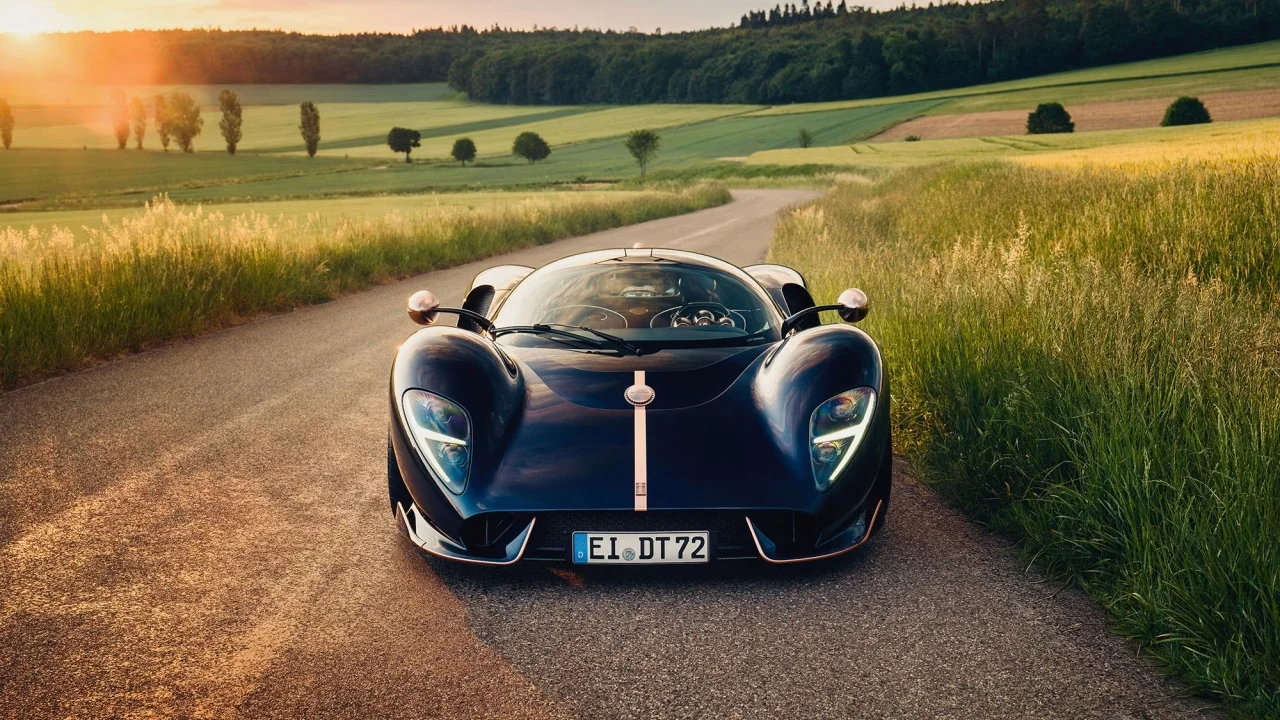
Modern supercars increasingly seem to be more and more digital in their makeup. Electrical systems are king, even if the performance is often delivered via an old-school combustion engine. However, in 2019, De Tomaso unveiled a refreshingly analogue supercar, harking back to the 1970s and 1980s, at the Goodwood Festival of Speed. This was the De Tomaso P72.
De Tomaso, an Italian supercar manufacturer, has been around in various forms since 1959. It was acquired by Hong Kong-based Ideal Team Ventures in 2019, and the P72 was the first car to be unveiled under this new ownership, complete with its retro styling.
Since that unveiling in 2019, it has been a waiting game to see the car enter production, with the design heavily based on the P70 racing cars of the 1970s. At the start of June 2026, the covers were finally taken off the first production example of the supercar, giving us a first proper glimpse at De Tomaso’s revival.
Offered as an old-school, mechanical driving machine, it feels like the P72 has been a breath of fresh air in the performance car segment. It has all the speed and power of a modern supercar, but it harks back to a very different era, when electronics in cars were very much in their infancy. This is car all about the sheer joy you get from a driving experience.
Analogue Power Is at the Heart of the De Tomaso P72
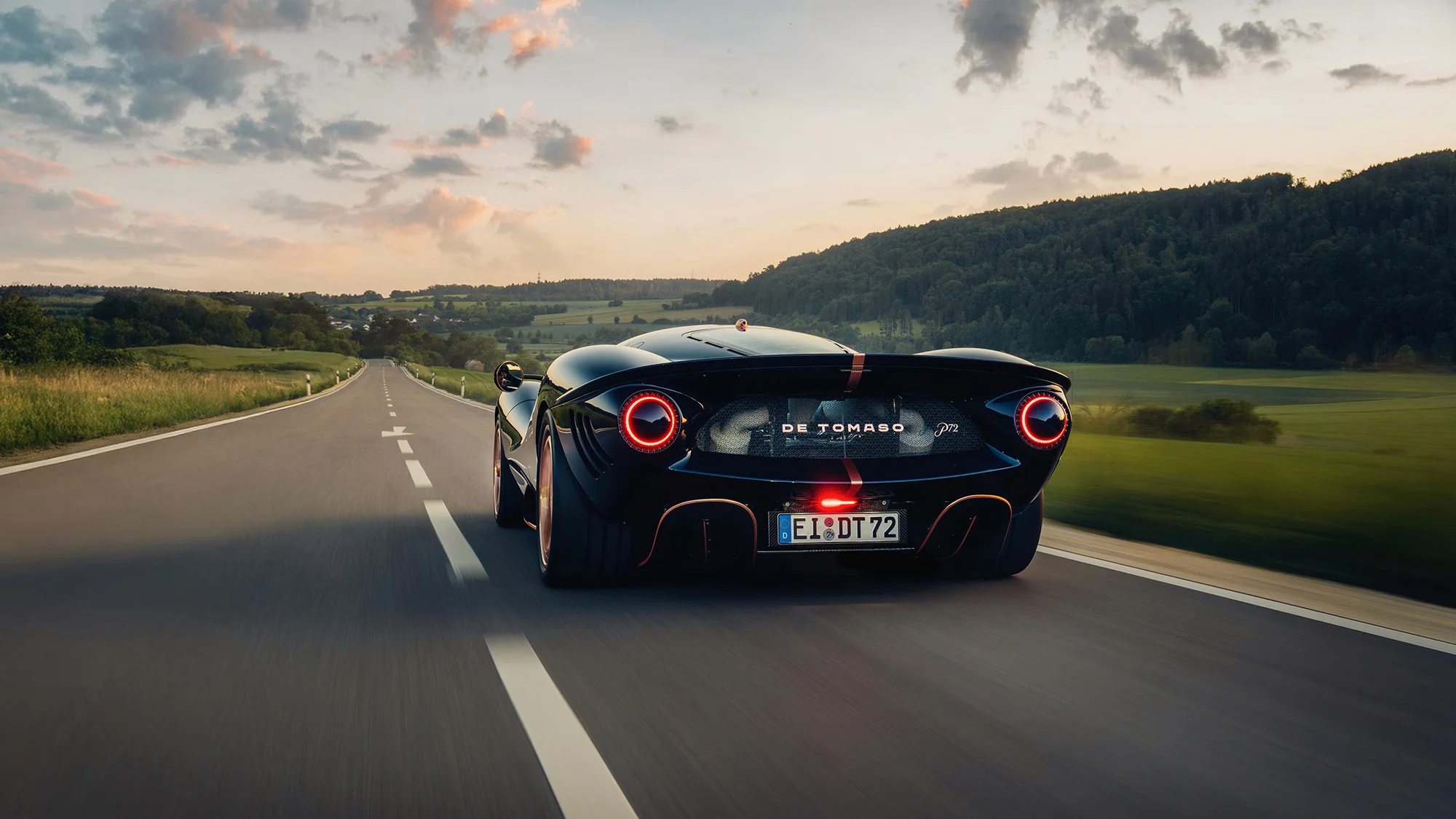
It is what lies under the hood where the magic happens for this mighty supercar. The P72 has a 5.0-liter supercharged Ford V8 engine, making a whopping 700hp and 605lb-ft of torque. That easily rivals cars such as the Ford Mustang and is very close to the best of what Ferrari and Lamborghini have to offer. Ironically, it is the same engine you can find in the Mustang GT and Dark Horse, but upgraded from its original 480hp.
The supercharger itself comes from Roush Performance. The supercar also has a six-speed manual transmission, designed with short gear ratios. This allows for an immediate and responsive driving experience, ensuring the P72 takes off like a rocket when you put your foot down. The car is also built around a lightweight carbon fiber chassis, ensuring it has excellent handling across a wide array of corners.
At the back, De Tomaso has given the supercar a 1960s-style exhaust layout. Roush also tuned its supercharger to ensure that there was no traditional ‘whine’ to allow drivers to enjoy an unfiltered V8 experience. Roush played a big role in helping De Tomaso design and develop the P72. Driver aids? Well, you won’t find any here, as that isn’t what this car is about.
The 1970s Inspired the Looks of the P72
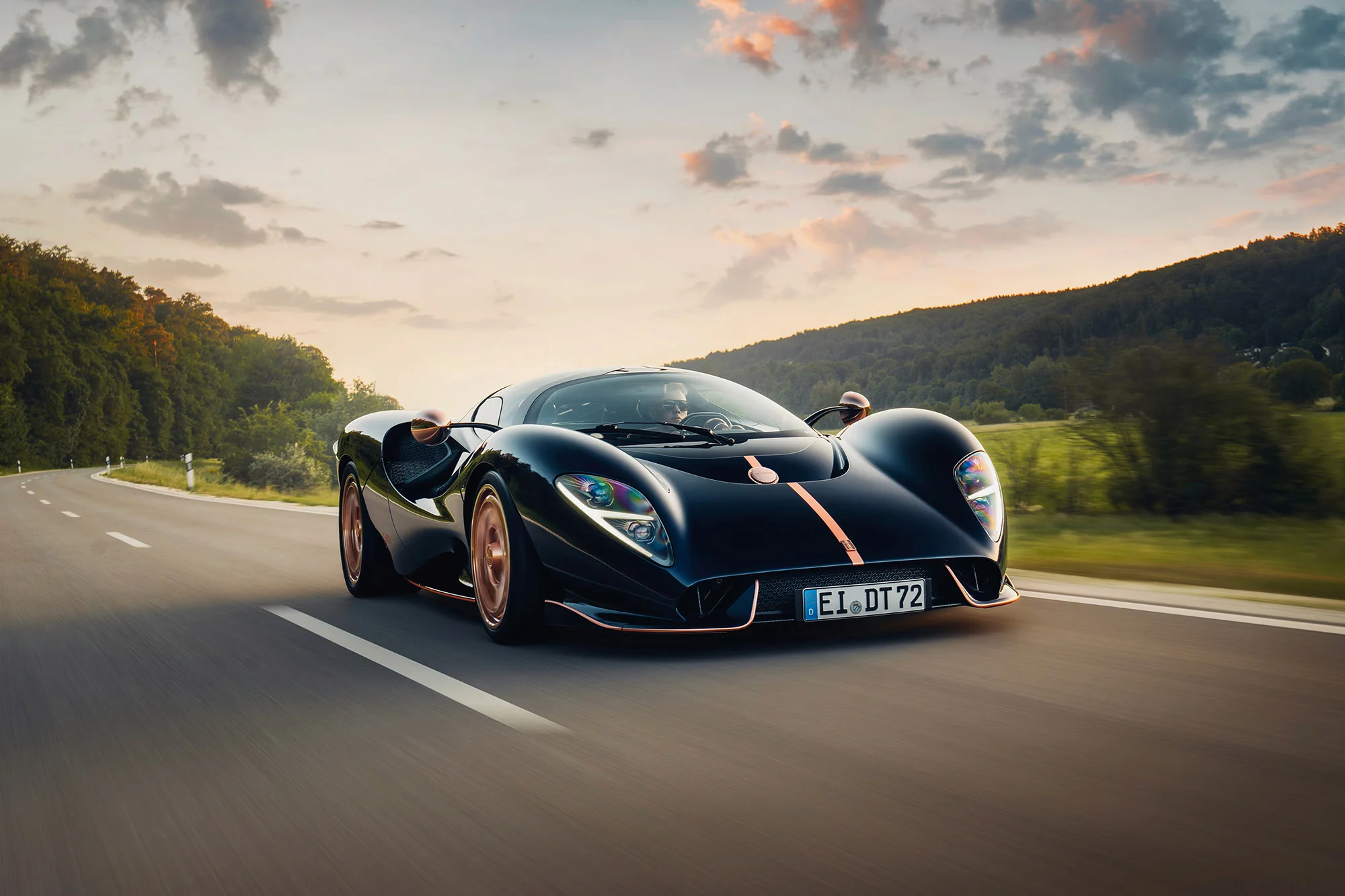
Designed by Jowyn Wong of Wyn Design, the P72 is based on the P70 Le Mans race cars of the 1970s. As such, it has some stunning curves. The first P72 shown off has an Aurelian Night paint scheme, a shade of blue that looks closer to black. Rose Gold is also visible in small accents across the splitter, hood, rear decklid, roof, rear diffuser, and side skirt.
Inside, you won’t find anything digital. No screens, nothing. The P72 is all about pure. uninterrupted driving, right down to the three-way adjustable push-rod suspension that has to be manually adjusted. This is what makes the P72 so refreshing, as it is all about the sheer thrill and purity of driving. De Tomaso will only make 72 of these supercars, and after appearing at a few events, this particular one will arrive at its new home later in 2026.