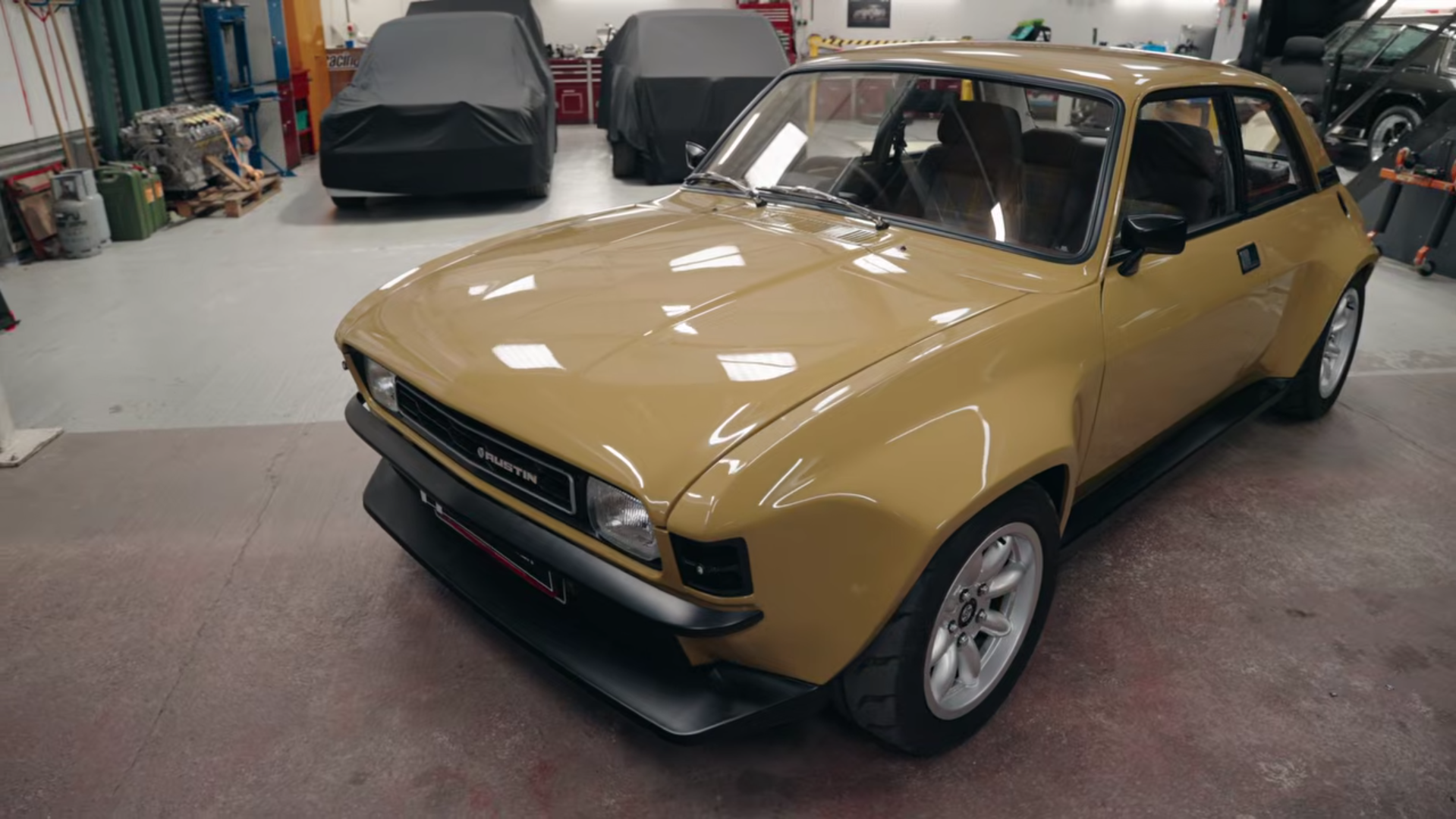
The Austin Allegro has spent decades near the top of lists ranking Britain’s least-loved cars. Introduced in 1973 as British Leyland’s replacement for the successful 1100, it quickly developed a reputation for awkward styling, underwhelming performance, and questionable quality, becoming an easy target for enthusiasts and comedians alike.
That reputation is exactly what made it the perfect candidate for one of the most ambitious restomod projects in recent memory. British specialist Retro Power has transformed the much-maligned family sedan into a bespoke performance machine that borrows its engineering from the legendary Honda Integra Type R.
Known as “Project Lucky Strike,” the build has become one of Retro Power’s most talked-about creations. Recently showcased by Jonny Smith at The Late Brake Show, the one-off creation demonstrates what can happen when modern engineering is combined with an unlikely classic.
Rather than simply swapping engines, Retro Power effectively reimagined the Allegro from the ground up. The result is a car that still looks unmistakably like an Allegro while delivering the driving experience of one of Honda’s greatest front-wheel-drive performance cars.
An Integra Type R Hiding Beneath An Allegro
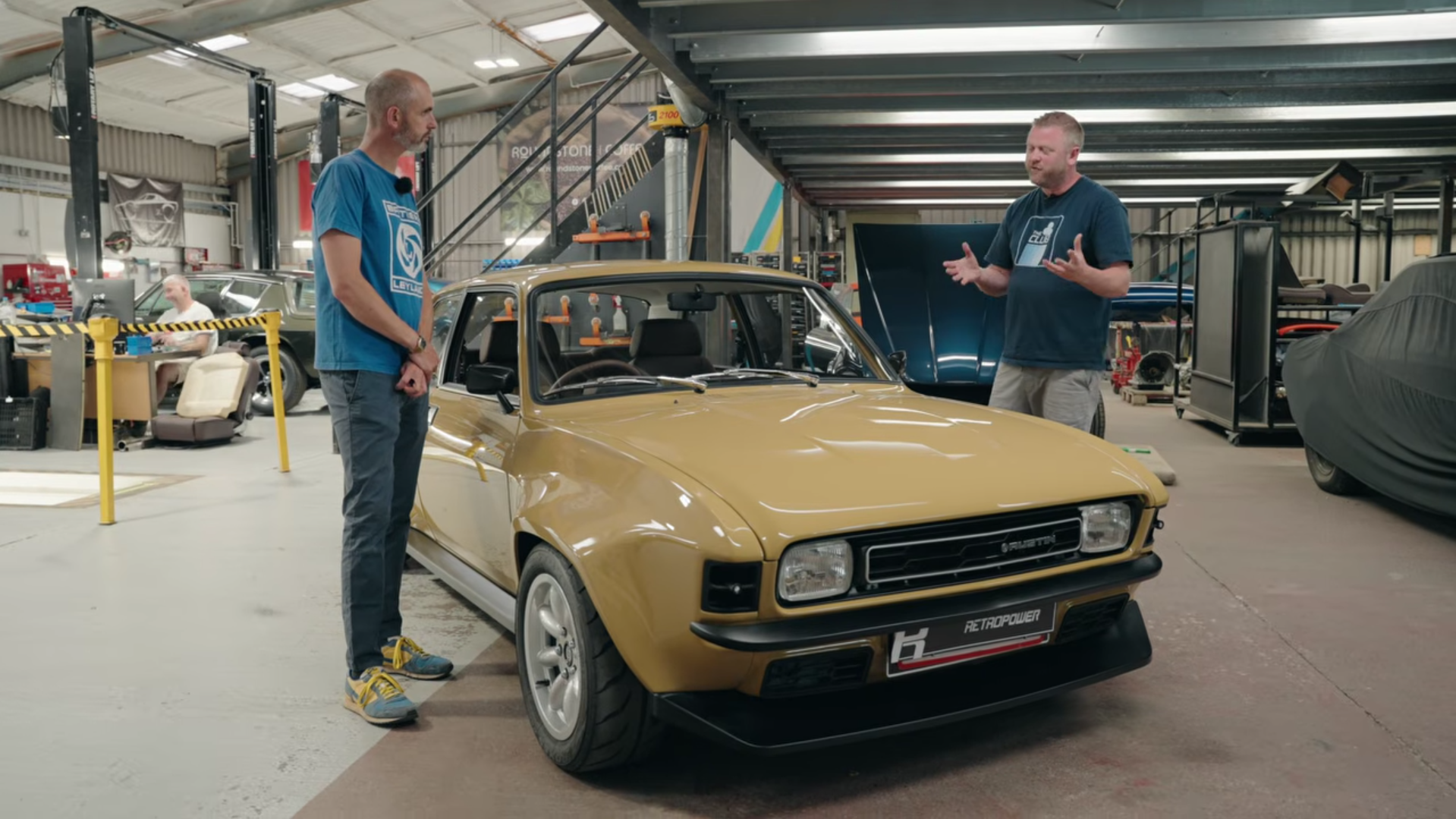
The project began with a customer asking a simple question: could one of Britain’s most ridiculed cars become a genuinely great driver’s car?
Retro Power founders Callum and Nathan Seviour quickly concluded that modifying the Allegro’s original mechanicals wouldn’t achieve the desired result. Instead, they sourced a Honda Integra Type R DC2 and used it as the engineering foundation for the entire build.
Using 3D scanning technology, the company digitally mapped both vehicles before overlaying their structures in CAD software. Surprisingly, the Integra’s dimensions aligned remarkably well with the Allegro, allowing much of Honda’s floorpan, bulkhead, suspension mounting points, steering position, and drivetrain layout to be incorporated into the project.
The wheelbase was shortened by approximately 120 millimeters, while the original Allegro contributed the roof, window openings, scuttle, portions of the rear structure, and all of the glass.
Almost Everything Was Designed From Scratch
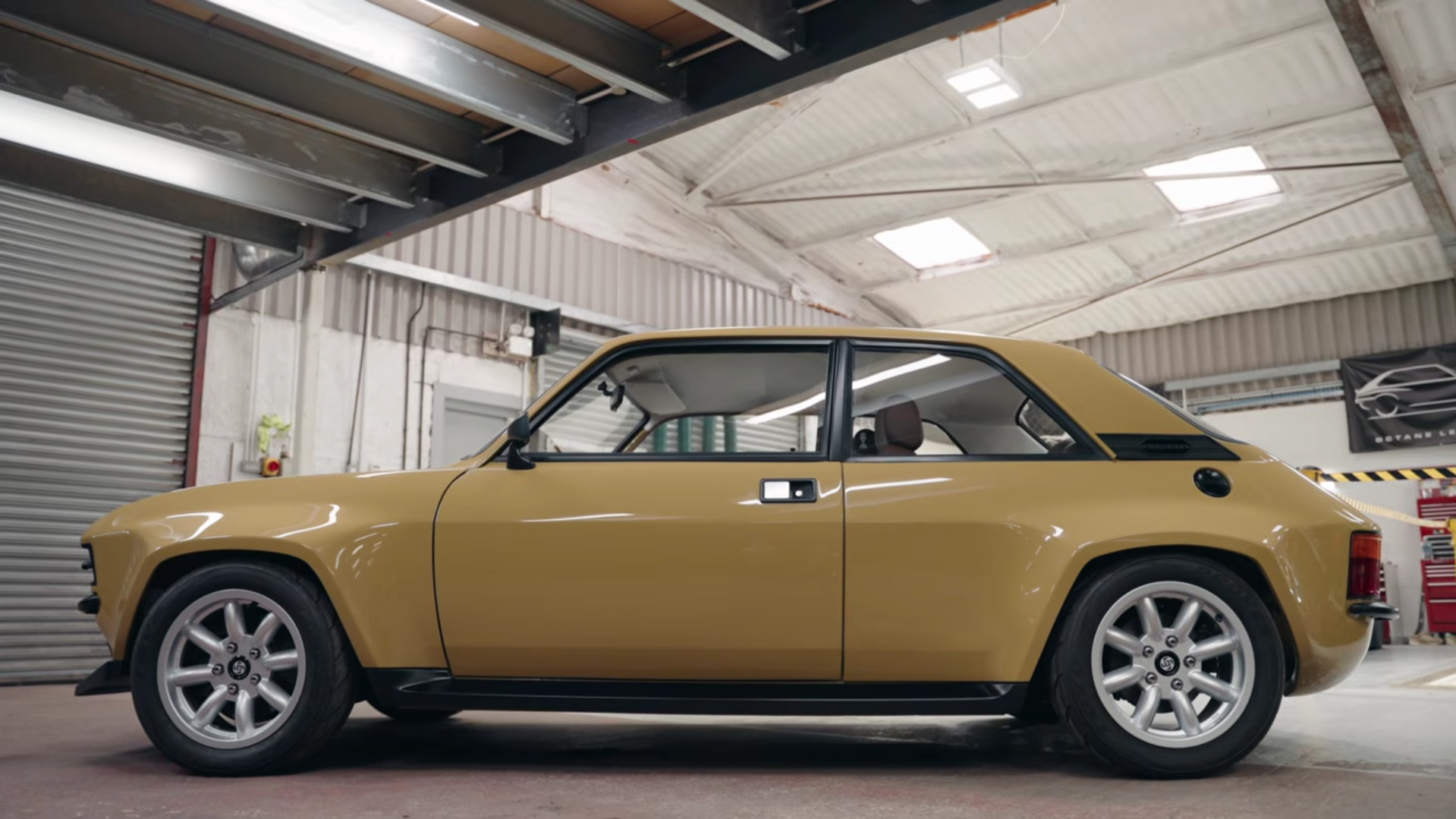
Although the car retains the unmistakable silhouette of an Allegro, very little of its bodywork remains untouched. The dramatic widebody arches, side skirts, front splitter, and rear quarter panels were all designed digitally before molds were created for carbon-fiber production parts.
Carbon was also used for the door skins and several other exterior components, while some lower sections were produced in fiberglass to simplify repairs.
The attention to detail extends throughout the build. Original-style door handles were retained because the team felt modern replacements would lose some of the Allegro’s character, while the bumpers were subtly reshaped to better match the revised bodywork.
Inside, Retro Power created an entirely new dashboard that faithfully echoes the original design while accommodating the Integra’s climate control system and electronics. Billet aluminum trim pieces, bespoke switchgear, hidden digital displays, and Harris Tweed upholstery combine vintage British style with modern functionality.
Honda Performance Without Losing Its Character
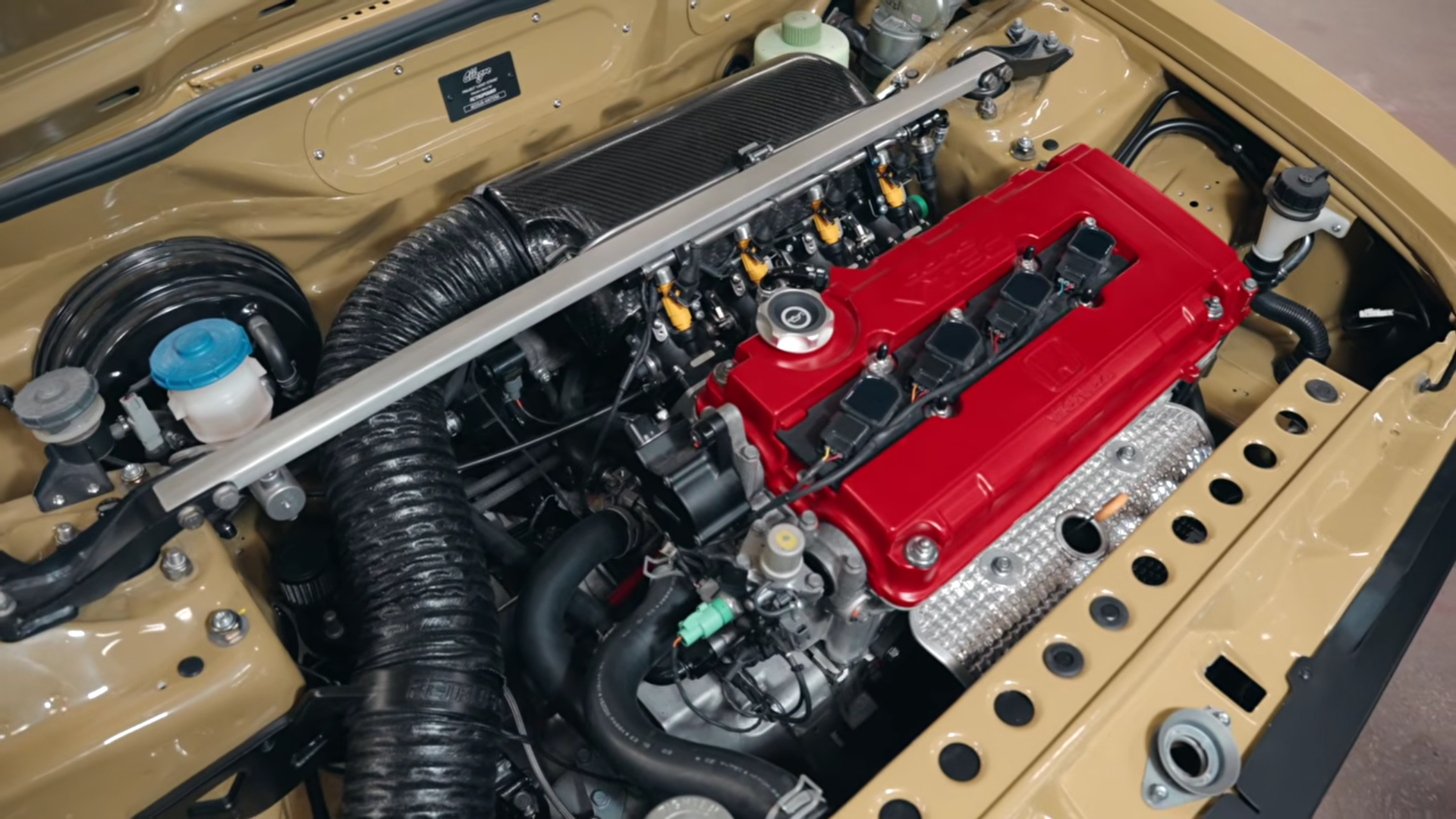
Power comes from Honda’s naturally aspirated 1.8-liter B18C engine from the Integra Type R rather than a heavily modified powertrain. Producing just under 200 horsepower, it remains largely factory specification apart from individual throttle bodies and updated engine management that enhance induction noise rather than dramatically increasing output.
The six-speed Honda drivetrain, limited-slip differential, suspension geometry, brakes, and much of the steering system were also retained. An electro-hydraulic power steering pump replaced the original belt-driven setup to solve packaging constraints within the Allegro’s compact nose.
Despite borrowing so much from the Honda, reviewers noted that the finished car doesn’t simply feel like an Integra wearing a different body. Its shorter proportions, revised suspension tuning, and lighter shell create a distinct personality while preserving the engaging characteristics that made the Type R famous.
The original square “quartic” steering wheel, one of the Allegro’s most controversial features, was even recreated with a modern interpretation that feels surprisingly natural in spirited driving.
A Company That Builds The Unusual
Project Lucky Strike reflects Retro Power’s philosophy of creating one-off vehicles tailored to individual clients rather than repeating familiar formulas.
Since opening in 2009, the British firm has built an eclectic portfolio that includes a Mk1 Ford Escort commissioned by legendary designer Gordon Murray, a Saab 900 riding on an Audi S4 chassis, an Aston Martin DBS using Corvette C7 suspension and a Chevrolet LT1 V8, and a Jaguar Mk2 transformed into a sleek two-door coupe.
Callum Seviour says in an interview with Henry Catchpole at Hagerty that the company deliberately avoids competing with specialists that already dominate certain models. That is one reason Retro Power has never undertaken a Porsche 911 project, believing customers seeking a Singer-style build are better served by Singer itself.
Instead, the workshop focuses on projects that challenge expectations and require original engineering solutions rather than repeating established recipes.
The Ultimate Redemption Story
The Allegro was once dismissed as one of Britain’s biggest automotive disappointments. Project Lucky Strike doesn’t attempt to rewrite history or argue that the original car was misunderstood.
Instead, it demonstrates what thoughtful engineering can accomplish when a talented team is willing to look beyond a vehicle’s reputation. By combining Honda reliability and performance with bespoke craftsmanship and unmistakable British character, Retro Power has created a restomod that is as entertaining to drive as it is unexpected.
Perhaps the greatest compliment is that enthusiasts are no longer laughing at the Allegro itself. They’re laughing in disbelief that one of the automotive world’s least celebrated cars has become one of its most imaginative and desirable custom builds.