
Hyundai has issued a major safety recall affecting more than 420,000 vehicles after reports that the cars could suddenly activate the brakes without warning.
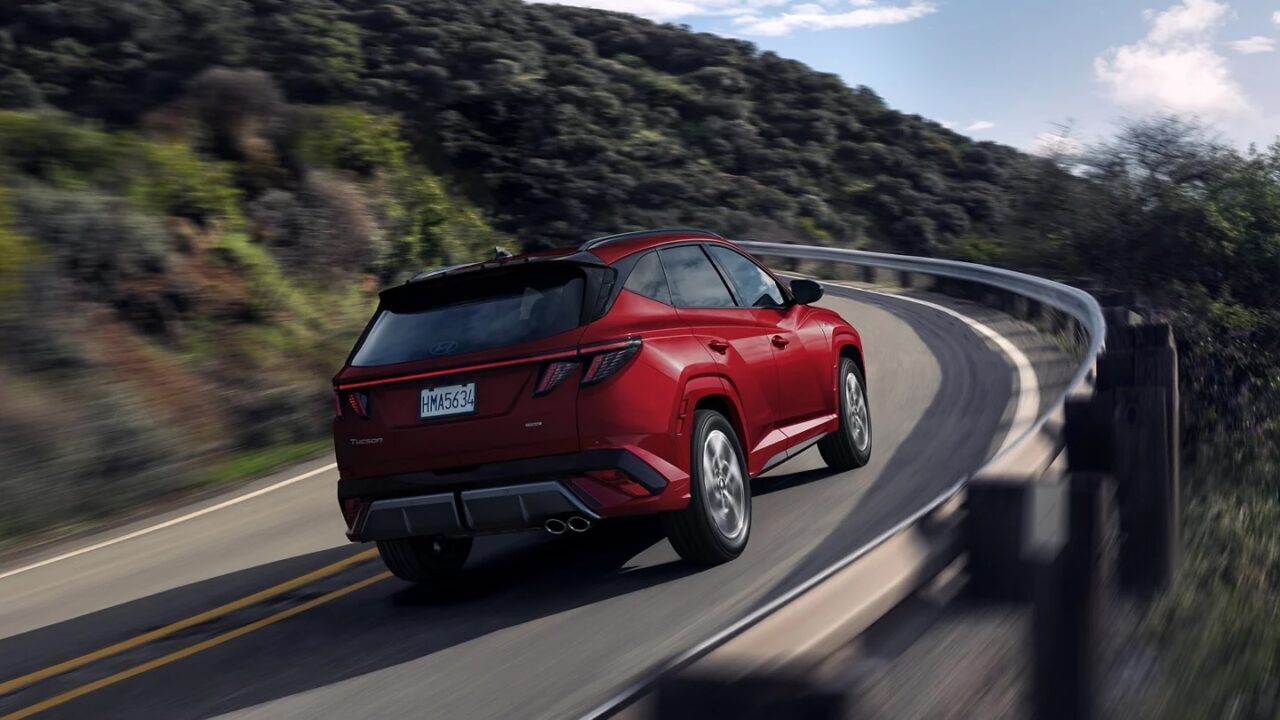
The recall covers several versions of the Hyundai Tucson and Santa Cruz built for the 2025 and 2026 model years. According to documents filed with the National Highway Traffic Safety Administration (NHTSA), the issue stems from software tied to the vehicles’ Forward Collision-Avoidance Assist system.
Hyundai says the system may become overly sensitive in certain driving situations, potentially triggering emergency braking even when no actual collision risk exists.
That kind of unexpected braking event can create a serious hazard, especially for drivers traveling behind the affected vehicles. Federal safety documents linked the issue to four reported rear-end collisions, though fortunately, no fatalities have been reported so far. The recall arrives only months after Hyundai faced lawsuits alleging phantom braking problems in certain Tucson models.
More Than 420,000 Vehicles Are Affected
According to the NHTSA recall filing, the issue affects a total of 421,078 vehicles across multiple Hyundai models.
The recalled vehicles include:
- 2025–2026 Hyundai Tucson
- 2025–2026 Hyundai Tucson Hybrid
- 2025–2026 Hyundai Tucson Plug-In Hybrid
- 2025–2026 Hyundai Santa Cruz
The vast majority of affected vehicles are standard Tucson models, accounting for nearly 293,000 units alone.
Hyundai says the problem originates from the front camera software used by the Forward Collision-Avoidance Assist system. Under certain conditions, the software may incorrectly interpret nearby objects or traffic situations, causing the vehicle to brake earlier or more aggressively than drivers expect. The recall report specifically warns that drivers may receive no meaningful warning before the system intervenes.
Phantom Braking Complaints Continue to Grow

Unexpected or “phantom” braking has become an increasingly controversial issue as automakers rely more heavily on automated safety technologies.
Forward collision systems are designed to reduce accidents by automatically applying the brakes when the vehicle detects an imminent crash. When functioning properly, the technology can help prevent serious collisions. The problem arises when sensors, cameras, or software incorrectly identify threats that do not actually exist.
Drivers have reported sudden braking events caused by shadows, roadside objects, overpasses, lane markings, or even empty stretches of highway. In many cases, following drivers have little time to react when a vehicle unexpectedly slams on its brakes.
The lawsuits filed against Hyundai earlier this year alleged the automaker may have relied on less sophisticated sensor hardware in certain systems, though those claims remain unproven.
Regardless of the underlying cause, regulators and automakers continue struggling to balance aggressive safety intervention with predictable vehicle behavior.
Hyundai Says a Software Update Will Fix the Problem
Hyundai plans to resolve the issue through a software update applied to the front camera system. Owners of affected vehicles will receive official recall notifications beginning July 17, 2026. Drivers will then be able to schedule a free dealership visit to install updated software designed to reduce the system’s oversensitivity.
The repair will be performed at no cost regardless of vehicle warranty status. Hyundai also says owners who previously paid out-of-pocket expenses related to the issue may qualify for reimbursement.
Drivers can verify whether their vehicle is included in the recall by checking their VIN through the NHTSA recall database. The recall identification number is 26V316.
Automated Safety Systems Still Have Major Challenges
Features like automatic emergency braking, adaptive cruise control, and lane-centering systems are becoming increasingly common across the industry. Regulators and automakers often promote them as major safety improvements capable of reducing accidents and fatalities. Yet incidents involving false emergency braking continue surfacing across multiple brands.
The challenge is especially difficult because these systems must make split-second decisions based on cameras, radar, software interpretation, and constantly changing environmental conditions. Overly cautious calibration can lead to unnecessary interventions, while insufficient sensitivity risks failing to prevent actual crashes.
For EVs and modern crossovers packed with increasingly advanced driver-assistance systems, software quality is becoming just as important as traditional mechanical reliability.
Hyundai Faces Growing Scrutiny
This latest recall adds to a difficult stretch for Hyundai. Just days earlier, the automaker announced another recall affecting more than 50,000 Elantra Hybrid models over a potential fire risk. Earlier this year, Hyundai also faced significant scrutiny following a tragic incident involving a defective folding seat in a Palisade SUV.
While none of the crashes tied to this latest braking recall have reportedly caused fatalities, the issue further increases pressure on Hyundai as the company continues rapidly expanding its technology-heavy lineup.
For affected owners, the safest move for now is to remain cautious in traffic and ensure plenty of following distance until the software update is completed.