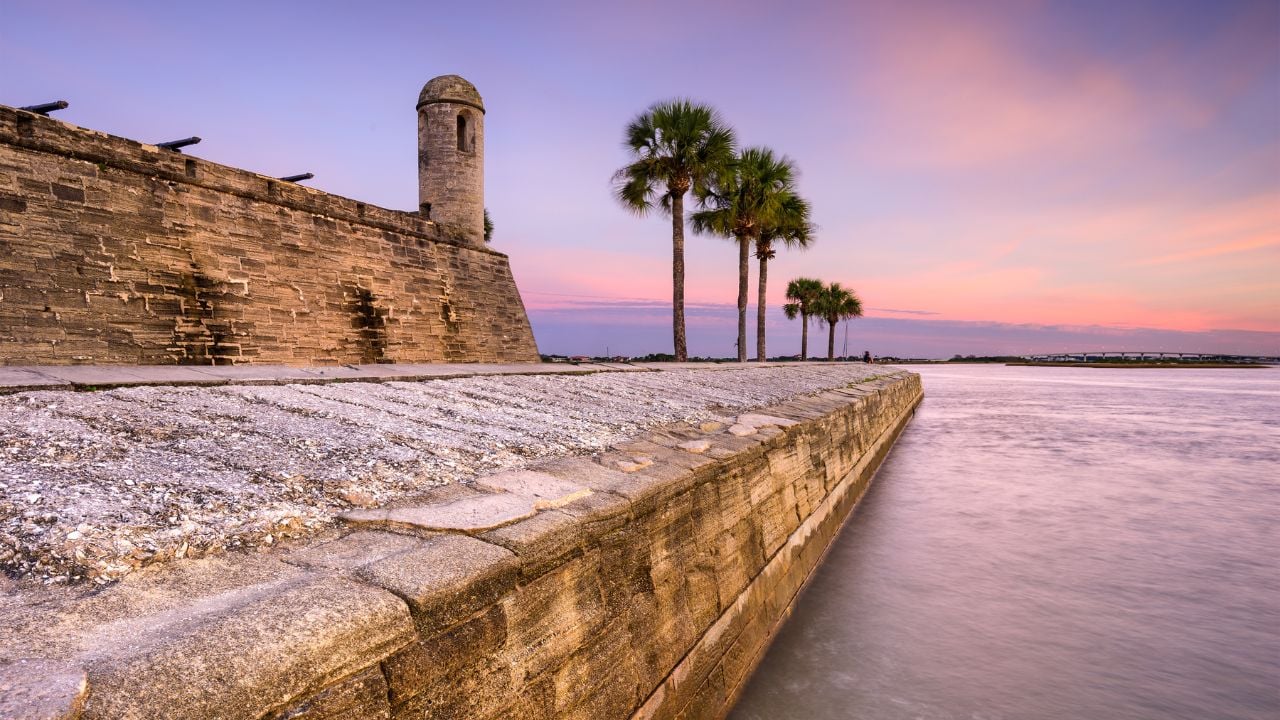
Founded in 1565, St. Augustine offers something rare in American travel: a place where the timeline feels visible at street level. Within a compact center, Spanish colonial roots, bayfront defenses, and Gilded Age grandeur sit close enough together to cover in a single outing. That makes planning easier, but it also raises the stakes, because there is a lot worth choosing carefully. A smart visit balances signature landmarks with slower moments that let the setting sink in.
Part of the appeal comes from contrast. One hour might put you beside coquina walls facing the bay, while the next leads into a palm-lined courtyard or a narrow brick lane with art galleries and old foundations underfoot. Architecture from several eras shares the same few blocks, so the day never feels visually flat. For travelers who like substance with their sunshine, few Florida stops deliver this mix so gracefully.
1. Begin at Castillo de San Marcos
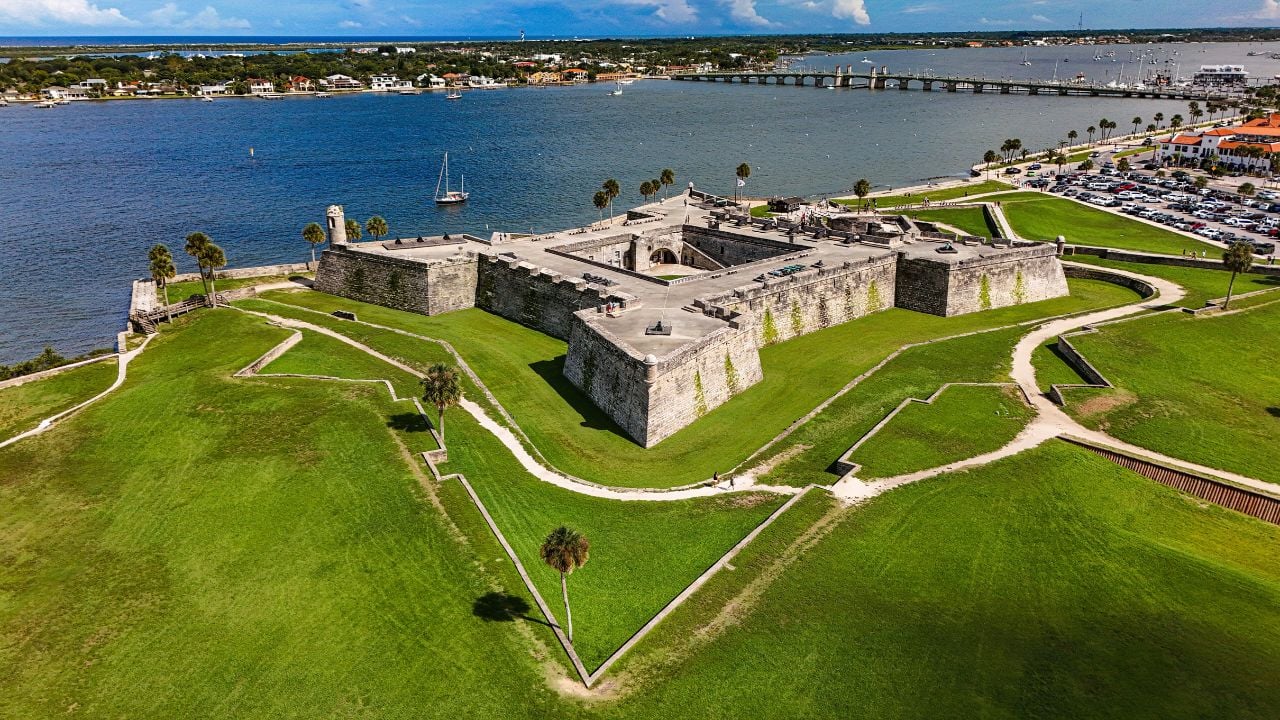
No first stop makes more sense than Castillo de San Marcos. The National Park Service says the Spanish built it to defend Florida and the Atlantic trade route, and it remains the oldest masonry fortification in the continental United States. That alone would justify a visit, yet the setting adds even more drama, with the stronghold planted right on the bayfront. From the outside, the pale coquina walls already tell you this was a place built to last.
Give yourself time to circle the exterior before heading inside. The structure’s distinctive star-shaped bastion design was created to reduce blind spots and strengthen defense, which means the layout is central to the story rather than a decorative flourish. Once you are on the grounds, the geometry becomes easier to appreciate, especially along the edges facing the water. Few American monuments explain military engineering so clearly without needing a lecture first.
The fort also works because it is not trapped behind museum glass or buried in a district that makes it feel abstract. You see it against the sky, the water, the green lawn, and the city moving around it. That makes the whole site feel alive rather than frozen. Even travelers who do not usually care much about military history tend to understand quickly why this stop matters.
It is also one of the best places in town to begin understanding the city’s scale. From here, the old center feels close, walkable, and connected, which helps the rest of the day fall into place. Start here and St. Augustine immediately makes sense. The city introduces itself with one of its strongest cards first.
2. Roam St. George Street, Aviles Street, and the Plaza
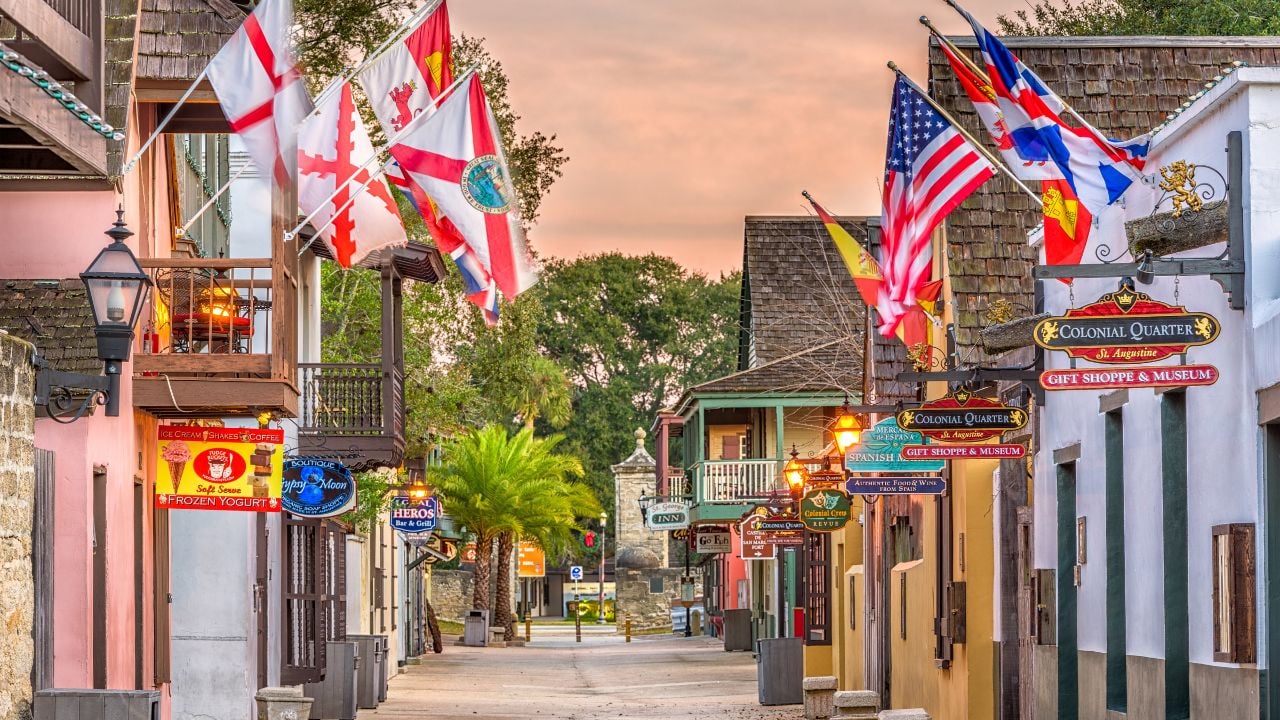
St. George Street works best without a rigid agenda. This pedestrian-only corridor threads through the historic center with colonial-era buildings, courtyards, museums, eateries, shops, and landmarks packed close together. Its charm comes from the rhythm of wandering, not from racing between pins on a map. Look up for balconies, glance into passageways, and leave room for whatever catches your eye.
The street’s strength is that it can absorb different kinds of visitors at once. Someone can stop for coffee and people-watching, someone else can duck into a shop or small museum, and a family can simply keep moving until something grabs them. It never feels like there is only one right way to do it. That flexibility is part of why the district works so well for a first visit.
A few blocks away, Aviles Street shifts the mood. Visit St. Augustine notes that archaeologists confirmed it as the oldest street in the United States after uncovering pottery shards dating to the early 1600s beneath the brick paving, and the corridor later became the town’s first formal arts district in the 1930s. Nearby, Plaza de la Constitución gives the center another layer of history and breathing room without asking much more than your time.
This part of town is where St. Augustine becomes more than a checklist of historic sites. The appeal is not only in the age of the streets, but in the way they still function as social, visual, and cultural spaces. You are not just looking at history from a polite distance. You are moving through it while the city continues to live around you.
3. Step Into the Gilded Age at Lightner Museum and Flagler College
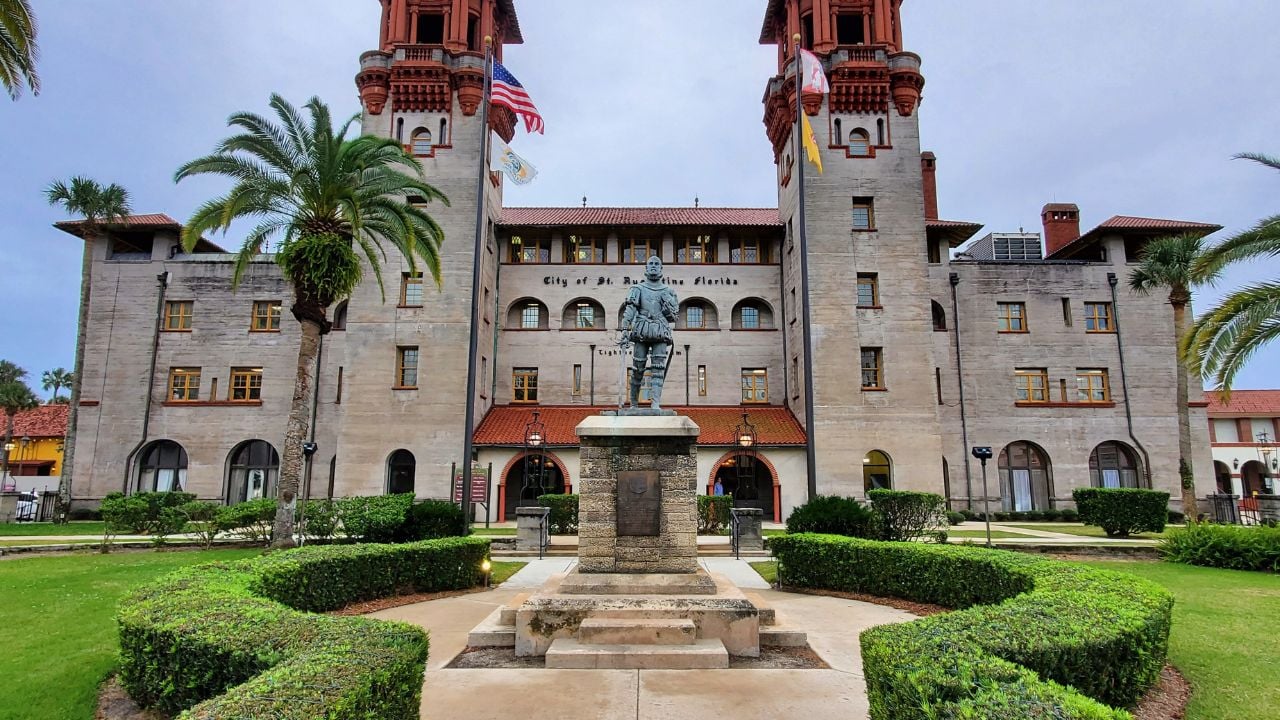
Henry Flagler changed the look of this community, and the Lightner Museum shows why his influence still matters. The museum occupies the former Hotel Alcazar, a Gilded Age resort commissioned by Flagler, completed in 1888 and designed by Carrère and Hastings. Even before you pause at a single display, the building itself does much of the storytelling. Towers, arcades, and interior grandeur give the stop a sense of ceremony from the moment you arrive.
This is one of those museums where the container is almost as compelling as the collection. The architecture does not merely house the experience. It shapes it. Walking through the building gives you a feel for the scale of ambition that once defined St. Augustine’s luxury resort era.
Across King Street, Flagler College’s historic tours continue that same era inside the former Hotel Ponce de Leon. The official tour information says visits run about 45 to 60 minutes and focus on major public rooms, with student guides explaining how a luxury retreat became an active campus. The route includes the Rotunda, Courtyard, Dining Hall with Tiffany stained glass, and the Flagler Room. Pairing this experience with the Lightner creates one of the strongest one-two combinations in town.
Together, these stops give St. Augustine more range than people often expect. Without them, the city can seem defined only by colonial imagery and waterfront defenses. With them, the place suddenly gains another layer of identity: ambitious, theatrical, and deeply tied to the Gilded Age vision that reshaped American tourism. That broader perspective makes the city feel fuller and more surprising.
4. Climb the Lighthouse for a Different Perspective
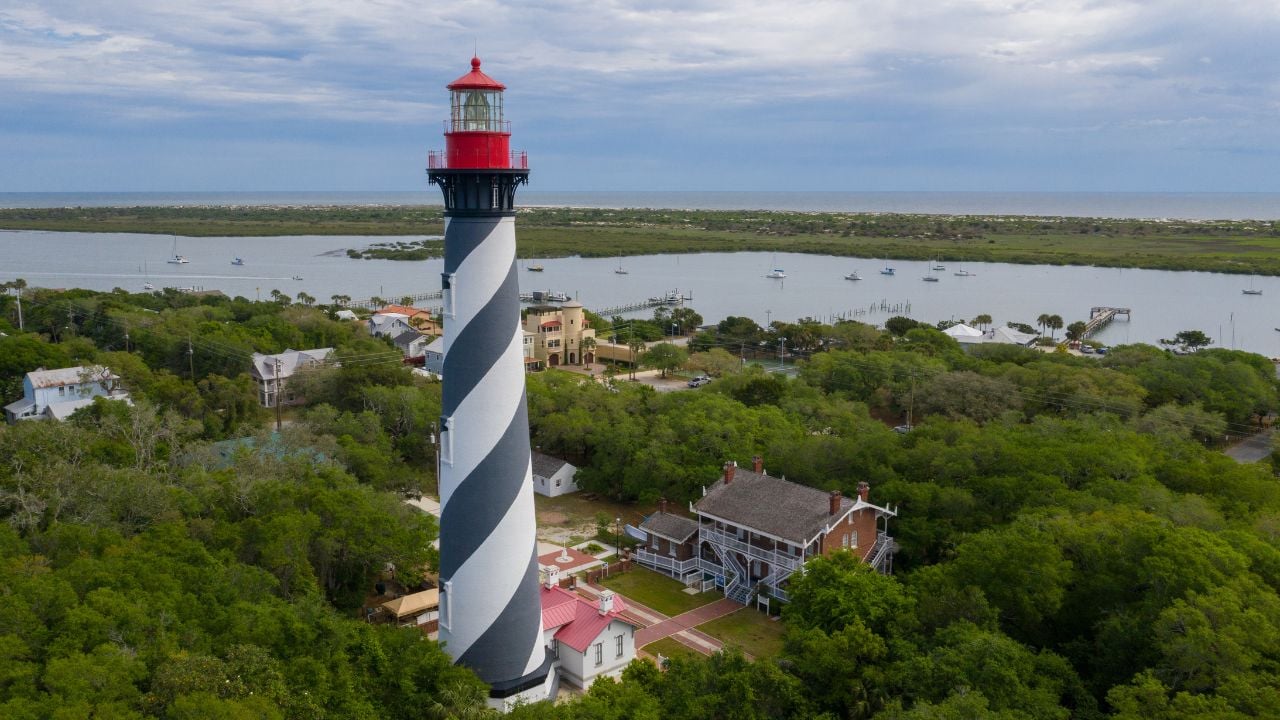
For a wider outlook, head across the bridge to the St. Augustine Lighthouse & Maritime Museum. The site interprets more than 500 years of maritime history, stretching from a wooden watchtower in the late 1500s to the current light station built from 1871 to 1874. That long span gives the stop more weight than a quick photo break. Port life, navigation, and coastal survival all come into sharper focus here.
This is also where the city’s relationship with the water becomes easier to understand. St. Augustine is not just a pretty old town beside a bay. It is a place shaped by shipping, defense, weather, access, and the constant logic of the coast. The lighthouse helps tie all of that together in a way that feels visual rather than overly academic.
The climb is part of the appeal. Visit St. Augustine notes a 219-step ascent, and the museum’s historic interpretation gives the effort real payoff beyond the view. Even travelers who skip the tower still get keeper stories, maritime displays, and grounds that add texture to the day. Go while your energy is still high, because this visit rewards legs that have not already spent hours on brick streets.
The payoff is not just the height. It is the shift in perspective. Once you look out over the water, bridges, rooftops, and shoreline, the city reads differently. The earlier stops stop feeling isolated, and the whole area begins to connect into one larger story.
5. Finish on the Water Along the Bayfront
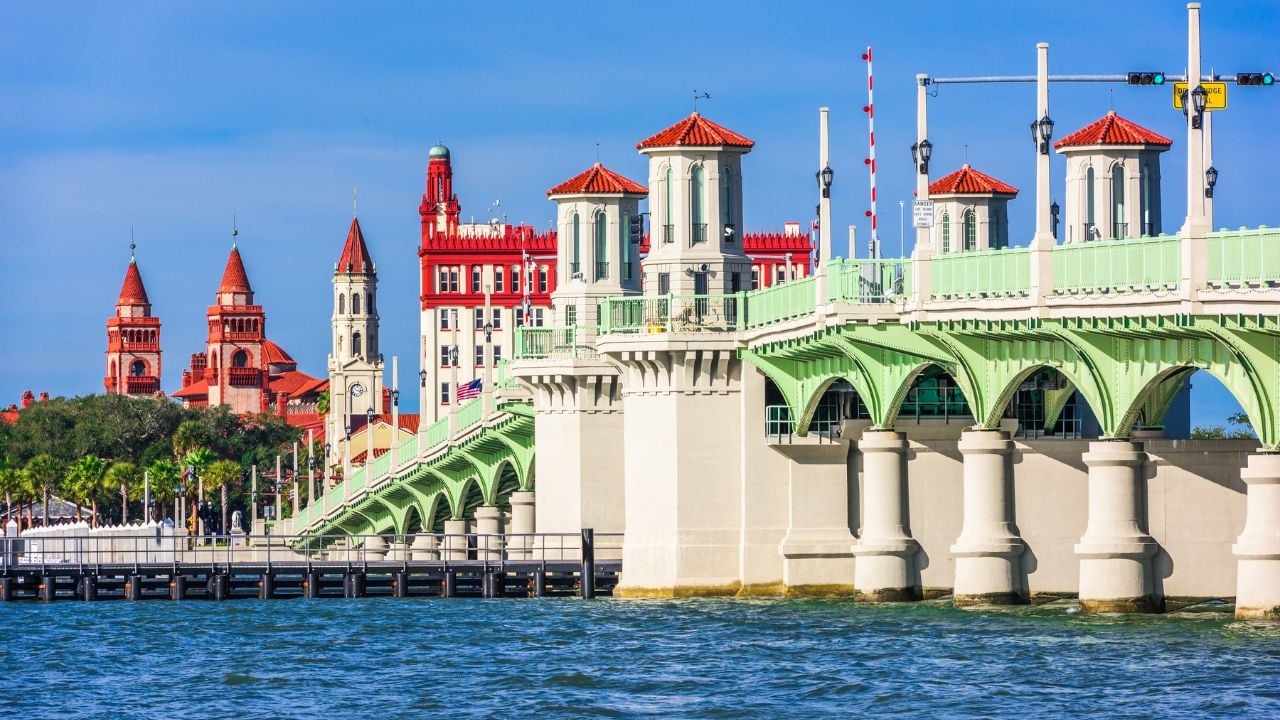
Before calling it a day, make time for the waterfront. The bayfront is a huge part of why this old quarter feels so cinematic, with green spaces, landmarks, and long sightlines opening beside the water. From shore, the Bridge of Lions frames the scene beautifully. From a boat, the skyline starts to read like a layered historical tableau.
This is also where the city softens a little. After forts, museums, college tours, and narrow streets, the water gives the day room to breathe. The pace slows down, the views widen, and the whole place starts to feel less like a sequence of attractions and more like an atmosphere.
One easy option is the Scenic Cruise of St. Augustine, which departs from the Municipal Marina just south of the Bridge of Lions in downtown St. Augustine. The ride gives tired feet a break while serving up broad looks at the shoreline and harbor. Late light tends to be especially flattering, though any calm run can make the whole place click into focus. End there, and the memory you carry home is likely to be stone walls, church towers, and salt air arriving all at once.
That kind of ending suits St. Augustine especially well. The city has enough substance to reward close attention, but it also knows how to leave a softer final impression. You can spend the day learning, walking, climbing, and looking closely, then let the waterfront gather it all into one quieter image. That is a strong way to leave town, and an even stronger reason to want to come back.