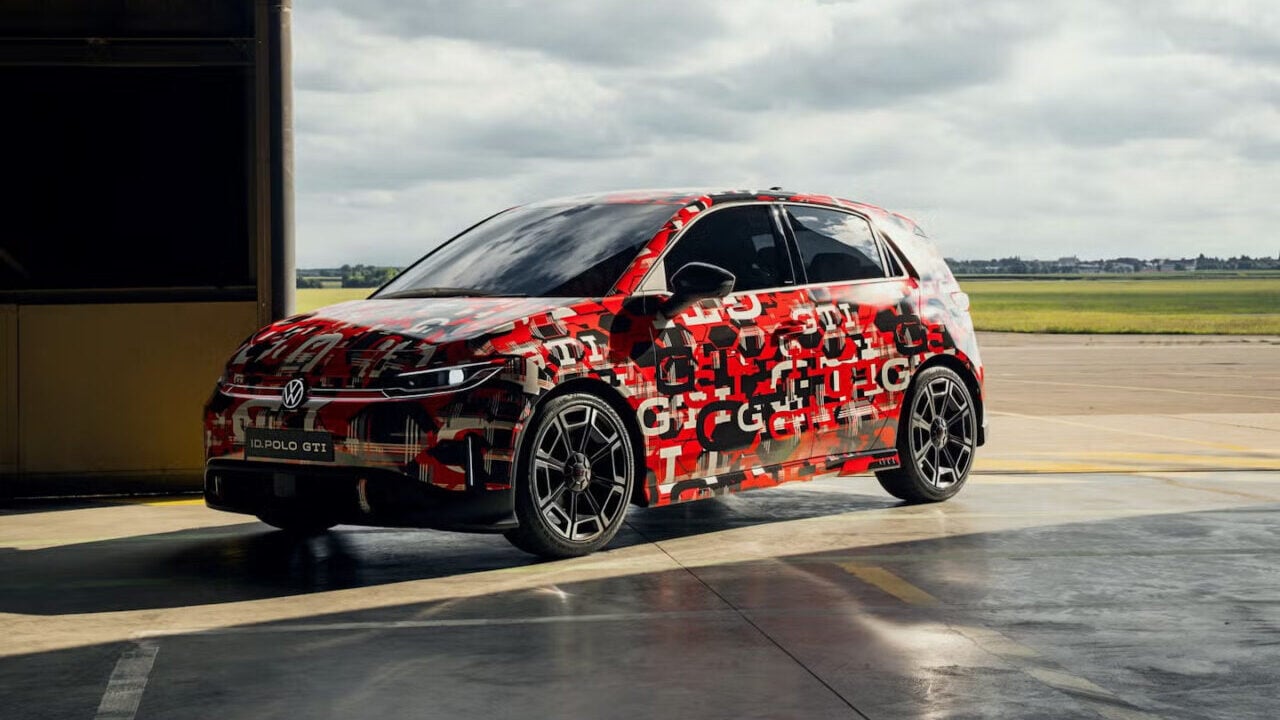
Volkswagen is finally ready to put the GTI badge on an electric car, and early signs suggest it may have built something genuinely interesting. The upcoming ID.Polo GTI represents the company’s first fully electric hot hatch to wear the legendary three-letter badge.
For years, Volkswagen treated its performance EVs differently from its gasoline-powered GTI models. Electric performance cars carried GTX branding instead, leaving enthusiasts wondering whether VW still understood what made a GTI special in the first place.
That appears to be changing, as the ID.Polo GTI has been engineered with a much stronger focus on lightweight packaging, front-wheel-drive handling, and driver engagement rather than simply chasing massive horsepower numbers.
Autocar recently became the first publication to drive an early prototype in the UK, and the impressions point toward a surprisingly playful and focused little EV. If Volkswagen can carry that character through to production, the ID.Polo GTI could become one of the most important enthusiast EVs yet.
Volkswagen Is Returning to the Classic GTI Formula
Volkswagen says the ID.Polo GTI was designed around the same principles that shaped earlier GTI models. The goal was not to build the fastest electric hatchback possible, but rather a car that feels usable, entertaining, and engaging every day.
That philosophy shows up immediately in the layout. Unlike many Volkswagen Group EVs that use rear-mounted motors, the ID.Polo GTI sticks with a front-mounted electric motor driving the front wheels.
Volkswagen’s engineering team reportedly believed that front-wheel drive simply fits the hot hatch formula better. The setup also helps reduce weight and preserve interior and cargo space in a compact car.
Power output lands at 223 horsepower and 214 lb-ft of torque. Those numbers may not sound outrageous in the EV era, but the relatively compact hatchback weighs under 3,400 pounds and appears to rely more on balance than brute force.
Hardware Built for Real Driver Engagement
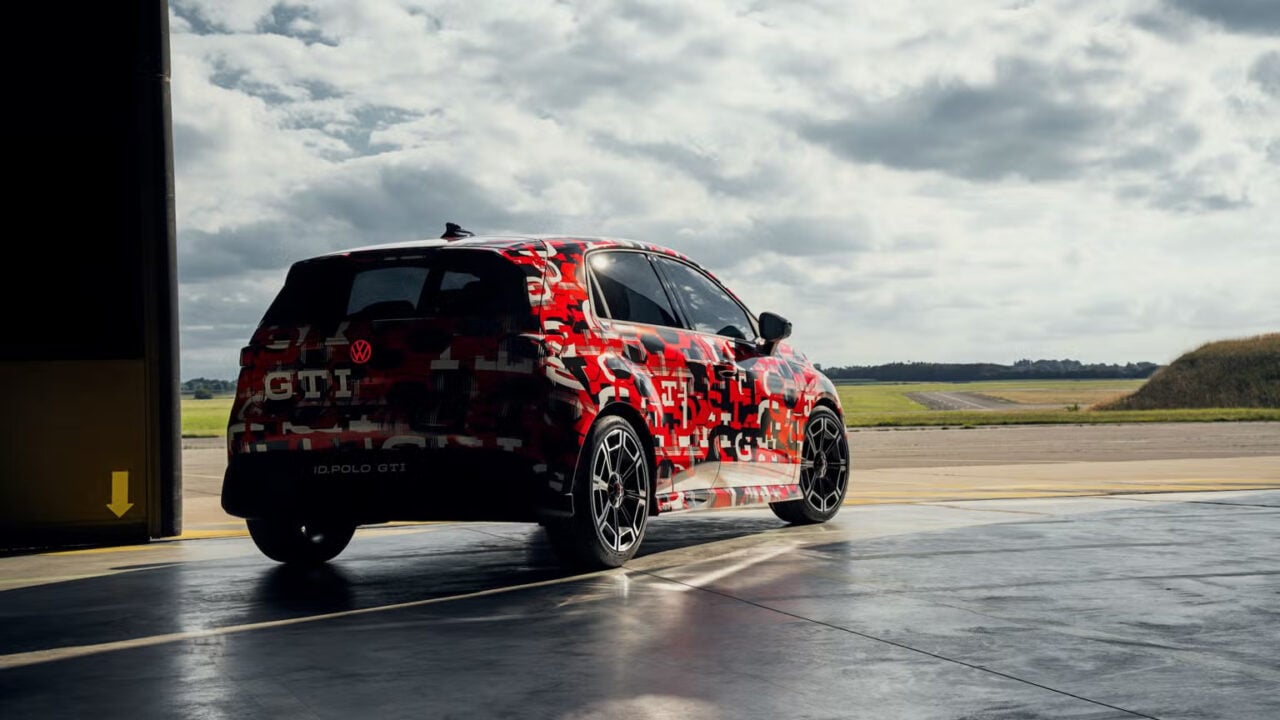
The ID.Polo GTI is built on Volkswagen’s new MEB+ platform and uses a 52-kWh battery pack. VW estimates more than 260 miles of WLTP range for the GTI, while less aggressive variants could stretch closer to 280 miles.
Volkswagen also loaded the car with proper performance hardware instead of relying entirely on software tricks. A torque-vectoring front differential based on the VAQ system from the Golf GTI Edition 50 comes standard, along with adaptive dampers and revised front suspension geometry.
The GTI sits 15 mm lower than a standard ID.Polo and rides on 19-inch wheels with wide 235-section tires. Engineers also revised the steering ratio, suspension bushings, and rear twist-beam setup to sharpen handling response without destroying ride comfort.
According to early impressions, the result is a car that feels lively and interactive rather than digitally filtered. Test drivers noted that the front differential allows the hatchback to rotate naturally through corners while still maintaining strong traction under power.
Volkswagen Learned From Its Earlier EV Mistakes
One of the more interesting parts of the ID.Polo GTI story is how openly Volkswagen appears to acknowledge the shortcomings of some earlier ID-branded models. Engineers reportedly focused heavily on making the new car feel familiar and intuitive instead of futuristic for the sake of it.
That approach extends to the cabin. The prototype features physical steering-wheel buttons instead of the touch-sensitive controls that frustrated many owners in previous Volkswagen products.
There are also visible physical climate controls beneath the air vents, another clear sign VW is backing away from touchscreen overload. Retro-inspired graphics modeled after the original Mk1 Golf GTI even appear in the digital gauges and infotainment menus.
The emphasis on usability is important because GTIs have traditionally succeeded by balancing fun with practicality. Volkswagen appears determined not to lose that character during the transition to electrification.
It Probably Won’t Come to America
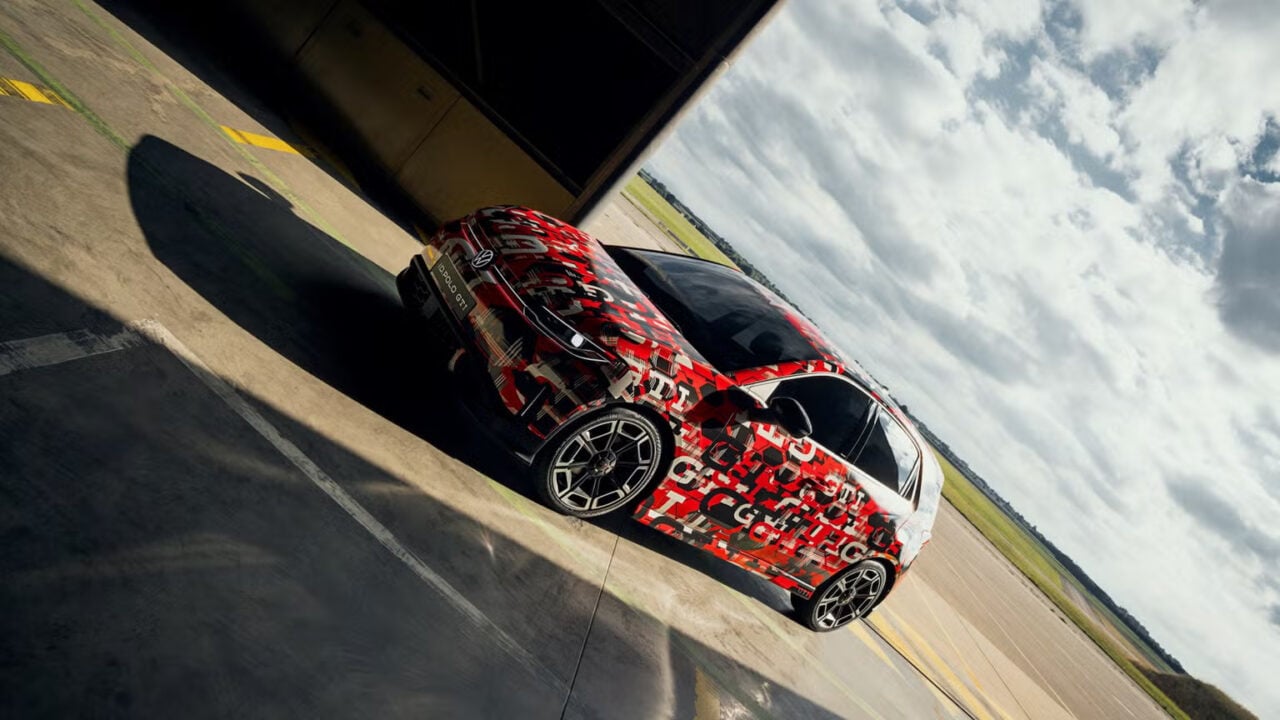
The unfortunate reality is that the ID.Polo GTI is unlikely to reach the United States. Small hatchbacks continue to struggle in the American market, where crossovers dominate nearly every sales category.
That is a shame, because compact hot hatches have historically delivered some of the best driver engagement at accessible prices. Cars like the Fiesta ST, Peugeot 205 GTI, and earlier Polo GTIs built loyal followings by prioritizing agility and personality over outright speed.
Volkswagen plans to launch the ID.Polo GTI in Europe toward the end of 2026, with wider deliveries beginning in 2027. By then, the EV market will be filled with increasingly powerful electric performance cars.
The difference is that Volkswagen may finally understand something many automakers have forgotten. A fun car does not necessarily need absurd horsepower figures or artificial drama. Sometimes, a sharp front axle, a playful chassis, and the right balance of performance are enough.