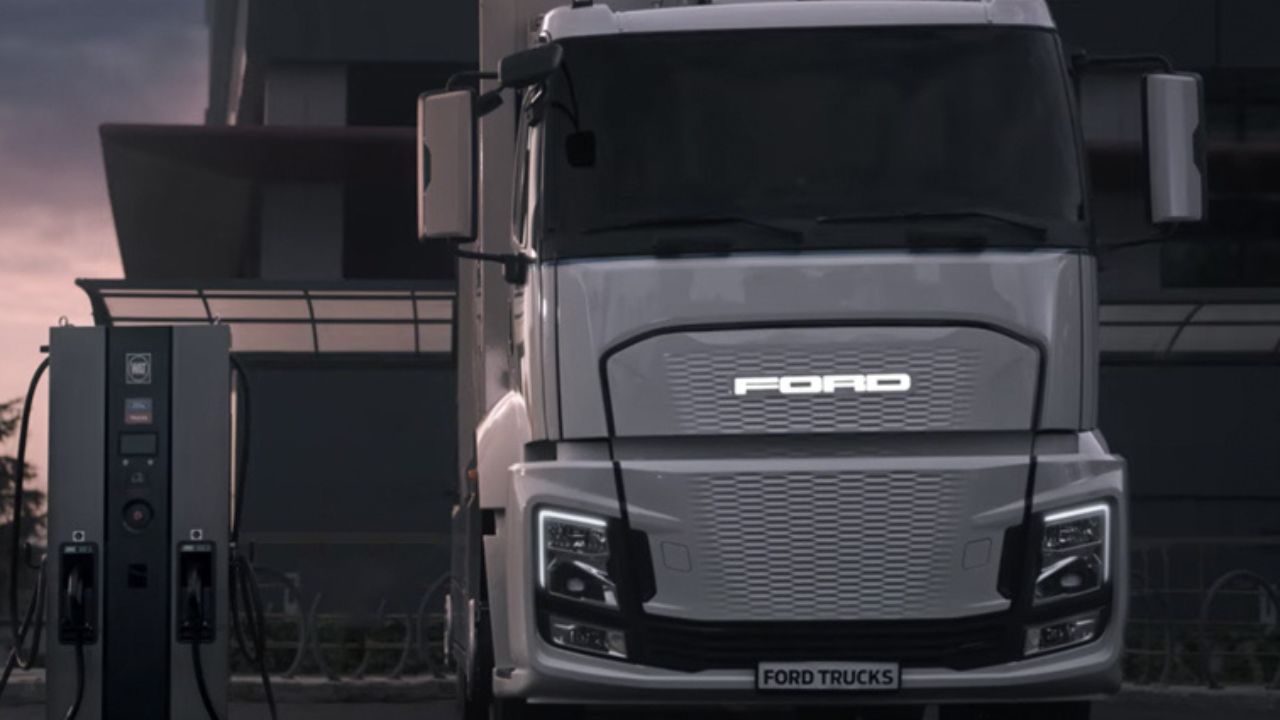

Ford has officially stepped into the electric semi-truck arena with its new 2026 F-Line E, marking a significant move for a company that until now has largely focused on passenger EVs and commercial vans. This truck will begin hitting Western European roads in the summer of 2026 in both 4×2 and 6×2 configurations.
The launch represents Ford’s first serious commitment to zero-emission heavy commercial vehicles and positions it to compete with established players in the region. And this comes as Daimler’s hydrogen-powered Mercedes-Benz NextGenH2 enters production for 2026.
Ford is targeting the F-Line E squarely at regional distribution fleets, urban logistics operators, and municipal services. These are commercial customers who operate predictable routes with regular returns to a base for charging and maintenance. Ford’s own engineers have designed the electric drivetrain and battery setup to support the kinds of daily stop-and-go cycles and short-range requirements that define these work profiles.
Power, Range, and Rapid Charging
At the heart of the F-Line E is its modular battery architecture. The truck can be fitted with up to four 98 kWh nickel manganese cobalt (NMC) battery packs, giving a total capacity of 392 kWh. In the heaviest 6×2 version with a 26-ton gross vehicle weight, that configuration delivers a loaded range of up to about 187 miles (300 kilometers).
The lighter 4×2 truck will use a smaller battery pack and is expected to provide a somewhat shorter driving range.
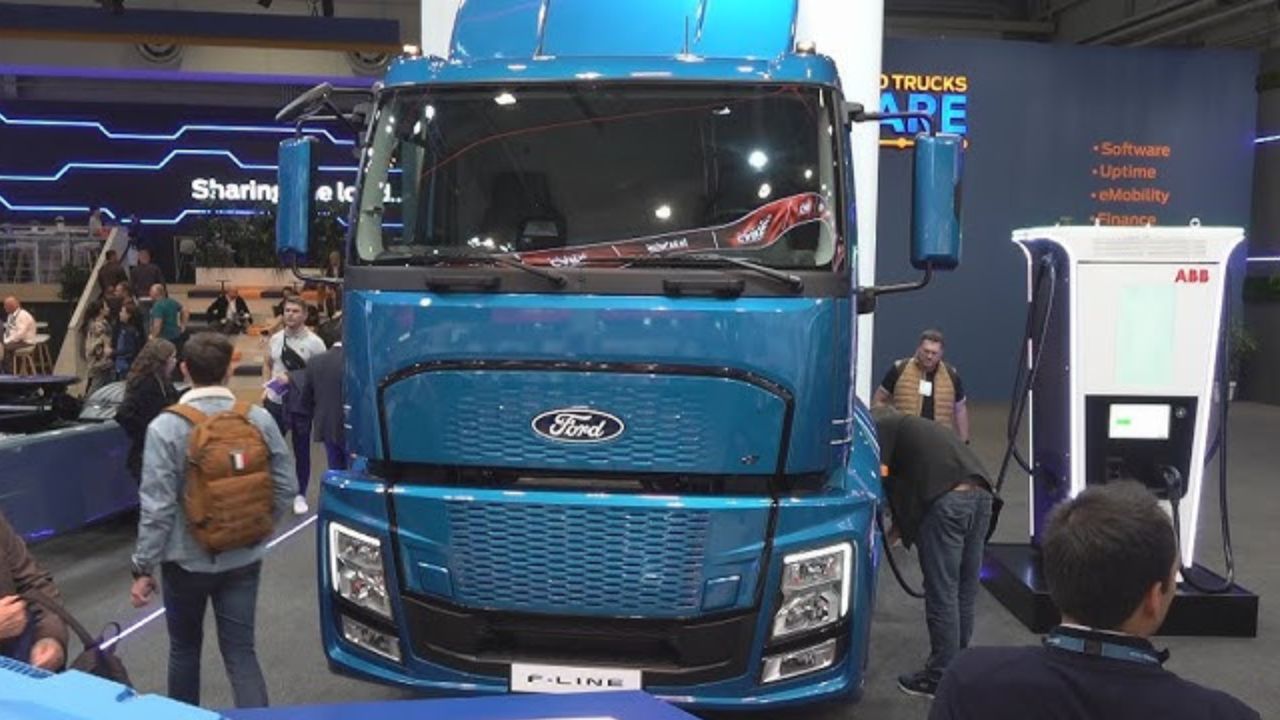
Power comes from an eAxle solution developed with Germany’s ZF, a major Tier 1 supplier. In performance terms, this setup delivers around 525 horsepower, and a torque figure of roughly 1,820 lb-ft. Those figures should give the F-Line E strong low-speed pulling power for loaded operations even in urban stop-start traffic.
Charging performance for commercial trucks is critical because downtime directly impacts revenue. Ford has equipped the F-Line E with fast-charging capability rated at up to 285 kW on the 6×2 trucks. Ford says this allows the largest battery packs to go from about 20 percent to 80 percent state-of-charge in roughly 45 minutes.
This put charging times in the same ballpark as many diesel-refueling breaks at depots, helping fleets get trucks back to work with minimal interruption.
Built for Work
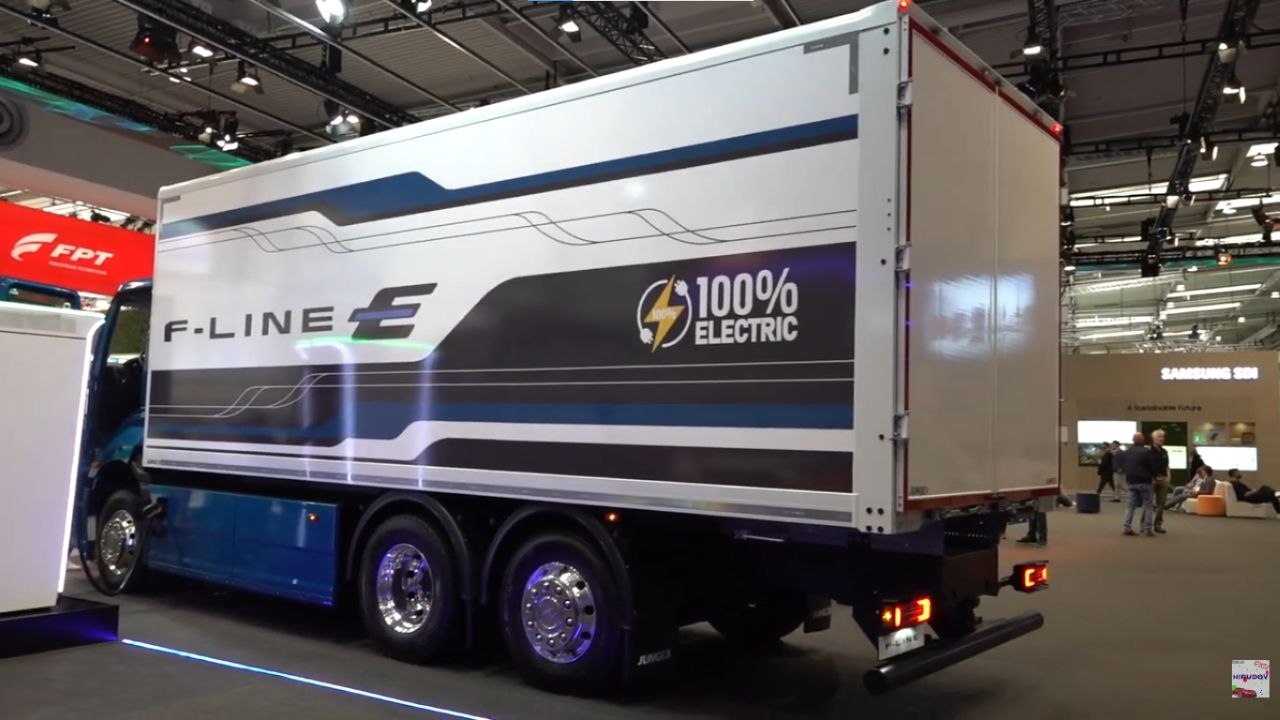
Ford Trucks, the commercial arm handling this product, also designed the F-Line E with body-builder flexibility in mind. The truck’s architecture supports a broad range of applications and upfit options, including refuse bodies and other municipal equipment. The electric architecture also powers auxiliary systems through an electric power take-off capability.
This means devices and tools can run off the battery without idling a separate generator. Air suspension on the rear axle and an electric air compressor is standard equipment, which helps reduce maintenance costs and provides better control for operators carrying a variety of loads.
Production is already underway at Ford’s truck plant in Turkey, where the company manufactures other commercial Ford models alongside the new electric offering. Deliveries are expected to begin in the summer of 2026 to key Western European markets where zero emission zones and fleet electrification incentives are gaining traction.
A Strategic Leap into a Competitive Arena
The launch’s timing is notable. For years Ford trailed competitors in the commercial EV truck space. Rivals from traditional heavy truck makers and newer electric truck companies have already rolled out electric models in Europe and Asia.
Meanwhile the United States market continues to wait for electric semi products from several major OEMs. Ford’s decision to introduce its electric semi in Europe likely reflects regulatory momentum for zero-emission commercial vehicles in the region and a growing base of fleet customers ready to adopt electric trucks.
The F-Line E comes as the company is also reshaping its overall electric strategy. Ford has shifted some electric product development toward smaller and more affordable models while revising its approach to full-size EVs. Earlier in 2025, the company announced changes to its larger EV programs and supply chain strategy, which reflected market realities and cost pressures.
The F-Line E shows that Ford still sees commercial electrification as a strategic opportunity. With growing demand for zero-emission fleets in Europe and the broader push for sustainability in transportation, Ford’s electric semi could be a major piece of the Blue Oval’s future business in the heavy-duty vehicle segment.