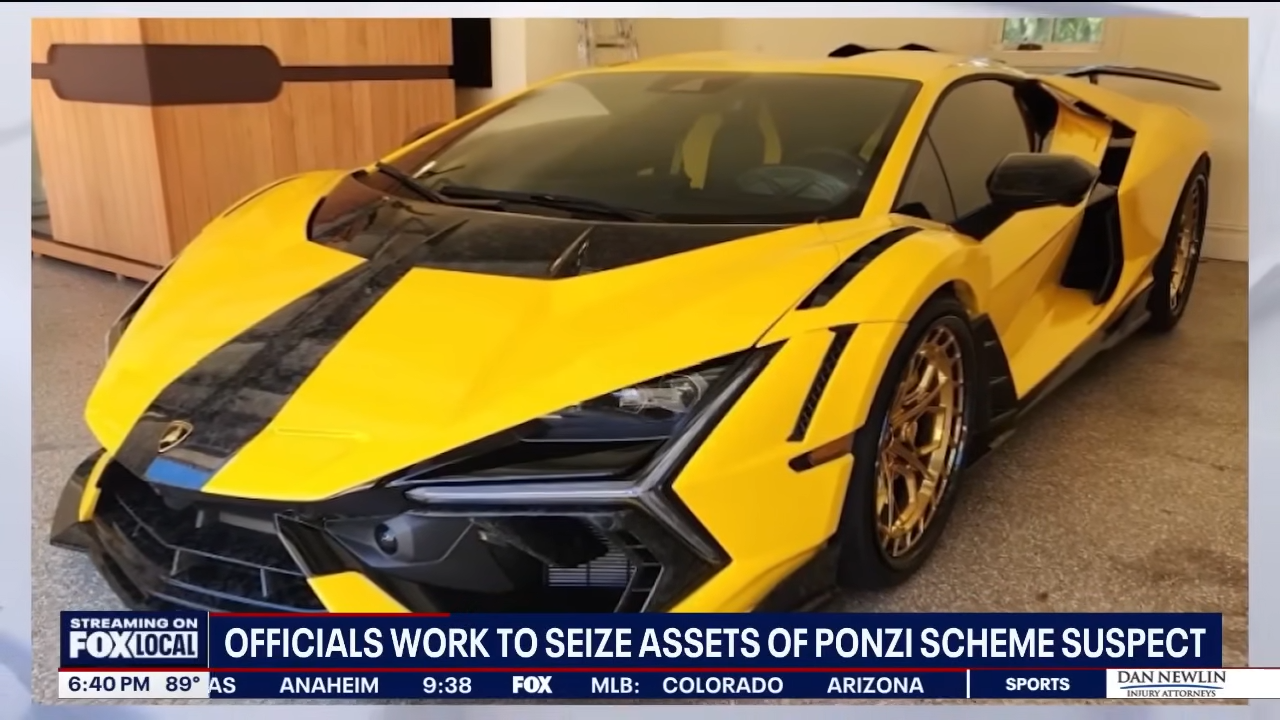
Christopher Delgado’s garage was every car enthusiast’s dream. It was also allegedly funded by someone else’s life savings.
There is something uniquely infuriating about watching a luxury car collection get built with stolen money. That is essentially what federal prosecutors are alleging happened in Central Florida, where Goliath Ventures CEO Christopher Delgado reportedly accumulated a jaw-dropping fleet of exotic vehicles, sprawling mansions, designer watches, and diamond jewelry, all while his investors were losing their retirement savings. The feds have had enough, and now they want it all back.
A civil forfeiture complaint has been filed against seven real properties and 11 vehicles allegedly purchased by Delgado with proceeds of the wire fraud scheme for which he was charged in February 2026. That is not a typo. Eleven vehicles. And if you think that sounds excessive, just wait until you see the list.
Delgado, 34 and based out of Apopka, Florida, served as the president and CEO of Goliath Ventures, an Orlando-based cryptocurrency investment firm. He stands accused of collecting more than $300 million from investors under the false promise that their money would be placed into cryptocurrency liquidity pools and generate low-risk, high returns. According to the DOJ, very little of that actually happened, and the funds were instead used to pay early investors, throw lavish parties, and purchase multi-million-dollar homes. FOX 35 Orlando
The Car Collection That Allegedly Cost Investors Everything
Let’s get right to the part that should make any car enthusiast’s blood boil, and any investor’s stomach drop. The forfeiture filing lists 11 vehicles, including a 2025 Lamborghini Revuelto with a purchase price of more than $700,000, and a 2023 Rolls-Royce Cullinan bought for more than $470,000. The filing also includes a Bentley and at least one additional Lamborghini, rounding out a collection that reads less like a personal garage and more like a supercar dealership floor.
To put the Revuelto’s price tag in perspective, the 2025 Lamborghini Revuelto is the Italian brand’s flagship V12 hybrid hypercar, producing over 1,000 horsepower and typically commanding well over half a million dollars before options. This was not a weekend cruiser purchased on a good bonus. By the mid-2020s, Delgado was living an extravagant lifestyle in Central Florida, traveling by private jet and driving Lamborghinis. Federal prosecutors allege that lifestyle was funded entirely by misappropriated investor money.
Delgado even showed Channel 9 news anchor Daralene Jones a Lamborghini inside the garage of his Isleworth mansion during an interview. Whatever you think of the alleged scheme, you have to acknowledge that is a bold move for someone under federal investigation.
Beyond the cars, a court filing shows Delgado owned 18 luxury watches, 5 Tiffany and Co. necklaces and pendants, 12 bracelets, 2 pairs of Louis Vuitton diamond earrings, and even a diamond-encrusted Goliath-branded ring. The branded ring is a detail that deserves its own moment of silence.
A $328 Million Scheme Built on Promises That Never Paid Out
Prosecutors said Delgado operated the Ponzi scheme from January 2023 to January 2026, soliciting victims with promises of monthly returns between 3% and 8% generated through cryptocurrency liquidity pools. Victims were drawn in through personal referrals, professional marketing materials, luxury events, and charitable sponsorships, all designed to establish Goliath’s credibility with investors. But while Goliath fraudulently obtained at least $328 million, only about $1 million was ever placed into a liquidity pool.
The gap between those two numbers, $328 million collected versus $1 million actually invested, is staggering. Beginning in late 2025, when investors attempted to withdraw their money or collect returns, Goliath began delaying payments while offering shifting explanations, eventually restricting or ending investor access to information about their investments entirely.
Investigators allege that $253 million was deposited into a JPMorgan bank account between January 2023 and June 2025, with roughly $123 million later transferred to Goliath wallets at Coinbase. In March, investors sued JPMorgan Chase, claiming the bank helped facilitate fund flows to Goliath and that it knew, through its Know Your Customer obligations, that Goliath was operating as a private equity-style cryptocurrency investment pool without being licensed to offer those types of products.
Real People, Real Losses
The cars and the mansions make for splashy headlines. The human toll is harder to read about. Victims described in court filings and news reports are not abstract numbers. They are retirees, pastors, and families who trusted someone they knew personally.
Victims told Fox 35 News they invested retirement savings into the company because they personally trusted Delgado. One pastor said he and his wife lost everything they had worked to build and later developed stress-related health problems tied to the case.
There are roughly 1,500 victims currently owed money by Goliath Ventures, now navigating the bankruptcy court process to try to recover their funds. The situation is grim. As former assistant state attorney Michael Becker noted to Fox 35, making victims whole in financial fraud cases is rarely straightforward, and the defendant’s cooperation often becomes the most critical factor in how much money can actually be recovered.
Delgado, for his part, has spoken publicly. In an exclusive interview with WFTV, he apologized directly to investors and said the purpose of coming forward was not only to explain what happened from beginning to end, but to tell them personally how sorry he is. He also claimed he returned voluntarily from Dubai and self-surrendered when he learned a federal criminal complaint had been filed.
What This Case Should Teach Every Investor
Crypto investment schemes follow a remarkably consistent playbook, and Goliath Ventures allegedly ran it by the book. High promised returns (3% to 8% monthly, in this case), access restricted behind minimum buy-ins, social credibility built through charity events and personal referrals, and luxury displays designed to signal success.
An investigative journalist in New Zealand named Danny de Hek actually began publishing articles and videos in September 2025 alleging that Goliath Ventures was a Ponzi scheme, roughly five months before Delgado’s arrest. De Hek alleged links between Goliath Ventures and a cryptocurrency scheme called My Liquidity Partner, which collapsed in 2022, claiming the two operations shared an identical business model and overlapping personnel. The warnings were out there. They just weren’t loud enough.
The takeaway for anyone being pitched an “exclusive” investment opportunity with guaranteed monthly returns is simple: if the pitch involves photos of Lamborghinis and promises that sound too good to be true, those are not signs of success. They might be signs of someone spending your money. Goliath obtained at least $400 million from more than 1,000 victim investors, and the entire enterprise allegedly rested on a foundation of fabricated statements and flashy distractions.
Delgado remains under house arrest in his $8.5 million Isleworth mansion while the legal process plays out. The Lamborghini in his garage, the Rolls-Royce Cullinan, the Bentley, and everything else on that 11-vehicle list are all targets for federal forfeiture. The cars may eventually be liquidated to help repay victims, though how much that actually helps remains to be seen.
The garage is impressive. The cost to everyone else allegedly was not worth it.