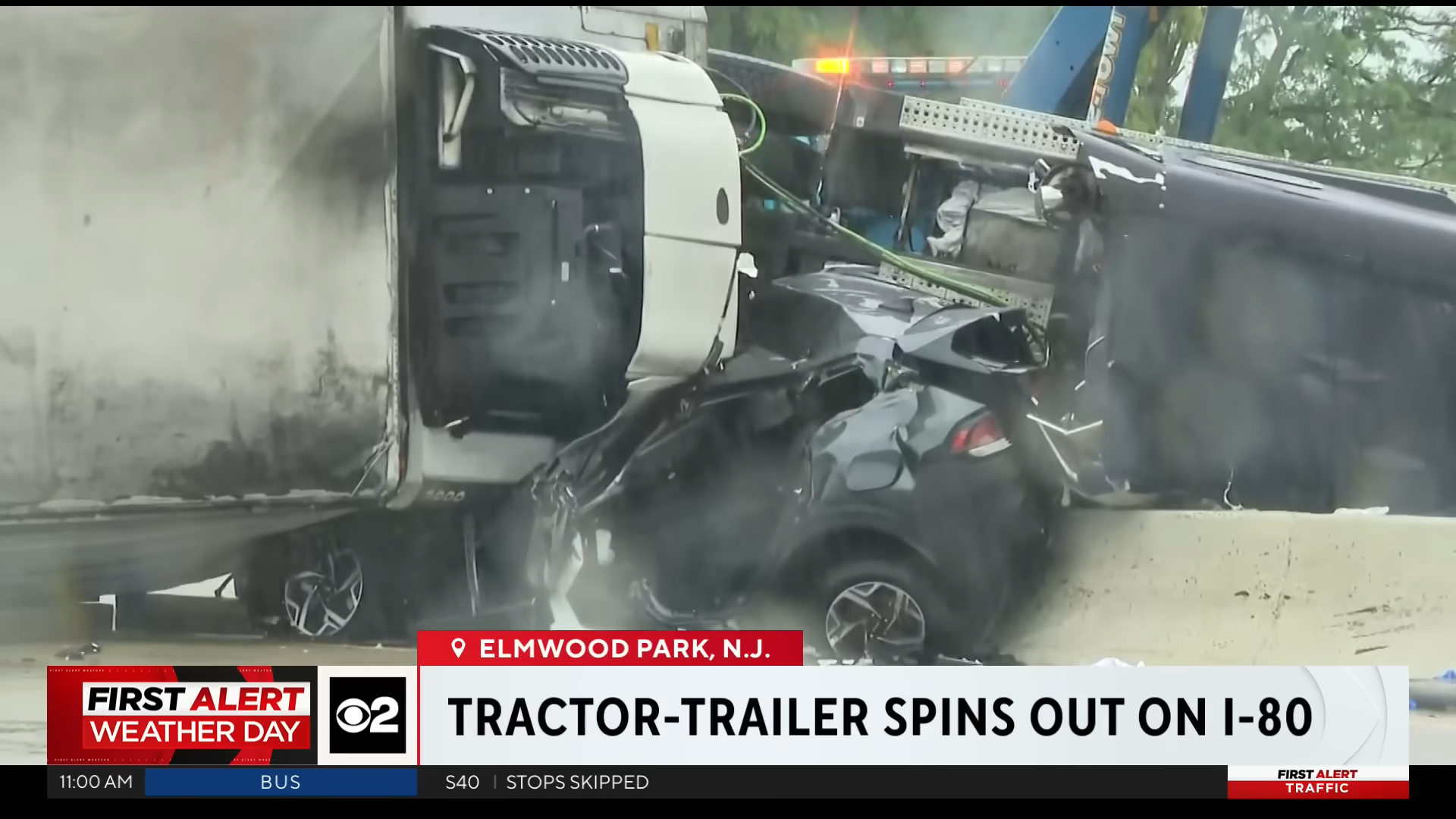
The Sunday before Memorial Day is supposed to be one of the most relaxed days of the year. Families loading up coolers, grills getting fired up, everyone easing into a long weekend. Instead, the Chicago area woke up to a First Alert weather day, a brutal multi-vehicle crash on one of the region’s busiest interstates, and falling trees taking out roads in parks. Not exactly the vibe anyone ordered.
A massive tractor-trailer rollover on Interstate 80 near Elmwood Park quickly became one of the most alarming scenes of the morning, drawing attention from local news broadcasts and bringing significant traffic delays to the area. With wet roads and poor visibility already in play, conditions were ripe for disaster, and disaster is more or less what happened. The images that circulated from the scene were hard to look at.
Compounding everything was the relentless rain that had been falling since at least the early morning hours. CBS broadcast crews reported on the scene live, tracking everything from the crash to downed trees in Central Park, all while standing in the downpour themselves. The skies were gray, the light was flat, and the rain simply was not letting up. For anyone who had plans to travel this weekend, the message from forecasters was clear: be very careful out there.
This is the kind of weather event that catches people off guard because, on paper, it sounds manageable. Some rain, maybe some wind. But the combination of heavy rainfall rates, saturated ground, and holiday weekend traffic volume created a perfect storm of problems across multiple fronts. And emergency workers, from road crews to chainsaw teams, spent their Sunday morning in the rain trying to keep up.
What Happened on I-80 in Elmwood Park
The crash involved a semi-truck that fully overturned on Interstate 80 near Elmwood Park, with multiple vehicles caught up in the incident. Video from the scene showed the big rig on its side, with at least one car pinned hard against the concrete median. The rear axle of the truck appeared to have crossed over the median entirely, which gives you a sense of just how violent the impact was.
Reporters on the scene noted that speed or wet road conditions were the most likely contributing factors, with hydroplaning being a strong possibility given how much rain had already fallen by that point in the morning. Clearing a crash of that scale is not a quick job under any circumstances, but doing it in active rain, on a busy holiday weekend interstate, made it significantly more complicated. Long traffic backups followed, affecting travel plans for anyone trying to move through that corridor on Sunday.
Falling Trees Added to the Chaos
Crashes were not the only infrastructure headache of the morning. A large tree, likely an elm based on its size and appearance, came down in Central Park, blocking a roadway inside the park. The root structure simply could not hold up against the heavy rainfall rates the area had been absorbing since the early morning hours.
Getting a tree that size cleared is not a simple leaf-blower situation. Crews had to bring out chippers and chainsaws, working in full rain gear to get the roadway passable again. It was not the only tree that came down, either. At least one other tree fall was being investigated by a separate crew at the same time, suggesting the ground saturation across the region had reached a point where even large, established trees were at risk of failing.
Why a Holiday Weekend Made Everything Harder
Memorial Day weekend is consistently one of the highest-traffic periods of the year on American roads. AAA and transportation agencies routinely flag it as one of the most dangerous stretches for driving, and when you add a genuine weather event on top of that normal surge in volume, the risk multiplies fast.
What made Sunday particularly tough was that it was not just one problem. It was a crash, multiple fallen trees, and an active weather system all happening simultaneously, all requiring emergency response, all competing for the same pool of workers and equipment. Forecasters had already flagged the day as a First Alert weather day because of the risk of localized flooding and travel disruptions, and the morning pretty much confirmed those concerns were justified.
What This Incident Reminds Us About Holiday Weekend Driving
There is a tendency to push through weather on holiday weekends because the destination feels worth it. The grill is waiting, the family is there, the plans are set. But a wet interstate on a day like this is genuinely unforgiving, and the Elmwood Park crash is a useful reminder that hydroplaning can happen to anyone, regardless of experience or vehicle size. A fully loaded semi-truck does not flip without serious force.
A few habits that actually make a difference: slow down well below the posted speed limit in heavy rain, increase following distance dramatically, and avoid sudden lane changes on wet roads. If travel is not necessary, staying put until conditions improve is always the right call. And if you do need to be on the road, checking local First Alert forecasts before heading out can at least tell you what you are driving into