We’re not going to pretend every EV buyer is out here trying to single-handedly save the polar bears; sometimes you just want to skip the gas station and enjoy that instant torque. But if you’re shopping electric and environmental impact matters to you, efficiency is where the magic happens.
The most efficient EVs squeeze more miles out of every kilowatt-hour, which means less energy consumption, lower charging costs, and a smaller carbon footprint whether your electricity comes from solar panels or the grid. Think of it as the EV equivalent of hypermiling, except you don’t have to draft semis or coast downhill with the windows down.
We’ve rounded up twelve electric vehicles that prove you don’t have to choose between being green and having a blast behind the wheel.
Lucid Air Pure RWD
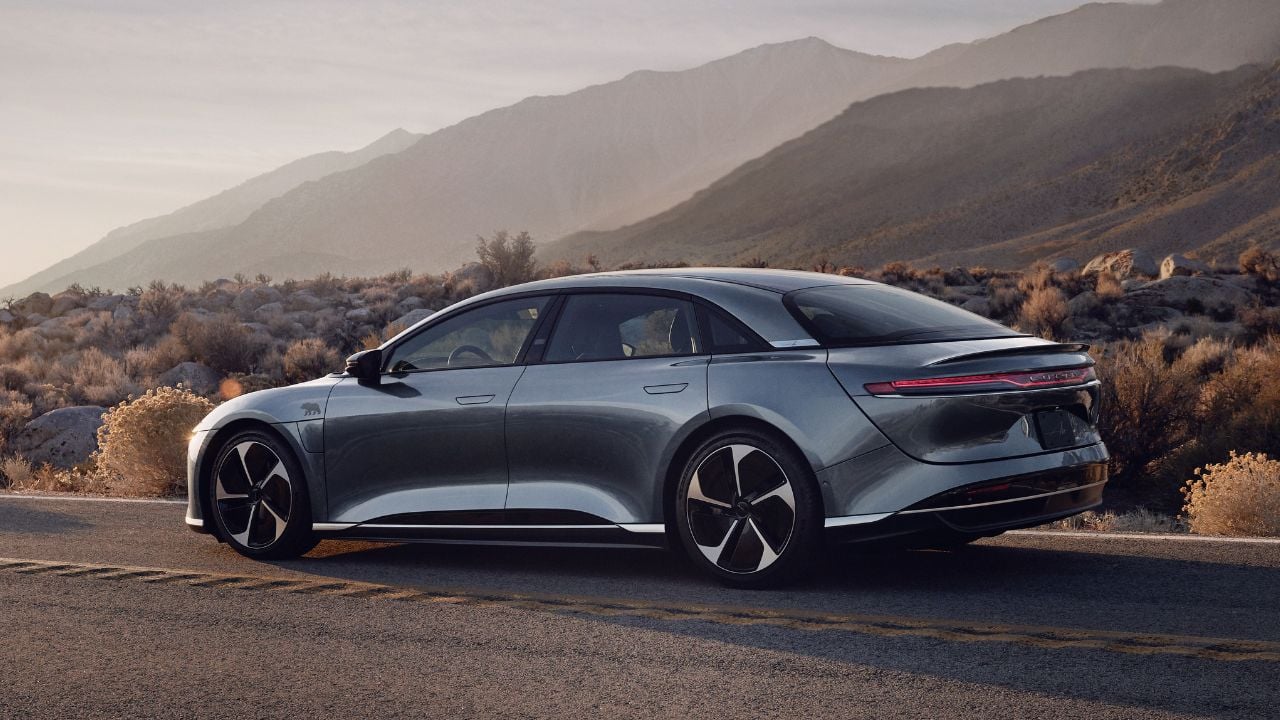
If efficiency had a poster child, it would be wearing the Lucid badge. The Air Pure RWD with 19-inch wheels achieves a stunning 146 MPGe combined and uses just 23 kWh per 100 miles, numbers that make other EVs look downright thirsty.
With its record-breaking 0.197 drag coefficient (basically wind-tunnel wizardry), this luxury sedan slips through the air like it’s apologizing for the disturbance. You get 420 miles of range from that efficiency, plus 430 horsepower to remind you this isn’t some eco-penalty box. Sure, at $69,900 to start before options and fees, it’s not exactly budget-friendly, but you’re getting U.S. built luxury assembled in Arizona that puts Silicon Valley tech bros and European automakers on notice.
The Air Pure proves you can have your sustainability cake and eat it too, with efficiency that does not require giving up real world performance.
Tesla Model 3 Long Range

The Model 3 has become the Camry of EVs, which isn’t an insult when you’re talking about a car that nails the efficiency-meets-practicality sweet spot. The Long Range rear wheel drive configuration delivers 137 MPGe combined and 363 miles of range while starting around $44,000, making it one of the most accessible ways to go seriously green.
Tesla’s Supercharger network remains the gold standard for road trips, and the minimalist cabin has grown on people (or at least they’ve accepted it). The instant throttle response and surprising handling chops mean you’re not sacrificing driving enjoyment for efficiency.
Yeah, the build quality can be hit-or-miss and Elon’s, uh, choices give some folks pause, but purely as an efficient electric vehicle, the Model 3 Long Range is hard to beat. It’s the sensible choice that happens to do 0-60 in the mid 5 second range.
Hyundai Ioniq 6 Standard Range

Hyundai’s swoopy sedan looks like it was designed in a wind tunnel by people who take aerodynamics very seriously, and thank goodness for that, because it pays dividends. The Ioniq 6 Standard Range achieves 135 MPGe combined with its 53-kWh battery and rear-wheel drive, though the 240-mile range means it’s best for commuters rather than road warriors.
Step up to the Long Range with its 77.4-kWh battery and you can get up to 361 miles of range in SE Long Range rear wheel drive form, with less range on other trims. The interior is surprisingly upscale with dual 12-inch screens, and Hyundai’s charging speed is legitimately impressive: 10 to 80 percent in about 18 minutes on a DC fast charger. Starting at $37,850 before destination, it’s positioned as the affordable efficiency champion.
Plus, it doesn’t look like every other crossover on the road, which counts for something when you’re stuck in traffic thinking about the planet.
Tesla Model Y Long Range

The Model Y essentially took the Model 3’s recipe and added more room, which helps explain why it was the best-selling EV in the United States in 2025. EPA estimates show the Long Range rear wheel drive Model Y at up to 337 miles of range, with efficiency estimated at 125 MPGe city and 117 MPGe highway.
EPA energy use varies by configuration and wheel and tire setup, but the Model Y remains one of the more efficient choices in the compact electric SUV class. You get actual cargo room, available third-row seating for kids (adults need not apply), and that massive glass roof that makes the cabin feel airy. The ride quality is just okay and the interior still feels a bit spartan for the price, but the combination of efficiency, range, and Supercharger access makes it the default choice for families going electric.
At around $45,000 to start, it’s positioned right where mainstream buyers are shopping.
Lexus RZ 300e
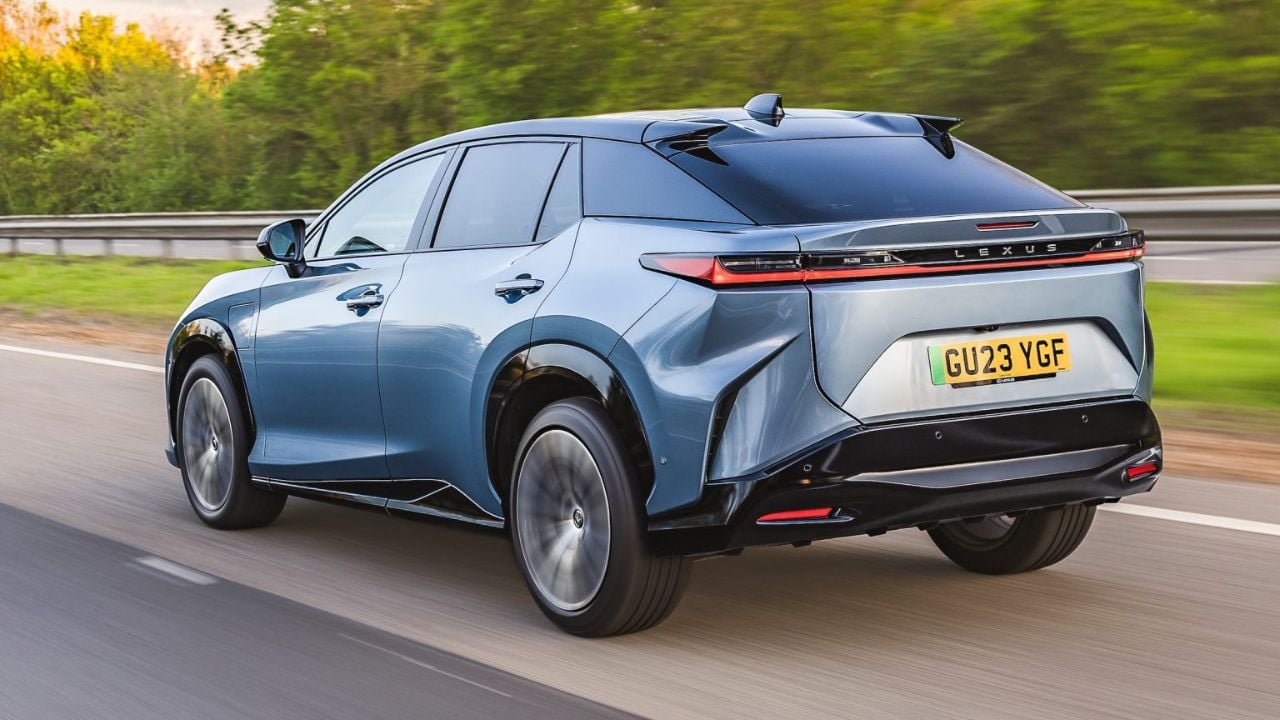
Toyota’s luxury brand finally enters the EV chat with the RZ 300e, and they’ve done their homework on efficiency. The base model uses a 72.8-kWh battery and single 201-hp motor to achieve 27 kWh per 100 miles with 266 miles of range, competitive numbers wrapped in Lexus refinement.
You’re getting the build quality and reliability reputation Toyota is known for, plus an interior that actually feels premium unlike certain Silicon Valley competitors. Aerodynamics help its efficiency, and the smooth, quiet ride is quintessentially Lexus. Sure, the range isn’t class-leading and the styling is polarizing (that closed-off grille is definitely a statement), but for buyers who value established brand trust and don’t need to tow their track car, the RZ 300e offers efficient guilt-free luxury.
Starting around $55,000 before incentives, it slots between mainstream and truly expensive EVs.
Kia Niro EV

Kia’s little egg-shaped crossover might not win beauty contests, but it wins at the only metric that matters for this list. The Niro EV achieves 126 MPGe in the city and 113 combined while delivering 253 miles of range from its 64.8-kWh battery.
That efficiency comes courtesy of good aerodynamics and a sensibly sized 201-hp motor that doesn’t waste electrons on unnecessary tire smoke. The interior is surprisingly roomy for something this compact, and Kia loads it with tech and features at a starting price around $40,000. Charging speeds are admittedly the weak point, you’re not going to be in and out of DC fast charging stops as quickly as some competitors.
But for daily commuting and around-town errands, the Niro EV is efficient, practical, and refreshingly affordable. It’s the smart choice that doesn’t require explaining yourself at any car meet.
Hyundai Ioniq 5 Standard Range

The Ioniq 5 broke through EV sameness with retro-futuristic styling that actually looks cool, and the Standard Range version brings efficiency to the party. It is rated at 127 MPGe city and 110 MPGe combined while delivering 220 miles of range, which is enough for many commuters.
The real story is the 800-volt architecture that enables charging speeds other EVs can only dream about. You can go from 10 to 80 percent in 18 minutes on the right charger, which changes the road trip calculus entirely. Inside, you get flat floors, sliding center console, and a genuinely clever use of space. At just over $42,000 to start, it undercuts crossovers with similar capability.
The only downside? The Standard Range’s 168 horsepower feels a bit leisurely compared to the instantly torque-happy EVs we’ve gotten used to.
Chevrolet Equinox EV
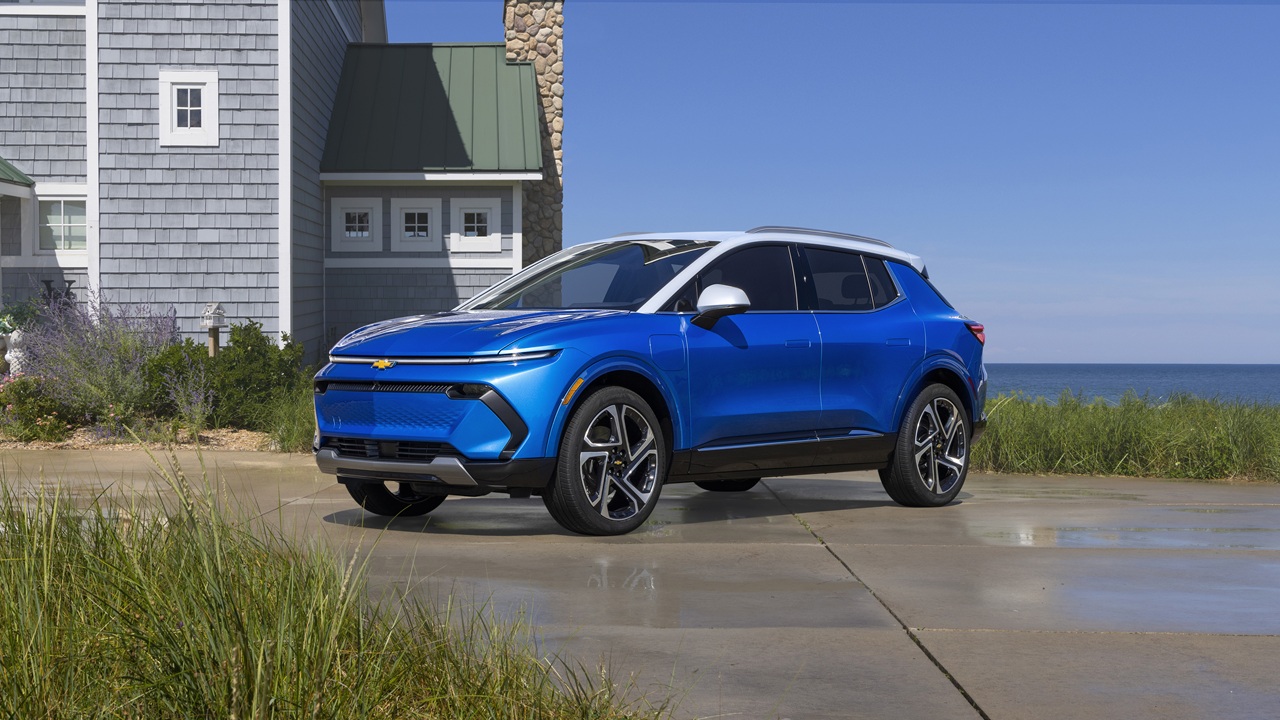
GM finally brought a properly affordable EV to market, and surprise, it’s actually good. The front-wheel-drive Equinox EV delivers 108 MPGe combined and up to 319 miles of range while starting at just $35,000, making it one of the best value propositions in the EV market.
You’re getting legitimate SUV space, modern tech including a massive 17.7-inch screen, and available Super Cruise for hands-free highway driving. The acceleration is merely adequate with the single-motor setup, but the AWD version’s dual motors wake things up considerably while still managing 96 MPGe combined and 307 miles of range. The lack of Apple CarPlay and Android Auto is annoying, but GM’s infotainment works well enough.
For mainstream buyers who want EV efficiency without the premium price tag, the Equinox EV delivers exactly what the market needs.
Volkswagen ID.4

VW’s first serious EV for the American market won’t make your heart race, but it will quietly and efficiently get you where you’re going. The ID.4 AWD models are rated at 108 MPGe city and about 102 MPGe combined, depending on trim and model year.
You get 275 miles of range, a comfortable cabin with actual buttons for climate controls (thank goodness), and VW’s typically solid build quality. The interior space is legitimately impressive, especially the back seat and cargo area, making this ideal for families transitioning from a gas SUV. At around $55,000 for the AWD version, it’s positioned against the Tesla Model Y, and while it can’t match Tesla’s efficiency, some buyers will appreciate the more conventional driving experience.
Think of it as the sensible Passat of the EV world, which is exactly what some people want.
BMW i4 eDrive40

BMW brings its Bavarian precision to the efficiency game with the i4 eDrive40, which uses about 31 kWh per 100 miles while still delivering proper sport sedan dynamics. You get 301 miles of range, rear-wheel drive, and 335 horsepower in a package that actually looks like a normal (if slightly aggressive) BMW sedan.
The interior is legitimately luxurious with proper materials and build quality, plus BMW’s curved display setup looks fantastic. Sure, at over $59,000 to start, you’re paying for the premium badge, but you’re getting a car that drives like a BMW should, precise steering, excellent chassis balance, and that satisfying feeling of quality German engineering.
The efficiency might not match the Ioniq 6, but the i4 proves you don’t have to choose between being environmentally conscious and enjoying the driving experience.
Hyundai Kona Electric

Hyundai’s smallest EV punches above its weight in the efficiency department, with the Standard Range delivering 29 kWh per 100 miles and about 200 miles of range. It’s compact, maneuverable, and perfect for urban dwellers who need something efficient and easy to park.
The interior is nicely finished for the segment, and Hyundai’s inclusion of actual physical buttons and knobs should be celebrated in an era of touch-screen-everything. Starting in the mid-$30,000 range, it’s one of the more affordable ways to go electric without feeling like you’re driving an econobox with a battery. The driving experience is peppy enough to be fun in city traffic, and the efficiency means your charging costs stay low.
Think of it as the Civic of the EV world: unpretentious, efficient, and exactly what many people actually need rather than what they think they want.
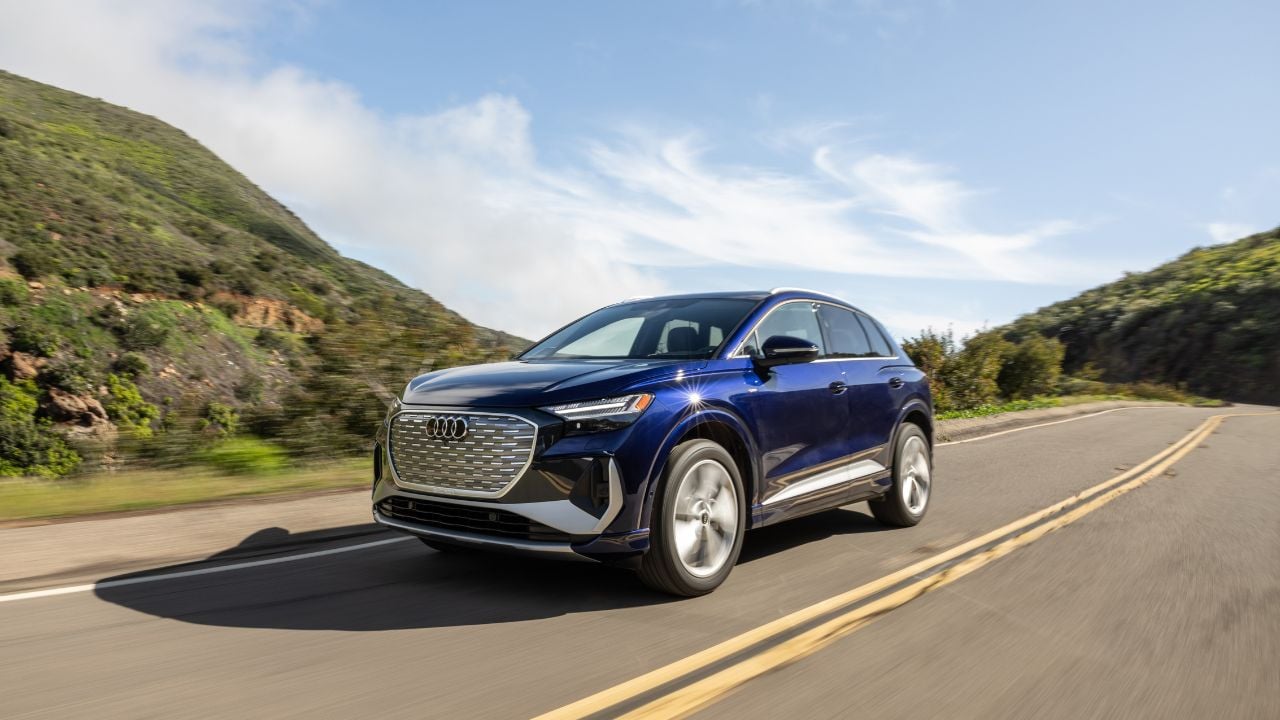
Audi Q4 e-tron

Audi’s compact electric SUV might wear premium badges, but the efficiency credentials are mainstream in the best way possible. The Q4 45 e-tron with single motor delivers 115 MPGe combined and 288 miles of range, impressive for a vehicle this size.
You get Audi’s trademark interior quality with excellent materials, a logical control layout, and enough tech to satisfy gadget lovers without overwhelming everyone else. The ride is comfortable and refined, handling is competent if not thrilling, and the overall package feels like a proper Audi that happens to be electric rather than an electric experiment wearing four rings.
Starting at around $50,000, it’s positioned as the thinking person’s EV crossover, not the cheapest or the most efficient, but a well-rounded package that happens to be kind to the environment. Sometimes you just want a normal luxury crossover that plugs in, and the Q4 e-tron delivers exactly that.
Conclusion

Here’s the reality: buying any EV is probably better for the environment than keeping your old gas-guzzler, assuming you’re not driving five miles a year. But if you’re serious about maximizing your environmental impact, efficiency matters just as much as making the switch to electric.
These twelve vehicles prove you don’t have to compromise, whether you want luxury (Lucid Air), value (Equinox EV), or something in between (pretty much everything else), there’s an efficient EV that fits your life. The best part? Unlike the early days when being green meant suffering through anemic acceleration and range anxiety, today’s efficient EVs are genuinely great to drive.
So pick the one that speaks to you, enjoy that instant torque, and feel good knowing your daily commute isn’t contributing to the slow destruction of the planet. You know, no pressure or anything.