
Think 300 mph is fast? Welcome to 2026, where that number’s practically the new speed limit for hypercars. The race for automotive supremacy has entered a wild new chapter, and car manufacturers worldwide are throwing everything they’ve got at the track — literally.
From China’s BYD shocking the establishment with a 308 mph electric monster to America’s Chevrolet proving that turbocharged V8s still have something to say, the boundaries of speed are being redrawn faster than you can say “hold my helmet.” What’s fascinating isn’t just the raw numbers (though they’re jaw-dropping), it’s how different approaches — electric power, hybrid tech, and pure combustion fury — are all converging on the same goal.
Whether you’re team electron or team explosion, 2026 is shaping up to be the year speed records fall like dominoes, and we’re here for every glorious, tire-shredding moment of it.
BYD Yangwang U9 Xtreme: The Dragon That Roared
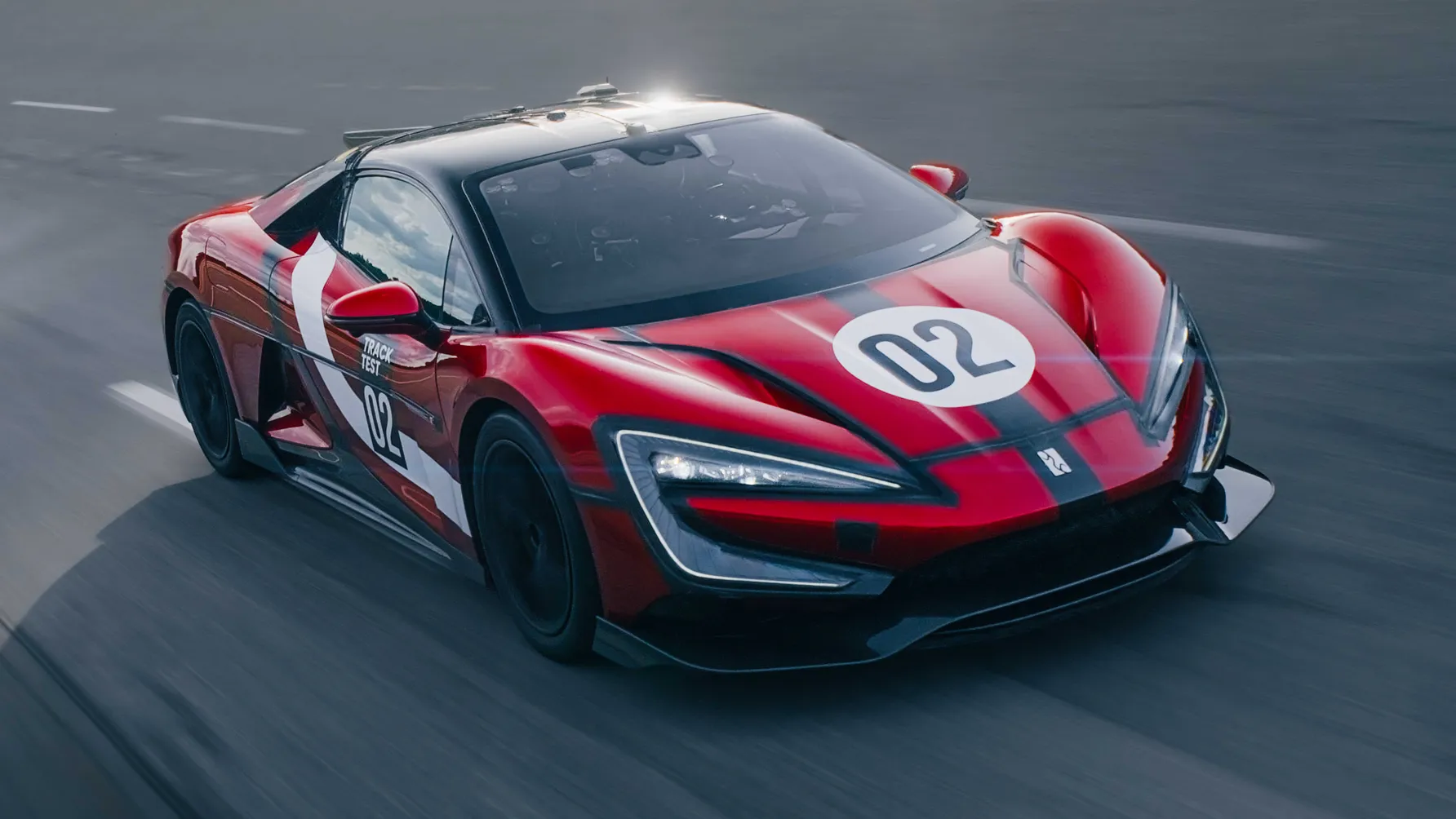
Sometimes the underdog story writes itself better than Hollywood ever could. BYD, once dismissed as a battery maker dabbling in cars, just dropped the mic on the entire hypercar world with the Yangwang U9 Xtreme, clocking 308.4 mph and officially becoming the fastest production car on Earth.
Let that sink in for a second — a Chinese EV manufacturer just dethroned Bugatti.
The U9 Xtreme packs nearly 3,000 horsepower from four electric motors spinning at 30,000 rpm, all powered by a 1,200-volt system that sounds more like something powering a small city than a car. What makes this even more delicious is where they set the record: Germany’s ATP Papenburg facility, the same track where Bugatti and Koenigsegg have historically flexed their muscles. BYD didn’t just show up to the party —they kicked down the door, set the record in September 2025, and casually mentioned they’re only building 30 units. The speed demon also happens to be the first production car to crack the sub-7-minute barrier at the Nürburgring for an EV, with a 6:59.157 lap time that left jaws on the floor.
If you’re wondering what it costs to join this exclusive club, BYD hasn’t announced pricing yet, but expect it to make your bank account weep. The U9 Xtreme is shaking up the entire automotive industry. For better or worse.
Hennessey Venom F5: Texas-Sized Ambition

When John Hennessey sets a goal, subtle isn’t in the vocabulary. The Venom F5 has been teasing speed freaks for years with promises of 300+ mph capabilities, and by all accounts, it’s ready to deliver in 2026.
Packing 1,817 horsepower (or 2,031 hp with the Evolution package running E85 fuel) from a twin-turbo 6.6-liter V8, this Texas-built beast is engineered to chase numbers that sound fictional. Hennessey’s simulations suggest the F5 could theoretically hit 328 mph under perfect conditions, though the team’s more realistic target is a two-way average north of 300 mph — and maybe, just maybe, that magical 500 km/h (310.686 mph) mark in one direction. The half-mile record they set in 2024 at 219 mph suggests they’re not bluffing.
What’s impressive is how Hennessey approaches this differently from the all-wheel-drive, hybrid-heavy competition—the F5 sends every one of those horses to the rear wheels through a seven-speed single-clutch automated manual. It’s a pure, no-nonsense approach to speed that feels refreshingly analog in today’s electrified landscape. With only 24 units built (all sold out at $2.1 million each), the F5 represents American muscle meeting aerospace engineering, and the results should be spectacular.
The team’s working with Michelin on tires that can handle the stress, and they’re confident enough that they’ve already announced plans for a top speed run — although we don’t know when… If they hit their targets, the Venom F5 could reclaim the crown America last held with the original Ford GT.
Koenigsegg Jesko Absolut: Swedish Precision Meets Insanity

Christian von Koenigsegg has built a career on making the impossible look easy, and the Jesko Absolut might be his magnum opus. This Swedish hypercar isn’t just quick — it’s mathematically, theoretically capable of hitting 330 mph, which would make it the fastest car ever if those simulations translate to reality.
The Jesko Absolut ditched the massive rear wing of its track-focused sibling for smooth bodywork and optimized aerodynamics, achieving a drag coefficient of just 0.278 Cd. Under that sleek carbon fiber body sits a 5.0-liter twin-turbo V8 producing 1,600 horsepower on E85 fuel, featuring the world’s lightest V8 crankshaft at just 27.6 pounds. Power flows through Koenigsegg’s revolutionary Light Speed Transmission, a nine-speed multi-clutch gearbox that can skip gears faster than you can blink.
In August 2025, the Jesko Absolut proved it’s more than just theory by setting a 0-400-0 km/h record in just 25.21 seconds, beating the Rimac Nevera and its own sibling, the Regera. That’s the kind of acceleration that makes your internal organs wonder what they signed up for. What makes the Jesko Absolut special isn’t just the numbers — it’s the obsessive attention to detail. Every surface, every vent, every curve serves a purpose, creating a car that slips through air with minimal resistance while staying planted at speeds where most vehicles would become airborne.
With a production run that’s extremely limited and a price tag around $3 million, the Jesko Absolut represents the pinnacle of what’s possible when engineering genius meets unlimited ambition.
Rimac Nevera: Electricity Redefined

Before BYD crashed the party, Rimac was making everyone rethink what electric cars could do. The Nevera isn’t just quick for an EV — it’s flat-out quick, period. This Croatian masterpiece packs 1,914 horsepower from four independent electric motors (one per wheel), producing enough thrust to hit 60 mph in 1.85 seconds and demolish the quarter-mile in around 8.6 seconds.
While its top speed of 258 mph was eventually eclipsed by newer electric rivals, the Nevera set an impressive 23 performance records in under 24 hours back in 2022, proving that consistency matters as much as peak performance. What makes the Nevera fascinating is the technology underneath: a 120 kWh battery pack, advanced torque vectoring that adjusts power delivery to each wheel over 100 times per second, and a sophisticated thermal management system that keeps everything cool during repeated high-performance runs.
Rimac didn’t just build a drag strip hero — they engineered a car that can lap circuits competitively while offering genuine everyday usability. The company’s expertise was so impressive that Porsche partnered with them, and now Rimac Automobili is part of Bugatti Rimac, bringing electric expertise to one of the most storied names in speed.
With 150 units produced at around $2.4 million each, the Nevera proved that EVs belong in the hypercar conversation — and it did so before most people thought it was even possible.
McLaren W1: Formula One for the Road
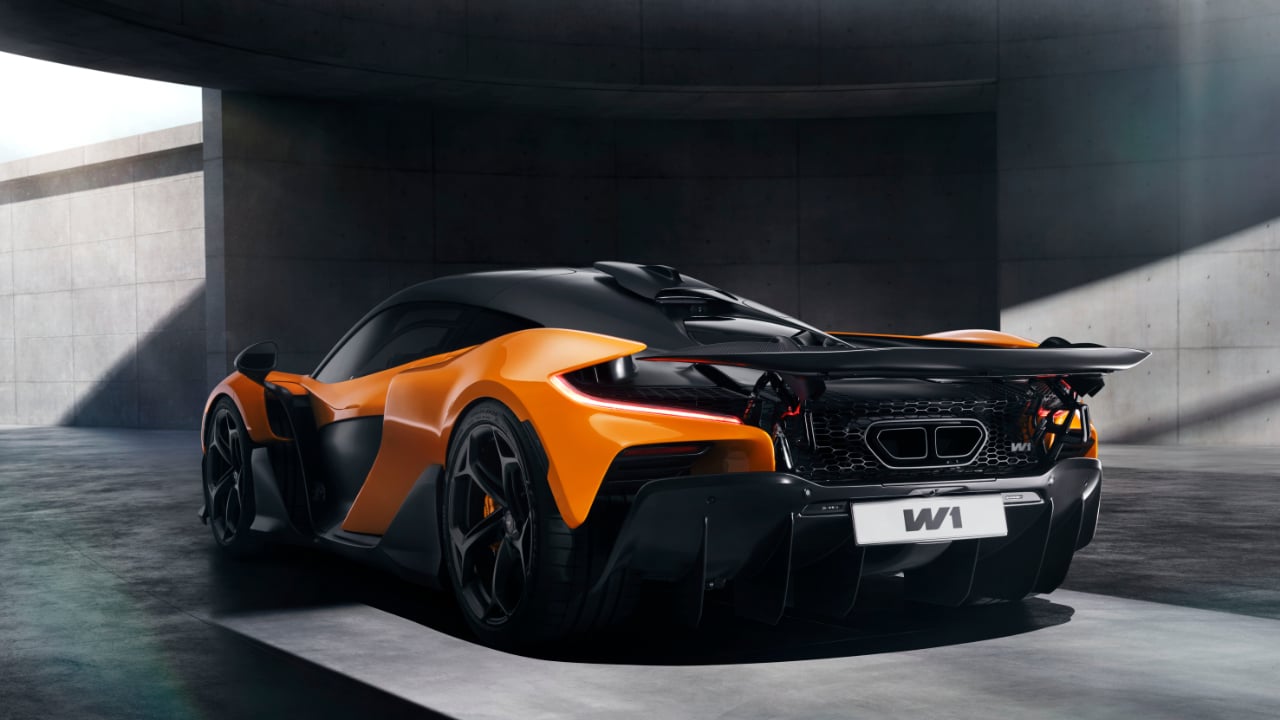
When McLaren decides to build a flagship hypercar, they don’t mess around. The W1, revealed on the 50th anniversary of McLaren’s first Formula One World Championship, is the worthy successor to the legendary F1 and P1.
This beast combines a new 4.0-liter twin-turbo V8 producing 916 horsepower with an F1-derived electric motor adding another 342 horses, bringing the total to a staggering 1,258 horsepower and 988 lb-ft of torque. It hits 60 mph in 2.7 seconds and reaches 124 mph in just 5.8 seconds — making it the fastest-accelerating McLaren to 200 km/h ever built. The party trick? An Active Long Tail rear wing that extends 11.8 inches and, combined with Formula One-inspired ground effects, generates up to 2,205 pounds of downforce.
McLaren claims the W1 is three seconds faster per lap around their reference circuit than the track-specialized Senna, which is the automotive equivalent of a mic drop. What’s impressive is the weight: despite all that hybrid tech, the W1 tips the scales at just 3,084 pounds dry, thanks to obsessive use of carbon fiber and 3D-printed titanium components. The top speed is electronically limited to 217 mph, but let’s be real — with this much downforce, you’re buying the W1 for corners, not straights.
Limited to 399 units at $2.1 million each (all already spoken for), the W1 represents McLaren’s vision of the ultimate driving machine: one that’s equally at home destroying lap records or cruising to the coffee shop.
Chevrolet Corvette ZR1: America’s Affordable Hypercar Killer

Americans have always loved proving a point, and the 2025 Corvette ZR1 makes its argument loud and clear: you don’t need a seven-figure price tag to join the 230+ mph club. In October 2024, GM President Mark Reuss drove a ZR1 to 233 mph at Germany’s ATP Papenburg facility, making it the fastest car ever built by an American automaker and the fastest production car under $1 million.
Let that sink in… For a fraction of what European hypercars cost, you get 1,064 horsepower from a twin-turbo 5.5-liter flat-plane-crank V8, a sub-10-second quarter-mile time, and genuine hypercar performance. The ZR1 achieves 0-60 mph in 2.2 seconds (matching the all-wheel-drive Porsche 911 Turbo S with only rear-wheel drive), and it does so while being something you can actually drive to work if you’re feeling frisky.
What makes this achievement remarkable is the complete package: with the optional ZTK Performance package and carbon fiber aero, the ZR1 generates over 1,200 pounds of downforce at top speed while maintaining stability that would make cars twice its price jealous. It even brings back the iconic split rear window, a design touch that pays homage to the 1963 Corvette while looking thoroughly modern.
Starting somewhere around $175,000-$200,000, the ZR1 delivers supercar performance at sports car prices, proving that American engineering still knows how to deliver value — just now with an extra 400 horsepower and a top speed that would’ve been unthinkable a decade ago.
Porsche 911 GT2 RS: German Engineering Strikes Back

When Porsche says they’re building a new GT2 RS, the automotive world pays attention. The 2026 model, still testing at the Nürburgring as we speak, promises to be the fastest and most powerful 911 ever created.
Spy shots reveal massive fender flares, aggressive aerodynamics inspired by the GT3 RS, and rumors of over 750 horsepower from a hybrid-boosted twin-turbo flat-six. The previous 991-generation GT2 RS set a production car lap record at the Nürburgring in 2021 with a 6:38.8 time (using the Manthey Performance Kit), and the new model will be gunning to reclaim that crown. What makes the GT2 RS special is Porsche’s philosophy: this isn’t just about straight-line speed — it’s about creating the ultimate rear-wheel-drive track weapon that happens to be street legal.
The hybrid system, borrowed from the latest 911 Turbo technology, should add instant electric torque to complement the turbocharged flat-six, creating a powerband that’s both savage and exploitable. The previous GT2 RS could hit 211 mph and sprint to 60 in 2.7 seconds; expect the new one to shave time off both figures. With deliveries expected in mid-2026 and a price around €450,000 (roughly $490,000), the GT2 RS represents Porsche’s answer to the hypercar onslaught: refined German engineering that can destroy lap records all day, then drive you home in comfort.
It’s the thinking person’s hypercar, and we can’t wait to see what it can do.
Aston Martin Valkyrie: Adrian Newey’s Road Rocket

When you hire Adrian Newey — the man behind some of the most dominant Formula One cars in history — to design a road car, you know it’s going to be special. The Valkyrie isn’t just a hypercar; it’s a barely street-legal race car that happens to have license plates.
With a naturally aspirated 6.5-liter Cosworth V12 screaming to 11,100 rpm and producing 1,001 horsepower (plus 141 hp from the hybrid system for a total of 1,139 hp), the Valkyrie sounds like an F1 car having a tantrum. But the numbers are just the appetizer. The real feast is the aerodynamics: at 135 mph, this carbon fiber masterpiece generates 1,100 kg (2,425 pounds) of downforce using ground effects and barely any visible wings. It can pull over 3.3 g in corners — three times what most performance cars manage.
The Valkyrie proved its credentials by setting a production car lap record at Silverstone’s GP circuit with a 1:56.42 time, more than 10 seconds faster than any other road-legal car. With a claimed top speed of 250 mph and 0-60 mph in about 2.3 seconds, it’s genuinely as quick as many modern LMP1 race cars in a straight line.
Only 150 coupes, 85 Spiders, and 40 AMR Pro track-only variants were built, with production ending in December 2024. At around $3 million, the Valkyrie represents the ultimate expression of what happens when motorsport technology meets road car packaging — and the result is utterly mesmerizing.
Ferrari SF90 XX Stradale: Prancing Horse on Steroids

Ferrari’s XX program has always represented the brand’s most extreme machines, but the SF90 XX Stradale breaks the mold by being street legal. This plug-in hybrid monster combines a twin-turbo 4.0-liter V8 producing 786 horsepower with three electric motors for a combined 1,016 horsepower — 30 more than the standard SF90.
But power is only part of the story. The XX generates 540 kg (1,190 pounds) of downforce at 155 mph — double what the standard car produces — thanks to aggressive aerodynamics including a fixed rear wing that would make a GT3 car jealous. In November 2023, the SF90 XX Stradale set a lap record at Ferrari’s Fiorano test track with a time of 1:17.309, beating the standard SF90 by 1.4 seconds and the legendary LaFerrari by over two seconds. That’s faster than some dedicated race cars. With 0-62 mph arriving in 2.3 seconds and a top speed of 199 mph (electronically limited to preserve those semi-slick Michelin Cup 2R tires), the SF90 XX represents Ferrari’s vision of a track-focused hypercar you can actually drive on the street.
What makes it remarkable is the balance: despite being obsessively focused on lap times, the SF90 XX remains civilized enough for road use, with Ferrari’s sophisticated stability control systems keeping everything manageable. With 799 Stradales and 599 Spiders produced (all sold out at around $890,000 and $995,000 respectively), the XX proves that Ferrari still knows how to build the ultimate drivers’ car — even when it runs on electricity part of the time.
Bugatti Tourbillon: The W16’s Successor

Saying goodbye to the legendary quad-turbo W16 engine must have been tough for Bugatti, but the Tourbillon shows they’re not slowing down.
This hybrid hypercar combines a completely new 8.3-liter naturally aspirated V16 (developed with Cosworth) producing 1,000 horsepower with three electric motors bringing the total to 1,800 horsepower. While Bugatti hasn’t confirmed an official top speed yet, the Tourbillon is expected to reach around 277 mph, making it one of the fastest Bugattis ever despite switching away from the W16 formula.
What makes the Tourbillon special isn’t just the power: it’s the philosophy. The interior features no screens (besides a small retractable unit), instead using physical gauges, milled aluminum toggles, and intricate mechanical components that look like Swiss watchmaking. The name “Tourbillon” comes from haute horology, and the cabin reflects that attention to craftsmanship. Bugatti is making a statement: hypercars don’t need to be all digital; there’s beauty in mechanical precision.
With deliveries starting in 2026 and only 250 units planned at $4.1 million each, the Tourbillon represents Bugatti’s commitment to maintaining their position at the pinnacle of automotive luxury and performance. Under the leadership of Mate Rimac (yes, that Rimac), Bugatti Rimac is blending combustion heritage with electric expertise, and the Tourbillon is the first fruit of that partnership.
Expect it to be fast, luxurious, and utterly exclusive.
SSC Tuatara: The American Dark Horse

The SSC Tuatara has had a controversial journey, but it remains one of the fastest cars ever built. After initial top speed claims were questioned, SSC proved the Tuatara’s capabilities with an officially verified two-way average of 283 mph (455.3 km/h) in 2021, making it the fastest production car at the time.
Powered by a twin-turbo 5.9-liter flat-plane-crank V8 producing up to 1,750 horsepower on E85 fuel, the Tuatara combines American muscle with aerospace-inspired design. The body is sculpted for minimal drag — just 0.279 Cd — while still generating meaningful downforce at speed.
What makes the Tuatara impressive is its focused approach: unlike hybrid competitors, it relies purely on combustion power sent to the rear wheels through a seven-speed automated manual. The result is a car that’s almost shockingly quick in a straight line while remaining tractable enough for street use. SSC only built 100 units at around $1.6 million each, making it genuinely rare. While newer electric hypercars have since claimed faster speeds, the Tuatara remains the fastest non-electric production car ever certified, and it holds the title of fastest American-built car.
For purists who want their speed delivered by a screaming V8 rather than electric motors, the Tuatara represents the peak of what’s possible — and it does so with a uniquely American approach to engineering.
Mercedes-AMG One: F1 for the Streets
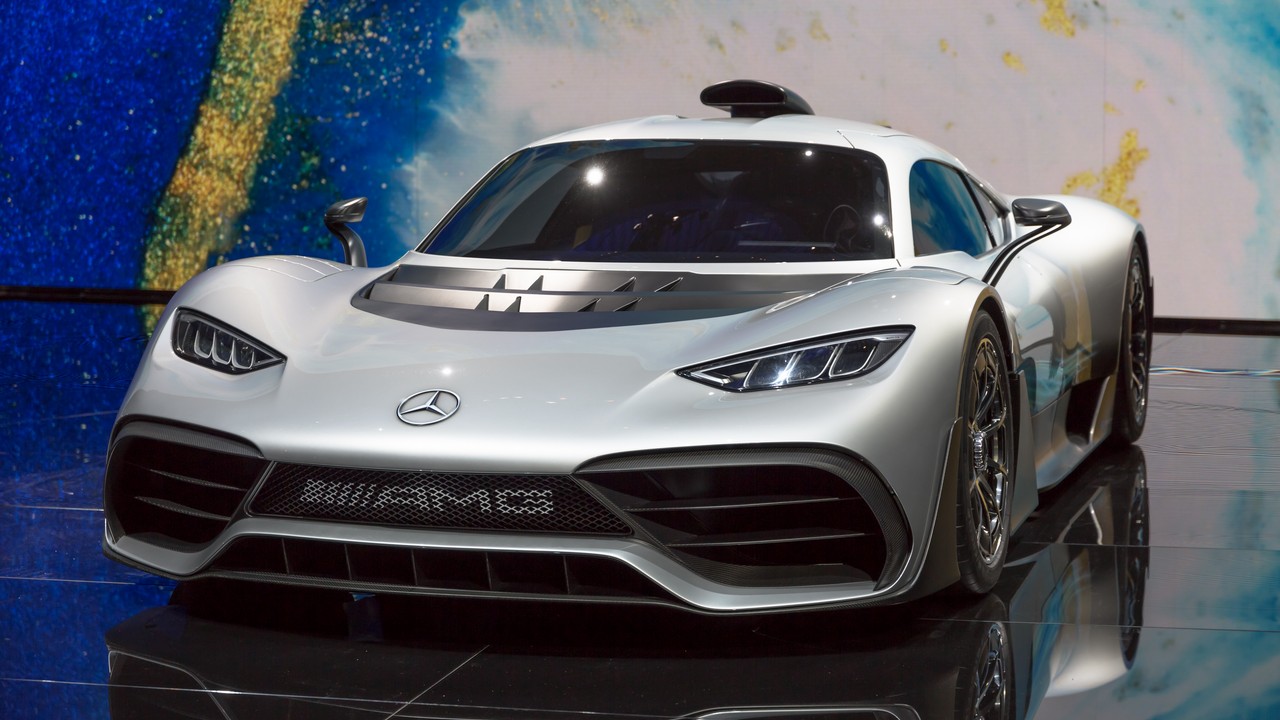
Imagine taking the hybrid V6 turbo power unit from a Formula One car and making it street legal. That’s exactly what Mercedes-AMG did with the One, and the results are predictably bonkers.
The 1.6-liter turbocharged V6, derived from the same engine Lewis Hamilton used to win multiple championships, produces 1,063 horsepower combined with four electric motors. It can rev to 11,000 rpm and sounds like an F1 car because, well, it basically is one. The hybrid system allows for all-wheel drive, with electric motors powering the front wheels and adding torque vectoring capability. The Mercedes-AMG One achieved 0-124 mph in 7 seconds and has a top speed electronically limited to 219 mph — not the fastest on this list, but remember, this is optimized for track performance.
In September 2024, the One set a new production car lap record at the Nürburgring Nordschleife with a time of 6:29.09, obliterating the previous record. That’s genuinely F1-level performance on a road car.
What makes the One special is the engineering challenge: taking an engine designed to last one race weekend and making it reliable enough for street use required completely re-engineering the hybrid system. Only 275 units were built at around $2.7 million each, and they all sold before the car even hit the road.
For anyone who’s ever wondered what it would be like to drive Hamilton’s F1 car to the grocery store, the Mercedes-AMG One is the closest you’ll ever get.
Conclusion

Looking at these 12 machines, it’s clear that 2026 isn’t just another year for fast cars — it’s a fundamental reset of what’s possible.
The fact that a Chinese EV maker now holds the outright production car speed record would’ve seemed like science fiction five years ago, yet here we are. What’s particularly exciting is how diverse the approaches have become: pure electric powertrains battling hybrid systems battling traditional combustion engines, each proving there’s more than one path to mind-bending speed. The democratization of hypercar performance is real too — when a Corvette can hit 233 mph for a fraction of what European exotics cost, it forces everyone to raise their game.
These aren’t just technological showcases gathering dust in climate-controlled garages; many are genuinely usable machines that blur the line between race car and road car. Whether it’s Hennessey chasing 300+ mph with Texas grit, Koenigsegg pursuing mathematical perfection with Swedish precision, or McLaren bringing F1 technology to the street, the competition is fierce and the innovation is relentless.
For enthusiasts, 2026 represents a golden age where the boundaries of speed, technology, and engineering are being pushed further and faster than ever before. Buckle up: the future is here, and it’s moving at 300+ mph.