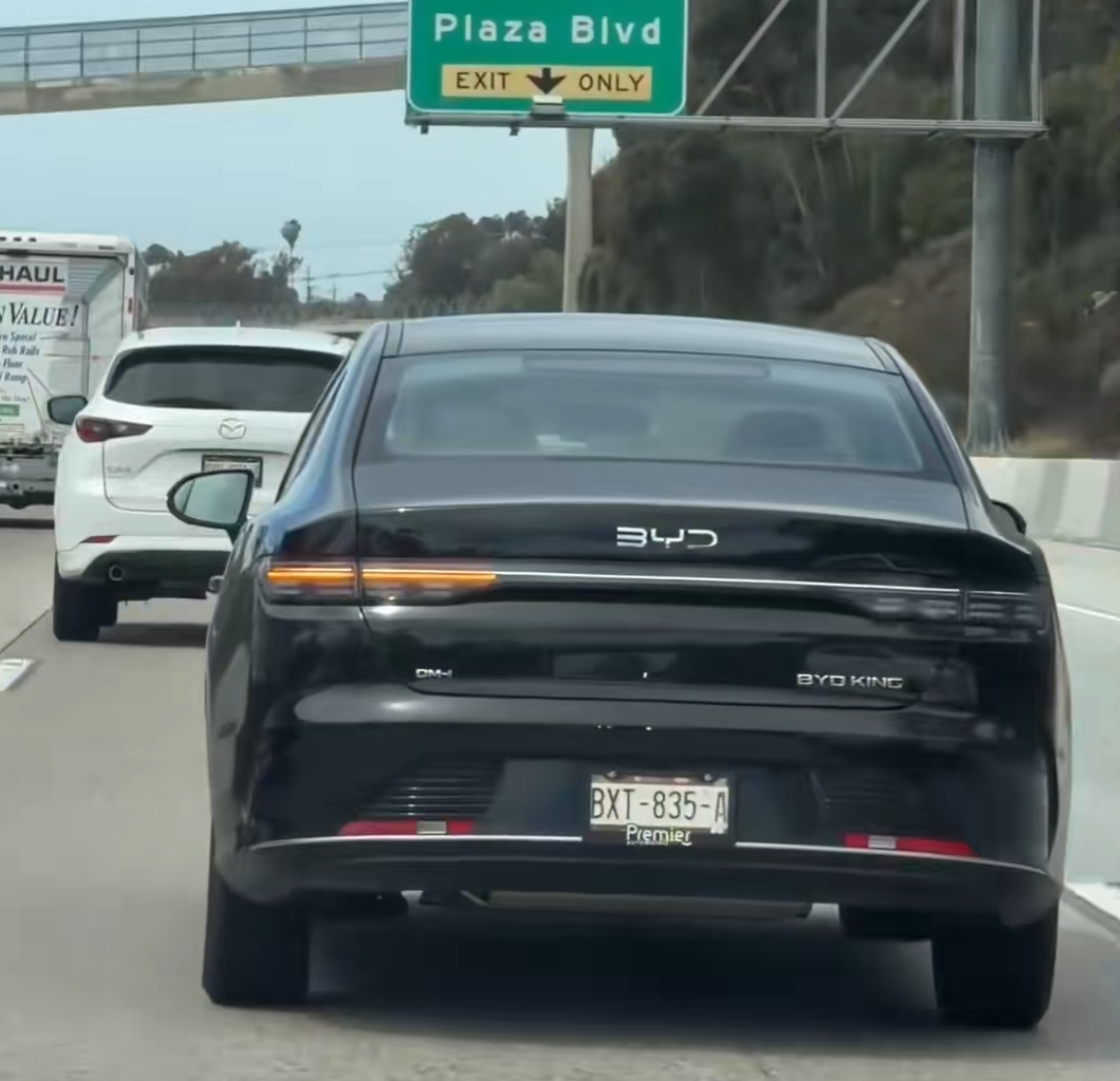
A TikTok video from user @chinesewarhawk went viral recently with a caption that was meant to make a point but ended up making the opposite one. The post showed a BYD on the road and declared that only wealthy Americans drive Chinese cars in the United States because of the 100% tariff slapped on imported Chinese vehicles. The implication was clear: Chinese cars are a rich person’s luxury in America, thanks to the trade barrier.
The comment section had other ideas. Within hours, viewers started pulling out their calculators and pointing out what the creator apparently had not considered: Chinese cars are so extraordinarily cheap to begin with that even doubling the price still leaves them well below what Americans are paying for a new vehicle today. It was one of those rare internet moments where the ratio was not just merciless, but actually educational.
Here is the number that broke people’s brains: BYD sells some of its vehicles for around $8,000. Slap a 100% tariff on that, and you are looking at $16,000. Meanwhile, the average new car purchase in the United States has climbed to around $50,000. That is not the price of a luxury vehicle. That is just the average. The comment section pointed this out with the kind of energy typically reserved for sports arguments.
To be fair to anyone who did not realize this math was coming, the sticker shock around Chinese EVs is real because Americans have never actually been able to buy them. They exist in a kind of automotive mythology at this point, somewhere between “affordable transportation” and “forbidden fruit.” But as more people see these cars in videos and start doing the arithmetic, the conversation around them is getting louder and harder for policymakers to ignore.
The Tariff Math That Broke the Internet
@chinesewarhawk #china #chinese #america #europe ♬ original sound – Chinese warhawk
The numbers here are genuinely hard to argue with. One commenter summed it up cleanly: a $20,000 BYD with a 100% tariff applied would still only cost $40,000, which is below the U.S. average new car price. Another pointed out that some BYD models start around $10,000, meaning even after the full tariff, they would come in anywhere from $5,000 to $10,000 cheaper than comparable American options.
For a country where car affordability has become a genuine crisis, those numbers land differently than they might have five years ago. Monthly car payments have ballooned, loan terms are stretching longer, and the used car market is not offering much relief either. So when people see a viral video of a BYD and start doing the math unprompted, it is not just internet entertainment. It reflects real frustration.
Wait, Can You Actually Buy a Chinese Car in America?
Here is where things get a little more complicated. The short answer is no, not really, and the BYD in @chinesewarhawk’s video is a good example of why. The car appears to be in Mexico, not the United States. It was not imported through a dealership or purchased by an American buyer for use on American roads.
What is actually happening along the Southern California border is that Mexican residents who work in the U.S. are driving their Chinese-made vehicles to and from work. U.S. Customs and Border Protection allows foreign-registered vehicles to enter the country temporarily, which means a BYD owned by a Mexican citizen can technically cross the border for work or travel without being subject to the import tariff. These cars are not for sale to American buyers and are not being permanently imported.
So while you might spot a BYD near the San Diego border, do not expect to find one at your local dealership. At least not yet.
Lawmakers Are Already Moving to Close the Loophole
The sight of Chinese EVs on American roads, even temporarily and even legally, has been enough to set off alarm bells in Washington. Representative John Moolenaar and Congresswoman Debbie Dingell have announced plans to introduce legislation that would go much further than the existing tariff structure. Their concern centers on data privacy, with arguments that connected Chinese vehicles could be collecting location, movement, and infrastructure data and sending it back overseas.
Some lawmakers have gone further still, suggesting that Chinese EVs could remotely access Bluetooth devices nearby or pose security risks near military installations. These claims have been met with skepticism by many observers, who see them as a strategy to discourage American consumer interest in vehicles that are dramatically more affordable than domestic alternatives. The fear framing around Chinese technology has become a familiar playbook, and not everyone is buying it.
What This Whole Situation Actually Teaches Us
The viral BYD video and its comment section are a case study in unintended consequences. When you set out to make a point about tariffs and the wealthy, but the math underneath your argument works against you, the internet will find it. Every time.
But beyond the dunking, there is a real lesson buried in the engagement: American consumers are paying close attention to car prices, and they are increasingly aware that vehicles exist elsewhere in the world that cost a fraction of what they are being asked to pay. The average $50,000 new car price is not a statistic that is landing quietly. It is feeding genuine resentment and curiosity about why those options are being kept out of the U.S. market.
Whether the arguments against Chinese EVs are rooted in legitimate national security concerns or are primarily about protecting domestic automakers is a debate that will continue. But one thing the comment section made very clear: the “it’s too expensive because of tariffs” argument has a ceiling, and Chinese car prices are low enough that the math still favors the BYD even after you double it.