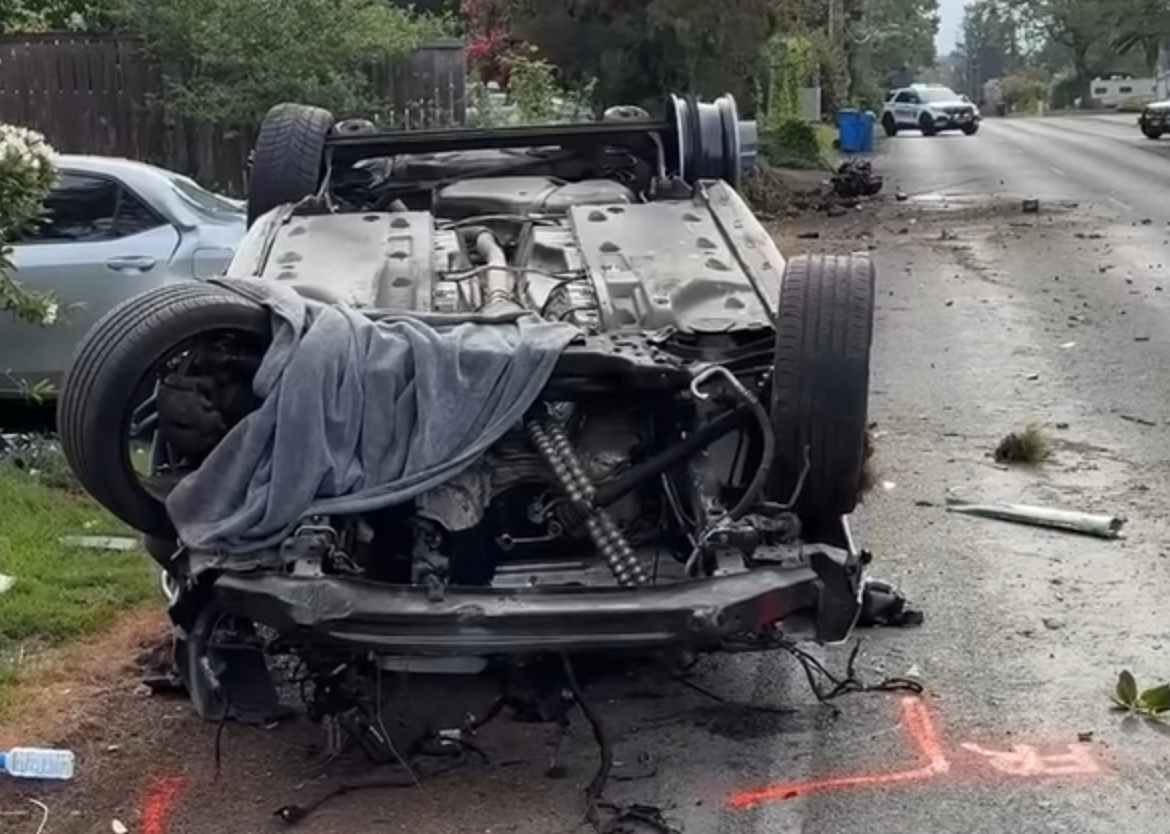
A Friday morning crash in Pierce County, Washington turned a routine commute into a fatal accident that left a community without power and a local school scrambling to adjust its schedule. It was the kind of wreck that serves as a stark reminder of just how quickly a split-second decision behind the wheel can turn catastrophic, not just for the driver, but for an entire neighborhood.
Pierce County Sheriff’s deputies were called out just after 7:00 a.m. to the 600 block of 138th Street East, where they found the aftermath of a single-vehicle crash that was anything but simple. By the time first responders arrived, the driver was already dead, the car was in ruins, and a utility pole had taken a hit hard enough to knock power out to multiple homes in the area.
What started as an attempt to pass another car on the road ended in a chain of events that investigators say happened with terrifying speed. The vehicle was traveling west at a high rate of speed when the driver crossed into the eastbound lanes. The attempt to swing back into the correct lane went wrong, and the driver lost control entirely.
The crash that followed was severe by any measure. The vehicle slammed into a utility pole with enough force to rip the engine clean out of the car. It then rolled and came to rest against a parked vehicle nearby. The driver was ejected roughly 40 feet from the car and did not survive. No other passengers were in the vehicle, and no other injuries were reported.
The Crash Scene: What Investigators Found
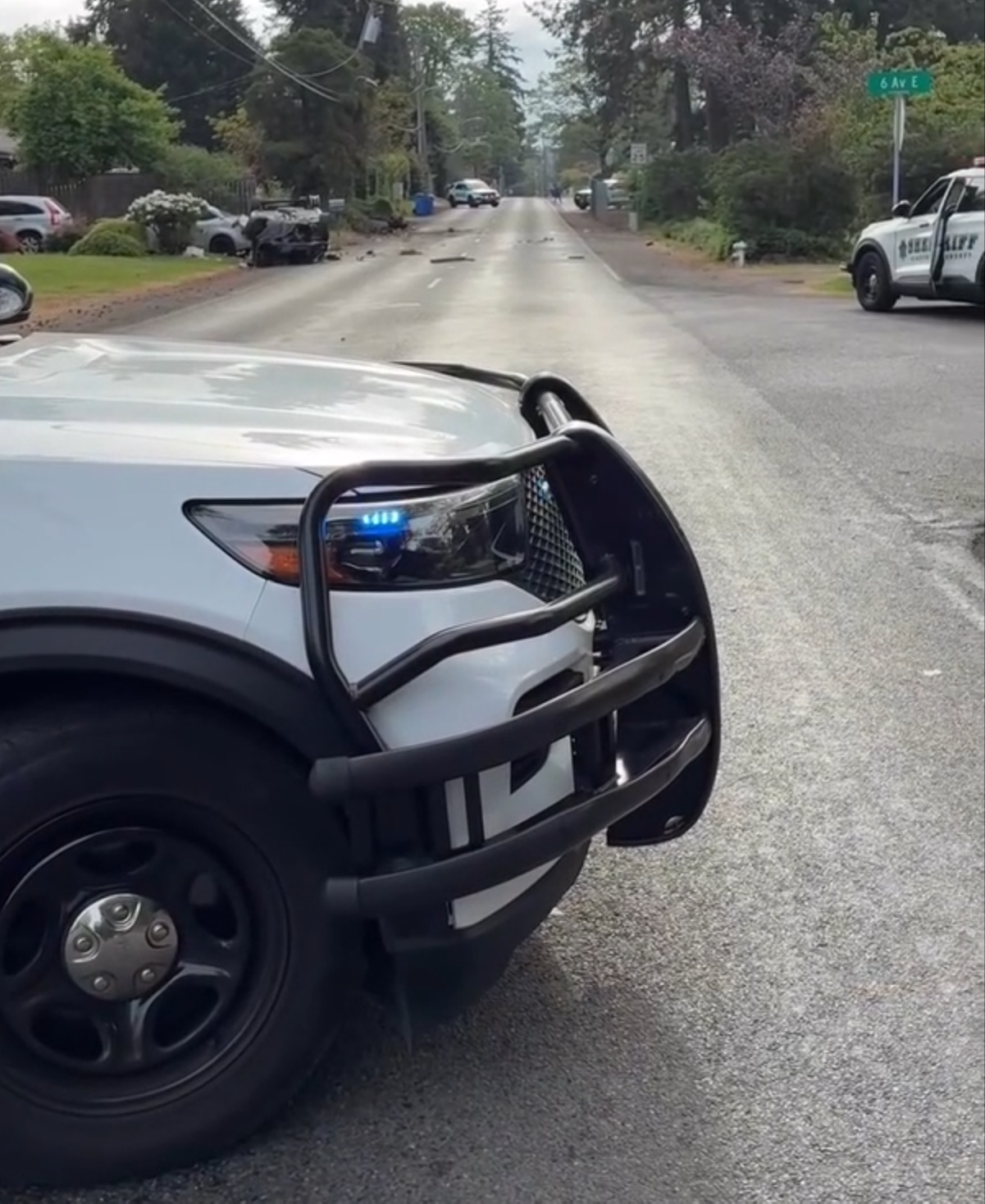
When deputies arrived on 138th Street East Friday morning, they were met with a scene that told the story on its own. The engine had been torn from the vehicle on impact with the utility pole, which is an indicator of just how fast the car was traveling. The vehicle then rolled and struck a parked car, adding to the destruction.
The driver, who was alone in the car, was found approximately 40 feet away from the wreckage. Despite the efforts of first responders, he was pronounced dead at the scene.
Power Outages Hit Homes and Elmhurst Elementary School
The crash did not just claim a life. It also cut power to a stretch of the neighborhood, including Elmhurst Elementary School. The school was forced to delay its start time as a result, and as of the time of the initial report, officials did not have a clear timeline for when power would be restored. For families who were already in the middle of their morning routines, the outage added an extra layer of disruption to an already sobering morning.
Power outages caused by vehicle collisions are more common than many people realize. When a car strikes a utility pole with significant force, it can bring down lines that serve dozens of homes and businesses. In this case, the damage was serious enough to affect a school, which added logistical challenges for parents and staff alike.
Passing Maneuvers: A Dangerous Gamble
This crash puts a spotlight on one of the more underappreciated hazards of everyday driving: the passing maneuver. Crossing into oncoming traffic to get around another vehicle demands precise timing, a clear line of sight, and enough speed to complete the move before oncoming traffic closes the gap. When any of those factors go wrong, the results can be devastating.
According to federal road safety data, improper passing is a contributing factor in thousands of crashes across the country each year. High speeds make the problem significantly worse, as they reduce the amount of time a driver has to react and correct course. In this case, the driver’s attempt to return to the westbound lane came too late, and there was simply not enough margin for error.
What We Can Learn From This Incident
Crashes like this one are painful reminders that traffic laws are not arbitrary. Speed limits exist because physics does not negotiate, and passing zones are marked the way they are for a reason. A few seconds saved on a commute are never worth the risk of crossing into oncoming traffic at high speed.
For drivers, there are a few clear takeaways here. Passing another vehicle should only happen when you have a long, unobstructed view of the road ahead and are confident you can complete the move safely. Speeding while attempting to pass dramatically increases the danger. And perhaps most importantly, the urgency that drives aggressive driving rarely reflects a genuine emergency.
The broader community impact of this crash, from a neighborhood without power to children arriving late to school, is also worth sitting with. When a driver makes a risky choice on a public road, the consequences rarely stop with that single vehicle.