
There’s something genuinely amusing about cars with absurd amounts of power. Sure, most of us spend our commutes stuck in traffic at 15 mph, but that hasn’t stopped automakers from building street-legal vehicles with four-digit horsepower figures. These cars represent the automotive industry’s commitment to answering questions nobody asked, like “What if we put a rocket engine in something with a license plate?”
Here are 12 cars that took the horsepower arms race way too seriously. But hey, even if it’s a bit over-the-top or not needed, color me impressed! There’s just something about horsepower that really gets car enthusiasts excited. We can’t help it!
Bugatti Chiron Super Sport 300+ (1,578 HP)

The Chiron Super Sport makes 1,578 horsepower from a quad-turbocharged 8.0-liter W16 engine, which is the kind of power output that makes you question whether you’re driving a car or piloting an aircraft. This is the production version of the car that broke 300 mph, though the street-legal model is limited to a mere 273 mph.
At nearly $4 million, you’re paying about $2,500 per horsepower, which actually seems reasonable until you remember you could buy a nice house instead.
Rimac Nevera (1,914 HP)
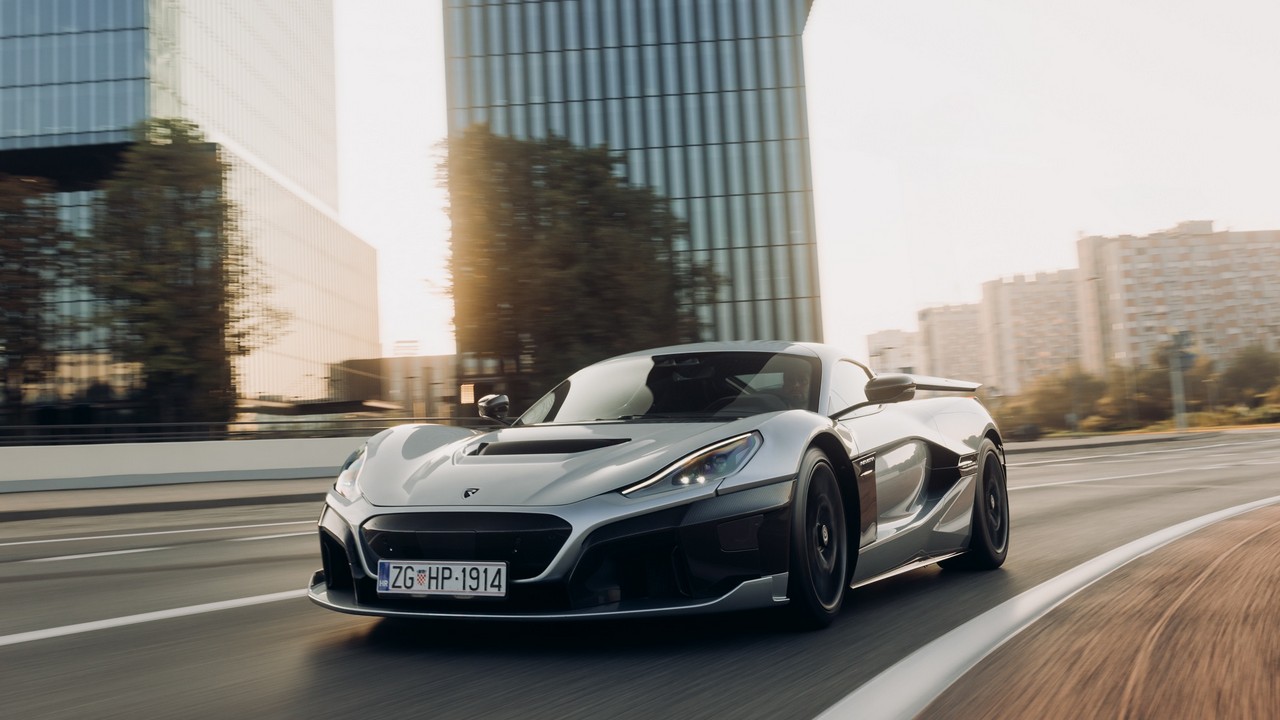
The all-electric Nevera produces 1,914 horsepower and is commonly cited at around 1.85 seconds from 0 to 60 mph, depending on the measurement method (rollout vs. no rollout), which is faster than most people can process what’s happening. It uses four electric motors and a 120 kWh battery pack to deliver power that would make a space shuttle jealous.
The really wild part is that this Croatian hypercar can deliver all that power instantly, unlike gas engines that need to build up to their peak.
Koenigsegg Jesko Absolut (1,600 HP)

Koenigsegg built the Jesko with a 5.0-liter twin-turbo V8 producing 1,600 horsepower on E85 fuel, because apparently 1,280 hp on regular gas wasn’t quite enough. The Swedish company designed it to be their fastest car ever, with projected/theoretical top-speed figures often quoted above 330 mph, though it has not been officially verified by a recorded production-car run.
Only 125 will be built, which is probably for the best since the world’s highways aren’t exactly designed for near-supersonic traffic.
Lotus Evija (2,011 HP)

Lotus decided to jump from making lightweight sports cars to building a 2,011-horsepower electric hypercar, which is like going from teaching yoga to competing in strongman competitions. Four electric motors work together to produce this ridiculous output, with Lotus originally targeting a curb weight of around 1,680 kg (about 3,700 lb), depending on the final specification.
Lotus has said the Evija can reach 300 km/h (186 mph) in under nine seconds, which is less time than it takes most people to parallel park.
Aspark Owl (1,985 HP)

Aspark has claimed outputs around 1,900–2,000 horsepower (often cited as 1,985 hp) and has claimed 0–60 mph in about 1.7 seconds (often quoted as 1.69 s, depending on rollout/test conditions), assuming you can handle the g-forces without blacking out. Range figures vary by source and test cycle; it’s often quoted around 280 miles, but the real-world result depends heavily on driving conditions, though we’re guessing that range drops considerably if you’re actually using all that power.
Pricing is commonly reported around €2.5 million (varies by market/spec) for one of the 50 being built, it’s cheaper than some of its competitors, which tells you everything about the hypercar market.
Czinger 21C (1,250 HP)

The 21C combines a 2.9-liter twin-turbo V8 with two electric motors to produce 1,250 horsepower in a car that weighs 3,668 pounds. This American-made hypercar uses 3D-printed components and features a tandem seating arrangement like a fighter jet.
The hybrid powertrain means you get both the instant torque of electric motors and the drama of a high-revving combustion engine.
Pininfarina Battista (1,900 HP)

Named after the company’s founder, the Battista makes 1,900 horsepower from its electric powertrain and can hit 60 mph in less than two seconds. The Italian design house partnered with Rimac for the technology, which explains why the specs sound familiar.
It’s positioned as the more elegant, luxurious alternative in the electric hypercar space, though “elegant” is relative when you’re dealing with nearly 2,000 horsepower.
Mercedes-AMG One (1,063 HP)
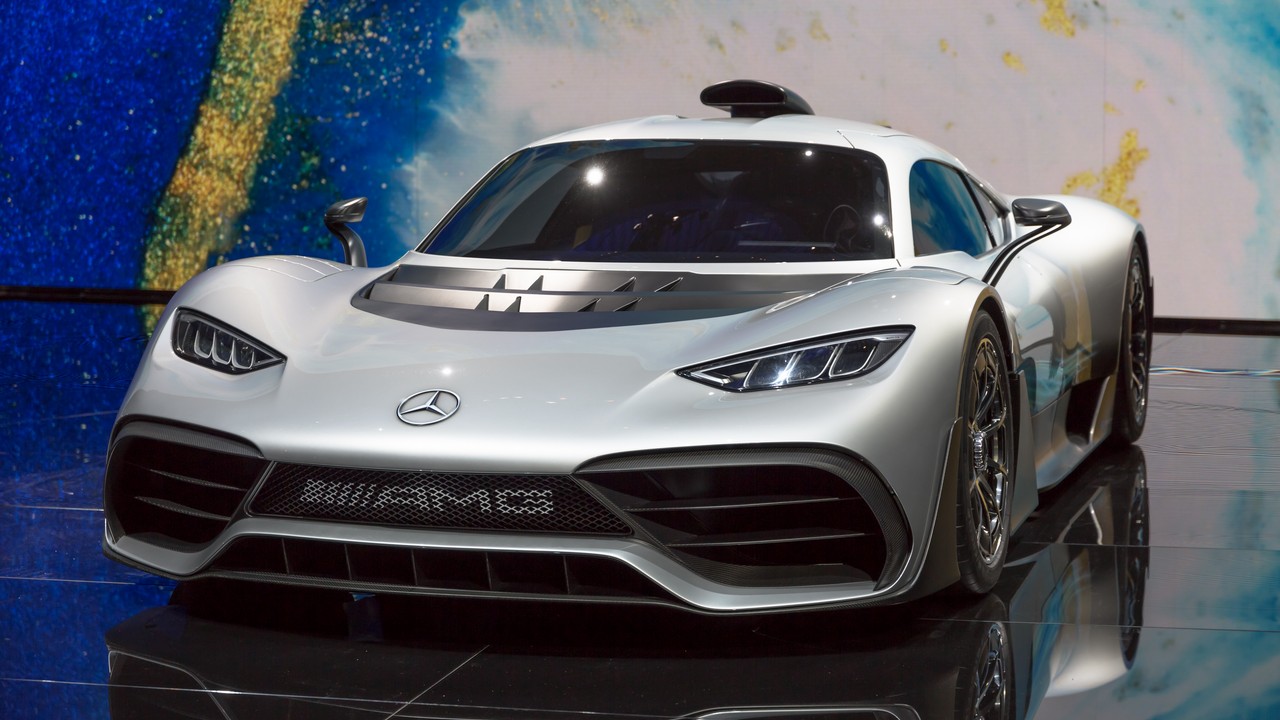
Mercedes literally took a Formula 1 power unit and made it street legal, resulting in 1,063 horsepower from a 1.6-liter turbo V6 hybrid system. The engine needs to be warmed up before you can access full power, and it requires rebuilds after 19,000 miles, just like a race car.
This is what happens when engineers take “race car for the road” too literally, complete with an engine that idles at 1,280 rpm.
Gordon Murray T.50 (700 HP)

At 663 PS (about 654 hp) from a naturally aspirated 3.9-liter V12, the T.50 seems almost modest on this list. But here’s the thing: it weighs just 2,174 pounds and revs to 12,100 rpm while seating three people with the driver in the center.
Designer Gordon Murray focused on the driving experience rather than straight-line bragging rights, though 700 hp in something this light is still completely unnecessary for any public road.
SSC Tuatara (1,750 HP)

The American-made Tuatara produces 1,750 horsepower on E85 fuel from its 5.9-liter twin-turbo V8, with the stated goal of becoming the world’s fastest production car. SSC claimed a 331 mph run in 2020, but the claim was debunked, and SSC later completed an officially observed run averaging 282.9 mph in January 2021.
Even without the top speed crown, 1,750 horsepower in a car you can theoretically drive to the grocery store remains wonderfully ridiculous.
Hennessey Venom F5 (1,817 HP)

Texas tuner Hennessey built the Venom F5 around a 6.6-liter twin-turbo V8 making 1,817 horsepower, with plans to exceed 300 mph. The car weighs just 3,053 pounds and features a claimed drag coefficient of 0.39 Cd, making it surprisingly slippery through the air.
Hennessey has been teasing this car’s ultimate top speed run for years, but even without that achievement, putting 1,800+ hp in something street legal is peak American excess.
Aston Martin Valkyrie (1,160 HP)

Aston Martin collaborated with Red Bull Racing to create this hybrid hypercar with a 6.5-liter Cosworth V12 and electric motor producing 1,160 combined horsepower. The naturally aspirated V12 revs to 11,100 rpm and sounds like the apocalypse, while the radical aerodynamics create enough downforce to theoretically drive upside down.
It’s so extreme that Aston Martin had to teach buyers how to get in and out of the car, which should tell you everything about its practicality.
Conclusion

These 12 cars represent automotive engineering at its most ambitious and least practical. While the rest of us are worried about gas mileage and cup holder placement, these manufacturers are out here answering the question “How much is too much power?” with a resounding “There’s no such thing.” Most will never see their top speeds on public roads, and many will spend more time as garage art than actual transportation.
But there’s something wonderful about the fact that in an era of efficiency and electrification, some companies are still building cars with enough power to make physics professors nervous.