
Every Mustang generation had its mission. Some were built to impress teenagers at drive-ins, others to separate wallets from their owners at gas stations. But a select few were engineered with one sacred purpose: making state troopers work overtime and turning speed limit signs into (ignored) suggestions.
This isn’t your typical “which Mustang sounds the loudest at the Sunday meet (before being banned)” list. We’re talking about factory-built, EPA-certified, warranty-backed rockets that could outrun your midlife crisis and your mortgage payment. These are the Mustangs that made radar detectors worth their weight in gold and convinced insurance companies to start charging hazard pay.
No garage queens, no “but wait until I install this turbo kit” stories. Just bone-stock ponies with top speeds that would make a Bugatti owner nervously check their rearview mirror. While Mustang was built on quarter mile performance, they can dominate a straight line much further than that!
2013 Ford Mustang Shelby GT500: 200 MPH
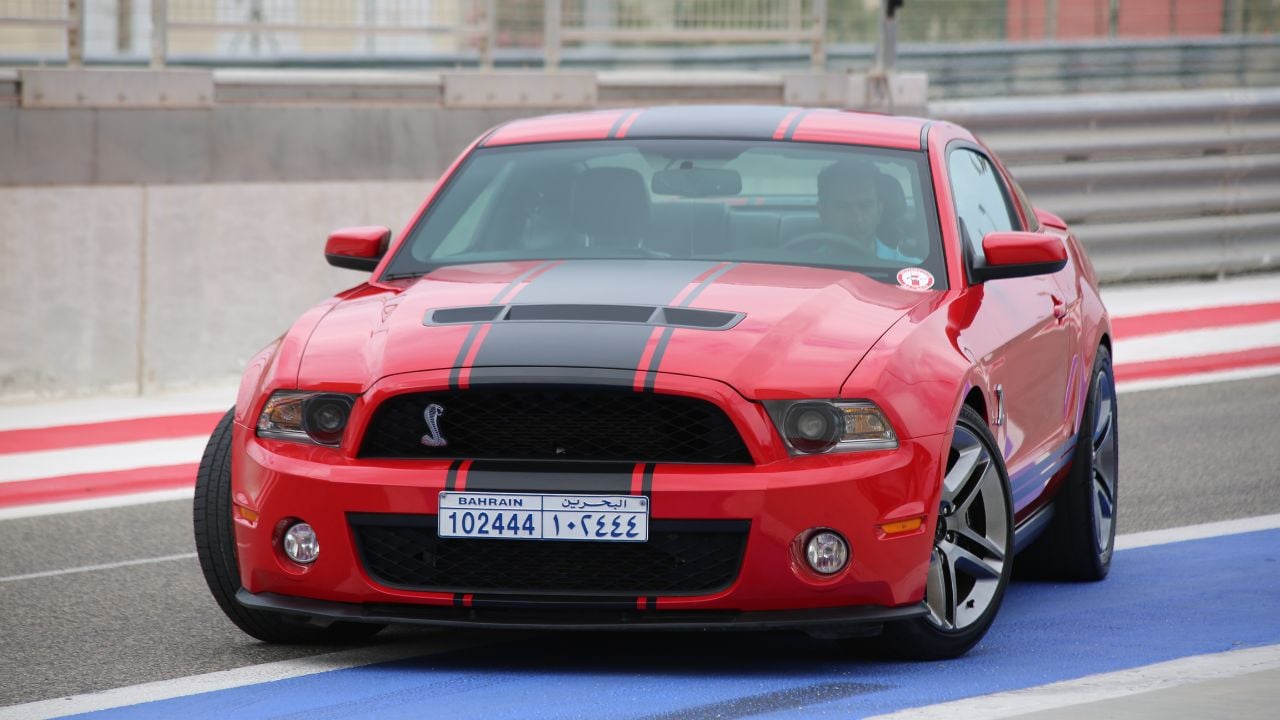
When Ford engineers sat down to design the 2013 GT500, they apparently wanted to create a Mustang that could outrun bad decisions. The result was a 662-horsepower monster that hit 200 mph and made every other muscle car look like it was stuck in traffic.
That supercharged 5.8-liter V8 made power, yes, but also statements. The kind of statements that begin with “Your Honor, I can explain.” With 631 lb-ft of torque on tap, this thing could accelerate from “law-abiding citizen” to “federal case” faster than you could say “Carroll Shelby would be proud.
The aerodynamics for this massive thing were necessary. Those hood vents weren’t decoration — they were life support for an engine that breathed harder than a marathon runner in August. The carbon fiber driveshaft spun at speeds that would make a washing machine jealous, and the Brembo brakes were sized for hauling down from velocities typically reserved for small aircraft.
Sure, it got about 8 miles per gallon when you used all that power, but who’s counting when you’re covering miles at a rate that makes GPS units panic?
2022 Ford Mustang GT500KR: 190 MPH

The GT500KR returned like a sequel nobody asked for but everyone secretly wanted. At 190 mph, it was 10 mph slower than its 2013 cousin, which in Mustang terms means you’re still fast, but you’re the one more likely to get pulled over in a street race.
That supercharged 5.2-liter V8 pumped out 900 hp, because apparently Ford’s philosophy is “if some is good, ridiculous amounts are better.” The carbon fiber track package included aero bits that actually worked, unlike the decorative spoilers on your neighbor’s Civic.
The adaptive suspension meant you could dial between “comfortable enough for grocery runs” and “race car that happens to be street legal.” Though let’s be honest, anyone buying a GT500KR for grocery runs probably uses premium gas to water their lawn.
The interior featured Recaro seats that hugged tighter than your grandmother at Christmas, and a roll cage that served as a gentle reminder that maybe, just maybe, you were driving something a little too serious for the school pickup line.
2020 Ford Mustang Shelby GT500: 180 MPH

Ford’s 2020 GT500 proved that sometimes taking a step back means leaping forward. At 180 mph, it was technically slower than the 2013 model, but with 760 hp and a dual-clutch transmission that shifted faster than your teenager changes moods, it was arguably the better all-around package.
The supercharged 5.2-liter Predator V8 (yes, that’s its actual name) made power like it was going out of style. The dual-clutch gearbox meant no more missed shifts during panic overtakes — because nothing says “professional driver on closed course” like accidentally hitting reverse at 100 mph.
Carbon fiber wheels kept unsprung weight low and wallet weight lower. The active aerodynamics adjusted automatically, which was helpful since most drivers were too busy questioning their life choices to manually adjust spoiler angles.
The track package included things like a strut tower brace and exposed carbon fiber, because this visible expense says you’re serious about speed (even if you don’t exactly know what you paid extra for).
2000 Ford Mustang SVT Cobra R: 170 MPH

While everyone else was panicking about computers failing at midnight, Ford was busy building a Mustang that could fail emissions tests with style. The 2000 Cobra R hit 170 mph and did it with all the subtlety of a fire alarm in a library.
Only 300 were built, making it rarer than a turn signal in Boston traffic. The 5.4-liter V8 made 385 hp, which doesn’t sound like much today but was enough to make soccer moms merge early and police officers reach for their ticket books.
No air conditioning, no radio, no rear seats — just you, 385 horses, and the sudden realization that maybe you should have sprung for the extended warranty. The suspension was tuned by someone who clearly believed that feeling every pebble on the road built character.
That ridiculous rear wing wasn’t just for show: it actually helped keep the car planted at speeds where most people would be praying to whatever deity handles automotive insurance claims.
2024 Ford Mustang Dark Horse: 166 MPH

The Dark Horse arrived fashionably late to the speed party but brought enough attitude to make up for lost time. At 166 mph, it’s not the fastest Mustang ever built, but it might be the most honest about what it is: a seriously capable machine wrapped in just enough civility to avoid scaring the neighbors.
The naturally aspirated 5.0-liter Coyote V8 makes 500 hp without forced induction, proving that sometimes the best way to make power is the old-fashioned way: with lots of displacement and aggressive tuning. The Tremec six-speed manual feels like it was borrowed from a race car, probably because it basically was.
Adaptive dampers mean you can adjust between “comfortable commute” and “track day hero” with the twist of a knob. The Brembo brakes are sized for serious stopping power, which is reassuring when you remember that traffic laws still apply regardless of your horsepower-to-brain-cell ratio.
The styling walks the line between “menacing” and “parking lot appropriate,” though that massive splitter up front suggests Ford’s designers weren’t overly concerned with drive-through clearance.
2007 Ford Mustang Shelby GT500: 155 MPH

After decades of Mustang fans asking “remember when these were actually fast?”, Ford finally delivered with the 2007 GT500. At 155 mph, it wasn’t breaking any land speed records, but it was breaking the drought of legitimately quick factory Mustangs.
The supercharged 5.4-liter V8 made 500 horsepower, which was enough to remind everyone why Carroll Shelby’s name still appeared on birthday wish lists. The retro styling hit all the right nostalgia buttons while the modern chassis kept things pointed in the intended direction.
Sure, the interior plastic quality was questionable, and the fuel economy would make an oil executive blush, but this was never about practicality. This was about Ford finally building a Mustang that could back up its aggressive styling with actual performance.
The six-speed manual transmission felt agricultural compared to modern gearboxes, but it was honest — like a handshake from someone who’s actually done manual labor (not a farming sim on their phone). The live rear axle meant that hitting the throttle mid-corner was more adventure than most people bargained for.
2012 Ford Mustang Boss 302 Laguna Seca: 155 MPH

The Laguna Seca edition proved that sometimes the best way to go fast is to go light. With the rear seats deleted and a roll bar installed, it was a statement that said “I take my driving seriously enough to sacrifice passenger comfort.”
The naturally aspirated 5.0-liter V8 made 444 hp, which might not sound earth-shattering until you factor in the weight savings and track-focused suspension. This thing could corner like it was on rails, assuming those rails were perfectly smooth and banked at optimal angles.
The graphics package was bold enough to be seen from space, which was either a feature or a bug, depending on your relationship with subtlety. The front splitter and rear wing weren’t afterthoughts — they were functional pieces that helped keep rubber side down at speeds where physics becomes your enemy.
Only 767 were built, making it rarer than a quiet day at the DMV. The TracKey unlocked additional performance settings, because apparently Ford’s lawyers insisted on having a way to legally deny warranty claims.
2003 Ford Mustang SVT Cobra Terminator: 155 MPH

The 2003 Cobra earned the “Terminator” nickname not through marketing genius but through sheer brutality. With a supercharged 4.6-liter V8 making 390 hp, it was the first Mustang in years that could embarrass sports cars costing twice as much.
The factory rating of 390 hp was about as accurate as a weather forecast — most dynos showed these making closer to 420-430 at the wheels, suggesting Ford’s engineers were either really conservative or really sneaky. The Eaton supercharger whined like a turbine engine, providing both power and soundtrack.
The independent rear suspension was a revelation for Mustang fans who had grown accustomed to solid axles that treated corners like personal insults. Suddenly, you could actually use all that power without immediately seeking the nearest grass median.
Electronic nannies were minimal, trusting drivers to make good decisions. This trust was often misplaced, but it made for entertaining insurance claims and memorable YouTube videos.
1995 Ford Mustang SVT Cobra R: 150 MPH

Before the Cobra R became a legend, it had to start somewhere. The 1995 version was that somewhere — a stripped-down, focused machine that hit 150 MPH and convinced Ford that maybe this whole “performance Mustang” thing had legs.
Only 250 were built, all in white, because apparently Ford’s color palette consisted of “Crystal White” and “not an option.” The 5.8-liter V8 made 300 horsepower, which in 1995 was enough to make Corvette owners nervous and insurance agents reach for stronger coffee.
No air conditioning, no radio, no sound deadening — just you, the engine, and road noise that served as a constant reminder that you were driving something special. The Koni shocks and upgraded brakes meant it could actually handle the speeds it was capable of reaching.
The removable hardtop was more practical than a full convertible but less convenient than a regular coupe, striking that perfect balance of compromise that performance cars excel at.
1993 Ford Mustang SVT Cobra R: 140 MPH

The 1993 Cobra R was Ford’s first attempt at building a serious track-focused Mustang, and like most first attempts, it was equal parts ambitious and awkward. At 140 mph, it wasn’t setting any speed records, but it was setting precedents.
With only 107 built, it’s rarer than common sense at a political rally. The 5.0-liter V8 made 235 hp, which doesn’t sound like much until you remember this was 1993, when most cars struggled to exceed the speed limit without breathing hard.
The deleted rear seat saved weight and sent a message: this wasn’t a car for taking friends to lunch. This was a car for taking yourself to therapy after discovering what “snap oversteer” meant in practical terms.
The suspension modifications were basic by today’s standards but revolutionary for their time, proving that Mustangs could be more than just straight-line bullies. The racing stripes acted as a warning label for anyone who revved at you.
Straight Roads, Fast Horses, Full Speed Ahead

These 10 Mustangs proved that American performance doesn’t need to come with apologies or asterisks. From the 140 mph of the original Cobra R to the 200 mph missile that was the 2013 GT500, each one pushed the envelope in its own way.
Sure, most of these speeds are completely unusable on public roads unless you enjoy explaining yourself to law enforcement professionals. But that’s not the point. The point is that Ford built them anyway, engineering teams working late nights to solve problems most people will never have, creating solutions to questions nobody was asking.
These cars are mechanical manifestations of the American belief that if some is good, more is better, and too much is just right. They represent the beautiful intersection of engineering capability and complete disregard for sensible limitations.
Whether you’re reliving your youth or planning your midlife crisis, these Mustangs prove that sometimes the best answer to “how fast do you need to go?” is simply “yes.” Just remember to keep a good lawyer on speed dial and maybe invest in radar detector technology that’s at least as advanced as the car you’re driving.
After all, these machines were built for speed. The rest of us just have to figure out where we’re legally allowed to use it.