Every car Carroll Shelby worked on had something a little extra, embodying his passion on the track and behind an engine. Every car he touched gained a voice, a stance, and a purpose that echoed with raw, unapologetic American muscle.
Tracks welcomed him like a conquering hero, as he didn’t just see performance in every curve; he saw unbridled possibility in every chassis. Shelby added a distinct identity on top of extra horsepower.
These cars are chapters in the incredible story of a man who shaped American performance with grit, unparalleled style, and full-throttle ambition. Their engines sing his legacy, and their tires carry his spirit, leaving behind rubber marks that spell out “legend” on the pavement. Shelby stamped his mark firmly on the hearts of every fan who ever dreamed in redlines, dreamed of side pipes, and dreamed of winning.
“What’s My Favorite Car? The Next One”
Born through a deep dive into Carroll Shelby‘s illustrious, often chaotic, and always fascinating career, this list showcases the glorious cars that Shelby played a part in creating. To get on this list, Shelby had to have had a meaningful role in the car’s development or conceptual design.
The timeline stretches from the glorious golden age of muscle cars (when dinosaurs roamed the earth and horsepower was king) to modern machines that still carry the Shelby name with fierce pride. Popularity among discerning collectors and lasting appeal among drivers who appreciate genuine go-fast goodness helped shape the final group. We literally rolled up our sleeves, sifted through countless stories, and polished the chrome of memory until 12 distinct machines stood out in full, glorious shine.
These cars don’t just represent Carroll Shelby’s work; they embody the very essence of his unwavering vision across decades of horsepower history. And they just look so good.
Shelby Cobra 427

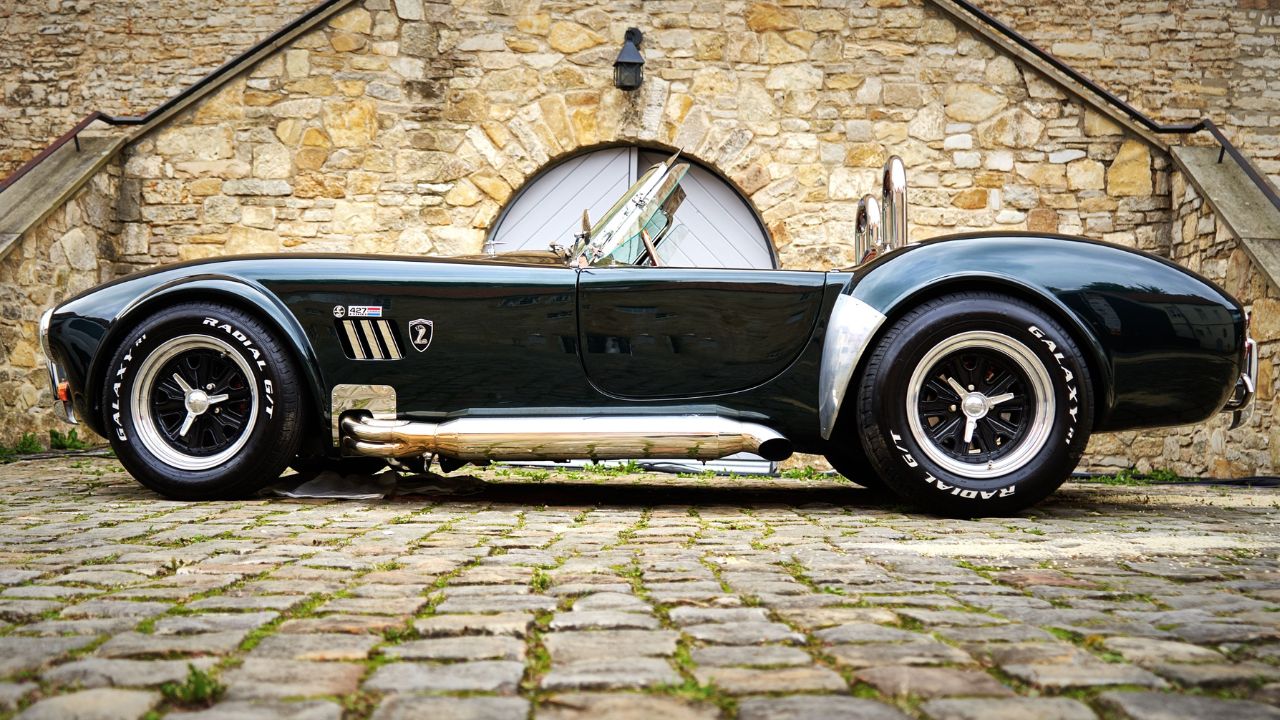
The Shelby Cobra 427. Just saying the name sends shivers down the spine of anyone who appreciates raw, unbridled power. It looked like something out of a fever dream for horsepower junkies, a daydream made real. The recipe was deceptively simple, yet brilliantly effective: take a lightweight, elegant British AC Ace roadster body, then shoehorn in a monstrous Ford 427 cubic-inch V8 engine. The result? A rolling thunderstorm. The sound from its side pipes didn’t just fill the streets; it owned them, unleashing a deep, echoing thunder that announced its arrival long before you saw its flared nostrils.
Every inch of this car radiated muscle, attitude, and a singular purpose: to go fast, violently fast. The massively flared fenders weren’t just for show; they gave it a wider stance that looked ready to attack the road like a coiled viper. This car sprinted like a predator, never hesitating in its pursuit of speed, often leaving trails of shredded rubber and bewildered onlookers in its wake. People didn’t just look at it in parking lots or race tracks; they gathered around it, eyes wide, hearts pounding, as if in the presence of automotive divinity.
Every burnout, every glorious redline scream, every white-knuckled moment has redefined automotive culture. Drivers sat so low in the seat they felt every single inch of the road through the steering wheel, no power steering, no ABS, just pure, unadulterated feedback. The Shelby Cobra 427 offered a direct, visceral connection between machine and man that defined its legacy and terrified a few insurers.
Shelby GT350

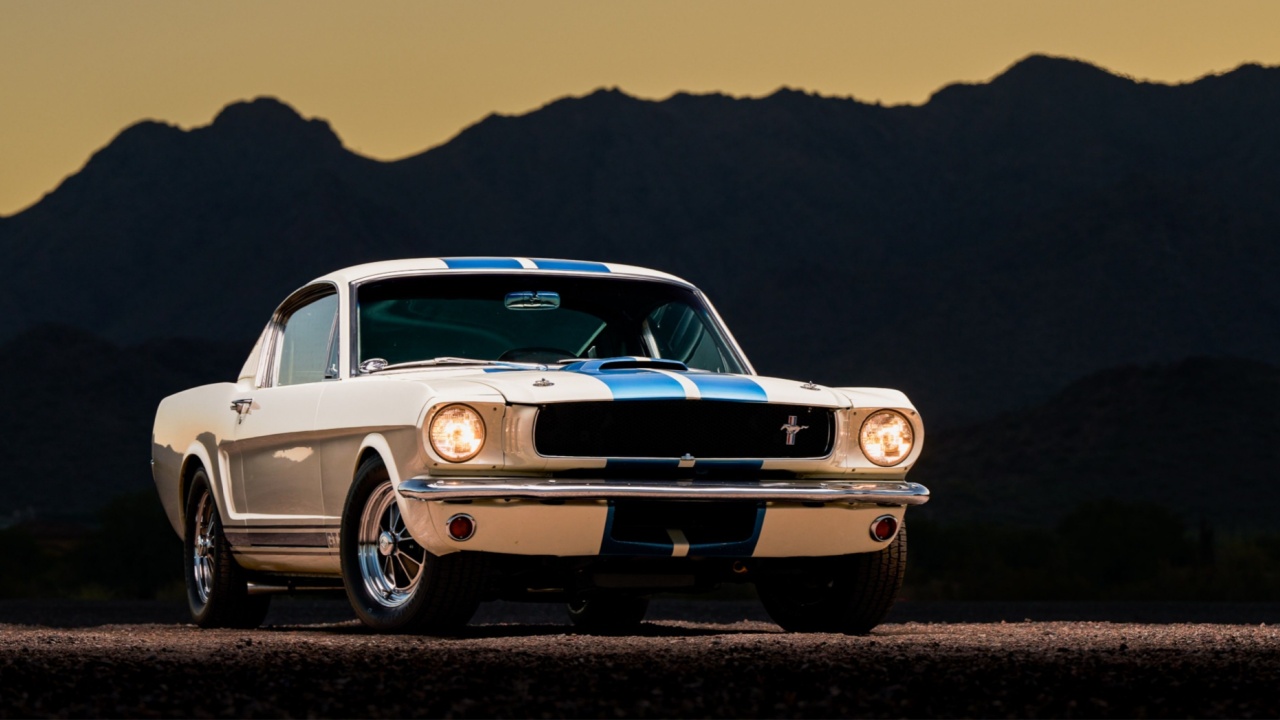
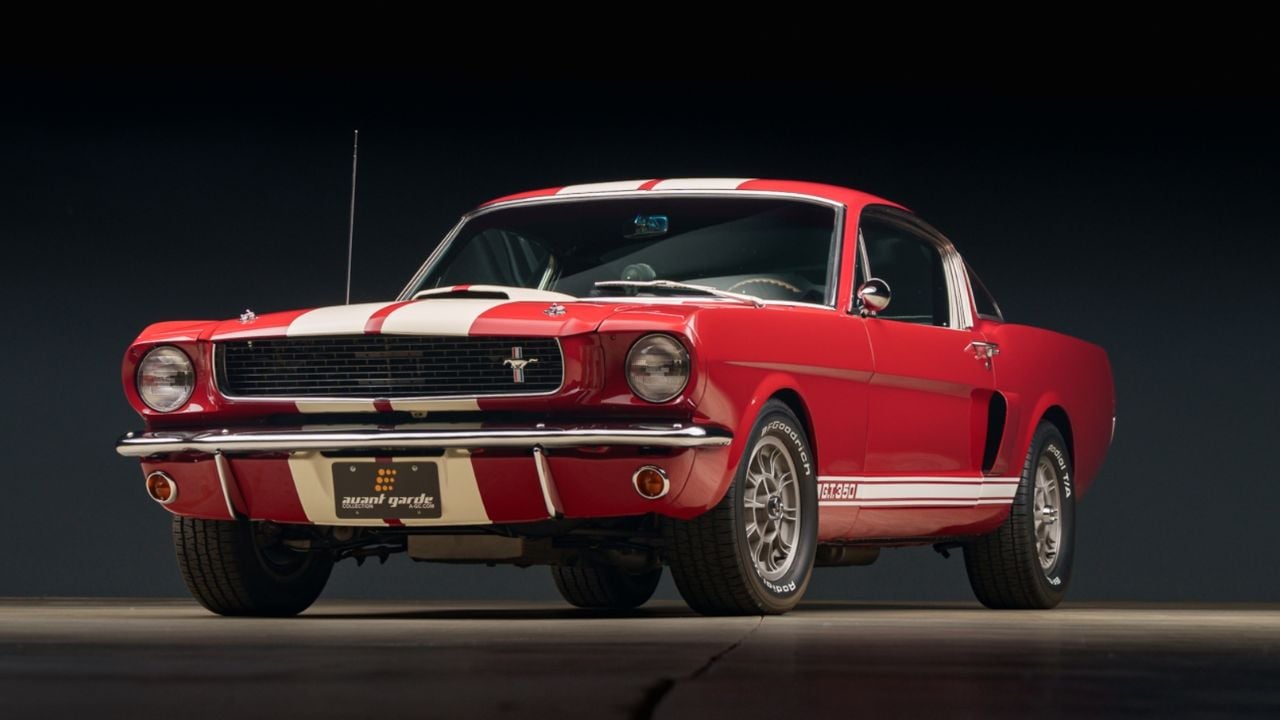
The original Shelby GT350 wasn’t just a Mustang; it was a Mustang born with race-day adrenaline coursing through its veins. Shelby took the humble Mustang Fastback, a car Ford designed for everyday folks, and sculpted it into something sharper, leaner, and a lot louder. He tossed out the rear seats (because who needs passengers when you’re going this fast?), added a beefed-up suspension with special Koni shocks, and bolted on a mighty 289 cubic-inch V8 that was blueprinted and rated at 306 horsepower.
The suspension didn’t just “handle” tight corners; it attacked them with eager precision, daring you to push harder. The high-revving V8 delivered a soundtrack that stirred drivers into flooring it just one more time, making every tunnel an impromptu concert hall. Those iconic blue racing stripes ran down its spine like a war-painted warrior, announcing its intentions to anyone in its rearview mirror.
Inside, the bare-bones bucket seats held drivers tight through the kind of turns made for brave hearts and heavy feet. This car wore minimal frills and plenty of fire. Track days turned into victory laps, and Sunday drives became events, drawing crowds wherever it went. The GT350 carved out a whole new tier of performance that drivers remembered forever. It served as both a coveted trophy car and a brutal weekend weapon for those who truly understood its singular mission: win on Sunday, sell on Monday.
Shelby GT500 (1967)

If the GT350 was a surgical scalpel, the 1967 Shelby GT500 was a sledgehammer wrapped in velvet. This beast brought even more power, more presence, and more attitude into the burgeoning Shelby stable. Instead of the 289, it featured the legendary 428 Police Interceptor–based engine, rated at 355 hp (and commonly described as underrated) (yes, the same one chasing bad guys, now chasing lap times), officially rated at 355 hp but widely rumored to be making significantly more. This was pure muscle, unleashed on the streets and tracks.
Its wide curves, aggressive hood scoop, and twin racing stripes gave it a commanding presence even before the ignition key turned. The massive, menacing grille stared down traffic with unflinching confidence, daring lesser cars to challenge its dominance. Under that fiberglass hood lived the thunderous heartbeat of a beast that roared with pride, spitting fire from its dual exhausts. Every throttle squeeze delivered a rush that filled the cabin with vibration, a guttural roar, and pure, unadulterated joy. The interior blended sport and style, offering specific gauges, toggle switches, and unique trim that perfectly matched its aggressive exterior.
It moved like a rolling thunderstorm, full of barely contained energy and singular purpose. Photographs from the era captured it tearing up drag strips, leaving black lines that stretched into the horizon, and drawing admiring crowds at every gas station. The 1967 GT500 left marks on the pavement and permanent impressions in the minds of those lucky enough to witness its majesty. Eleanor, anyone?
Dodge Viper RT/10
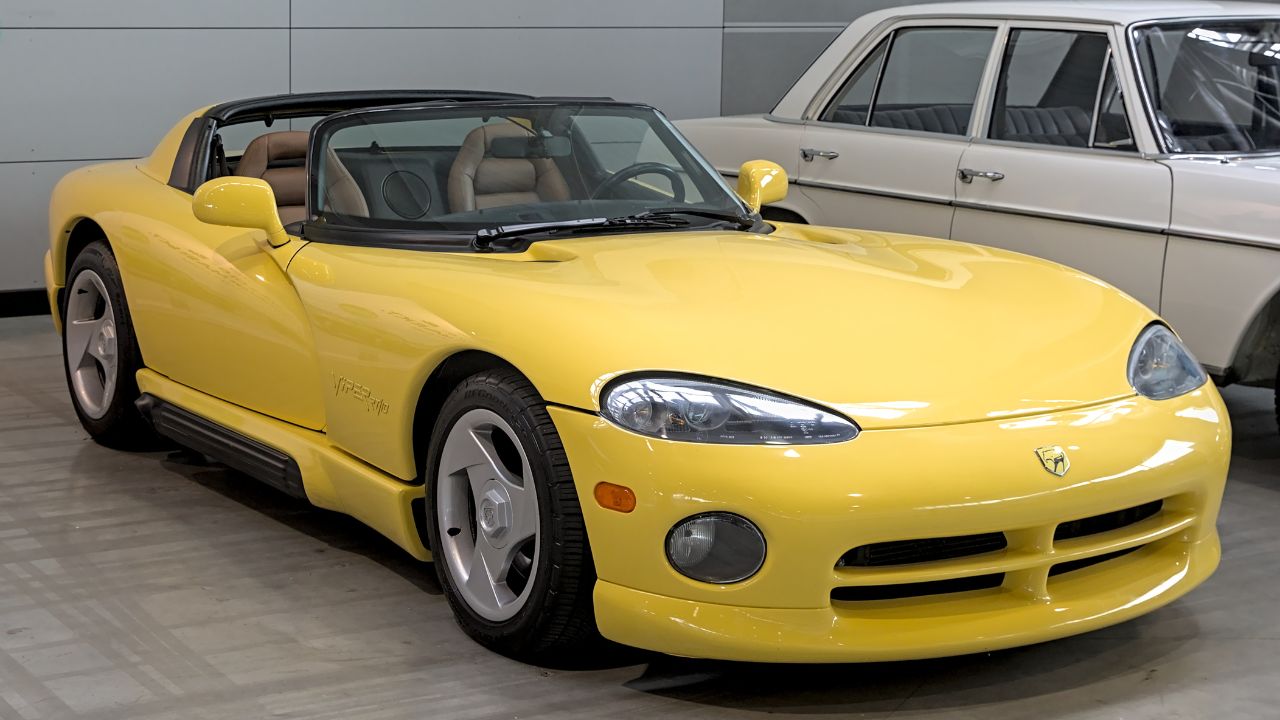
Okay, hold on to your hats, Mopar fans! The first Dodge Viper RT/10 arrived in the early ’90s like a venomous snake, a raw, unapologetic, and utterly bonkers celebration of pure American aggression and mechanical honesty. And guess who had a hand in stirring that pot? Carroll Shelby served as an advisor/consultant during early Viper development (he was also on Chrysler’s board at the time), bringing decades of ideas, experience, and sheer audacity from a lifetime of building legends. He championed the idea of that monstrous 8.0-liter V10 engine, a power plant so big it stretched the limits of traditional performance design.
The Viper’s shape flowed with muscular tension, looking fast even while standing still, like it was about to pounce. It accelerated with primal urgency, letting drivers feel every shift, every horsepower surge, deep in their bones. The roadster body opened the entire experience to the world, wind whipping through your hair as the tach needle climbed past sanity. And in the cabin? Forget digital distractions; there were no cupholders, no external door handles, just the absolute basics and the glorious, terrifying roar of that V10. It was a car that dared you to drive it.
Shelby’s direct input helped shape the Viper into a visceral, untamed celebration of pure American road performance. He essentially told Chrysler, “Make it loud, make it fast, and make it so nobody can screw it up with too many ‘comfort’ features.” Mission accomplished.
Ford GT40 Mk II

This, boys and girls, is where legends are truly forged. The Ford GT40 Mk II became not just a car, but a crown jewel of American motorsport, born from Enzo Ferrari’s casual dismissal of Henry Ford II. Shelby American was brought in to spearhead Ford’s GT40 Mk II racing effort after early attempts faltered after early attempts faltered. His team took the already potent GT40 and transformed it into an endurance and speed weapon. The monstrous 7.0-liter (427 cubic-inch) V8 engine thundered down the Mulsanne Straight at Le Mans like a jet on four wheels, shaking the ground and striking fear into the hearts of its competitors.
Its impossibly low, aerodynamic body wasn’t just pretty; it was a pure, functional design, slicing through the air with relentless, singular focus. Drivers like Ken Miles and Bruce McLaren spent grueling hours inside that cramped, oven-hot cockpit, their senses sharpened by the incessant roar and the exhilarating rush of the race. Shelby’s team worked day and night, pushing boundaries, tuning, testing, and relentlessly refining the GT40 beyond what anyone thought was possible. The result? A stunning, humiliating 1-2-3 finish at Le Mans in 1966, a feat immortalized in racing history and a definitive “salute” to Ferrari.
The car symbolized raw precision engineering powered by a bold, unyielding American spirit. Photographs from the podium showed drivers drenched in sweat and champagne, the ultimate taste of victory. Shelby’s presence and genius elevated the GT40 into a machine not just built to win, but remembered for generations as the ultimate underdog story.
Shelby GT500 (2007)
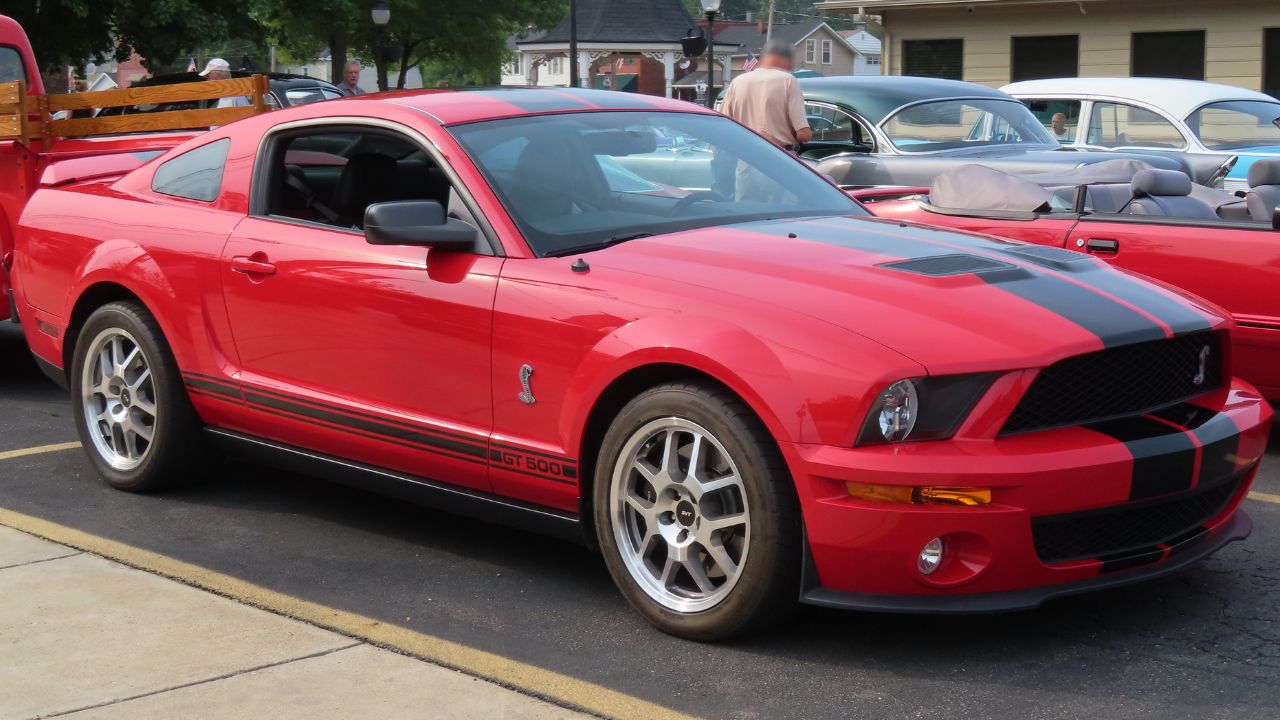
Fast forward a few decades, and Ford decided it was time to rekindle a flame. The revival of the Shelby GT500 in 2007 added new, supercharged fire to a proud and legendary name. This wasn’t just a marketing ploy; this was a serious performance machine. Under that aggressive, twin-striped hood, a potent 5.4-liter supercharged V8 pumped out a jaw-dropping 500 hp with a deep, guttural growl that let everyone know it meant business. Its bodywork cleverly combined visual cues from the glorious ’60s while introducing unmistakably modern muscle proportions, making it look both retro and utterly contemporary.
Those iconic dual racing stripes down the center honored the past and screamed “modern power” through the present. Inside, the cockpit surrounded drivers with tactile buttons, a satisfyingly solid gear throw from the manual transmission, and proudly displayed Shelby emblems on the seats and dashboard. The steering delivered the road with each precise movement of the wheel. Acceleration came on strong, steady, and eager, pushing you firmly back into those bolstered seats.
Fans immediately gravitated to it, gathering at meets and online forums to share stories, modifications, and track times. The 2007 GT500 inspired a whole new generation of muscle car owners to embrace loud, fast, and unashamedly fun driving. And yes, Carroll Shelby himself stood proudly beside it, genuinely proud of the work being done under his legendary name. It proved that the old dog still had new tricks, and plenty of bite.
Dodge Omni GLH-S
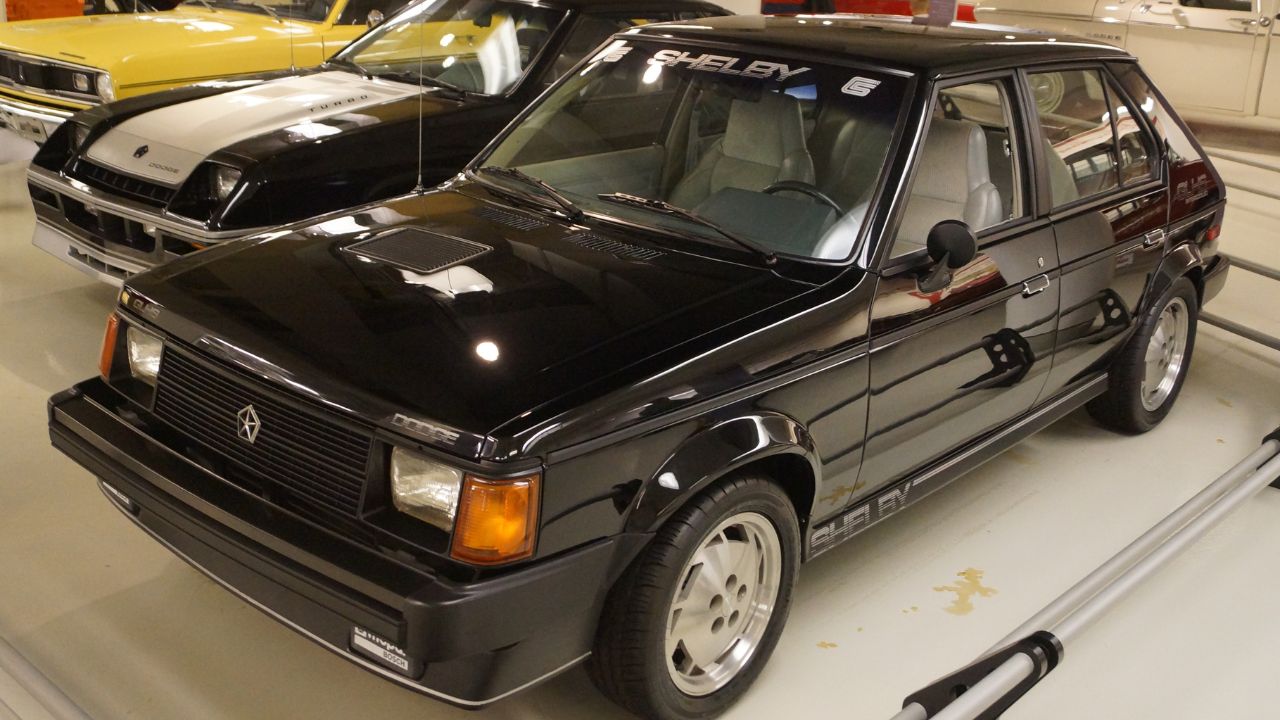
Alright, now for something completely different! The Dodge Omni GLH-S. If you just scoffed, you clearly didn’t live through the ’80s and witness this thing. This humble, boxy hatchback surprised absolutely everyone with its ludicrous speed and precise Shelby-tuned performance. This unassuming terror used a highly tweaked, turbocharged 2.2-liter four-cylinder engine that delivered quick, punchy bursts of power, often leaving bewildered muscle car owners in its dust.
It featured upgraded suspension, a stiffer chassis, and bigger brakes that kept the car flat and planted, even through spirited maneuvers. The handling allowed for genuinely fun drives through corners and tight city streets. It looked like a grocery getter, but it moved with lightning instincts. Shelby didn’t just lend his name; he personally added his touch with specific logos, unique badging, and a brutally limited production run (only 500 were made for the 1986 model year) that ensured instant exclusivity.
The lightweight frame (it was an economy car, after all) contributed to a nimble, agile driving feel. Performance-minded drivers found pure joy in its responsive steering and quick-spooling turbo boost. Road tests from the era showed acceleration numbers that punched way above its humble weight class, proving that horsepower wasn’t just for big V8s. The GLH-S carried Shelby’s creative genius into new territories with a compact frame and a ridiculously big-hearted performance. It was the ultimate sleeper before sleepers were cool.
Sunbeam Tiger
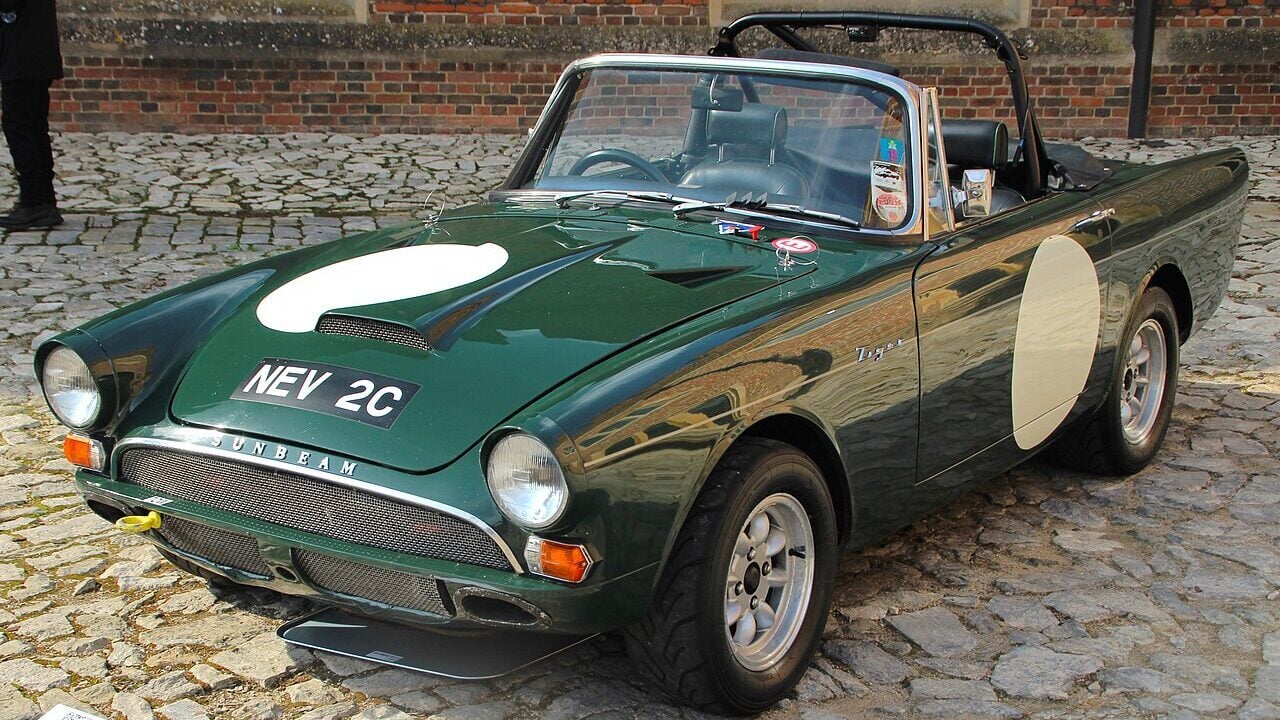
The Sunbeam Tiger is the automotive equivalent of a charming British gentleman who suddenly drops a thick Texan accent and starts talking about cubic inches. It offered a deceptively charming, compact British roadster exterior paired with utterly unexpected power. The secret sauce? A compact British roadster design (the Sunbeam Alpine) with a growling Ford V8 (usually a 260 or 289 cubic-inch) deftly nestled into the engine bay.
And guess who helped make that unholy (and glorious) union work? Carroll Shelby himself was instrumental in adapting the chassis and powertrain to handle that American muscle, ensuring it didn’t twist itself into a pretzel on the first hard launch. The result was a spirited, light machine with excellent throttle response and a wicked exhaust note. Drivers enjoyed the refreshing simplicity of the interior and the exhilarating energy under their right foot.
The Tiger handled winding roads with eager precision and playful feedback, darting through corners. Its straight-line speed delighted owners and genuinely turned heads at snooty British car shows. The blend of classic European style and raw American torque defined its unique, irresistible appeal. Collectors today cherish its rarity and legitimate racing pedigree.
Shelby Series 1
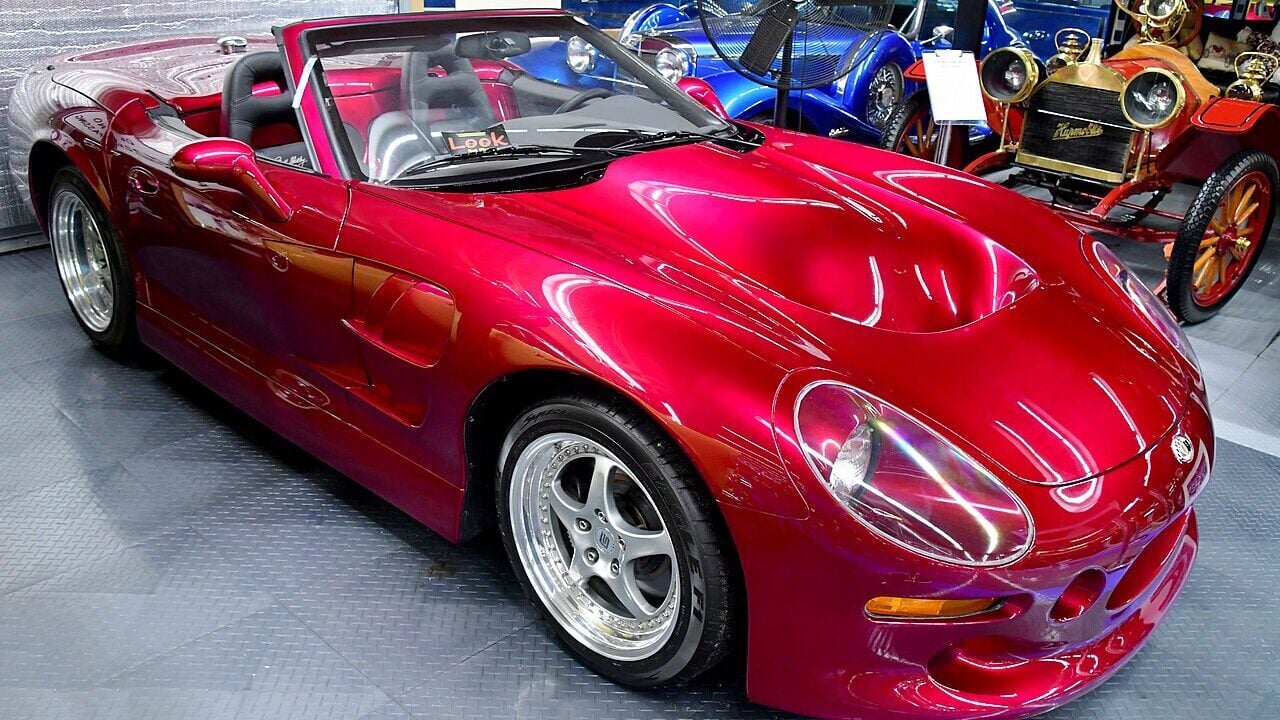
By the late 1990s, Carroll Shelby was a living legend, but he still had one personal automotive itch to scratch: creating a car entirely from the ground up, his ultimate vision, unbound by an existing Ford or Dodge chassis. The Shelby Series 1 was that dream, finally brought to exhilarating life. It utilized a cutting-edge, lightweight aluminum chassis that formed the backbone of its incredibly tight handling and rigid structure. The body panels? They were crafted from carbon fiber, giving it a sculpted, futuristic look that still turns heads today.
Power came not from a Ford or Dodge engine, but from a naturally aspirated, high-revving Oldsmobile Aurora 4.0-liter V8 engine (tuned by Shelby), offering smooth delivery and sharp response, eventually leading to a supercharged option as well. The car’s proportions brilliantly evoked memories of classic roadsters while pushing into completely new territory for the era.
Inside, the cabin featured proper analog gauges and a driver-focused layout, free from excessive digital distractions. The Series 1 hugged corners with confidence and surged forward with intoxicating purpose. Production numbers remained agonizingly low (only 249 examples were built), keeping the car an elusive, expensive prize for true fans and collectors. Shelby poured his vision, his passion, and every ounce of his hard-earned wisdom into every single part of its design. The Series 1 stands as Carroll Shelby’s deeply personal masterpiece, a testament to his legacy in full, undiluted glory.
Shelby Dakota

Before the SVT Lightnings and the Ram SRT-10s, there was this unassuming trailblazer: the Shelby Dakota. This truck single-handedly introduced serious performance to the pickup world, with a unique blend of muscle and utility that nobody saw coming. Under the hood, a potent 5.2-liter (318 cubic-inch) V8 was carefully dropped in, filling the compact truck with a surprising amount of energy and strength. Space limitations meant deleting the engine-driven cooling fan and switching to electric fans, one of the key packaging changes Shelby’s team made to fit and cool the V8 properly. Sacrifices for speed, folks!
The vibrant red valve covers and prominent Shelby badges gave it a special identity that stood out at every stoplight, leaving confused glances from owners of plain old work trucks. It came exclusively in red or white, with a bold sport stripe that ran cleanly along its sides. The upgraded wheels, performance-tuned suspension, and beefier transmission created a driving feel that brought genuine muscle car fun to truck fans. Inside, the bucket seats and center console gave it a cabin made for drivers, not just hauling lumber. About 1,500 units rolled off the line for the 1989 model year, each one officially signed into Shelby history.
Owners appreciated the way it still handled daily tasks while holding onto a surprising performance soul. The Shelby Dakota brought a new flavor to Dodge’s lineup and proved that the magic of Shelby’s vision could take any shape, even a humble pickup. It remains a standout in both truck and performance car conversations, carrying serious horsepower in a workman’s silhouette. It was Carroll saying, “Even your work truck can be a hot rod!”
Shelby Cobra Daytona Coupe
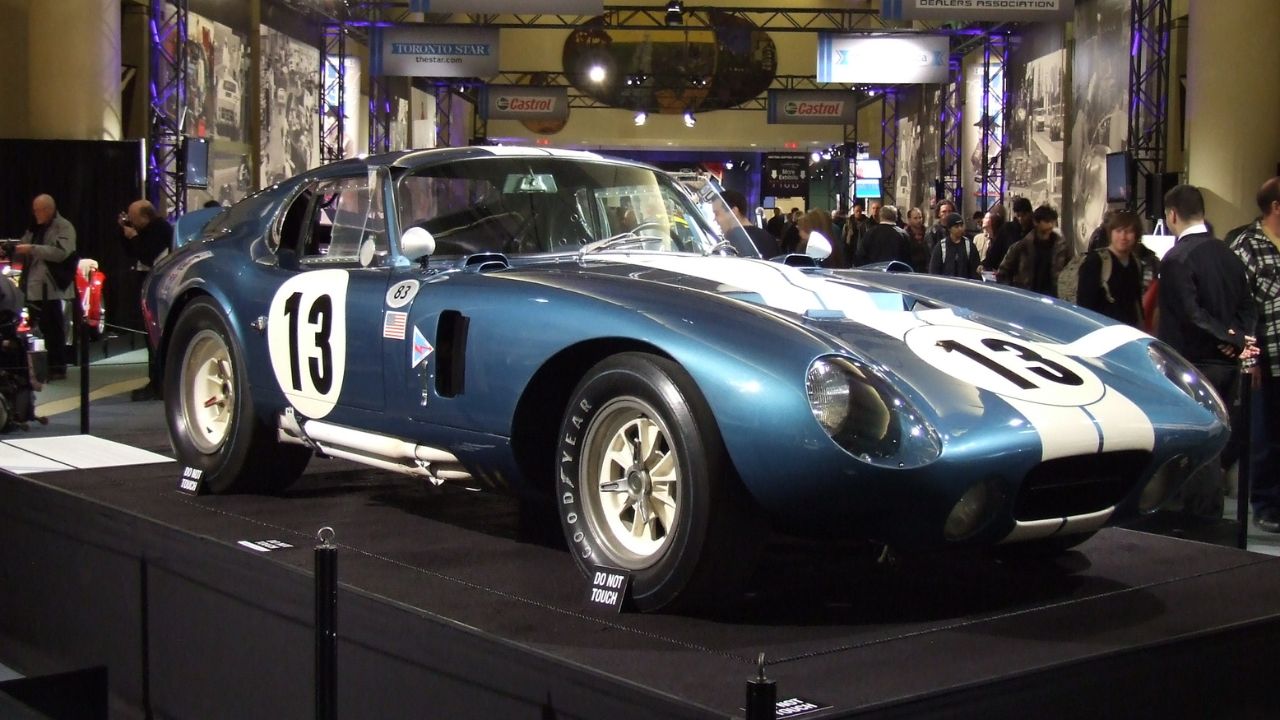
If the Cobra roadster was a bare-knuckle brawler, the Shelby Cobra Daytona Coupe was a purpose-built weapon, an aerodynamic assassin crafted for absolute victory on the world stage, especially at tracks like Le Mans where aerodynamics trumped raw power. It was designed with a long, impossibly sleek, aerodynamic fastback body that sliced through the air like a jet on wheels. The Coupe used the same mighty 289 cubic-inch V8 as the Cobra roadster but wrapped it in a shape optimized for endurance racing and blistering top speeds, allowing it to reach around 180–190 mph on long straights.
The visionary Peter Brock penned the revolutionary design (often sketched on a chalkboard!), and Shelby’s dedicated team brought it to life with relentless determination and unparalleled skill. The car achieved unprecedented success at legendary races like Sebring, Daytona, and Monza, earning trophies and respect with each grueling run. The cockpit, a narrow, purposeful space of gauges, switches, and raw power, surrounded drivers with pure, unadulterated craftsmanship and the constant roar of the V8.
Only a precious six of these magnificent machines were ever built, each one securing its hallowed place in motorsport history. The Daytona Coupe helped Shelby American secure the coveted 1965 FIA World Sportscar Championship in the GT class, giving American engineering a proud and permanent place at the very top of international road racing. Every elegant curve of its body tells a story of ambition, groundbreaking speed, and Shelby’s unstoppable, winning drive. It remains a legend, cherished by collectors, revered by racing purists, and visually stunning to this day.
“There’s Never Enough Horsepower… Just Not Enough Traction”
Carroll Shelby left behind more than just horsepower figures and a legendary heritage. He fundamentally shaped the way people felt behind the wheel, injecting passion, aggression, and an undeniable sense of purpose into mere sheet metal and speed. Each car on this list carries his touch like a signature written in torque, a testament to his relentless pursuit of performance perfection. The lines, the sounds, and the very spirit of these machines speak clearly about a man who lived with a foot firmly planted on the gas pedal and a vision rooted in boundless possibility.
Racetracks around the world echoed with his victories, streets buzzed with the thunder of his builds, and garages across the globe proudly displayed his name like a badge of honor. Drivers felt braver, louder, and undeniably freer inside a Shelby creation. The road gave him a place to speak through audacious design, overwhelming power, and exhilarating motion. These twelve cars offer a lasting reminder that speed becomes something timeless when guided by heart, instinct, and pure American grit. Shelby’s legacy doesn’t just live on; it lives in motion, perpetually heading toward the horizon, leaving a trail of tire smoke and awe in its wake.
So, which one of these Shelby legends makes your heart rev? And if you own one, tell us your wildest story, we’re all ears (and eyes for burnout videos).