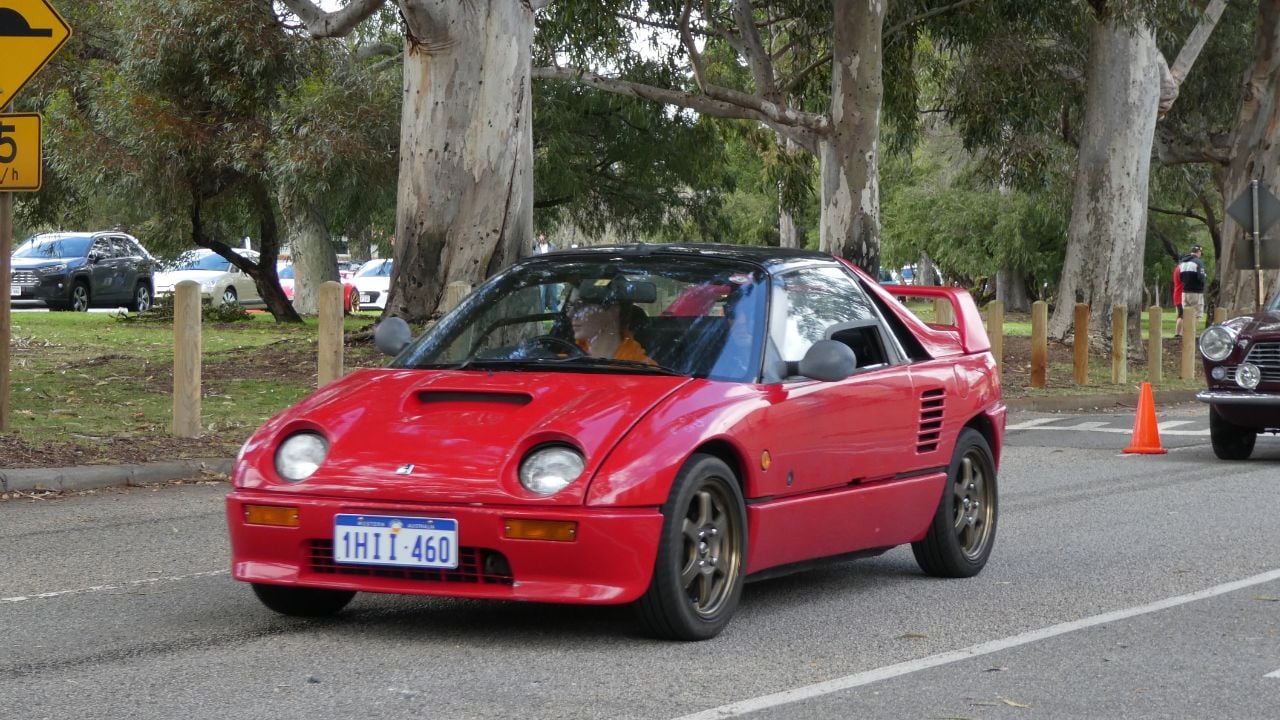
Some cars follow trends, others follow rules. And then some follow their own little spark across the blueprint. The Autozam AZ-1 arrived with that spark, shaped like a smile and engineered with a sense of delight. Its body stayed small, its intentions stayed playful, and it didn’t care if it was practical at all.
This was a machine from a time when design meetings still began with sketches on paper. It wore its edges proudly and opened its doors like butterfly wings reaching toward the sky. It existed in a moment when cars could surprise people without needing grand size or horsepower. Roads welcomed it like a curious guest, and drivers found stories within its tiny shell.
The AZ-1 lived with purpose, created for those who loved rhythm in corners and shapes that made people stop and look. It offered more than transportation in the form of a ceremony, a turbo engine, and gull-wing doors, not to mention a ton of personality. Let’s take a long look back at the strange, special Autozam AZ-1 and everything it brought with its gleaming, grinning face.
Kei Car By Size, Not By Design

Let’s get the specs straight: the AZ-1 measured just 3,295mm long, 1,395mm wide, and 1,150mm tall, basically a rolling shoebox that could legally park in a motorcycle space. Under Japan’s kei car regulations, it was limited to 657cc and 64 horsepower, but here’s where Mazda’s engineers got clever (and slightly deranged).
They didn’t just drop in any old kei engine. They borrowed Suzuki’s F6A — a DOHC 12-valve turbocharged three-cylinder that was surprisingly gutsy. With the turbo spooled up, this thing made peak torque at just 4,000 rpm, which in a car weighing only 1,587 pounds meant it could embarrass plenty of “real” sports cars off the line. The 0-60 time of around 8.5 seconds doesn’t sound impressive until you remember this thing cost less than a souped-up Civic and looked like it drove out of an anime.
Gull-wing Doors on a Car the Size of a Coffee Table
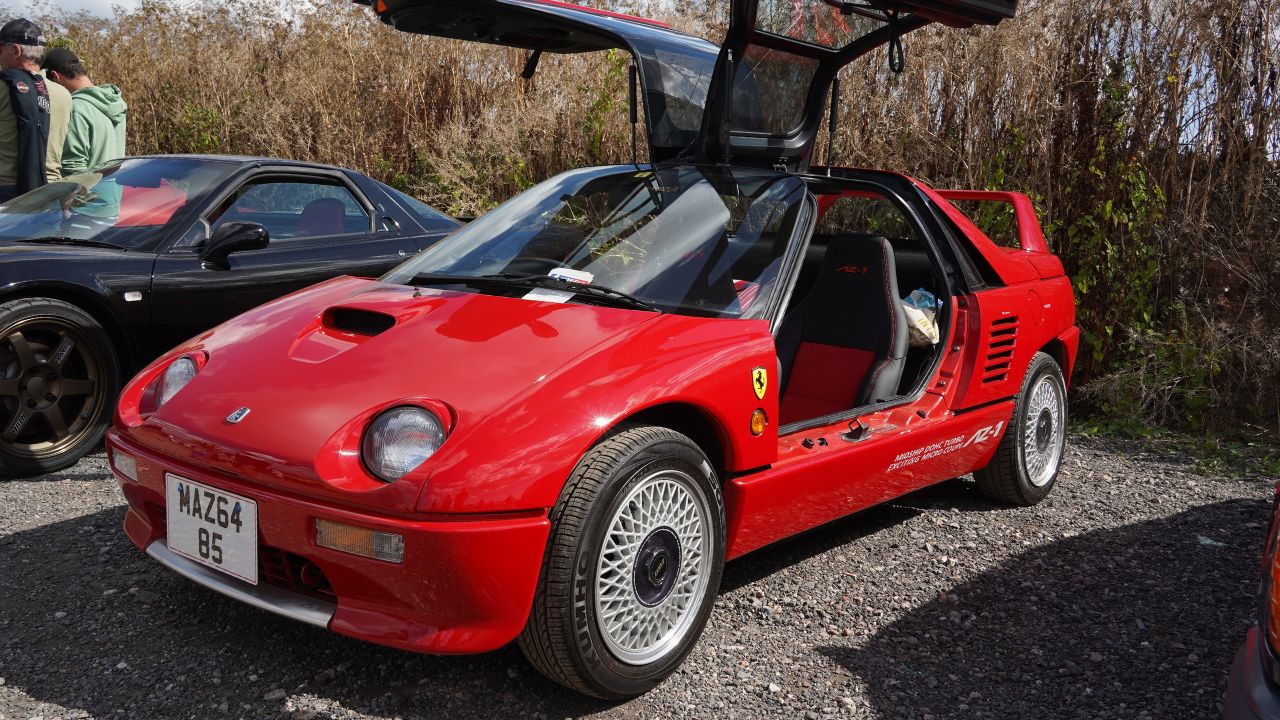
Here’s where the AZ-1 either shows its genius or its complete lack of common sense, depending on your perspective. Those gull-wing doors weren’t just for show — they were actually necessary. The car was so small that conventional doors would have been downright impractical. Plus, let’s be honest, popping those doors in a mall parking lot was guaranteed to collect a crowd of confused normies wondering if a cartoon character was shopping at Target.
The doors used gas struts (not the fancy hydraulic systems from actual supercars), which meant they occasionally failed and left owners looking like idiots trying to prop them open with a broomstick. But when they worked, climbing out of an AZ-1 made you feel like you were emerging from a fighter jet, even if you were going to buy groceries.
The Chassis: Where the Magic Actually Happened

This is where the AZ-1 stopped being a cute toy and became a legitimate sports car. Mazda didn’t get lazy with the engineering — they gave it a proper mid-engine layout with the turbo three mounted behind the driver. The weight distribution was dang near perfect at 45/55 front-to-rear, and the wheelbase was so short (2,235mm) that the car could change direction faster than your ex broke their promises.
The suspension was a proper double-wishbone all around — none of that MacPherson strut economy car nonsense. Combined with the low center of gravity and sticky 165/65R13 tires (yes, 13-inch wheels were standard), the AZ-1 could pull nearly 0.8g on the skidpad. That’s better than most muscle cars from the era, and it did it while looking like a Transformer’s little brother.
Cutie Patootie with a Scary Secret
That F6A three-cylinder was a legitimately clever piece of engineering. Suzuki managed to stuff an intercooler, turbocharger, and DOHC heads onto an engine that displaced less than most motorcycle engines. It made its peak 64hp at 6,500 RPM and would happily rev to 8,000 — impressive for a motor that shared basic architecture with what powered Suzuki’s economy boxes.
The turbo lag was real but manageable, and once it lit up, the engine had a surprisingly aggressive exhaust note for something with fewer cylinders than most lawn mowers. Fuel economy was outstanding at around 40+ miles per gallon, which meant you could afford to drive the thing, unlike the gas-guzzling American cars of the era.
Track Hero (To An Extent)
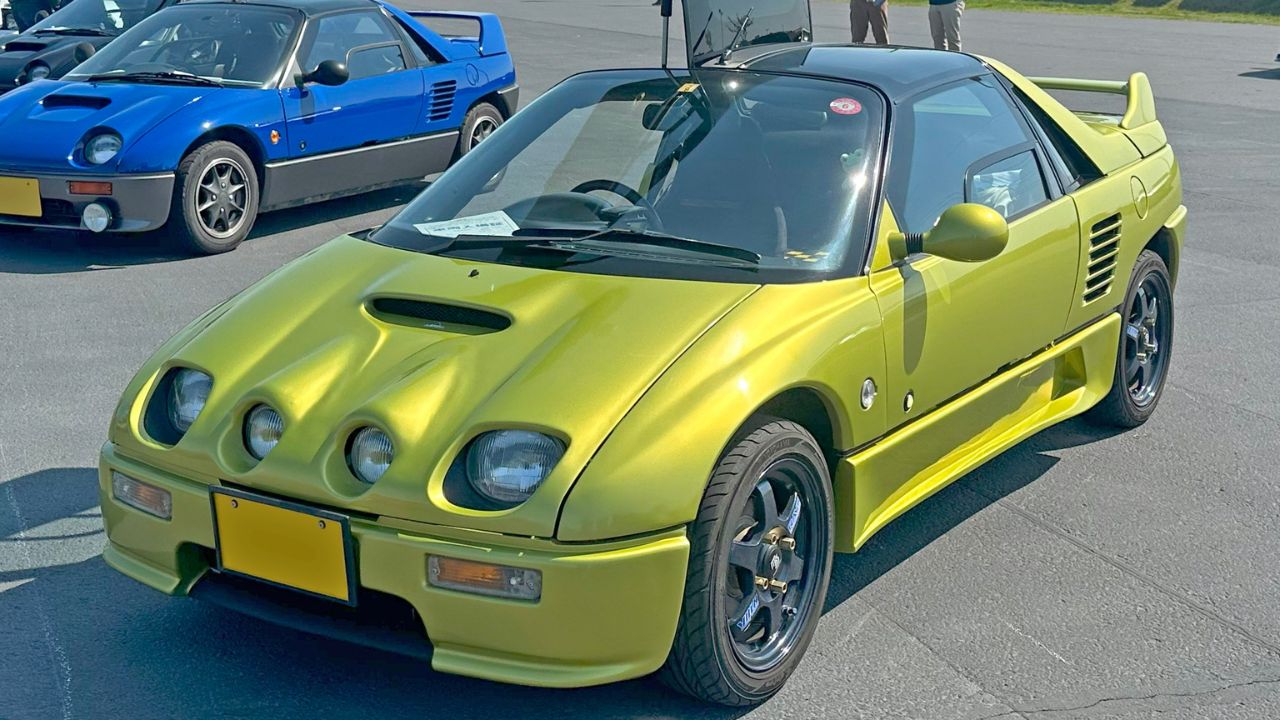
Here’s where the AZ-1 gets interesting for serious drivers: it’s capable on track, but not in the way you’d expect. With only 64hp, it’s not going to set any lap records on power tracks like Road America or Daytona. But put it on a tight, technical course like Tsukuba or your local autocross, and suddenly this little demon puppy makes sense.
The short wheelbase that makes it twitchy on the highway becomes an advantage when you need to change direction quickly. The mid-engine balance means it rotates beautifully through corners — maybe a little too beautifully if you’re not paying attention. The lack of power forces you to maintain momentum, making you a better driver in the process. It’s like the automotive equivalent of learning to fight with your hands tied behind your back.
The problem is consumables. Those tiny 13-inch tires might be period-correct, but finding decent rubber in that size is like finding an honest politician. Most owners end up running whatever Walmart special fits the rim, which destroys the handling balance Mazda worked so hard to achieve. The brakes, adequate for the car’s light weight and modest power, start to fade after a few hard laps. And don’t even think about tracking it in summer — that mid-mounted turbo engine will cook itself in no time.
Cramped But Cool Cockpit
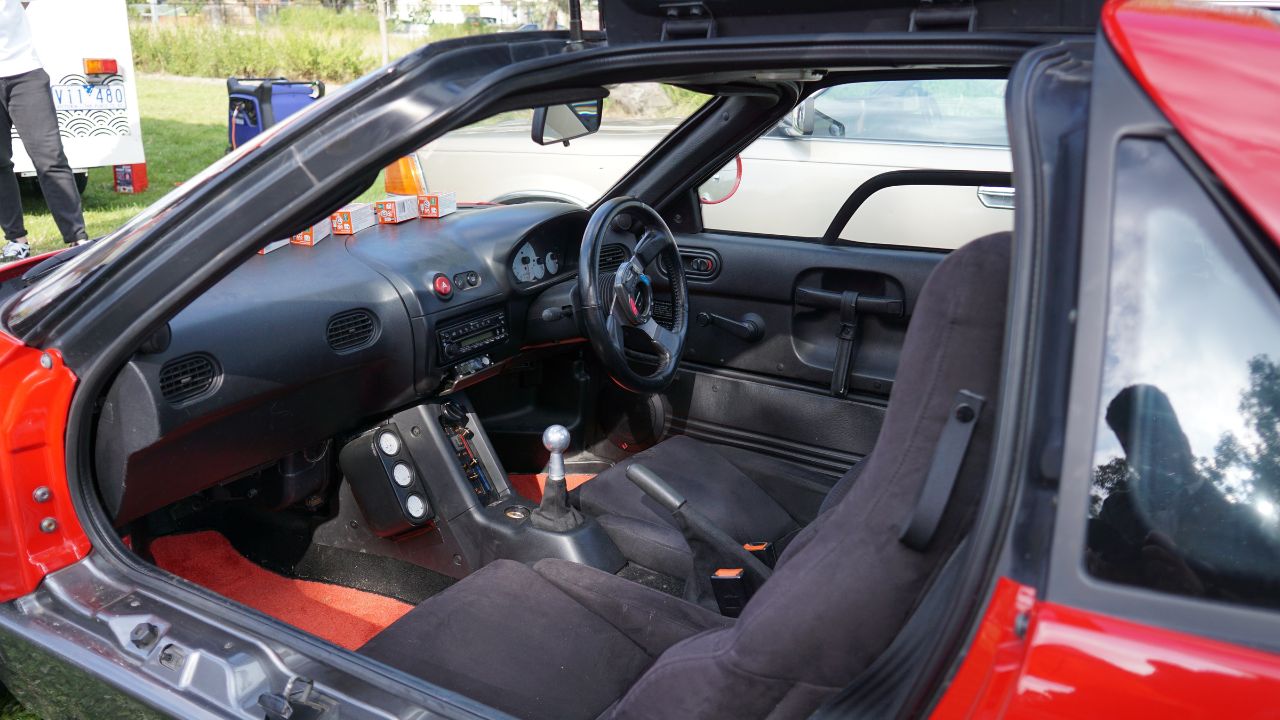
The cockpit was clearly designed by someone who had never actually tried to fit two normal-sized humans inside. At 6 feet tall, you weren’t getting in without some creative yoga moves. If your passenger were anything larger than a jockey, you’d be getting intimately acquainted with each other’s personal space.
However, the driving position, once you achieved it, was nearly perfect. The steering wheel was positioned correctly, the pedals were well-spaced (with a proper dead pedal for heel-toe downshifts), and the shifter fell perfectly to hand. The gauge cluster was lifted straight from Mazda’s parts bin, which meant it was readable — a refreshing change from the hieroglyphic crapola most Japanese manufacturers were putting in their sports cars.
It’s like being in a racing simulator brought to life.
A Dashboard From Another Dimension
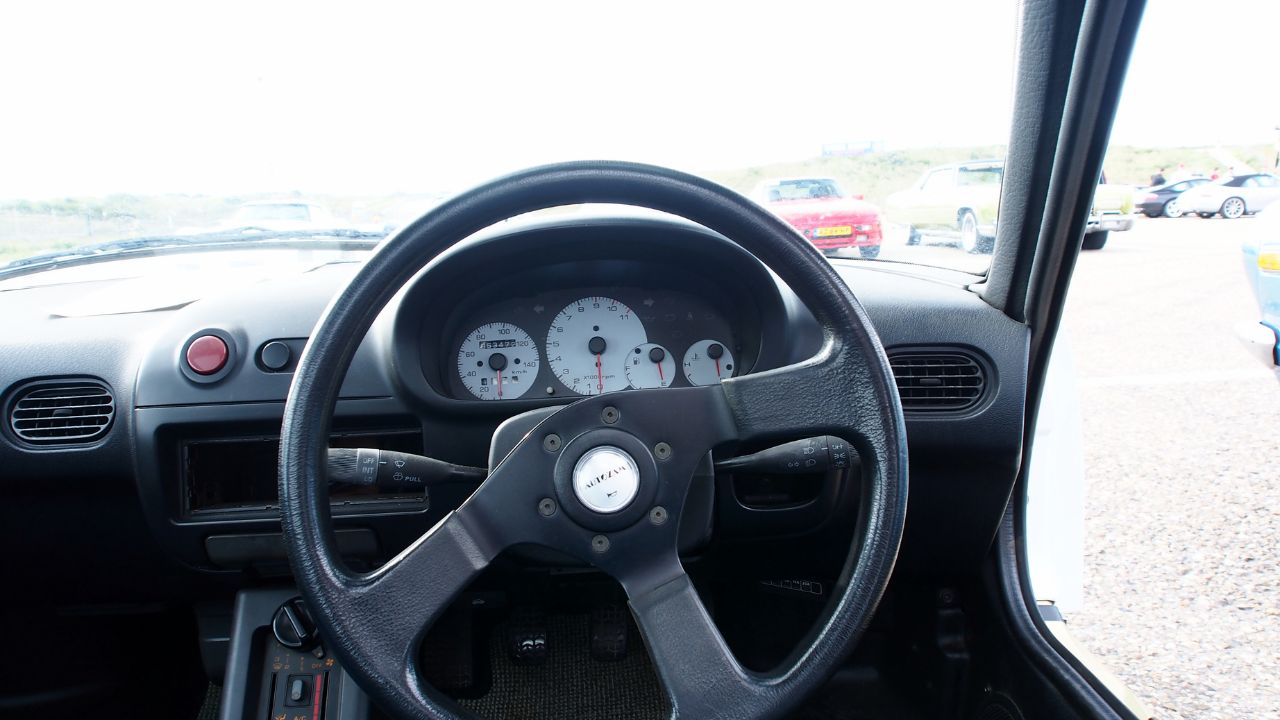
Like everything else with the AZ-1, it didn’t do what was expected. The AZ-1’s interior layout featured a tidy, focused dashboard. Dials glowed with warm colors that offered a sense of occasion. The cluster sat close together for easy reference. Vent shapes and materials added character to the space. The center controls were shaped for intuitive use.
Buttons and toggles felt firm and satisfying. The arrangement gave the cabin a sporty identity. Nothing felt unnecessary or overdone. The dashboard became part of the car’s personality. Each drive started with a view that encouraged focus and excitement.
Rare (Because Nobody Wanted One)
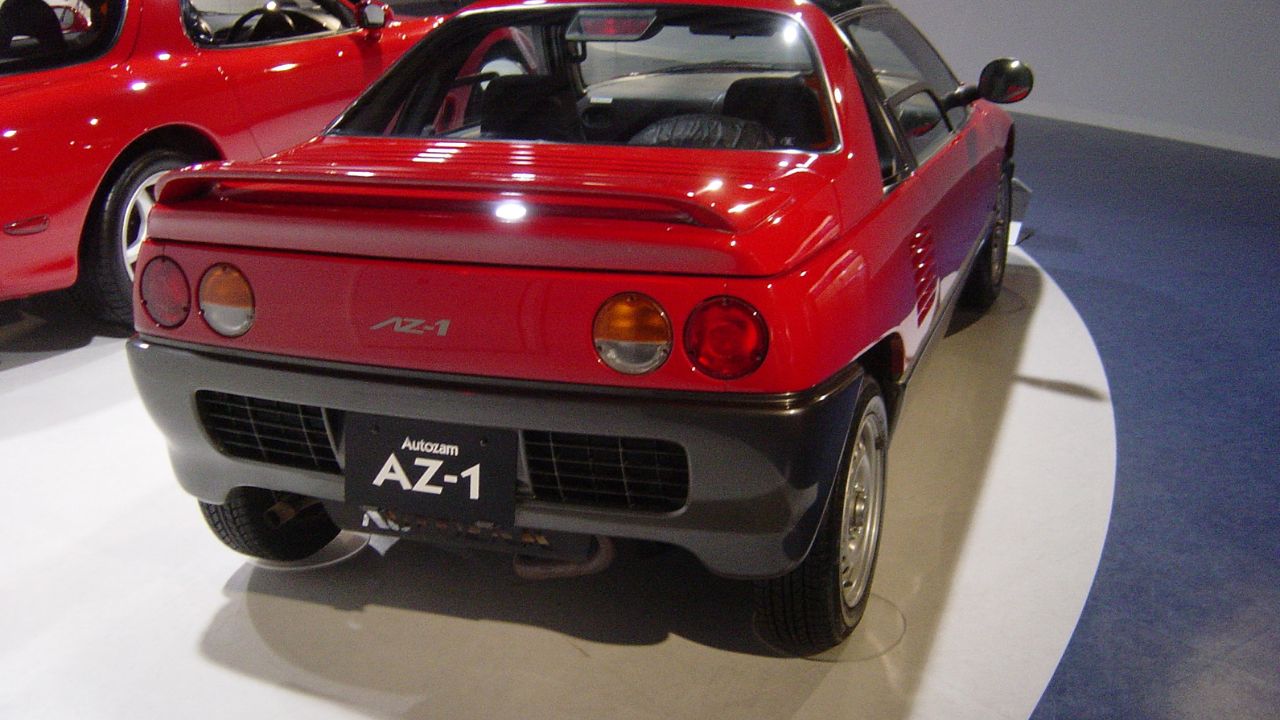
Mazda built exactly 4,392 AZ-1s between 1992 and 1995, making them legitimately rare. We need to be clear about why: they weren’t rare because they were too expensive or exclusive — they were rare because most people thought they were completely insane.
At ¥1.49 million (about $15,000 in 1992 dollars), the AZ-1 cost more than basic commuter cars at the time but offered less practicality than a motorcycle. You couldn’t fit a week’s groceries in it, taking a passenger taller than 5’6″ was an act of cruelty, and good luck explaining to your insurance company what you’d bought.
But it’s so cute!
With the 25-year rule lifted, more AZ-1s are infiltrating the United States, like an invasion of super adorable insects. Expect to start seeing more at your local car show… or in my garage.
The AZ-1 Invades America (Madness Follows)
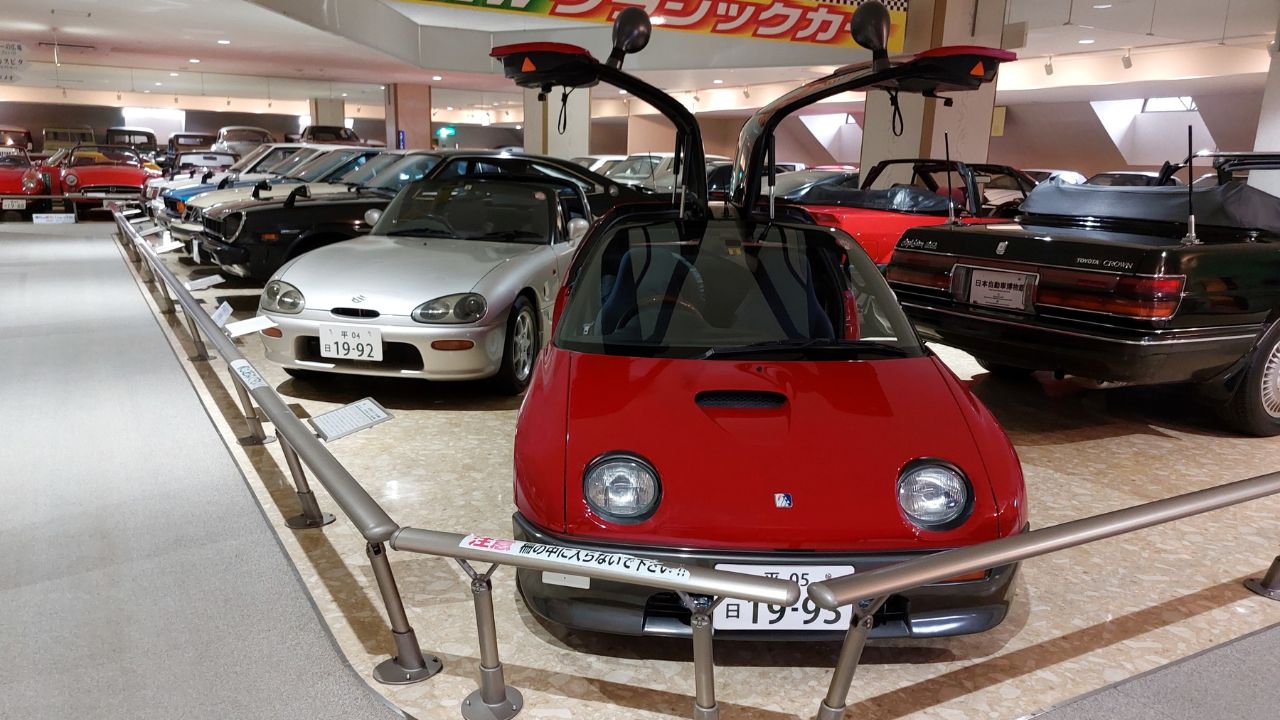
Thanks to America’s 25-year import rule, AZ-1s started becoming legal around 2017. This kicked off the predictable cycle of JDM import hysteria: prices skyrocketed, quality plummeted, and suddenly every clapped-out example with more rust than a Titanic deck chair was being marketed as a “rare investment opportunity.”
The smart money got in early, importing decent examples for $15,000-20,000. Those who were less clever waited until TikTok discovered JDM cars and now pay $35,000 for the privilege of owning a car with a blown turbo and an interior that smells like 30 years of Japanese cigarettes. Most imported examples have been “modified” by previous owners, usually with the kind of taste that makes Fast & Furious look subtle.
Finding a truly clean AZ-1 is like finding a cat that can do your taxes instead of just coughing up hairballs all over your sheets. The good ones stayed in Japan with collectors who understood what they had. What makes it to American shores are usually the cars that Japanese enthusiasts didn’t want — think of it as automotive natural selection in reverse. That said, even a rough AZ-1 is an experience worth having, assuming you can find someone willing to work on it who won’t charge you supercar labor rates for kei car complexity.
The Bubble Economy’s Greatest Hit
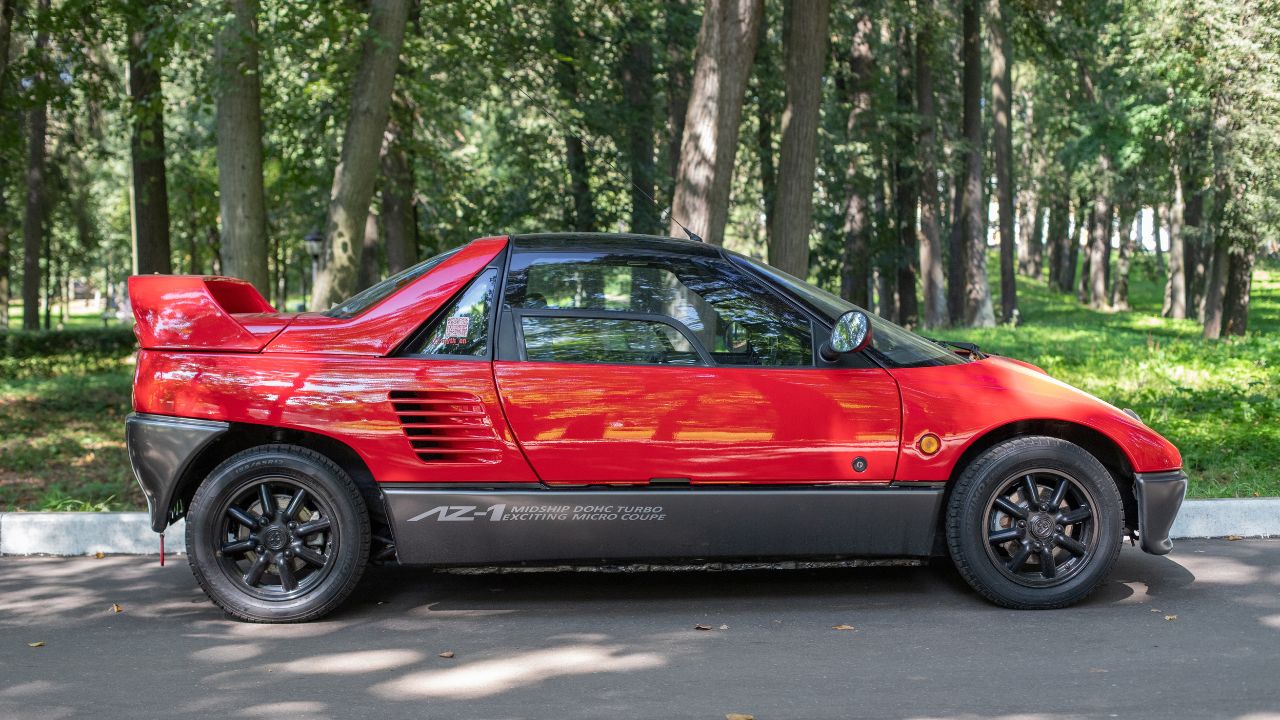
The AZ-1 was pure bubble economy excess — the automotive equivalent of Japan’s economic binge of the late ’80s and early ’90s. This was a time when Japanese manufacturers were convinced that if they built something weird enough, people would buy it. Most of the time, they were wrong (see: every other Autozam product), but occasionally, they struck gold.
The AZ-1 existed because Mazda had money to burn and engineers with more creativity than sense. It was developed alongside the Honda Beat and Suzuki Cappuccino as part of Japan’s brief obsession with making legitimate sports cars that fit kei car regulations. Of the three, the AZ-1 was the most extreme — and the most successful at actually feeling like a real sports car instead of a toy.
The Leader Of the Kei Car Cult
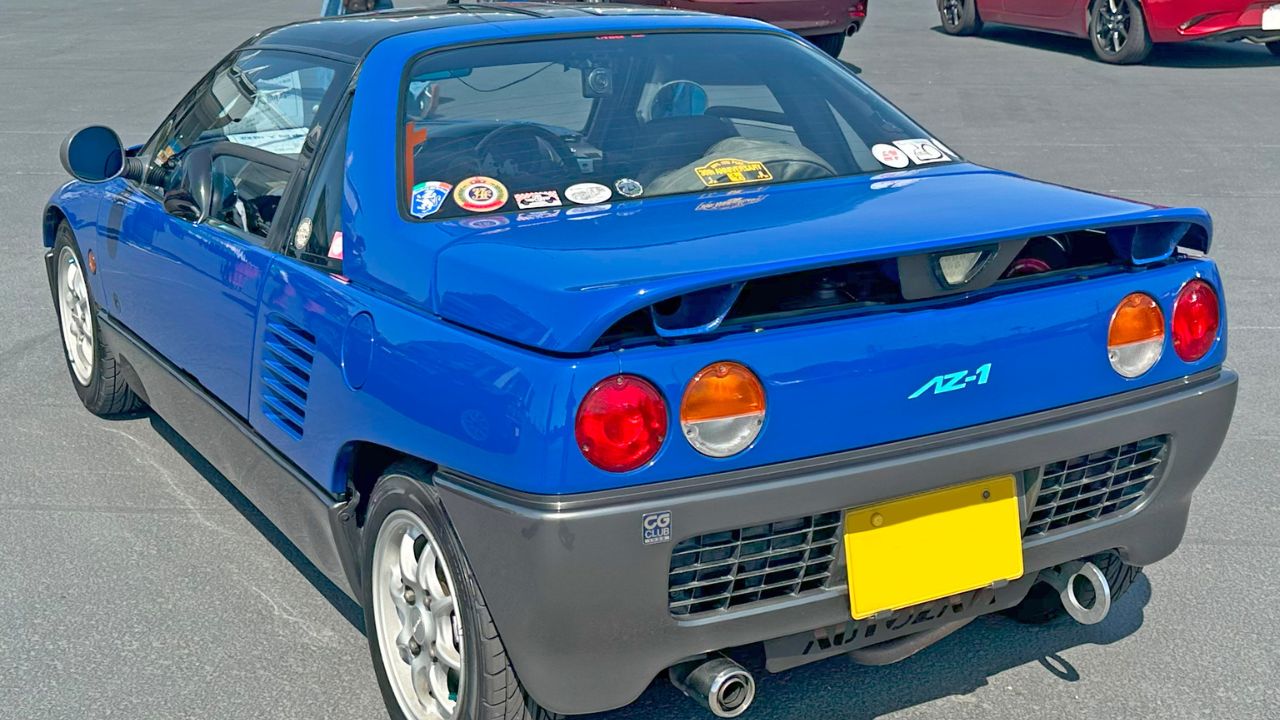
The AZ-1 didn’t exist in a vacuum — it was part of Japan’s brief obsession with kei sports cars. The Honda Beat played it safe with conventional doors and front-engine layout, making it the sensible choice for people who wanted a kei sports car but still needed to function in society. The Suzuki Cappuccino went full roadster, offering a removable roof and rear-wheel drive dynamics.
On paper, the Beat made more sense: easier to service, more reliable, and better build quality. In reality, it drove like a Honda Civic that had been put on a diet and gotten delusions of grandeur. The naturally aspirated engine was smooth but gutless, and the handling, while competent, never achieved the AZ-1’s manic intensity.
The Cappuccino was the AZ-1’s real rival, offering similar power from a turbocharged three-cylinder but in a more conventional front-engine, rear-drive package. It handled beautifully and had the practicality advantage of a real trunk, but lacked the AZ-1’s theatrical presence — you could drive a Cappuccino without causing accidents from rubbernecking pedestrians. In the world of attention-seeking automotive purchases, that’s practically a design flaw.
All three cars proved the same point: when Japanese engineers are given stupid restrictions and unlimited creativity, magic happens. The AZ-1 was the most extreme expression of this philosophy, which is why it’s the most memorable and the most expensive today. Sometimes, being the most impractical choice is exactly the right choice.
Your Local JDM Specialist Will Love You
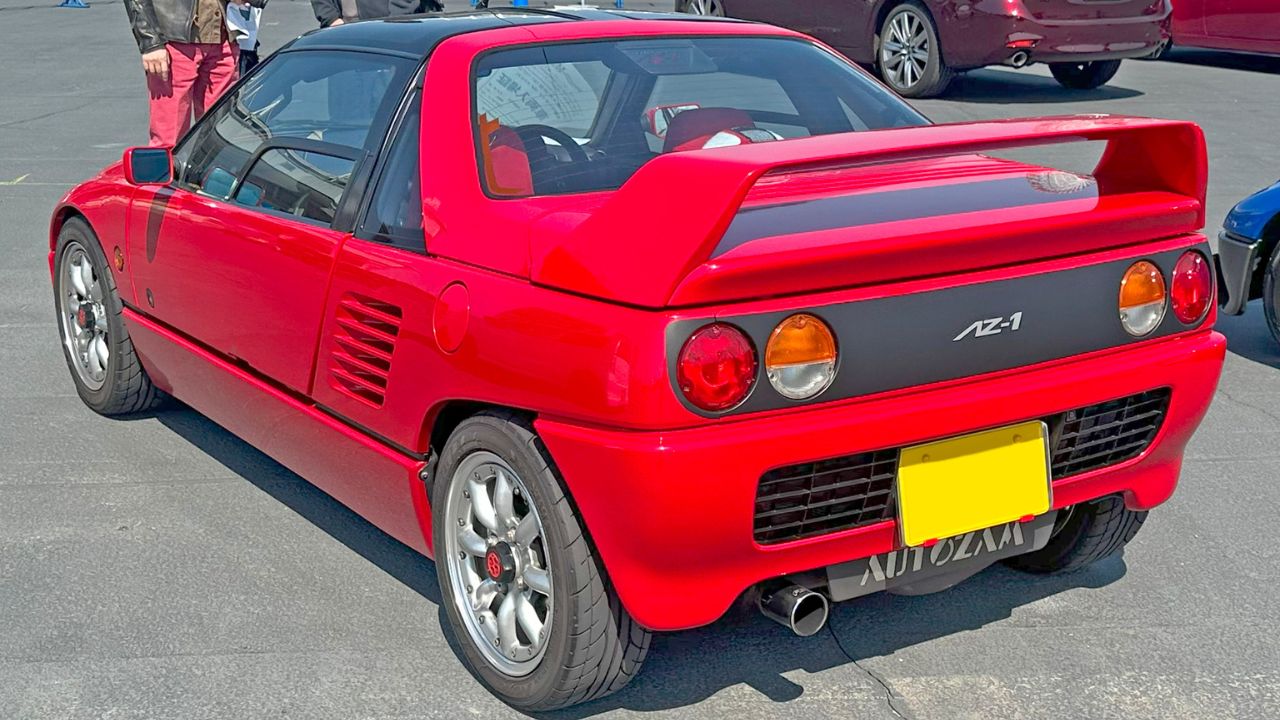
Let’s talk about what nobody mentions when they’re waxing poetic about JDM classics — keeping these things running. As someone with a Miata, I can say it’s cost me more than my other two cars combined over the last two years! The AZ-1’s turbo F6A engine was reliable enough in Suzuki’s bread-and-butter cars. Still, Mazda decided to tune it more aggressively and stuff it into a mid-engine layout where everything was twice as hard to reach.
Changing the oil requires removing half the rear bodywork. A simple spark plug change becomes a philosophical debate about whether you need to drive this week. The turbocharger, mounted in what can only be described as “the worst possible location,” loves to cook itself and everything around it. And when something does break — which it will, because it’s a 30-year-old Japanese turbo car — good luck finding parts. Suzuki stopped caring about the F6A engine around the time MySpace died, and Mazda acts like the AZ-1 never existed.
The electrical system, typical of early ’90s Japanese cars, has the reliability of a politician’s campaign promises. Window motors fail, leaving you looking like a moron trying to roll up a gull-wing door window manually. The air conditioning (what little there was) gave up years ago, turning summer drives into a mobile sauna experience.
A Small Car That Lives Large in Memory
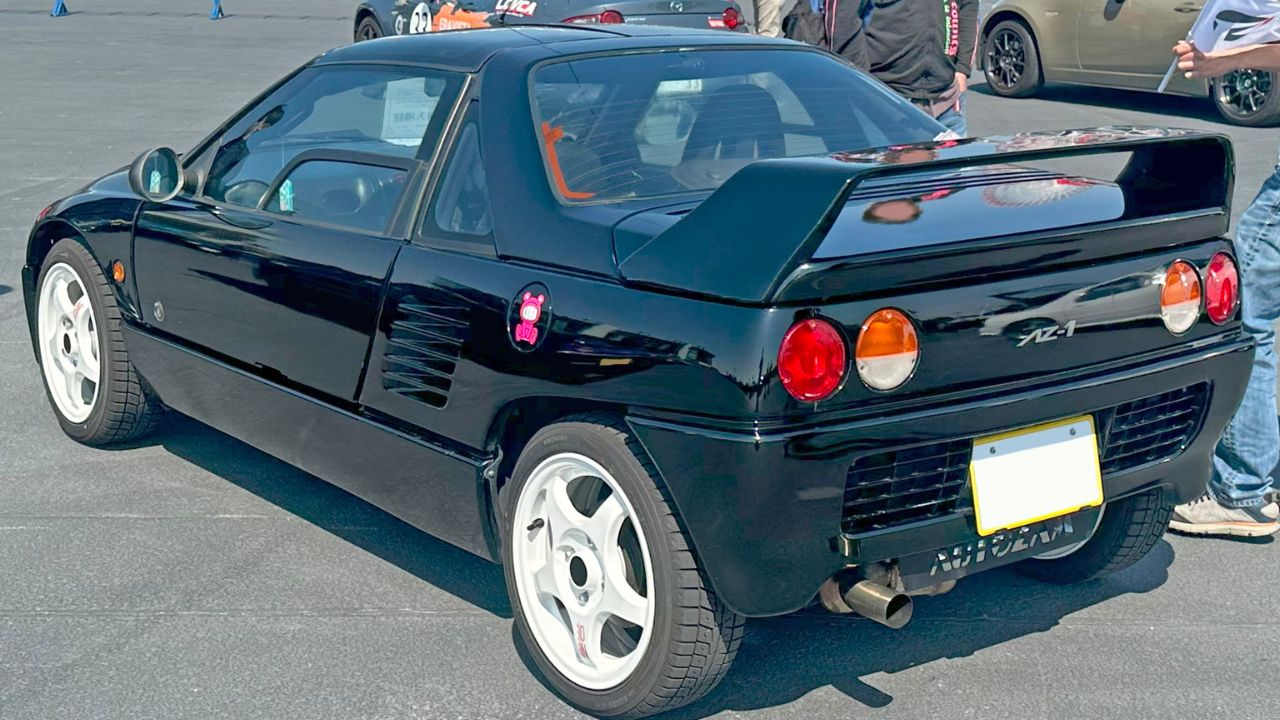
The Autozam AZ-1 brought joy to every stretch of pavement it touched. Its design spoke with personality, and its presence stayed unforgettable. The small frame held big ideas, and every detail felt like it came from a place of care and creativity.
Drivers found a connection through its feel and its sound. People remembered the way the doors opened, the way the cabin wrapped around them, and the way the car seemed to move with a sense of fun. Each drive offered a moment worth holding onto.
Enthusiasts gathered around it with stories and smiles. Roads felt brighter when the AZ-1 rolled by. Events gained energy when they showed up. The car left a lasting impression through its shape, its spirit, and the joy it gave.
The AZ-1 continues to shine through photos, videos, meetups, and memories. Its legacy lives on in the hearts of those who appreciate cars that come from a place of imagination. The little gull-wing kei car from Japan still brings people together through the simple love of something special. And some of us are crazy enough to look past its impractical nature just because it’s so cute and fun.