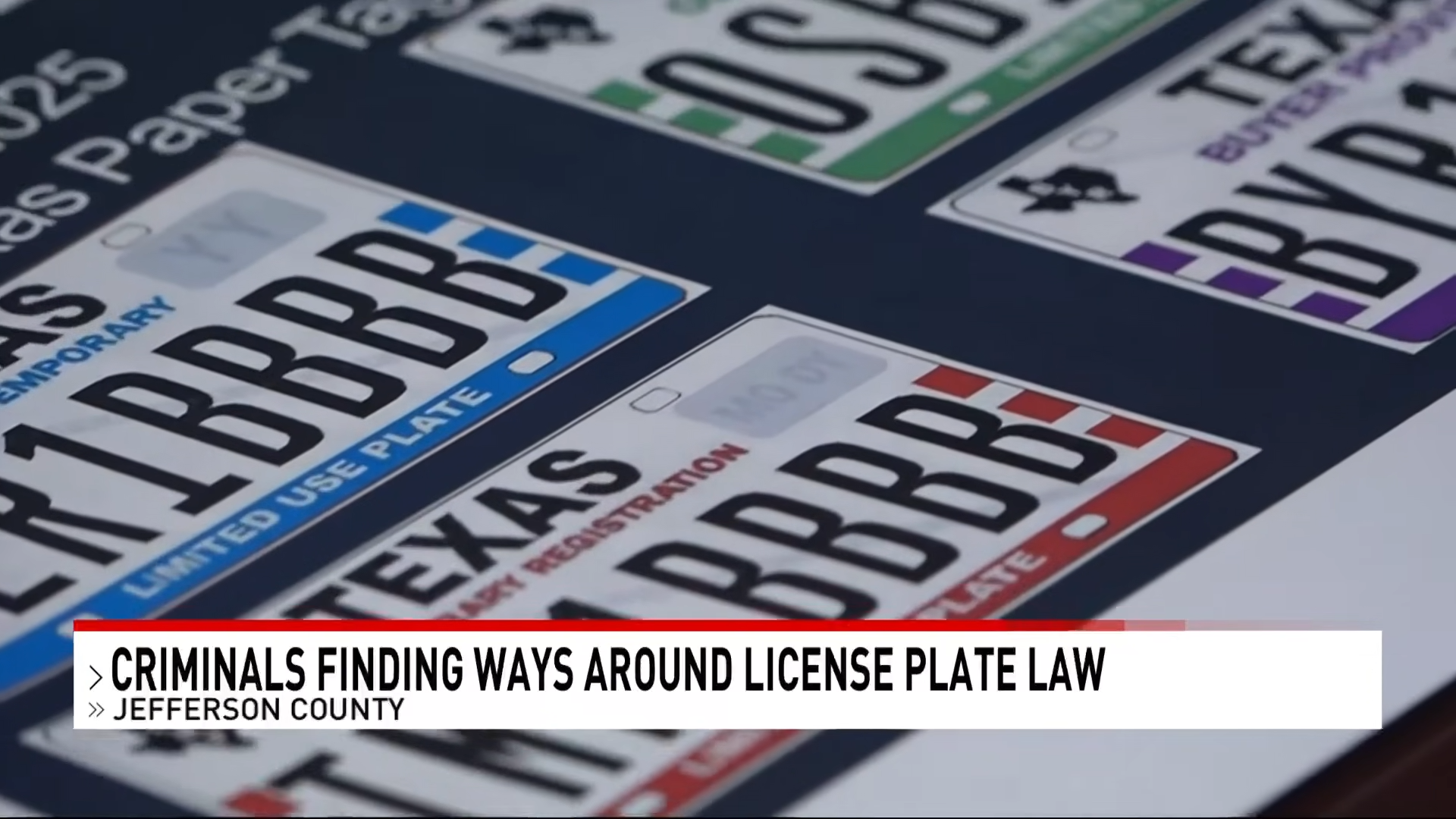
Less than a year into Texas’s big anti-fraud license plate overhaul, officials say the scheme has already sprouted a sequel — and this one is harder to spot. Jefferson County authorities are raising the alarm about a new wave of plate cloning that is catching drivers off guard, sometimes hundreds of miles away from where they live.
Texas made the switch away from paper temporary tags last July, a move that had been a long time coming. Law enforcement groups had pushed for the change for years, arguing that paper plates were simply too easy to forge and too widely abused. The fix seemed straightforward: skip the paper entirely, hand out permanent metal plates at dealerships the moment a car is sold, and cut fraud off at the source.
The plan worked — kind of. Incidents tied to paper tags did drop. But as Jefferson County Tax Assessor-Collector Kate Carroll puts it, solving one problem opened a door to another. Criminals, rather than abandoning their schemes, simply upgraded them. Instead of printing fake paper plates, they are now copying real metal ones, duplicating legitimate plate numbers and slapping them on vehicles they do not own.
That shift creates a much thornier problem for both drivers and law enforcement. A fake paper plate is visually suspicious. A cloned metal plate, on the other hand, looks completely legitimate because it essentially is one — just on the wrong car.
How License Plate Cloning Actually Works
Plate cloning is not a new concept nationally, but its rise in Texas follows directly from the state’s policy change. When paper tags were easy to fake, there was little reason to go through the extra trouble of duplicating a real plate. Now that metal plates are the only game in town, fraudsters have had to get more creative.
The process involves copying a real, registered plate number and reproducing it on another vehicle. The cloned plate carries all the correct registration information tied to the legitimate owner, which means it passes basic checks. The catch only comes when discrepancies surface, like a toll violation tied to a plate number but attached to a completely different make, model, or vehicle identification number.
Carroll described exactly that kind of situation with a friend in Texas who received a large bill for toll violations racked up in Florida. The plate number matched her registration perfectly. Everything else, the car, the VIN, the make and model, did not. Her friend was eventually able to dispute the charges, but the process was not simple, and the fact that the crime crossed state lines meant Southeast Texas law enforcement was not even in the loop.
Why This Fraud Is So Hard to Catch
Part of what makes plate cloning so frustrating is that the victim often has no idea it is happening until a bill or a notice arrives out of nowhere. There is no visible sign on your car, no alert from the DMV, and no reason to suspect anything is wrong until someone else’s bad behavior lands on your doorstep.
Carroll summed up the challenge well, describing it as a game of whack-a-mole. Fix the paper plate problem, and the fraud shifts to metal plates. Tighten up on metal plates, and something else will emerge. The underlying motivation does not go away just because one avenue gets blocked.
The cross-state nature of many of these incidents adds another layer of difficulty. If a cloned Texas plate gets used to dodge tolls in Florida, Georgia, or Oklahoma, there may be no coordination with local Texas law enforcement at all. The victim is left navigating disputes with agencies in other states, often without a clear point of contact closer to home.
The Beaumont Police Department noted it has not seen this particular type of fraud surface in Beaumont yet, but officials across the region are encouraging drivers to stay watchful for any unusual notices, bills, or violations that seem to come out of nowhere.
What Drivers Can Learn From This Situation
The broader lesson here is one that applies well beyond Texas: policy fixes that address one form of fraud rarely eliminate the underlying incentive to commit it. When the paper plate loophole closed, the demand for fraudulent plates did not disappear. It just adapted.
For individual drivers, that means it is worth paying attention to your mail and your inbox, especially if you drive frequently near toll roads or across state lines. An unexpected toll bill or violation notice tied to your plate number, particularly one from another state, could be an early sign that your plate has been cloned. Contesting the charges is possible, as Carroll’s example shows, but it takes time and documentation.
It is also a reminder that law enforcement and policymakers are essentially always playing catch-up with fraud. Carroll acknowledged that authorities are now focused on staying ahead of the next tactic, though she was candid that the people behind these schemes are not exactly lacking in creativity. As she put it, if they put that ingenuity toward something constructive, things would look pretty different.
What Texas Authorities Are Doing Next
Officials in Jefferson County say that despite the new challenges, the move to permanent metal plates was still the right call overall. The widespread abuse of paper tags has been meaningfully reduced, and that is not a small thing. But Carroll and others are clear-eyed about the fact that the work is not finished.
Law enforcement across the state is now working to better understand the scope of the cloning problem, track how the schemes are being carried out, and coordinate with agencies in other states where cloned Texas plates may be showing up. For now, the most important tool available to ordinary drivers is awareness. Check your mail. Question unexpected bills. And if something does not add up, report it even if you are not sure who has jurisdiction.