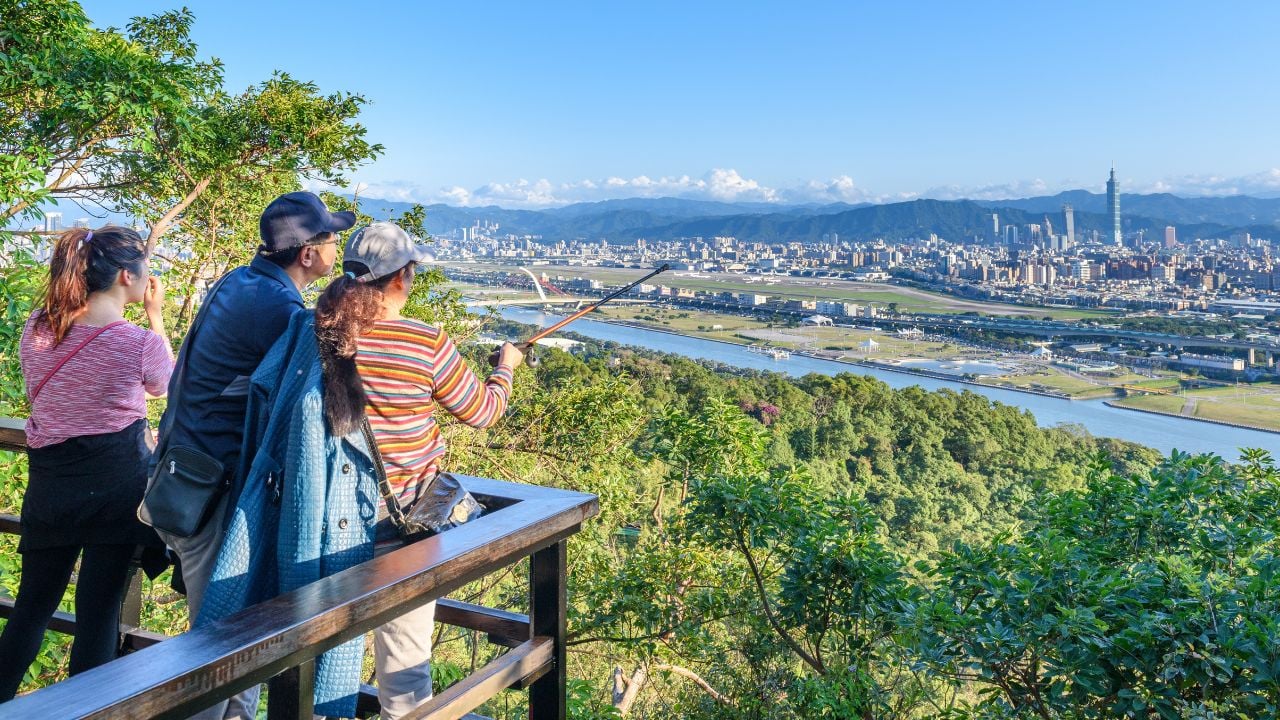
Some travel memories do not come from a packed itinerary. They happen when you reach the bridge at the right time, climb above the roofs, look down into a fjord, or turn toward the lake just as the light changes.
The places below all have streets, food, history, and proper things to do, but each one also has a view that deserves more than a quick photo. Leave space for it. Do not squeeze it between lunch and the next museum like a chore.
A good lookout needs time. You walk there, stop talking for a moment, look again, and suddenly the place feels different from the way it looked on the map.
That is the kind of trip this list is about: destinations where one view can become the part you talk about first when you get home.
1. Ronda, Spain

Ronda is built for that first sharp intake of breath. Walk toward Puente Nuevo and the town suddenly opens under your feet: stone bridge, white buildings, cliffs, sky, and the deep cut of El Tajo below. It is not a view you need someone to explain. You reach the edge and understand why people came all this way.
Andalucía’s official tourism site describes Puente Nuevo as one of Ronda’s symbols and gives its height as 98 meters. The bridge joins the old and newer parts of the town, but from the viewpoints nearby it feels less like infrastructure and more like a stage built across the gorge.
Do not rush away after the first photo. Walk along the viewpoints near the bridge and let the angle change. From one side, the bridge looks like it has grown out of the rock. From another, the houses seem to sit too close to the edge. The gorge makes the whole town feel slightly impossible.
Alameda del Tajo is the softer way to stay with the same landscape. Ronda’s tourism site describes it as a 19th-century natural walk on the edge of the Tajo cornice, with natural and geological variety. Nearby Paseos Hemingway y Blas Infante are also known for views and a quieter atmosphere.
That is the better Ronda plan: see Puente Nuevo, walk the edge, sit somewhere when the cliffs start feeling too dramatic, then return later when the light has changed. The bridge is famous, yes, but the real memory is the feeling of the town hanging over open air.
2. Orvieto, Italy

Orvieto looks strange and beautiful before you even reach the old town. From below, the city rises on its tufa rock like someone placed the cathedral, walls, and rooftops on a natural pedestal and then pulled the valley away from the edges.
Umbria Tourism calls Orvieto “the city on the rock” and places it on the tufa plateau known as La Rupe, above the valley of the Paglia River. That position gives the arrival its drama. Before the streets, before the restaurants, before the cathedral facade, there is the sight of the whole town sitting high above the countryside.
Once you are inside, Orvieto changes from a distant cliff town into a place of narrow streets, stone walls, church doors, and sudden openings toward the valley. The Duomo is the obvious stop, and it should be. Its striped stone and detailed facade pull people into the square even if they planned to “just walk around.”
But Orvieto is not only above ground. OrvietoViva points visitors toward the tufa outcrop, the Duomo, Saint Patrick’s Well, narrow streets, historic palaces, and underground tunnels and caves. That hidden layer makes the views feel even better. You are standing on top of a city that also continues beneath your feet.
Give yourself time for both versions: Orvieto from below, looking like a town lifted onto rock, and Orvieto from inside, where the streets, cathedral, wells, and underground spaces make the cliff feel less like a backdrop and more like the reason the city exists.
3. Aurland and Flåm, Norway
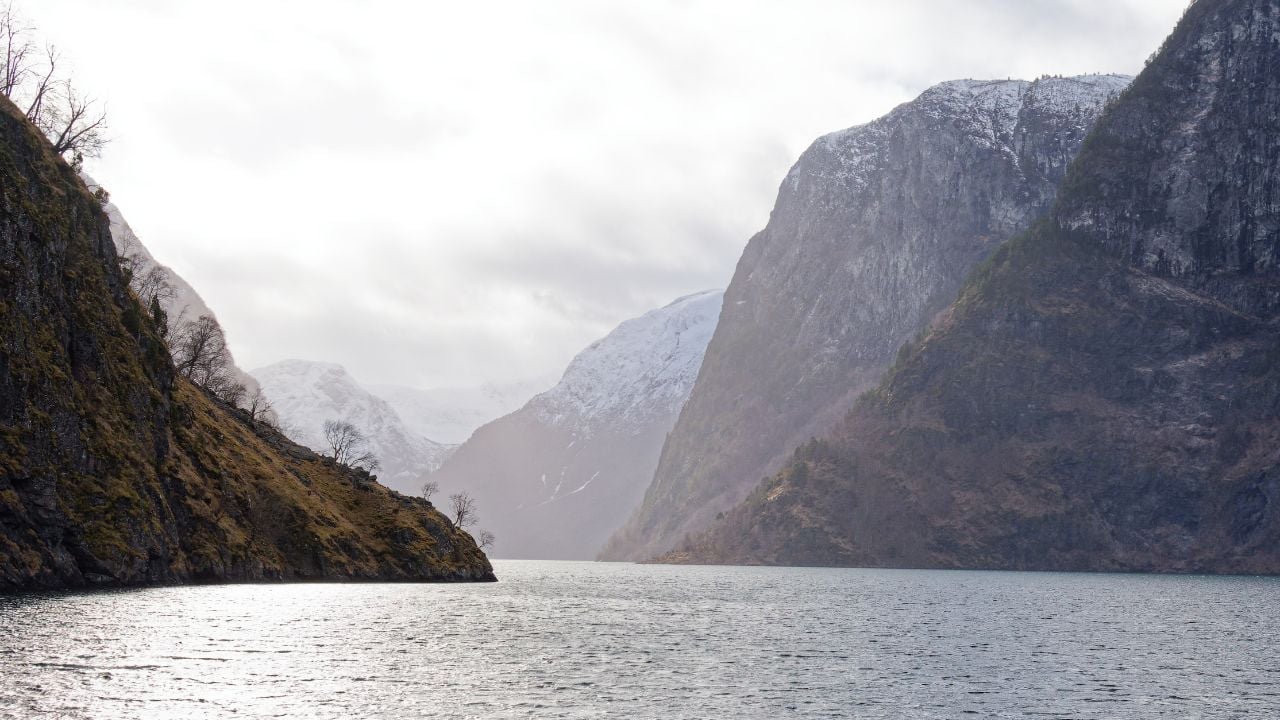
Stegastein is not subtle. You step onto the platform and the Aurlandsfjord drops away below you, with water, farms, steep slopes, and mountains filling the view before you have time to make sense of all of it.
Norway’s Best says Stegastein sits 650 meters above Aurlandsfjord, extends 30 meters out from the mountainside, and was designed as part of the National Tourist Routes project. The platform is made of steel clad with pine, and the end of it feels like it is pushing you straight into the fjord landscape.
This is the view to save time for if you are staying in Flåm, Aurland, or nearby. Many travelers arrive after boats, trains, buses, tunnels, or winding roads, and Stegastein gathers all that movement into one clean look. The fjord is below, the road is behind you, and the mountains suddenly make the whole journey feel worth the effort.
Do not treat it like a ten-second stop. Stand at the edge, then step back and look again from the side. The platform itself is part of the experience, but the best moment is quieter: the long water below, the tiny settlements, and the feeling that Norway has very little interest in looking small.
Afterward, the fjord at water level feels different. A cruise, a slow walk near Aurlandsvangen, or a simple stop in Flåm makes more sense once you have seen the whole landscape from above.
4. Bonifacio, Corsica
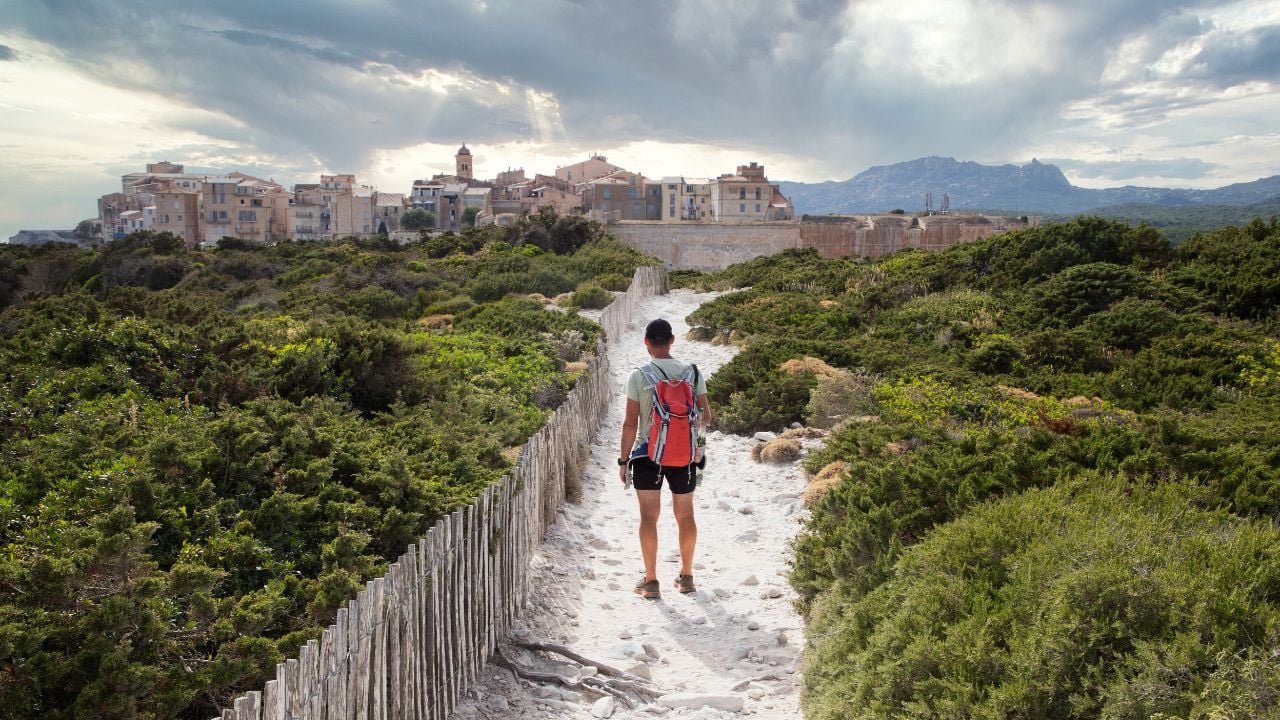
Bonifacio looks almost unreasonable from the water. The old town sits on white limestone cliffs, with houses pushed so close to the edge that you keep checking whether the rock is really holding all of it up.
The local tourist office describes the Bonifacio citadel as a thousand-year-old architectural gem in the far south of Corsica, with visits possible by boat or on foot. The difference is worth thinking about. From inside the old town, you get narrow lanes, walls, stairs, and sudden flashes of sea. From the water, you finally see the full cliff drama.
Walk the citadel first if you can. The streets are tight, the stone feels hot in summer, and the sea appears in pieces between buildings before opening wide at the edge. Bonifacio is not a place where the view stays politely in one direction. It keeps interrupting you.
The King of Aragon’s Staircase gives the cliffs a more physical kind of drama. The official tourist office says the Escalier du Roy d’Aragon is a listed historic monument carved into the limestone cliff, linked by legend to the troops of the King of Aragon in 1420, though in reality it was dug to access the Saint-Barthélemy well.
Boat trips show the town from its most startling angle: limestone, sea caves, blue water, and the citadel above. Bonifacio has quiet corners inside the walls, but the view is not gentle. It is the kind of place that makes you stop mid-walk and say, “How is this town even here?”
5. Český Krumlov, Czechia
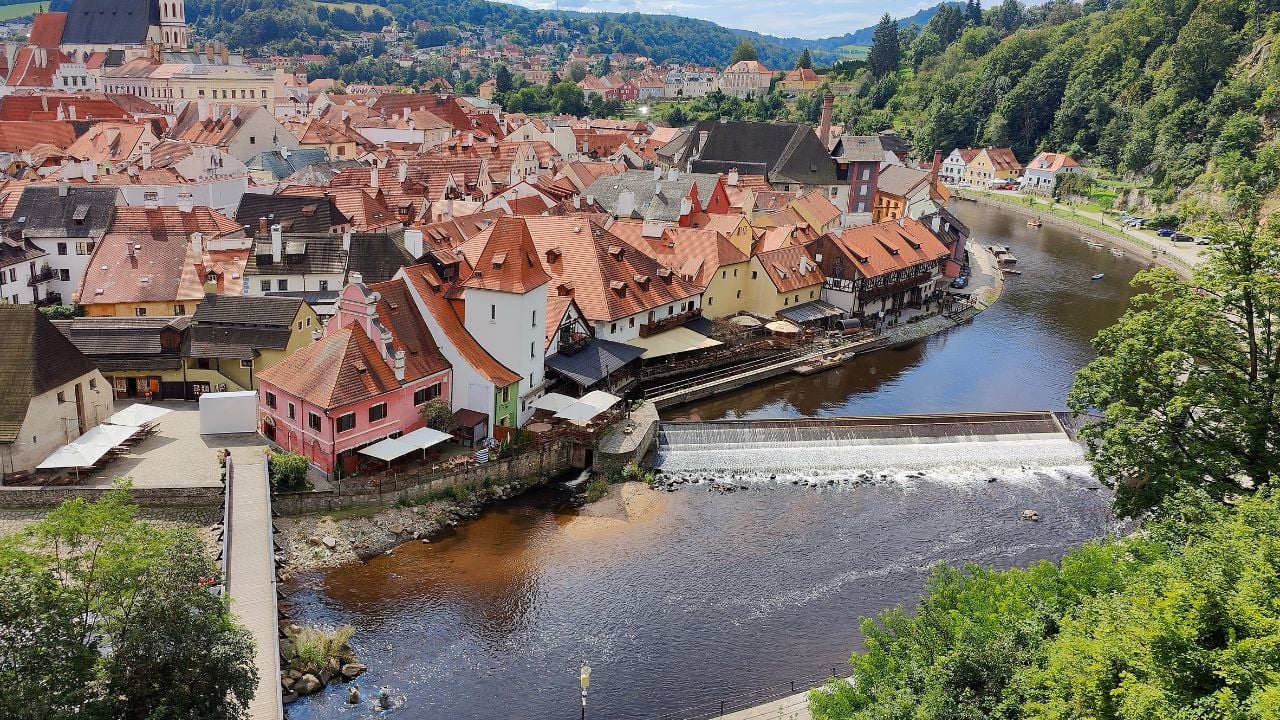
Český Krumlov is the kind of town that looks almost too arranged from above. The Vltava River bends around the old center, red roofs press together below, and the castle rises above it all like someone designed the whole place for one perfect viewpoint.
UNESCO says the historic center sits on the banks of the Vltava River and was built around a 13th-century castle with Gothic, Renaissance, and Baroque elements. It also describes Český Krumlov as an outstanding example of a small Central European medieval town whose architectural heritage has remained intact.
The castle area is the natural place to look down from. The official tourism site describes the State Castle and Château as the second-largest castle and château complex in the Czech Republic and one of Central Europe’s important monuments. That scale matters, but the view is what most people remember first.
Stand above the town and the confusing lanes suddenly make sense. You see the river curve, the roofs gather, the church tower rise, and the castle stretch along the hill. Then, when you go back down, the streets feel less like a maze and more like something you already understand from the air.
The danger in Český Krumlov is rushing through it because it is famous and compact. Do not do that. See the view, then take the slower route back through the lanes, bridges, courtyards, and riverside corners. The town is small, but it deserves more than a fast postcard stop.
6. Gjirokastra, Albania
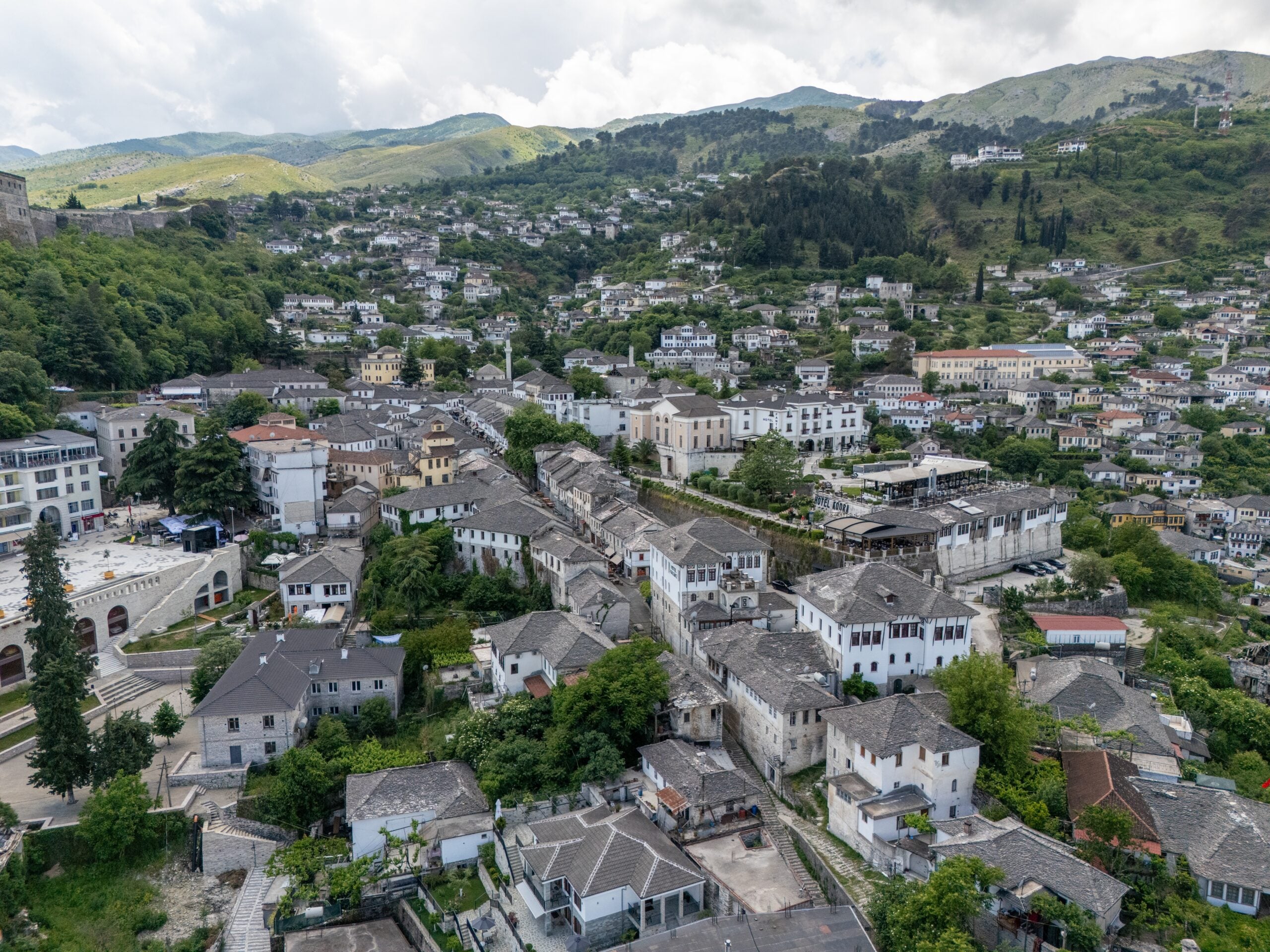
Gjirokastra begins with stone: stone roofs, stone streets, stone walls, and a castle watching over the Drinos Valley. Even before you climb anywhere, the town already looks heavy with history.
UNESCO describes Gjirokastra, in the Drinos River valley of southern Albania, as a town with outstanding two-story houses developed in the 17th century, along with a bazaar, an 18th-century mosque, and churches from the same period. The description sounds formal, but the real experience is very physical: steep lanes, pale stone, rooflines, and views that keep opening between houses.
Climb toward the castle slowly. The higher you go, the more the town spreads below you: bazaar streets, layered roofs, hillsides, and the valley beyond. Gjirokastra’s nickname as the “Stone City” does not feel like branding when you are up there. It feels obvious.
Albania’s official tourism site describes Gjirokastra Castle as one of the country’s most magnificent and best-preserved monuments, set on a hill with views over the Drinos Valley. Its history dates back to the 4th century, while its current form developed during the Ottoman period.
From the top, the town looks carved into the slope rather than placed on it. Stay long enough to pick out the bazaar, the old houses, the roads, and the mountains beyond. The castle is the sight, but the view back over the stone city is the part that gives the climb its weight.
7. Ohrid, North Macedonia
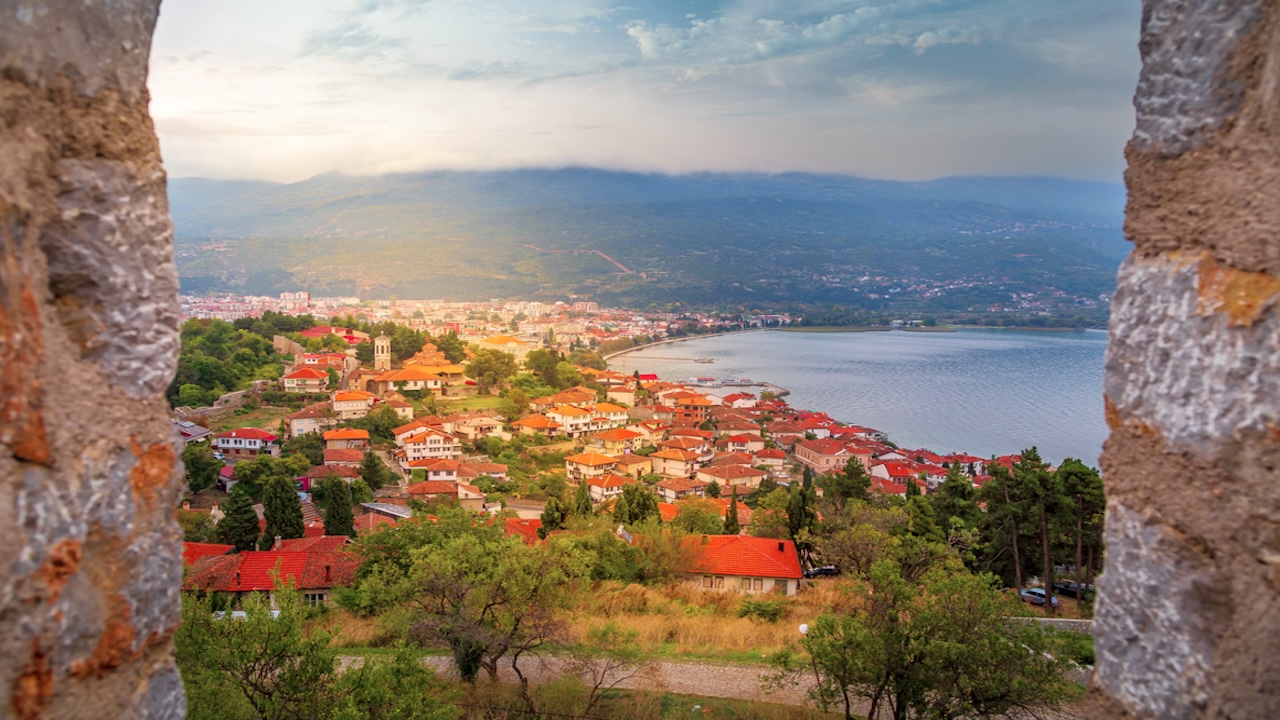
Ohrid’s view is calmer than Ronda or Bonifacio, but it stays with you in a different way. The lake is wide and blue, the red roofs fall toward the water, and the mountains behind it make the whole scene feel much older than a normal lakeside holiday.
UNESCO describes Lake Ohrid as a deep and ancient lake of tectonic origin that has existed continuously for roughly two to three million years. It also calls the lake a superlative natural phenomenon, with endemic and relict freshwater species. That background changes the way you look at the water. It is not just a pretty lake; it is one of Europe’s great old landscapes.
Tsar Samuel’s Fortress gives the classic view over the town and lake. The Ohrid museum site describes it as one of North Macedonia’s largest medieval fortification constructions, with ramparts and fortified towers occupying the entire Ohrid hill, which rises 100 meters above the lake.
Walk the fortress walls and look down slowly. Red roofs, church domes, blue water, boats, hills, and mountains all gather into one frame. This is not a loud view. It does not hit like a cliff or a fjord platform. It settles in quietly, especially if you stay long enough for the light to change on the lake.
Afterward, go back down through the old town instead of rushing away. Ohrid is best when the lake keeps returning between streets, churches, and viewpoints. You may come for history, but the water is what follows you around all day.